
Expansion VR’s Biggest Update Adds a True VR-Native Campaign — Here’s Why That Matters
Game intel
Expansion VR
VR real-time strategy blending action, exploration, and decision-making. Command high-tech base, elite squads, and ferocious units for intense warfare, testing…
Why This Update Actually Matters
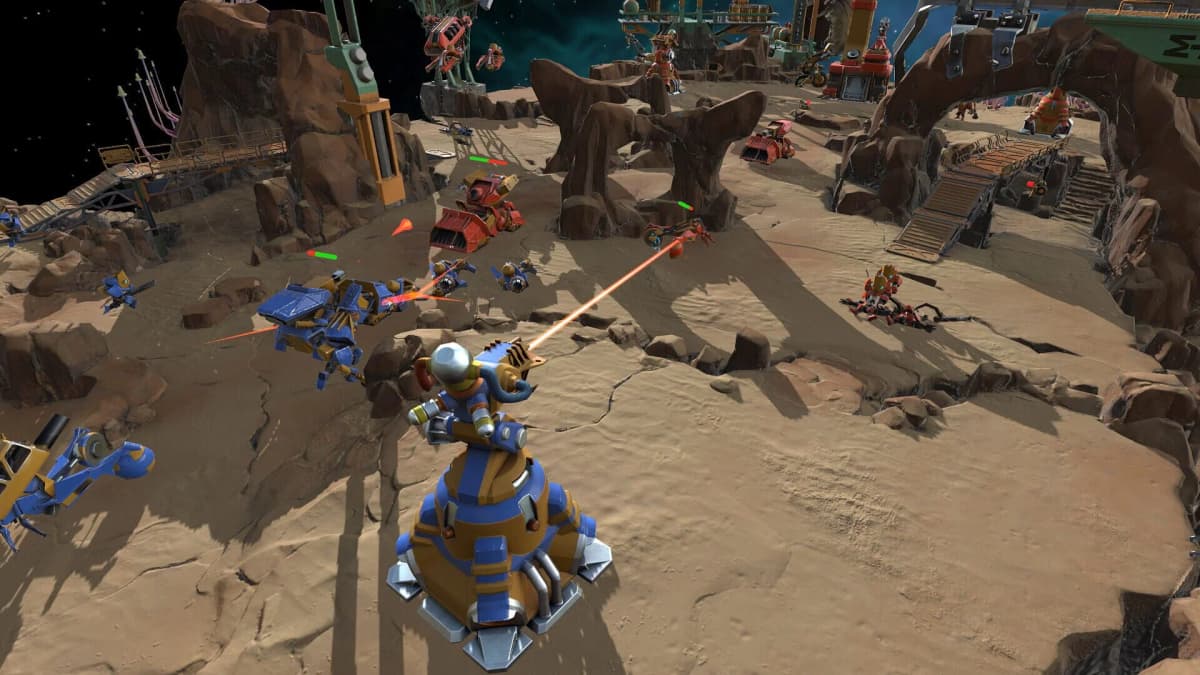
Expansion VR just rolled out its largest update yet, and it’s not another map pack or a handful of units-it’s a full single-player Campaign Mode built specifically for VR. That caught my attention because real-time strategy in VR often leans on skirmishes and multiplayer ladders, then leaves solo players to sandbox tinkering. A story-led campaign with preset unit rosters, smarter AI, and expanded lore signals a serious commitment to making Expansion VR more than a competitive playground. It’s available now on Steam and the Meta Horizon Store.
Key Takeaways
- A proper VR-native campaign with story missions-finally, something to chew on solo.
- Preset unit rosters shift the focus to tactics and execution, not grinding unlocks.
- Smarter AI and balance passes should benefit both campaign and competitive play.
- Hand-based motion controls remain the core-this is Expansion VR, not a bolted-on side mode.
Breaking Down the Announcement
Here’s the headline: Expansion VR now includes a full single-player Campaign Mode with story-driven missions designed around VR-style control. Instead of dumping you into a freeform skirmish, each mission presents a curated roster—think puzzle-box tactics where your hand is forced, and the challenge is making the most of what you’ve got. That’s a smart way to teach unit synergies without overwhelming newcomers or forcing veterans to wade through meta builds.
The update also touts expanded lore. RTS fans know how much a little world-building does for mission variety—context can make a defensive holdout or a risky flanking maneuver feel meaningful instead of mechanical. If Expansion VR uses its fiction to justify unique objectives—timed evacuations, resource-denied scenarios, asymmetric defense—that’s where a campaign becomes more than a tutorial.
Smarter AI and balance improvements round things out. This is the unsexy part that actually changes day-to-day play. Better AI can be the difference between “cheats for difficulty” and “feels human.” It also gives competitive-curious players a place to practice without getting steamrolled in ranked. Balance passes are the lifeblood of any strategy meta—if a campaign exposes broken strategies, those fixes will ripple back into multiplayer.
The Gamer’s Perspective: Why Solo Matters in VR Strategy
VR strategy has flirted with campaigns before—Brass Tactics and Final Assault come to mind—but too many projects stop at skimpy single-player or leave the narrative on the cutting room floor. Expansion VR leaning into a campaign built around its hand-based motion controls is the right call. Those controls are the hook: pinching, placing, and directing units with your hands makes it feel like you’re orchestrating a tabletop war from a god’s-eye view. A curated campaign should push that tactility—forcing quick placement decisions, multi-front attention, and rapid unit swaps—without the stress of ladder anxiety.
Preset rosters are also a stealth win for game feel. When developers lock loadouts per mission, they can tune encounters tightly. No more “bring the one busted unit and steamroll” or “fail because you didn’t grind the right upgrade.” It’s a skill-first approach that lets the motion controls shine—besting a mission because you executed sharp hand calls under pressure is satisfying in a way menu meta never is.
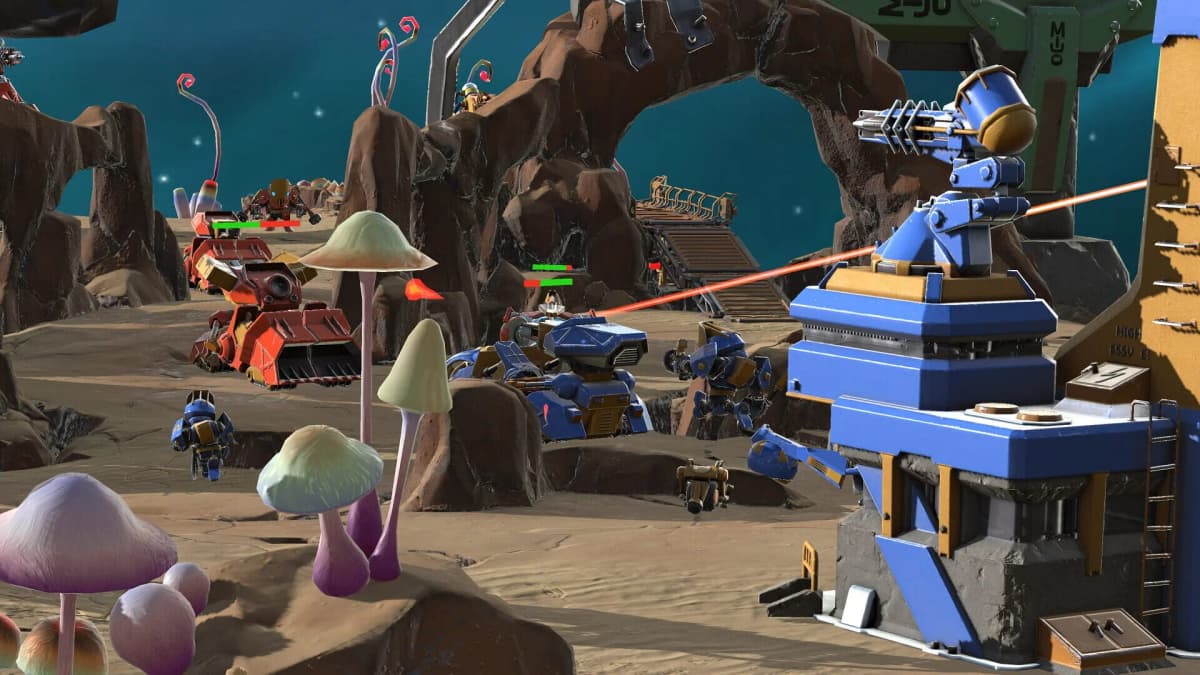
Comfort-wise, VR RTS tends to fare better than smooth-locomotion shooters thanks to its tabletop vantage point. If Expansion VR sticks to anchored perspectives with smart teleport or tilt options, the campaign should be friendlier for longer sessions. Still, I want to see robust comfort settings and left-handed parity—quality-of-life is where campaigns either welcome everyone or quietly gatekeep.
Want to Level Up Your Gaming?
Get access to exclusive strategies, hidden tips, and pro-level insights that we don't share publicly.
Ultimate Gaming Strategy Guide + Weekly Pro Tips
Will It Strengthen Competitive Play—or Split Focus?
The pitch promises to deepen solo without sacrificing Expansion VR’s fast-paced competitive play. That’s the tightrope. The optimistic read: smarter AI trains better players, balance tweaks harden the meta, and the campaign becomes a skill ramp that funnels newcomers toward PvP. The skeptical read: if the campaign’s unit tuning or mission-specific rules don’t line up with multiplayer, you get whiplash when you swap modes.
What I’m watching for: does the campaign teach transferable fundamentals—macro prioritization, positioning discipline, timing pushes—rather than gimmick missions that reward cheese? If the answer is yes, competitive should benefit. If not, expect a divide where campaign fans and PvP regulars barely overlap.
What We Still Need to Know
- How many missions are we getting, and is there meaningful mission variety beyond “destroy base” and “hold for X minutes”?
- Are there difficulty options, mutators, or scoring systems to encourage replays?
- Do campaign learnings (not gear) translate cleanly to multiplayer fundamentals?
- Any performance differences between SteamVR and the Meta Horizon Store build?
- Accessibility: comfort presets, dominant-hand options, and readable UI at different play heights.
Pricing also matters. The announcement frames this as an update rather than a paid expansion; if it’s a free addition, that’s a strong value play and a clever way to grow the player base. If there’s a price tag, mission scope and replayability need to justify it. Either way, the premise is right: give VR strategists a reason to log in every night that isn’t “queue up and hope for a good match.”
TL;DR
Expansion VR now has a proper, VR-first single-player campaign with story missions, preset rosters, smarter AI, and balance tuning. If the missions teach transferable tactics and the comfort/QoL is solid, this could be the mode that onboards new players and sharpens vets—without dulling the game’s competitive edge. It’s live on Steam and the Meta Horizon Store.