
Table of Contents (6)
An exposed Persona codebase shows age-verification tools are acting like surveillance
This caught my attention because age verification was supposed to be a narrow, privacy-preserving step to keep kids away from adult content – not a route into faceless, automated surveillance. On Feb. 20, 2026, PC Gamer reported security researchers discovered an exposed Persona frontend on a FedRAMP‑authorized server. The leak allegedly included 2,456 source files and 53 MB of source maps, and the code appears to run 269 separate verification checks across 14 types – some of them plainly invasive.
- 2,456 TypeScript files and 53 MB of source maps were reportedly exposed on a government‑authorized endpoint, per PC Gamer.
- The code allegedly describes 269 checks across 14 screening types, including “SelfieSuspiciousEntityDetection” and screenings for terrorism and espionage.
- Researchers say Persona could file Suspicious Activity Reports with FinCEN and tag reports with codenames tied to intelligence programs – well beyond simple age confirmation.
- Discord had recently trialed Persona for UK age verification, meaning Discord users could have been exposed to these opaque processes.
What the researchers actually found
PC Gamer’s writeup summarizes a security research blog (the researchers described the investigation as starting “passive recon” but turning into “a rabbit hole deep dive”). The team claims they didn’t need to exploit anything — “the entire architecture was just on the doorstep.” The files, they say, reveal every API endpoint, compliance rule and screening algorithm. That includes automated facial-comparison checks that match selfies to watchlist photos and a function named SelfieSuspiciousEntityDetection. The codebase reportedly documents screening categories that span terrorism, espionage and other “adverse media” checks.
Why this matters to Discord users (and gamers)
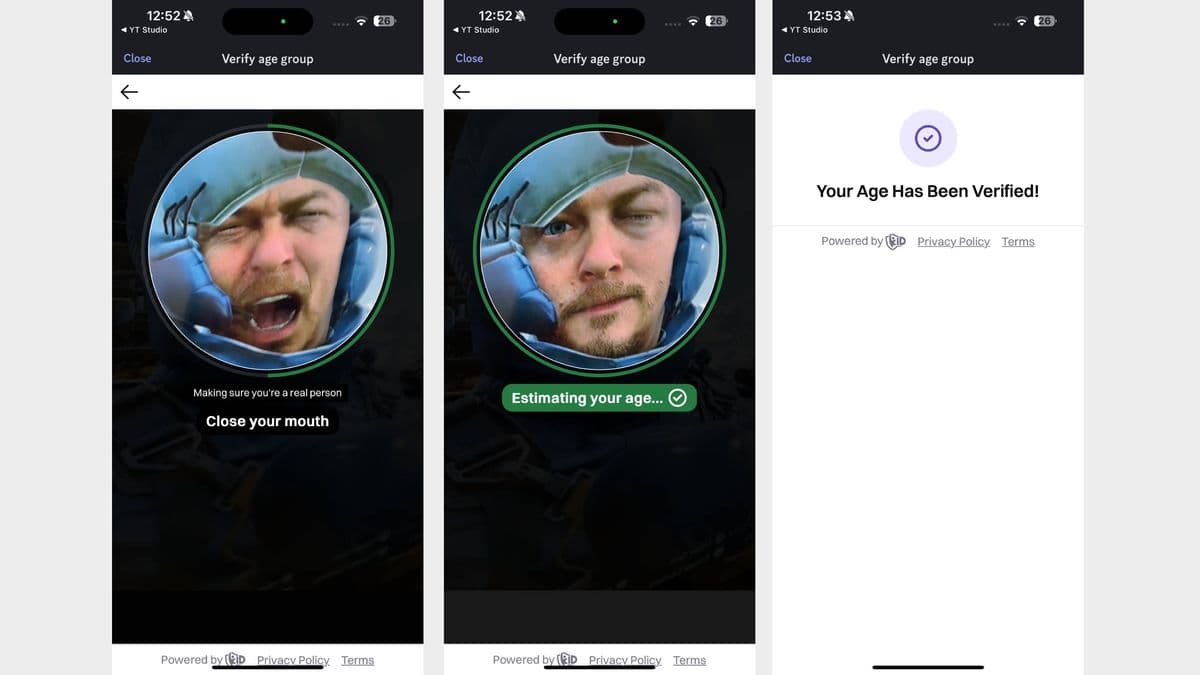
Discord tested Persona for UK age verification. Whether Discord used the full suite visible in the leaked code is unclear — PC Gamer and the researchers stop short of saying the exact configuration Discord employed. But the discovery is a red flag: systems sold as “age checks” can contain modules designed for far broader screening. Facial-recognition outputs and watchlist matches are valuable for more than age; they can be retained, repurposed, or shared with government systems.
For gamers, that’s a concrete risk. You don’t want a selfie you took to prove you’re over 18 routed into databases or triggers that flag you for reasons you can’t review or contest. The researchers put it bluntly: “What makes a face ‘suspicious’? The code doesn’t say. The users aren’t told.”
Industry context: why age verification went from niche to contentious
This is happening as more platforms roll out identity checks. Recent reporting shows companies from Ubisoft to other major services are implementing automated age verification in jurisdictions that demand it — sometimes using ID+face scans, automated age-estimation photos or third‑party services. At the same time there’s mounting legal pressure over safety and how platforms protect minors, exemplified by lawsuits and regulatory probes targeting major services.

That combination — regulatory demand + third‑party vendors offering turnkey verification — creates an environment where extremely powerful biometric and watchlist tools can be shoehorned into consumer flows without sufficient transparency or oversight.
What Persona, Discord and regulators should answer
There are a few basic, non‑negotiable expectations here: a) clear documentation of what checks run and why, b) strict data minimization and retention limits, c) independent audits of facial‑recognition models and watchlist matches, and d) an explicit ban on sharing consumer verification data with unrelated intelligence or enforcement programs without user notice and legal justification.
So far, public statements from Persona or Discord related to this specific leak are limited or absent in the reporting. That silence matters. If age‑verification tech is going to be mandatory in some settings, vendors and platforms need to stop hiding functionality behind opaque compliance language.
TL;DR — Why you should care
A reported exposure of Persona’s code on a FedRAMP endpoint suggests age checks can be many things besides “proof of age”: facial recognition, intelligence‑style screenings and automated flags that could feed government reporting. Gamers and Discord users deserve simple, transparent age verification — not black‑box surveillance stitched into onboarding flows. Until vendors open their audits and platforms publish exactly what they’re running, treat promises of “privacy‑first” verification with skepticism.
Source: PC Gamer reporting on researchers’ findings (published 2026‑02‑20).
FinalBoss // Gear
Level up your setup
01Top-rated gaming headsetson Amazon→02High-refresh gaming monitorson Amazon→03Gaming chairson Amazon→04Discounted game keyson Kinguin→Affiliate links · As an Amazon Associate, FinalBoss earns from qualifying purchases.
Want to Level Up Your Gaming?
Get access to exclusive strategies, hidden tips, and pro-level insights that we don't share publicly.
Ultimate Gaming Strategy Guide + Weekly Pro Tips