
Brazilian Counter-Strike finally has a date for the end of its defining era. With Gabriel “FalleN” Toledo announcing on stage at IEM Rio that he’ll retire from competitive CS2 at the end of 2026, the conversation stops being “if” and becomes “what comes after” – for him, for FURIA, and for a Brazilian scene that has leaned on his shadow for more than a decade.
Table of Contents (8)
Key takeaways
- FalleN’s retirement is delayed, not immediate: a planned, public runway through the end of 2026 gives Brazil rare time to manage succession – or fail to.
- His exit forces a structural question: who leads Brazil at the top level when the region’s default in-game leader, spokesperson and talent magnet steps aside?
- He’s not leaving Counter-Strike, only competition; what role he picks next (coach, owner, academy boss) will quietly define Brazil’s next decade.
- This is less about one player and more about whether Brazilian CS can decentralise from a single figure into a real ecosystem.
A scheduled goodbye, not a collapse
Most legendary esports careers end the same way: sudden benching, performance collapse, or a quiet retirement tweet after a year of middling results. FalleN is taking a different route. He used the Farmasi Arena stage at IEM Rio 2026 to tell a home crowd he’ll play out the year, then walk away from top-level competition.
This matters because it creates a defined transition window instead of a vacuum. Based on his own count, there were roughly 247 days left in his professional career when he said it. Teams, organisations and younger players now know exactly how long they have to learn from him, play against him, and figure out who fills the gap.
The announcement caps a 20+ year run that started in Counter-Strike 1.6, survived the turbulence of Global Offensive’s early years, peaked with back-to-back Major wins under Luminosity/SK in 2016, and somehow extended into a late-career stint in CS2 that still included trophies with FURIA in 2025. This isn’t a legend hanging on out of nostalgia; it’s a legend choosing the endpoint.
The uncomfortable part for Brazil is that clarity cuts both ways. If the region enters 2027 without a clear leadership core, nobody can pretend they “didn’t have time” to prepare.
Brazil is losing more than an AWPer
Reducing FalleN to “veteran AWPer” misses the structural role he’s played. For a decade, he has been Brazil’s default solution to almost every problem:
- Need a world-class IGL? Put FalleN in the server.
- Need a sponsor-friendly face for the region? Put FalleN on the stage.
- Need to justify an all-in Brazilian project to an international org? Build it around FalleN.
He’s been in-game leader, primary caller, star player, public diplomat and academy operator. That’s not healthy long term, but it has been effective. Brazilian Counter-Strike’s highest peaks – the double Major era with coldzera’s immortalised Mirage graffiti, MLG Columbus and ESL One Cologne, the SK/LG international dominance — all carry his fingerprints in how those teams called, practised and presented themselves.
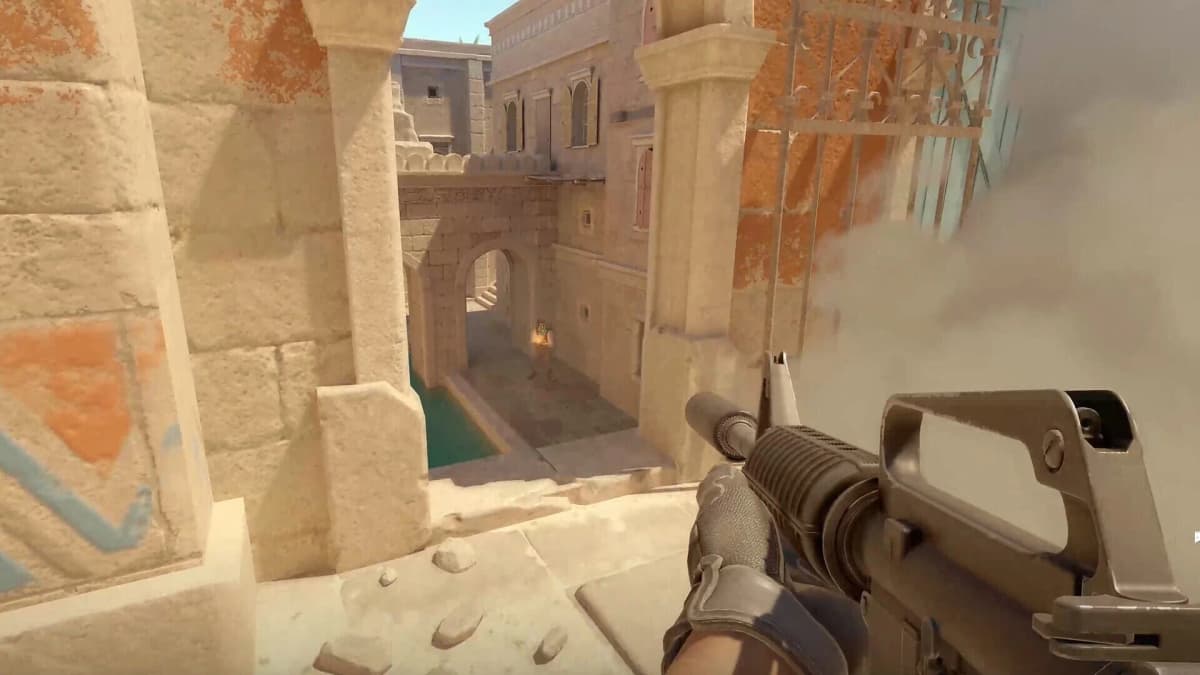
That’s why his IEM Rio statement that he’ll “move on to other great things for the Counter-Strike ecosystem” matters. He’s not leaving the game, just deleting the one role nobody else in Brazil has fully replicated: elite IGL plus cultural anchor.
On paper, Brazil still has plenty of talent. FURIA remain a top international presence. Line-ups under banners like paiN, MIBR and Fluxo cycle promising riflers and AWPers every season. The problem is not aim; it’s orchestration. There is no obvious successor with the combination of tier-one calling experience, international pedigree and off-server influence that FalleN brings.
The succession gap the scene has been avoiding
Every region faces this at some point. Sweden had to work out life after f0rest and GeT_RiGhT. Denmark had to stop pretending you can just keep rebuilding around dev1ce forever. Korea will eventually have to think about a world where Faker is not on stage for every big League of Legends moment.
Brazil’s version of that problem has always had the same answer: “FalleN will fix it.” He was the one who proved a full-BR roster could win Majors. He was the one who built Games Academy and turned it into a talent pipeline. He was the one who came back into the spotlight whenever a new Brazilian “superteam” needed instant legitimacy.
His post-2026 retirement makes that reflex impossible. The region needs, at minimum, three things that don’t currently exist at the same level:
- New leadership cores. More than one. If the answer to “who leads Brazil in 2027?” is just the current FURIA IGL, the region has learned nothing. You want multiple tactical identities, not a single national playbook.
- Independent brands. Talent, orgs and events that can attract sponsors and audiences without needing FalleN on the poster. Brazil’s fanbase is big enough; the industry side needs to catch up.
- Honest roles for veterans. Players who are 26-30 now will be the next “old guys” in a few years. The region can either repeat the cycle of clinging to faded stars or deliberately build clear paths into coaching, talent development and management.
The debate inside Brazilian CS is already there: who can “carry Brazil’s next era internationally”? But that question is still framed like we’re looking for the next singular hero. The healthier version is uglier: can Brazil stop needing one?
FalleN’s second career may matter more than his first
It’s easy to treat “I’ll stay in the ecosystem” as retirement boilerplate. In FalleN’s case, it is probably the most important part of the announcement.
He already has the infrastructure most retired pros build after the fact. Games Academy has been developing Brazilian talent for years. He has brand reach, sponsor relationships, and credibility with both players and tournament organisers. If he chooses to focus on that full-time, he effectively becomes Brazil’s first true Counter-Strike institution rather than just its most famous player.
There are a few realistic pathways once he steps away from competition:
- Head coach / strategic director. The most obvious move. Attach him to a top Brazilian or international roster and you instantly stabilise structure and attract talent. The risk: his presence could again centralise decision-making around one person, just from the server’s sidelines instead of in it.
- Academy and talent pipeline. Scaling Games Academy into a serious tier-two ecosystem — regular competition, coaching certification, structured paths into tier-one teams — would do more for Brazilian CS in the long term than another “last dance” run ever could.
- Ownership / operations. Stepping into a management or ownership role with a Brazilian organisation would let him influence salary standards, infrastructure and long-term planning. It’s less visible, but likely more impactful than streaming or content alone.
- Broadcast and analysis. He’d be good at it, and tournament organisers would love him on camera, but it would be a waste if that became his primary focus instead of a side outlet.
From a distance, the academy route is the one that actually solves the problem his retirement exposes. Coaching a single team keeps Brazil dependent on where FalleN is employed. Building a robust tier-two system reduces the need for a single saviour.
The wider Counter-Strike context
FalleN’s career also tracks neatly with Counter-Strike’s own transformation. We’re at a point where legacy titles like CS2 and League of Legends still soak up around a third of all PC playtime. Esports scenes around them have matured from scrappy communities into multi-million-dollar ecosystems, and now they are hitting the stage where founding stars begin to age out.
We have seen plenty of legends retire from CS: f0rest, olofmeister, shox, others. Most either slipped quietly into streaming, low-impact coaching gigs, or semi-pro limbo. None of them were as structurally central to a single national scene as FalleN is to Brazil. That makes his next move a kind of test case for late-career transitions in long-lived esports.
If he manages to convert personal legacy into lasting infrastructure — a stronger academy system, a more coherent tier-two, more professional management practices — it becomes a template for other regions whose iconic players will also age out of the server. If he doesn’t, Brazilian CS risks living off highlight reels while other regions build sustainable pipelines.
What to watch between now and the end of 2026
The runway to his retirement is long, but there are specific signals that will tell us whether this is just a farewell tour or the start of a serious handover.
- FURIA’s roster and calling structure. If FURIA start sharing IGL duties, trialling younger callers or building clear succession around the tactical role, that’s a sign they are treating his departure as a structural issue, not just a PR moment.
- Expansion of Games Academy. Watch for announcements about new facilities, partnerships with Brazilian orgs, or structured leagues and programs under the Academy brand. That would confirm he is prioritising pipeline over one last competitive sprint.
- Public commitment to a post-playing role. If, before the end of 2026, he signs as head coach, strategic director, or formally takes a leadership position in an organisation, we’ll have a much clearer picture of how centralised Brazil’s next era will be around him.
- Results from non-FalleN Brazilian teams. Deep runs at majors or elite events by Brazilian line-ups without him — especially with new IGLs and systems — would be the healthiest sign the scene is already adapting.
By the time he plays his last professional map, the important story will not be whether he tops the server one last time. It will be whether Brazilian Counter-Strike looks less like a one-man project and more like an ecosystem that can survive its founding architect stepping off the stage.
TL;DR
Gabriel “FalleN” Toledo has announced he will retire from competitive Counter-Strike 2 at the end of 2026, ending a two-decade career that defined Brazilian CS. His planned exit forces the region to confront a long-delayed question: who leads, builds and represents Brazil at the top level when its default IGL and cultural anchor is gone from the server. What he does next — especially whether he doubles down on coaching and talent development rather than another spotlight role — will quietly decide how strong Brazil’s next era actually is.
FinalBoss // Gear
Level up your setup
01Graphics cardson Amazon→02Gaming laptopson Amazon→03High-refresh gaming monitorson Amazon→04Discounted game keyson Kinguin→Affiliate links · As an Amazon Associate, FinalBoss earns from qualifying purchases.
Want to Level Up Your Gaming?
Get access to exclusive strategies, hidden tips, and pro-level insights that we don't share publicly.
Ultimate Gaming Strategy Guide + Weekly Pro Tips