
Table of Contents (10)
Fallen Tear: The Ascension – The Early Access Metroidvania That Already Feels Finished
About 30 minutes into Fallen Tear: The Ascension, I caught myself doing something I only do with games that click instantly: I stopped rushing objectives and just…watched. Watched Hira’s idle animations, watched the way leaves swayed in the background, watched enemy tells telegraph through a few perfect frames of hand-drawn motion. For an Early Access build, it didn’t feel like I was stress-testing something half-baked. It felt like I’d installed a full release by mistake.
I played Fallen Tear on PC via Steam on a mid-range rig (RTX 3060, Ryzen 5, 16GB RAM) at 1440p, mostly with an Xbox-style controller and a bit of time on keyboard just to see how bad of an idea that was. The short version: visually, this is already one of the prettiest 2D Metroidvanias I’ve touched in a while; mechanically it feels remarkably complete; narratively it stops right when it’s starting to open up. And that weird mix of “done” and “not done yet” is kind of the whole Early Access story here.
A Hand-Drawn First Impression That Doesn’t Buckle Under Its Own Animation
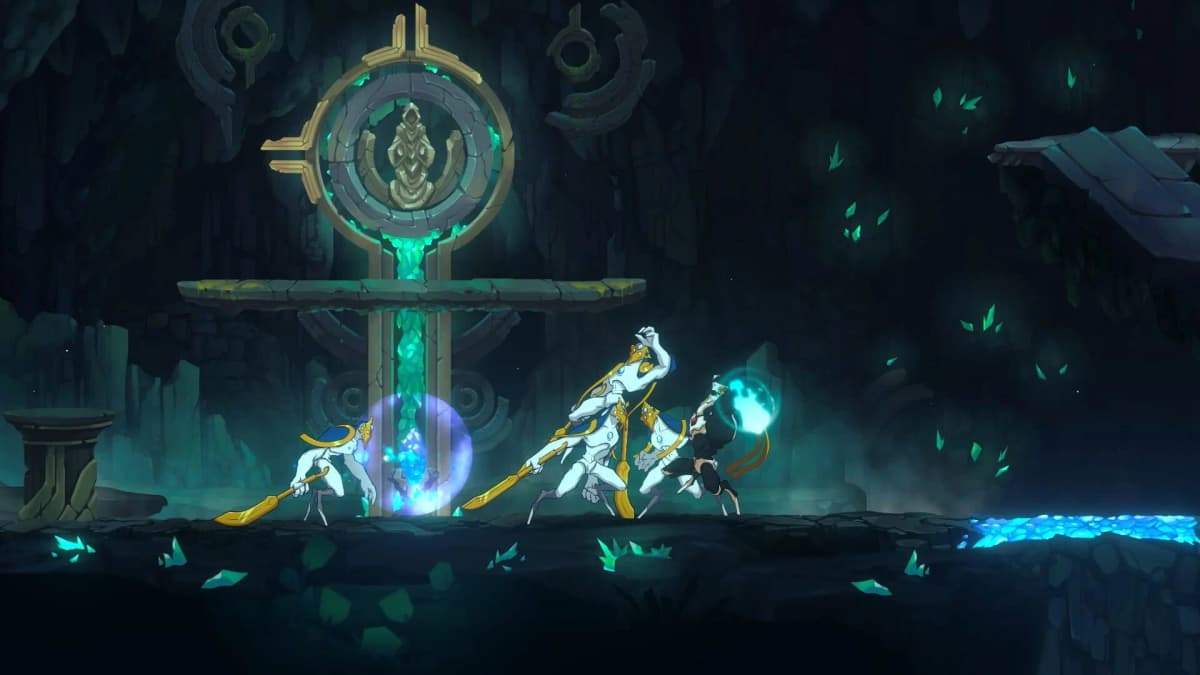
The first thing Fallen Tear does is flex its animation budget. Hira’s opening area, with its muted colors and painterly backgrounds, feels like you’ve wandered into a high-end animated series rather than a Steam indie. Every character is hand-drawn, and their movements have this fluid, slightly exaggerated style that immediately reminded me of the first time I saw Ori or Hollow Knight in motion.
Whenever I hear “fully hand-animated,” I brace for one specific problem: controls that feel a half-beat behind because the artist’s priorities overruled the game feel. Fallen Tear flirts with that issue, but mostly sidesteps it where it matters. Jumping, air-dashing, stabbing through a group of enemies – all of that feels snappy. The attack animations respect your inputs rather than locking you into big, floaty flourishes.
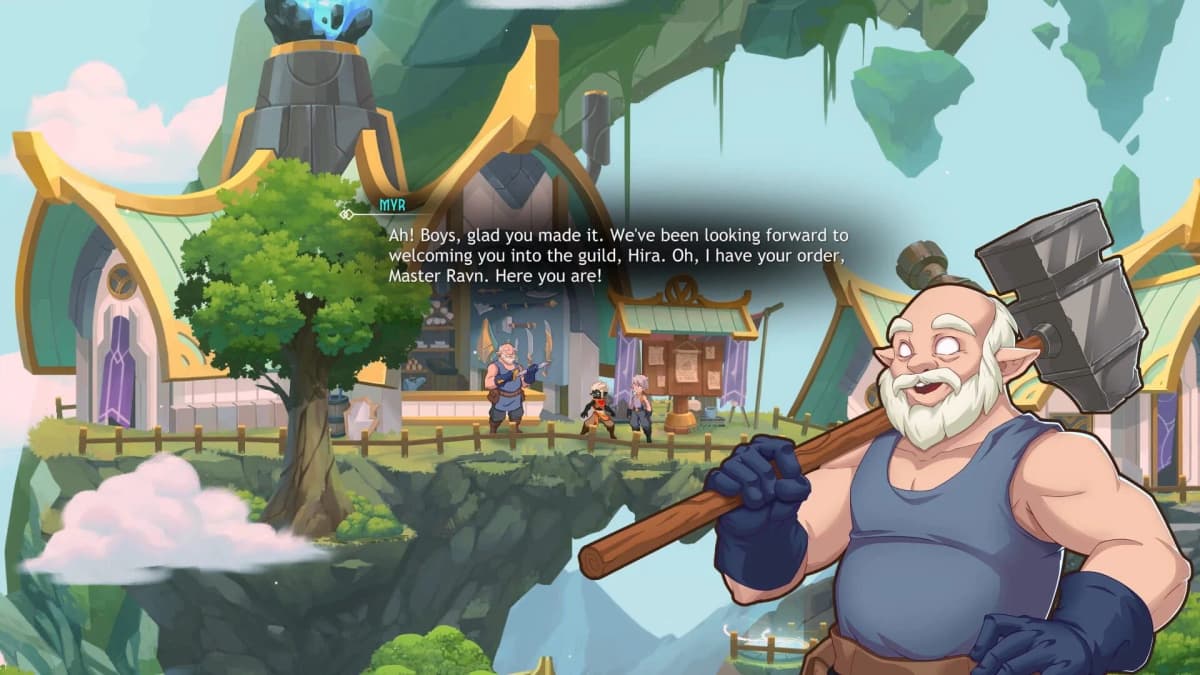
The only place I really felt the animation-first approach trip over itself was in the menus and dialogue interactions when I tried keyboard. I’d tap the interact key to advance a conversation and…nothing. Tap again. Then suddenly it would jump two lines. It’s not game-breaking, but when you’re reading a lot of voiced dialogue, those tiny delays are noticeable. On a controller those frustrations mostly vanished, which lines up with the game’s own recommendation to play with a pad.
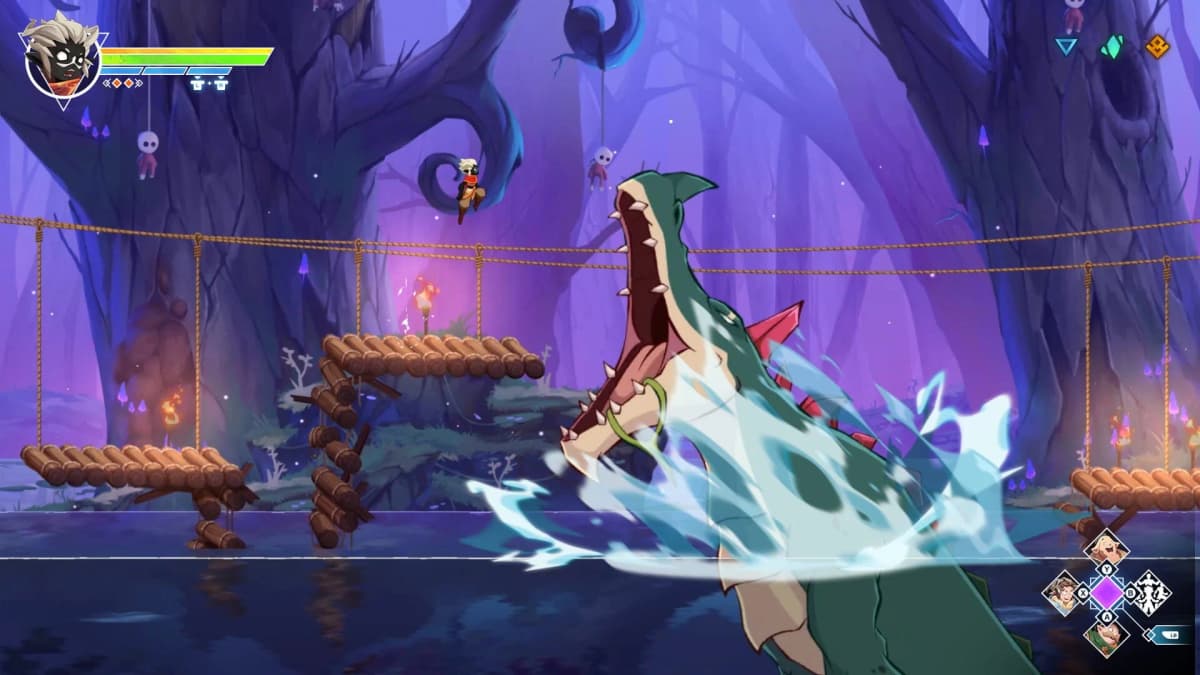
Outside of that, the game looks and feels ridiculously polished for an Early Access release. Enemy designs are readable but stylish, particle effects don’t drown the screen, and the parallax backgrounds make each region feel distinct even when you’re “just” running left to right. It’s the kind of art that will sell people on screenshots alone, but in motion it actually backs up the hype.
Combat and Platforming: Familiar Metroidvania Bones, Solid Execution
If you’ve played more than two Metroidvanias in your life, Fallen Tear’s core loop will feel immediately familiar. You explore a big interconnected world, pick up movement and combat upgrades, unlock shortcuts, and backtrack through older areas with new toys to open previously blocked paths. On paper it’s safe. In practice, it’s reassuring – this is a team that clearly studied the genre and decided not to reinvent the wheel.
Hira’s basic kit is light but effective: a snappy melee combo, a dodge with good invincibility frames, basic ranged tools, and a gradually expanding set of movement tricks. Early on I was making very “normal” jumps between platforms; a few hours later the game had quietly escalated me into chaining double jumps, air-dashes, and wall maneuvers in a way that scratched that classic Metroidvania brain itch without ever dipping into kaizo-platformer cruelty.
Combat has that nice middle-ground pace where regular trash enemies die fast if you’re paying attention, but sloppy play gets punished. One early room that stuck with me had a narrow vertical shaft full of spike-lined walls and flying enemies that like to hover right in your jump arc. The first time through, I tried to brute force it and got shredded. Going back after a short break, I found the rhythm: one enemy baited to attack, a clean dodge through, then a quick counter and hop to the next ledge. Nothing revolutionary, but it felt good in my hands.
Bosses, from what’s currently available, lean more toward pattern recognition and spacing than raw difficulty spikes. I didn’t hit anything on the level of a late-game Blasphemous nightmare, but I also never felt like I was just wailing on a giant HP sponge. Telegraphed attacks, clear “now’s your window” animations, and arenas that support both cautious and aggressive playstyles – it’s competent, confident design.
The Bond System: JRPG Party Vibes Without Party Clutter
Where Fallen Tear actually steps out of the Metroidvania comfort zone is its “Fated Bonds” system, and this is the piece that sold me on the game as more than just a pretty genre exercise.
Over the course of exploring the world, Hira meets a rotating cast of allies – the kind of JRPG-flavored personalities you’d normally expect to manage in a full party system. Instead of them following you around on-screen, you forge Bonds with them. Mechanically, that means you equip them like sub-weapons or special moves. In combat, triggering a Bond power effectively summons that character in for a quick, flashy assist attack or utility move, then they vanish again.
It’s a clever trick. You get all the emotional and narrative flavor of having a party – voiced banter, personal quests, different vibes depending on who you’ve grown close to – without cluttering the screen or slowing combat down with AI companions constantly getting in your way. You feel like the center of the story, but not the only person who matters in the world.
I particularly liked how Bonds are tied into exploration as well as combat. One ally’s power might open a traversal path or environmental interaction that another can’t, nudging you to experiment with different loadouts before heading into a new region. It gave me the same satisfaction I get in a classic Metroidvania when I realize, “Oh, that weird statue from three hours ago? I can finally do something with that now,” except the key this time is a person, not just a double jump upgrade.
On the flip side, the system is more stylish than radically deep – at least in this Early Access slice. You’re not reshaping entire builds around one character’s passive tree or juggling synergy-heavy cooldown rotations. It’s more like a set of powerful, character-flavored special attacks than a full-blown JRPG combat system slipped into a 2D action game. That’s not a complaint, but if you’re going in expecting Octopath-level party tinkering, temper that.
World Design and Progression: Ten Regions, Plenty of Threads
The Early Access build covers a surprisingly broad chunk of Hira’s journey: around 15–20 hours of content depending on how thoroughly you poke at side paths, spread across roughly ten interconnected regions with multiple bosses (including a few optional ones). There are clear thematic shifts between areas – from more grounded starting zones into stranger, more fantastical spaces – which helps the world feel like a real journey instead of just color-filtered reskins of the same level.
Structurally, Fallen Tear leans into the modern “hub plus spokes” flavour of Metroidvania. There are key settlements and recurring NPCs acting as anchors, with branching paths leading outward into more hostile territory. Shortcuts and warp points keep backtracking from being a chore, and the map does a decent job of nudging you toward the next main objective without smothering that feeling of, “Wait, what’s over there?”
One thing I appreciated is that the game rarely locks you into a single route. Hitting an obstacle you can’t immediately clear often means you have at least one other thread to pull on elsewhere. That flexibility kept me from ever feeling truly stuck, even when I’d hit the current edge of the Early Access story and was sweeping for missed secrets.
One thing I appreciated is that the game rarely locks you into a single route. Hitting an obstacle you can’t immediately clear often means you have at least one other thread to pull on elsewhere. That flexibility kept me from ever feeling truly stuck, even when I’d hit the current edge of the Early Access story and was sweeping for missed secrets.
🎮 Get This Game at the Best Price
Compare prices instantly and save up to 80% on Steam keys with Kinguin — trusted by 15+ million gamers worldwide.
*Affiliate link — supports our independent coverage at no extra cost to you
Story, Characters, and Voice Acting: Strong Cast, Safe Plot
Fallen Tear’s premise is squarely in familiar fantasy territory. Hira is a stranger with a mysterious curse, ancient evils are waking up, his past is shrouded in the kind of fog that practically screams “late-game twist.” If you’ve played a JRPG or two, you’ll probably be able to sketch the broad strokes of where the overarching narrative is headed.
Where it works is in the moment-to-moment character writing and the voice acting that props it up. The cast Hira meets along the way is where the script shows some teeth. They’re not wildly subversive archetypes, but they’re played with enough earnestness and nuance that I genuinely wanted to see their personal arcs through. A couple of early allies, in particular, had that “oh no, I care about you now” energy that had me doing side quests I could’ve technically ignored.
The voice work is honestly one of the loveliest surprises here. For an indie Metroidvania, “full voice acting” can mean anything from inconsistent amateur reads to a couple of marquee characters and a lot of silence. Fallen Tear lands much closer to the high end of that spectrum. Performances are clear, emotive, and rarely cross the line into melodrama. It makes spending time in dialogue-heavy hubs feel like a reward instead of a pacing slog.
The main story beats themselves, at least in this first half, are competent but not exactly mind-blowing. It’s the sort of “ancient curse, looming calamity, chosen-ish hero” setup that gets the job done but doesn’t fight for space in your memory the way the art and combat do. I never rolled my eyes, but I also rarely had the “oh damn” story reaction that the genre’s best can pull off.
Early Access State: Mechanically Complete, Narratively Halfway There
Here’s the odd tension at the heart of Fallen Tear right now: in terms of controls, systems, art, and performance, it already feels like a full release. In terms of narrative, it’s only giving you about half the journey.
The developers have been pretty clear that this Early Access build is essentially the first big half of Hira’s story. You get numerous regions, bosses, Bonds, and fully realized mechanics – this isn’t one of those “combat will be added later” prototypes. When the credits (or more accurately, the current stopping point) rolled for me, I had the strange sensation of having just finished a full game’s “Part 1,” not a vertical slice or teaser.
That structure makes Fallen Tear feel more like an extended, very polished demo of a larger narrative arc. I don’t mean “demo” in the sense of missing features; everything you can currently do feels intentional and thought through. But you are unquestionably being cut off mid-story. If you’re the kind of player who hates waiting between seasons of a TV show, that’s something to consider.
On the other hand, there’s a very practical upside: the Early Access version is currently discounted on Steam, and buying in now essentially locks in a cheaper ticket to the full ride when the complete release lands (currently projected for next quarter). If you’re patient, you can even grab it now at the discount and wait to play until it’s done; the build is stable enough that I don’t have many concerns about it collapsing under future patches.
Performance, Controls, and That Keyboard Delay
On the technical side, Fallen Tear behaved itself nicely on my system. Load times were short, I didn’t hit any crashes, and I didn’t run into glaring performance drops in busy combat or large areas. The art style helps here; this isn’t a 3D engine trying to melt your GPU, but 2D games can absolutely stutter if they’re not built well, and this one felt smooth throughout.
Controls are where I started to see some cracks, although they’re more “hairline fractures” than structural damage. With a controller, Hira responds fluidly. There’s a clear window on your dodge, attack chains cancel into jumps predictably, and air control feels tuned for precision platforming instead of floaty platformer nostalgia.
On keyboard, though, I consistently ran into small but annoying delays when interacting with NPCs or clicking through dialogue. Sometimes I’d have to tap the interaction key a couple of times before the next line would register, and occasionally it would then skip ahead too quickly. In combat and movement this wasn’t an issue – inputs there felt fine – but any time you’re dealing with lots of conversations, those micro-hiccups add up.
The game itself strongly suggests using a controller, and I agree with that recommendation. If you’re a die-hard keyboard-only player, you can make it work, but you’re not getting the best version of the experience right now. Hopefully that’s the kind of thing that gets ironed out during the Early Access window, because it feels like a fixable annoyance rather than something baked into the game’s DNA.
Who Fallen Tear: The Ascension Is For
After my time with Fallen Tear’s Early Access, here’s who I think will vibe with it:
- Metroidvania fans who prioritize feel and art: If tight movement, crunchy combat, and gorgeous 2D animation are your top checkboxes, this already clears them with room to spare.
- Players who like JRPG-style casts but don’t want party micromanagement: The Bond system lets you enjoy a big crew of allies and their personalities without drowning in menus.
- Early Access skeptics who hate buggy “prototypes”: This is one of the more complete-feeling EA launches I’ve played – it’s more “first half of a shipped game” than “work-in-progress sandbox.”
- Value hunters: With a launch discount and 15–20 hours of solid content already in, it’s an easy recommendation if you’re even mildly curious about the genre.
On the flip side, you might want to hold off if:
- You absolutely need the full story in one sitting and hate cliffhangers.
- You expected a wildly original, subversive narrative rather than a polished take on familiar fantasy beats.
- You refuse to use a controller and are sensitive to minor input quirks.
FinalBoss // Gear
Level up your setup
01Top-rated gaming headsetson Amazon→02High-refresh gaming monitorson Amazon→03Gaming chairson Amazon→04Discounted game keyson Kinguin→Affiliate links · As an Amazon Associate, FinalBoss earns from qualifying purchases.
Want to Level Up Your Gaming?
Get access to exclusive strategies, hidden tips, and pro-level insights that we don't share publicly.
Ultimate Reviews Strategy Guide + Weekly Pro Tips