
Fans Think Pokémon Pokopia Is Tied to Cinnabar Island — Here’s Why It Matters
Game intel
Pokémon Pokopia
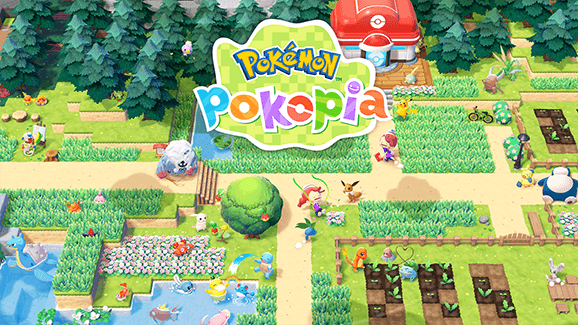
Pokémon’s first life simulation game, Pokémon Pokopia, will release on Nintendo Switch 2 on March 5, 2026. Playing as a Ditto that has transformed to look like…
Why this trailer actually matters – and why I’m paying attention
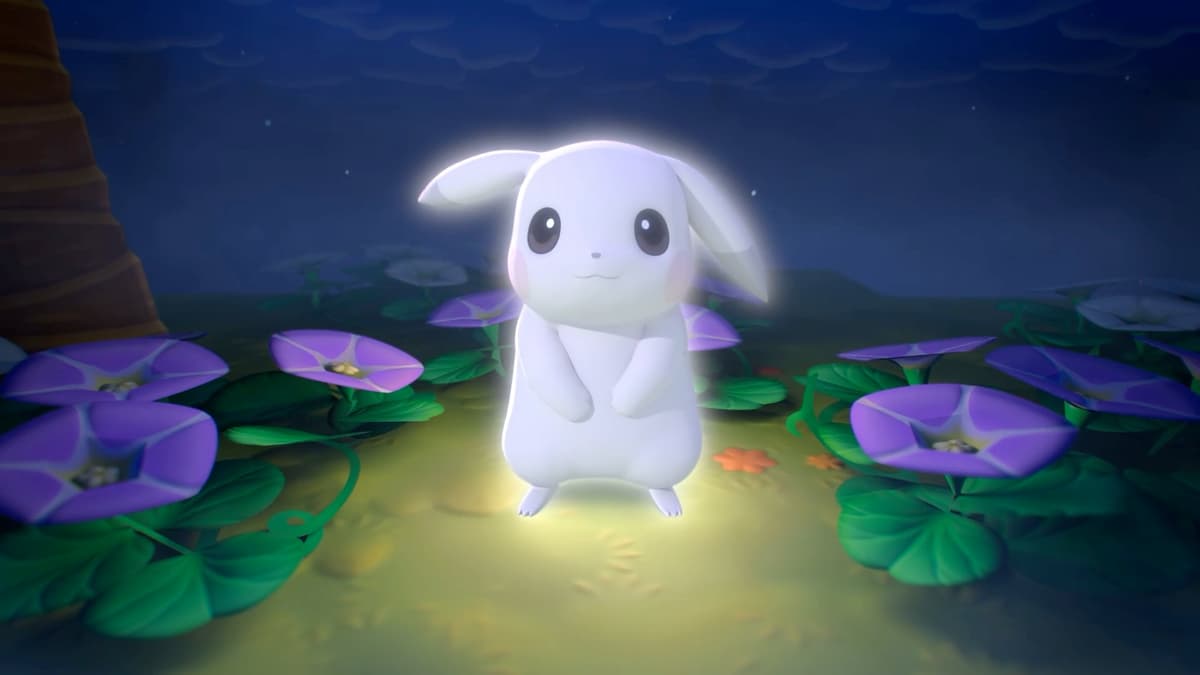
This caught my attention because Pokémon trailers rarely flirt with actual mystery like this. The extended Pokémon Pokopia trailer didn’t just show new mechanics; it dropped a string of visual cues – a devastated Pokémon Center, a Generation I Pokédex, and a pale “Peakychu” – that fans immediately stitched into a larger theory about the game’s place in franchise lore. When community detectives start connecting dots to Gen I locations like Cinnabar Island and the Pokémon Mansion, it’s worth listening: it means the developers might be inviting longtime fans to read between the frames rather than handing everything to us on a silver platter.
Key takeaways
- The trailer’s ruined Pokémon Center and Gen I Pokédex point toward deliberate Gen I callbacks, not random nostalgia.
- Fans think Pokopia could be set on a post-eruption Cinnabar Island because of volcanic imagery and the ruined mansion vibe.
- A Ditto protagonist who can assume a human-like form plus Professor Tangrowth hints at experiments, identity themes, and Ditto/Mew lore.
- This could be a bold narrative twist for a mainstream Pokémon title — or just clever marketing that leans on franchise mythology.
Breaking down the clues the trailer actually showed
Start with the simplest image: a wrecked Pokémon Center. That’s not the usual “battle-scarred area” aesthetic; it’s a very local, specific kind of decay. Pokémon Centers are franchise signifiers — seeing one destroyed reads as “this world has history.” The Generation I Pokédex is the next nudge. A modern game plastering Gen I hardware into frames is rarely incidental. Then there’s the oddball detail fans have latched onto: a white “Peakychu” (the trailer label is awkward, but the creature appears to be an altered Pikachu-like form). That visual, paired with a Ditto protagonist who can transform into a humanoid figure, fuels theories about experiments, mutations or timeline weirdness.
Professor Tangrowth — a new figure seen in the footage — matters because professors in Pokémon games often anchor lore and region history. Pair a professor whose name literally evokes an existing Pokémon with Ditto-centric storytelling, and people naturally reach for the series’ longstanding Ditto/Mew theories: Ditto as a failed clone, Ditto’s stretch-and-morph biology, and the franchise’s history of secret labs (see: Pokémon Mansion).
Why fans are pointing at Cinnabar Island
Cinnabar Island is an obvious suspect because of how it’s been framed in red: volcano, experiment-heavy Pokémon Mansion, burned-out structures. If Pokopia’s landscapes include ash-scarred coasts, collapsed research facilities and Gen I tech, Cinnabar fits the aesthetic and the narrative hooks. Fans are connecting the ruins in the trailer to Pokémon Mansion’s lore — laboratories, fossil research, and the shadow of past experiments — and suggesting Pokopia could be exploring the long-term fallout of those events.
That said: correlation isn’t confirmation. A ruined mansion + volcano + Gen I props could be purposeful nostalgia, a thematic echo of “what happens when humans and Pokémon experiments go wrong,” or just visual shorthand for “this story will be darker.” I’m skeptical that every single easter egg is a literal map pin. Developers love the ambiguity because it fuels community engagement.
Want to Level Up Your Gaming?
Get access to exclusive strategies, hidden tips, and pro-level insights that we don't share publicly.
Ultimate Gaming Strategy Guide + Weekly Pro Tips
What this might mean for players — and where to be skeptical
If Pokopia actually sets part of its story in a post-eruption Cinnabar-like place and leans into Ditto experiments, we could be looking at one of the more emotionally weighty Pokémon narratives in years: environmental consequences, ethical questions about cloning/experimentation, and a protagonist who literally questions identity every time they shift form. For players who grew up on Red and Blue, that’s powerful nostalgia with teeth.
But there are red flags. Nostalgia can be weaponized to sell preorders and merch; callback-heavy marketing often promises depth that the final game doesn’t deliver. Omega Force — the studio attached to Pokopia and known for large-scale, action-forward projects — could be bringing a different mechanical lens to Pokémon. That might mean interesting gameplay shifts (crafting, building, Ditto transformations), or it could mean a focus on spectacle over subtle storytelling.
Looking ahead — why March 5, 2026 matters
Pokopia’s March 5, 2026 release on Switch 2 gives fans time to comb trailers and proddatabases for clues — which the community will absolutely do. If the developers intend Pokopia as a deliberate tie-in to Gen I mysteries, they’ll either confirm it before launch or let the silence fuel speculation. Either way, expect theorycrafting to dominate the pre-release conversation, and keep an eye on smaller details in future footage: map names, NPC dialogue, and any direct mentions of “Mansion,” “Cinnabar,” or fossil research.
TL;DR
The Pokopia trailer dropped several Gen I-flavored bread crumbs that fans have braided into a narrative about a post-eruption Cinnabar Island and Ditto-centric experiments. It’s compelling, and it could deliver one of Pokémon’s darker, more lore-heavy stories — or it could be marketing veneer. Either way, this is the kind of announcement that turns a trailer into a community investigation, and that’s worth watching.