
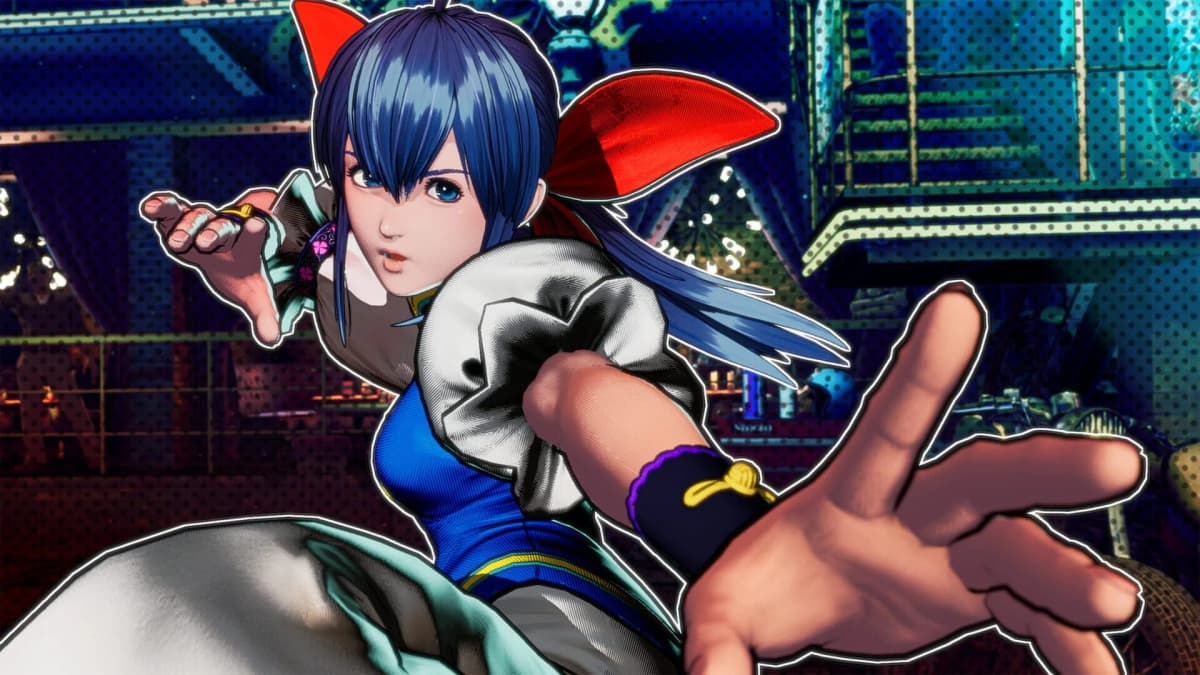
Two DLC slots, one announcement, and zero Fatal Fury characters. That is the relevant fact behind SNK’s September 9 reveal of Manjiro “Mikey” Sano and Ken “Draken” Ryuguji from Tokyo Revengers for Fatal Fury: City of the Wolves. Both fighters arrive on October 22 as Season 3 DLC, and SNK has emphasized that they are separate, fully independent playable characters rather than a tag-team package.
That distinction makes the decision worse, not better. Mikey and Draken are two complete roster slots. They will carry their own move sets, matchup demands, animations, balance requirements, and player bases. Calling them one crossover because they share a franchise would be dishonest accounting. SNK has chosen to spend two character releases at once on guests, and City of the Wolves has reached the point where that choice damages the roster’s identity.
Guest characters belong in fighting games. They create an immediate media event, pull in fans who would otherwise ignore a new release, and can offer valuable mechanical variety. The problem is that SNK has started treating external recognition as a substitute for building confidence in its own fighting-game history. Fatal Fury should be using DLC to make South Town feel deeper. Instead, it is increasingly using the roster as a billboard for whoever has the largest audience outside it.
Table of Contents (5)
The Mikey and Draken reveal counts as two decisions
SNK presenting this as the first simultaneous release of two DLC fighters is clearly meant to signal scale. It does. It also signals a sharper form of roster dilution than a single guest slot would. A one-character crossover can function as a controlled novelty. A two-character drop changes the season’s center of gravity.
The issue is not that Mikey and Draken lack a place in a fighting game. Their rivalry, street-fighting presentation, and distinct personalities give SNK plenty to work with. The company has said the pair has been adapted into South Town with unique combat styles, and that matters. A fully realized fighter is far more defensible than a costume, a menu cameo, or a shallow promotional skin.
But a well-made guest remains a guest. The question is whether the game has enough room to keep expanding outward without losing the reason Fatal Fury fans showed up in the first place. On October 22, the answer gets harder to avoid: SNK is prioritizing two outside characters simultaneously while Season 3’s full balance between returning Fatal Fury fighters, new original combatants, and guest slots remains unclear.
That uncertainty does not excuse the choice. It makes the choice more frustrating. A company asking players to invest in an ongoing roster should make it obvious that its own franchise still has a visible future inside that roster. Right now, the clearest Season 3 statement is a double crossover.
City of the Wolves already made guests part of its brand
This argument did not begin with Tokyo Revengers. Fatal Fury: City of the Wolves already opened its doors to Chun-Li and Ken, Cristiano Ronaldo, Salvatore Ganacci, and Kenshiro. Cristiano Ronaldo’s inclusion marked the first time a real-life athlete entered a mainline fighting game, which was never going to read as a quiet, series-faithful roster decision. Salvatore Ganacci pushed the same celebrity-first logic even further.
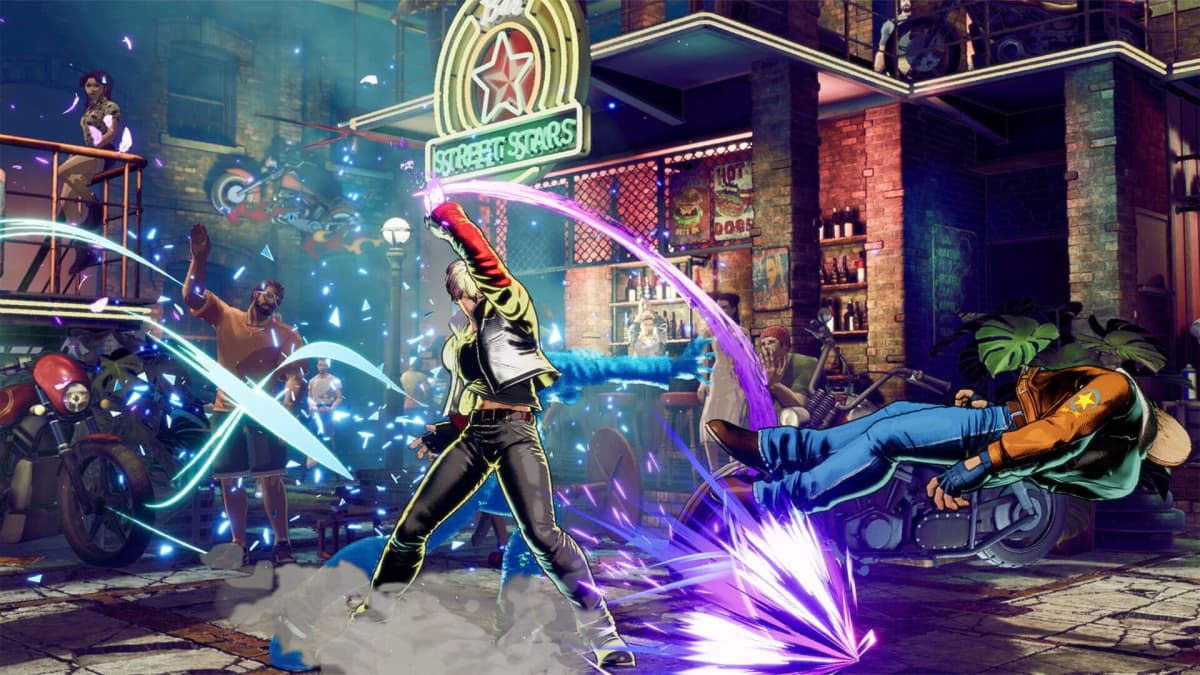
- Chun-Li and Ken establish a crossover lane built around instantly recognizable fighting-game icons.
- Cristiano Ronaldo and Salvatore Ganacci establish a celebrity lane built around attention beyond the fighting-game audience.
- Kenshiro establishes an anime and manga guest lane.
- Mikey and Draken expand that anime and manga lane into a simultaneous two-character release.
Each addition can be defended in isolation. That is how roster drift works. Nobody needs to argue that every individual guest is a disaster. The problem emerges when the collection begins to look more deliberate than the series representation around it. Fatal Fury’s own cast gradually becomes the connective tissue holding together a showcase of outside properties.
That is an upside-down use of a legacy fighting-game brand. Fatal Fury should be the main event. Guests should be the occasional reason a lapsed player checks the trailer, downloads an update, or learns a fresh matchup. Once guests become the most reliable headline, SNK has trained the audience to care about the logo on the collaboration card more than the game beneath it.
The practical case for guests is real
There is a reason publishers keep pursuing crossover characters. A legacy-character trailer mostly reaches people already following the game. Mikey and Draken can bring an established Tokyo Revengers audience into the conversation. That is useful for a fighting game that needs active matchmaking, regular discussion, and a reason for players to return after the initial release window.
Mechanically, two independent fighters can also give the competitive side of the game more to work with. Separate movesets mean separate matchup knowledge, separate counterplay, and separate tournament experimentation. If SNK has built Mikey and Draken with enough care, they can add meaningful variety rather than simply inflate the character-select screen.
Those benefits are legitimate. They still do not erase the opportunity cost. Every DLC fighter occupies development time, balance testing, marketing space, and a place in the public story of the game. A guest is never free merely because the announcement is exciting. The lost alternative is a Fatal Fury returnee, a deeper original addition, or a character who can strengthen the continuity that makes South Town more than a setting rented out for crossovers.
City of the Wolves launched on April 24, 2025 for PlayStation 5, PlayStation 4, Xbox Series X|S, Steam, and the Epic Games Store. By October 22, 2026, it will have been building its post-launch identity for more than a year. That is ample time for a DLC strategy to stop feeling experimental and start feeling intentional. The Tokyo Revengers pair makes SNK’s intention look uncomfortably clear.
A healthy Fatal Fury guest cadence has a hard limit
Fatal Fury does not need to abandon guest characters. It needs rules. SNK has not announced an official numerical cap, but the healthy standard is obvious: guests must remain a minority of the total DLC roster, and a season should ordinarily carry one major guest slot at most.
That last part matters. A themed pair still counts as two slots. Mikey and Draken are not a single boss encounter, a shared stance character, or a cosmetic bundle. They are two fighters. Treating a two-person crossover as if it fits inside a one-guest-per-season policy would be another way to dodge the actual roster math.
| Roster decision | Tokyo Revengers release | Healthy Fatal Fury standard |
|---|---|---|
| Number of guest slots | Two separate fighters released together | One guest fighter per season as the default ceiling |
| Role of the crossover | Major Season 3 headline | Occasional event positioned around a clearly active Fatal Fury pipeline |
| Series identity | Outside-IP recognition drives the announcement | Legacy returnees and original fighters remain the core sales pitch |
The better model is simple. Announce one guest, then make the next major DLC beat a Fatal Fury character with real weight behind them. Give players a clear sense that the roster is moving through the series’ own history rather than skipping past it. If SNK wants to release two fighters at once again, that should be reserved for a substantial internal pairing whose arrival deepens the game’s world and relationships.
SNK should also be more direct about the composition of each season before turning the next crossover into the headline. Players do not need every name revealed months early. They do need to know whether they are buying into a Fatal Fury season with a guest accent or an externally curated season that happens to use Fatal Fury mechanics.
The premium package makes the identity issue harder to dismiss
The physical Deluxe Edition positioned Fatal Fury: City of the Wolves as a premium collector release: PlayStation 5 only in North America and Europe, priced at $79.99 or €79.99, with the base game, Season Pass 1 product code, SteelBook, two-disc soundtrack, 100-plus-page artbook, collector’s box, and two sticker sheets. That package sells a world, a cast, an aesthetic, and a piece of SNK history.
It does not give buyers ownership over every future roster choice. It does create a higher expectation that the game will protect what made the product worth collecting. A collector’s edition for Fatal Fury carries different cultural weight when its live-game identity keeps tilting toward celebrities and outside franchises. The more guest-heavy the roster becomes, the less coherent that premium promise feels.
There is nothing inherently wrong with putting Mikey and Draken in South Town. There is a clear problem with making them the latest evidence that SNK’s biggest DLC swings are increasingly attached to someone else’s universe. The October 22 release will be a meaningful test of whether Season 3 restores the balance with visible Fatal Fury representation or confirms that the guest roster has become the point.
FinalBoss // Gear
Level up your setup
01Top-rated gaming headsetson Amazon→02High-refresh gaming monitorson Amazon→03Gaming chairson Amazon→04Discounted game keyson Kinguin→
Affiliate links · As an Amazon Associate, FinalBoss earns from qualifying purchases.
Want to Level Up Your Gaming?
Get access to exclusive strategies, hidden tips, and pro-level insights that we don't share publicly.
Ultimate Gaming Strategy Guide + Weekly Pro Tips