

Fibbage Card Game Review: Great Bluffs, Weak Pacing
Fibbage Card Game has one problem that cuts straight through its best idea: a bluffing game cannot afford to make the truth recognizable before anyone gets to vote.
That flaw does not sink Jackbox Games, Inc.’s physical tabletop adaptation of Fibbage, the bluffing party game that first arrived digitally in 2014. At its reviewed $19.99 price for this boxed edition, it remains a sharp, social party game for three to six players, and the basic format still creates the kind of gleeful suspicion that turns harmless trivia into an accusation. The trouble is structural. The revealer knows the answer, writes it down, and then has to hope the group cannot identify that handwriting once every option reaches the table.
That is a lot of pressure to put on a dry-erase board.
- Fibbage Card Game keeps the essential formula intact: read a missing-word prompt, invent a convincing lie, vote for the truth, and score by fooling people or identifying the real answer.
- The physical box is properly equipped for the job: 300 prompt cards, six dry-erase markers, boards, and cardboard voting and point tokens give it the shape of a complete tabletop package.
- The revealer role is the weak link: one player becomes the prompt reader and answer handler, creating both pacing friction and a potential handwriting tell.
- Gallipoli has the stronger systems story: suppression, panic, restricted class slots, and specialized support roles give teamwork real mechanical weight.
- The call is simple: Fibbage Card Game is good party-night ammunition for the right group, while Gallipoli is the more convincing recommendation for players who want a game’s rules to force cooperation.
The Bluff Is Still the Star
Fibbage Card Game understands the real appeal of its premise. Knowledge helps, but knowledge is not the point. A strange fact with one missing piece becomes a stage for improvised nonsense, calculated plausibility, and the small social victories that come from making a ridiculous answer sound just credible enough. The correct answer is only one choice among several. That makes every vote a judgment of both trivia instinct and human behavior.
The tabletop conversion preserves that loop with admirable discipline. One player takes the revealer role, draws a card, and reads a partially blanked prompt. Everyone else writes a completion designed to fool the room. The revealer also writes the actual answer, which joins the shuffled options before the group votes. Points come from selecting the truth and from persuading other players to select your lie.
That is Fibbage in its purest form: the answer matters, but the confidence behind an answer matters more. A convincing lie creates the game’s funniest tension because it gives every player a reason to doubt a fact they may have understood immediately. The best rounds turn a single blank into a miniature contest of nerve, and the box does not overcomplicate that with extra subsystems or tabletop clutter.
That restraint matters. A physical adaptation of a digital party game can easily become overdesigned, as if cardboard has to justify its existence by adding side rules nobody asked for. Fibbage Card Game avoids that trap. It keeps the read, write, reveal, vote structure intact and trusts the social friction to do the work. For a party game, that is usually the correct instinct.
The default six-round structure is also a sensible fit. Fibbage is strongest when it has time to let rivalries build, yet it does not need an endlessly escalating ruleset to stay interesting. The scoring remains easy to grasp because every successful bluff and every correct vote has a visible payoff. Nobody needs to master a complicated board state. They need to read a room.
The box contents help support that pick-up-and-play feel. With 300 prompts, six dry-erase markers, boards, and cardboard voting and point tokens, this does not feel like a flimsy novelty item spun out of a better digital game. It feels like a complete package aimed squarely at teen and adult game nights, where setup needs to be painless and the pitch needs to land in one sentence.
Handwriting Turns Into a Mechanical Problem
The physical format gives Fibbage Card Game its personality, then asks it to survive the limits of that format. In a digital version, typed answers flatten everyone into the same visual presentation. At a table, handwriting has personality. Letter shapes, spacing, punctuation, capitalization, and even the way someone tries to disguise all of those things can become evidence.
That may sound like harmless table banter. It is more serious than that. Fibbage depends on uncertainty. The revealer’s correct answer has to compete on equal terms with the group’s lies, because the vote only works when players believe the truth could plausibly be any of the displayed options. If the revealer’s writing is obvious, the round stops being a bluffing contest and becomes an identification exercise.
That is the design problem in one sentence. The game asks one player to hide the truth while using one of the most recognizable forms of input imaginable. In the digital Fibbage, anonymity is automatic. Here, anonymity becomes a social favor. Everyone has to agree not to notice what they can plainly notice.
The irony is brutal: the game asks a person to conceal the answer while using the most recognizably personal form of input available. Dry-erase boards make the game tactile and immediate, but they also expose the mechanism that digital presentation quietly solved.
That issue is not a deal-breaker for every group. Some tables will shrug, laugh, and keep moving. Some will treat handwriting recognition as part of the chaos and accept that a round occasionally tilts sideways. Others will probably improvise a house rule around how answers are presented. But a game should not need its players to sand down a core vulnerability before its central bluff works cleanly.
That is why this flaw lands harder than a normal party-game quirk. It does not merely create a funny accident. It threatens the fairness of the round’s most important decision. When a design lives and dies by deception, anything that makes the truth easier to spot than a good lie deserves to be called what it is: a structural weakness.
Pacing Depends Entirely on the People at the Table
Fibbage Card Game works best with players who enjoy creating a lie almost as much as they enjoy exposing one. That is why the three-to-six-player range matters. Three players can run the structure, but a larger group gives the vote more noise, more competing stories, and more chances for a clever answer to disappear among plausible alternatives. Four to six players is where the format has enough room to breathe.
Every round has a natural pause: prompt reading, answer writing, arranging the options, voting, and scoring. None of those steps is difficult. Together, they make Fibbage more deliberate than a party game that can instantly collect answers and calculate results. A decisive group will keep the rhythm moving. A hesitant group can stretch a single blank into a committee meeting about whether an answer should be clever, safe, absurd, or believable.
That pause between inspiration and payoff is the game’s second real issue. The digital Fibbage can hide some of its downtime behind screens, prompts, and fast presentation. The card game cannot. Every beat is visible. You feel the room waiting for pens to move. You feel the shuffle into reveal order. You feel the slight drag when one person is still thinking while everyone else has already committed to a lie.
The revealer carries additional weight here. That player reads the prompt, enters the correct answer into the mix, and helps steer the reveal. Rotating the role prevents one person from becoming the table’s permanent moderator, but rotation does not erase the asymmetry. Anyone who wants every turn to involve writing a lie and trying to sell it may find the revealer position less satisfying, because it turns one seat at the table into a light host role.
That matters more than it might sound. Party games live on equal enthusiasm. If one player is doing administration while everyone else gets the fun of fabrication, the room can still have a good time, but the design is spending social capital. The group has to be generous enough to carry that asymmetry instead of resenting it.
This is why Fibbage Card Game is a focused social game rather than background entertainment. It wants a group willing to read, write, fabricate, and pay attention. Give it expressive players who enjoy bluffing, and the 300 prompts become raw material for repeated evenings. Put it in front of a disengaged or impatient crowd, and its pauses become much louder than its punchlines.
FinalBoss // Gear
Level up your setup
01Top-rated gaming headsetson Amazon→02High-refresh gaming monitorson Amazon→03Gaming chairson Amazon→04Discounted game keyson Kinguin→Affiliate links · As an Amazon Associate, FinalBoss earns from qualifying purchases.
Want to Level Up Your Gaming?
Get access to exclusive strategies, hidden tips, and pro-level insights that we don't share publicly.
Ultimate Reviews Strategy Guide + Weekly Pro Tips
Gallipoli Gives Teamwork Teeth
Gallipoli makes a useful contrast because it also asks players to rely on one another, yet it embeds that reliance into the rules instead of leaving it to social energy. BlackMill Games’ fourth World War I title moves its fighting to the Middle Eastern front, including locations such as Anzac Cove, and its strongest decision is to make fire discipline as important as direct kills.
Suppression sits at the center of that design. In practice, that means incoming fire is not only a threat because it might kill you. It can also degrade your ability to fight back. Sustained fire can push a player into panic mode, blurring vision and ruining steady aim. Experience points are awarded for laying down suppressive fire, so pinning an enemy has value even before anybody drops. A lane denied to the other team counts as progress.
That system creates a harsher battlefield rhythm than a simple run-and-gun shooter. Going prone behind cover helps players resist and recover from suppression, while careless exposure invites punishment that reflex alone cannot erase. The result is a match flow built around pressure, positioning, and timing rather than individual heroics.
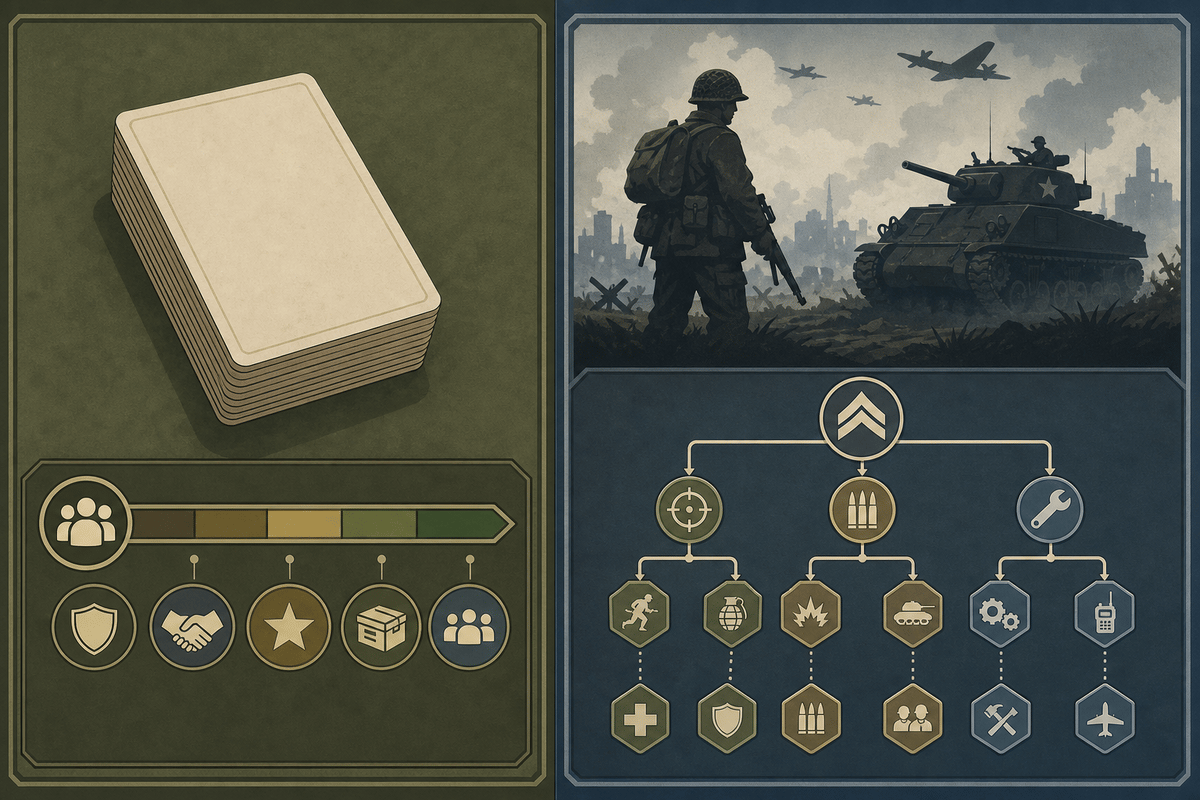
The class structure extends that logic. Gallipoli adds World War I-era roles such as stretcher bearer, ammo bearer, heavy machine gunner, and bomber. The stretcher bearer can build med stations and heal or revive squadmates while advancing. The ammo bearer keeps allies supplied through dropped ammo boxes or even a fresh magazine. The bomber brings grenades and improvised explosive devices made from fictional metal food tins. Each of those roles does more than decorate the class menu. Each creates a reason for a squad to move and survive as a unit.
Even the weapon behavior supports the same idea. Hip-firing a light machine gun is ineffective because the barrel swings wildly, the shots scatter, and that fire does not panic opponents. In other words, the game does not merely tell players to act like part of a team. It makes sloppy lone-wolf play mechanically inferior.

Gallipoli also protects its role ecosystem by limiting most classes, with rifleman and engineers as the key exceptions. Only one sniper is allowed per team, and team killing stays active with penalties attached. Those are not decorative realism touches. They are control mechanisms that stop a match from collapsing into a pile of identical kits and consequence-free gunfire.
That is the difference between teamwork as a slogan and teamwork as a system. Fibbage Card Game asks players to meet it halfway with the right mood, the right pace, and a willingness to ignore a design leak. Gallipoli forces cooperation through suppression, roles, and battlefield penalties. One game depends on the group. The other makes the group matter through rules.
Who Each Game Is For
Fibbage Card Game belongs with groups of three to six who enjoy writing jokes, constructing believable nonsense, and arguing over a suspiciously convincing answer. Its 300 prompts, dry-erase boards, and straightforward scoring make setup accessible, while the bluffing loop gives every round a clear purpose. It is especially effective when the players are willing to commit to the lie rather than merely hunt for obscure facts.
It is also best treated as a deliberate activity, not something to toss onto a table while half the room is distracted. The people playing need to care enough to read prompts cleanly, write quickly, and stay engaged during reveals. If that sounds obvious, it is only because party games often get graded on a generous curve. Fibbage Card Game asks for more focus than a lot of boxed crowd-pleasers, and whether that feels charming or cumbersome depends entirely on who is sitting down.
Skip Fibbage Card Game if your group hates pauses, dislikes writing by hand, or wants every player to have an identical job each turn. The revealer’s role and the risk of recognizable handwriting are not tiny quirks. They sit at the heart of the game’s deception engine.
Gallipoli is the more compelling choice for players who want class roles, squad support, weapon behavior, and suppression to shape every push. Its panic system will punish lone-wolf aggression, and that is precisely why its matches have force. The game asks for patience, positioning, and a willingness to make space for somebody else’s advance.
Was this review useful?
Fibbage Card Game Review: Great Bluffs, Weak Pacing
Fibbage Card Game is a good party game with a real structural flaw. The conversion preserves the digital game’s sharp bluffing loop, provides a substantial 300-prompt package, and can make a game night much better when the group brings creativity and attention. Yet the revealer role slows the momentum, while handwriting can expose the very answer that should remain hidden. The jokes land, the lies work, and the physical presentation is appealing; the central deception simply deserves a cleaner disguise.