
Three to five hours gives you a useful sample of Final Fantasy Resonance’s opening battles and character progression. That is the estimated length of its Chapter 1 demo, making it the most practical way to judge whether reading the turn-order timeline and setting up weakness combos feels satisfying before buying.
Square Enix’s first HD-2D Final Fantasy combines pixel art with three-dimensional environments, lighting and effects. It is a standalone, single-player RPG with no gacha mechanics or microtransactions, so your decision comes down to the story, combat and progression rather than an ongoing mobile-style commitment.
Table of Contents (4)
How the timeline and Break system work
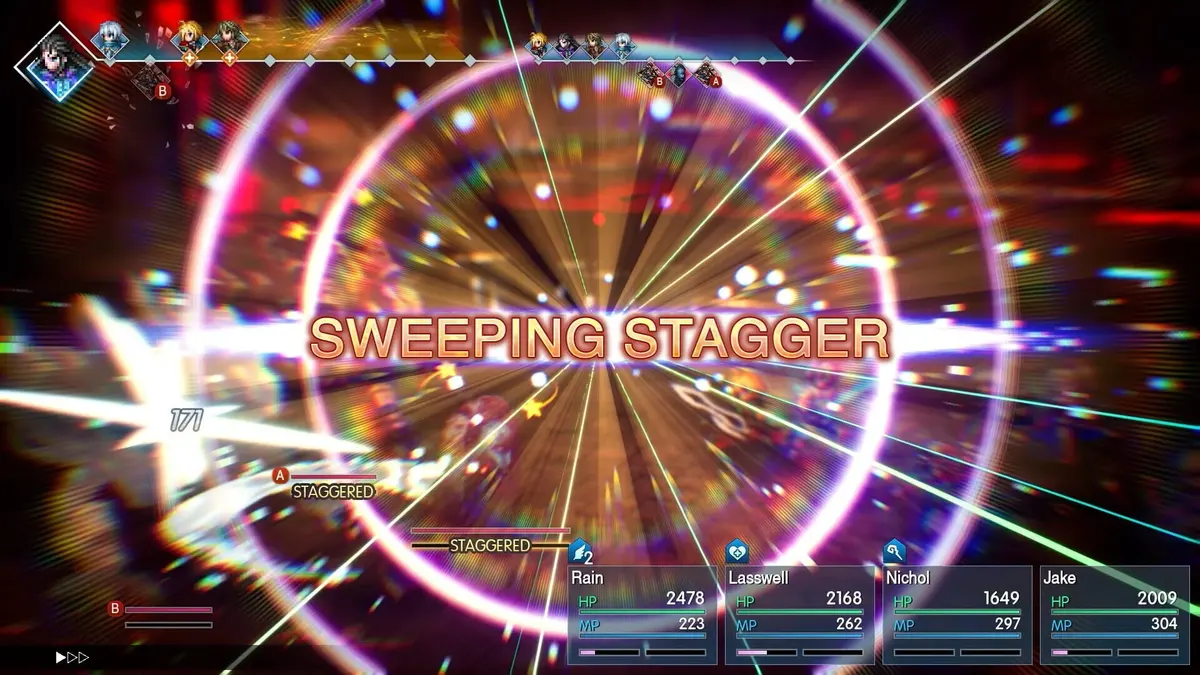
Combat uses traditional command-based turns rather than Active Time Battle. A timeline at the top of the screen shows upcoming allied and enemy actions, giving you the information needed to choose targets and fit recovery around approaching enemy turns.
Hitting an enemy’s elemental weakness reduces its stagger gauge. Empty that gauge to trigger Break: the enemy becomes staggered and takes extra damage. The practical priority is to match attacks to weaknesses when setting up the opening, then use your heavier damage abilities while the target is vulnerable.
Target selection matters because staggering every enemy in a turn triggers a Resonance attack, a cinematic Vision special move. In a group encounter, look across the whole enemy lineup before concentrating every action on one target. An enemy left unstaggered prevents that all-enemy trigger.
Spells can target one enemy or the entire enemy group, but the all-target version has reduced effectiveness. Use single-target casting when you need a stronger focused hit; consider all-target casting when spreading weakness damage helps set up the group-wide stagger condition.
Keep defensive decisions tied to the visible timeline, especially against bosses. Do not budget your survival around an assumed skipped enemy turn: preserve the healing or revival action you need while preparing the Break window. Phoenix Downs revive fallen party members, while Fina’s healing role gives her a different priority from your main damage dealers.
Visions shape each party member’s abilities
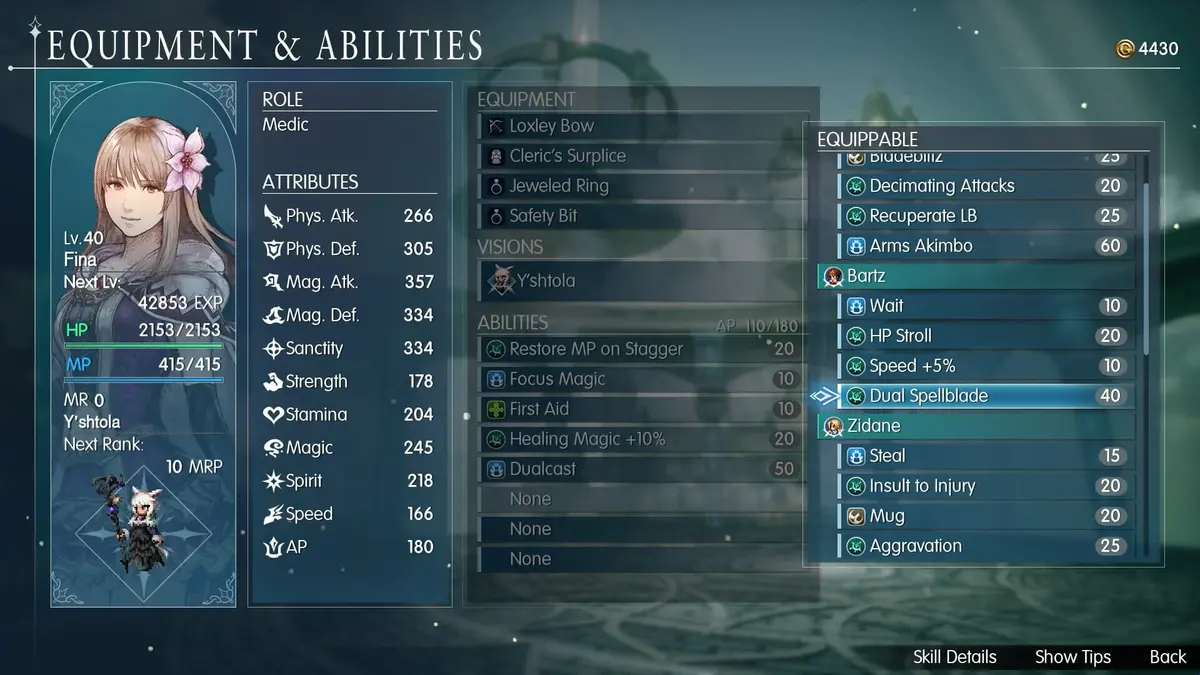
Each party member equips one Vision, an equippable partner with its own abilities and separate progression. The roster includes Cloud Strife, Terra, the Warrior of Light, Zidane, Noctis and Squall Leonhart. These characters affect your combat options rather than serving only as visual cameos.
Magical shards level Visions and unlock or improve their abilities. When choosing where to spend them, consider the elemental coverage and party role the Vision supplies. A new weakness-hitting ability can help create a Break opportunity; additional damage on an element the enemy resists will not solve the same problem.
Build around the character as well as the equipped Vision. Fina primarily handles healing, with archery and light abilities also available, so assigning her every offensive task can compete with the recovery your party needs. In the full game, new Visions are acquired at vision sanctums through quiz-like questions about Final Fantasy characters.
What Chapter 1 lets you evaluate
The demo covers the opening through the end of Chapter 1, including the Wind Shrine and a boss named Aether. It introduces Rain, an airship squadron commander from the Kingdom of Grandshelt, and the opening party’s combat roles.
The demo caps progression at character level 15 and Mastery Rank 5. Use those limits as a stopping point rather than grinding in search of later systems. The chapter can show whether you enjoy managing turn order, elemental coverage and Vision abilities, but it cannot represent the full progression curve.
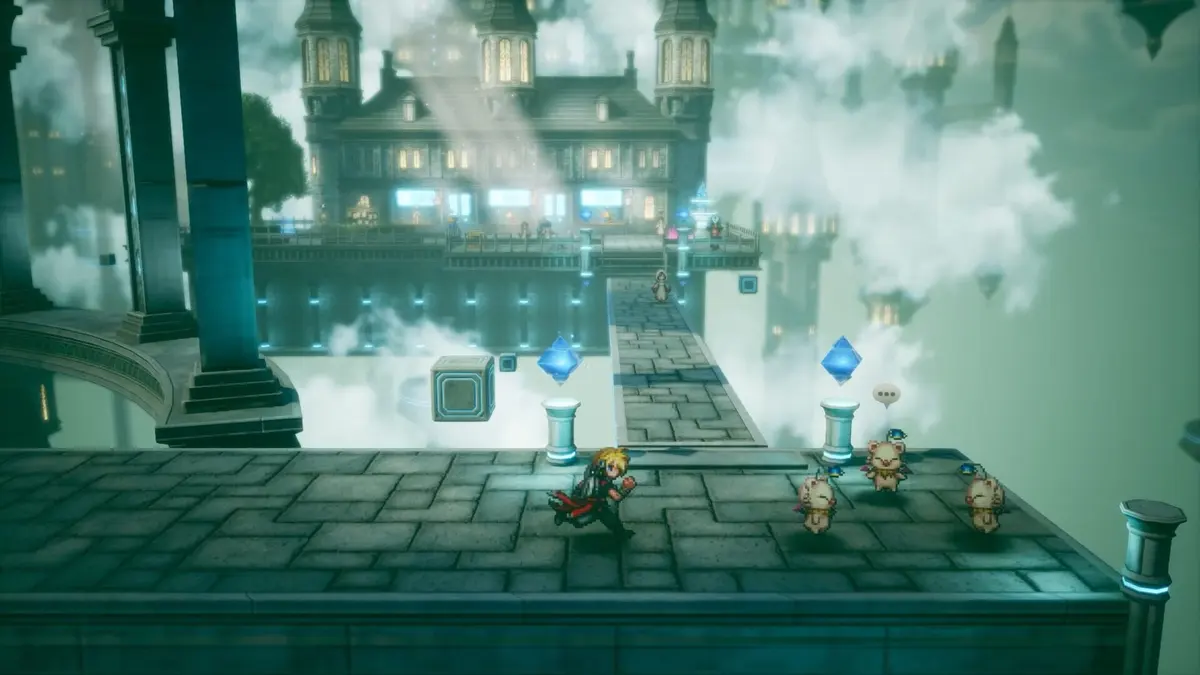
During exploration, the minimap flashes red shortly before a random encounter. That warning is useful for noticing how often travel transitions into combat and whether the encounter rhythm suits you. The full game also includes Chocobo travel, airships and Espers.
For purchase planning, the pre-launch playtime estimate is 20-30 hours for the main story and up to about 70 hours with extra content. Treat the demo as a sample of the opening systems rather than a proportional preview of everything that longer playtime contains.
Platforms, release dates and where to try the demo
The free Chapter 1 demo is available across the listed console and PC platforms. The main launch date is October 22, 2026; Steam’s Japanese listing uses October 23.
| Platform | Full-game release |
|---|---|
| PlayStation 5 | October 22, 2026 |
| Xbox Series X|S | October 22, 2026 |
| Nintendo Switch | October 22, 2026 |
| Nintendo Switch 2 | October 22, 2026 |
| PC — Xbox on PC | October 22, 2026 |
| PC — Steam | October 22, 2026; October 23 in Japan |
On PC, use the demo to assess how the HD-2D lighting and effects run on your own hardware and how comfortably you can read the battle timeline. If you are choosing between Nintendo Switch and Nintendo Switch 2, compare the same opening area and battle on the screen you expect to use; the shared art style alone does not establish a performance advantage.
Demo save data carries into the full game. For a straightforward continuation, play the demo on the platform and PC storefront where you intend to buy, rather than planning your purchase around moving that save elsewhere.
FinalBoss // Gear
Level up your setup
01Top-rated gaming headsetson Amazon→02High-refresh gaming monitorson Amazon→03Gaming chairson Amazon→04Discounted game keyson Kinguin→Affiliate links · As an Amazon Associate, FinalBoss earns from qualifying purchases.
Want to Level Up Your Gaming?
Get access to exclusive strategies, hidden tips, and pro-level insights that we don't share publicly.
Ultimate Guide Strategy Guide + Weekly Pro Tips