
Table of Contents (9)
Brave Exvius Gets a Proper Single-Player Second Life
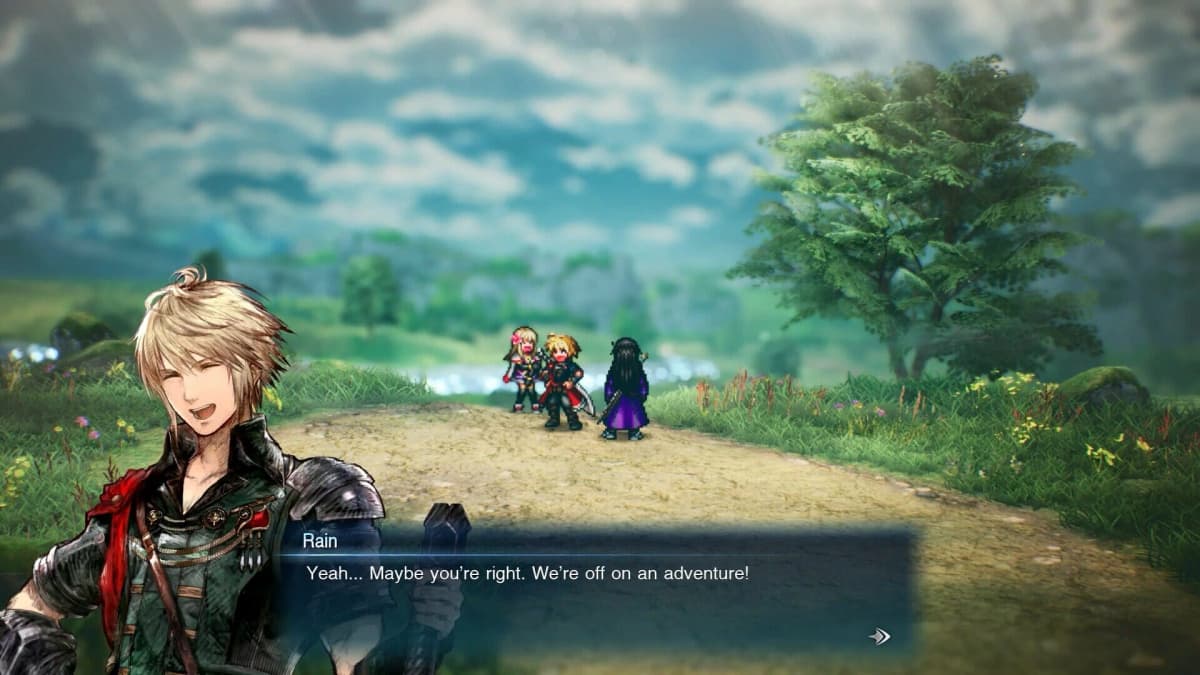
For roughly a decade, Final Fantasy Brave Exvius lived by the rhythms of a mobile gacha RPG: stamina, limited banners, duplicate units, and a constantly shifting power ceiling. Its service ended on October 31, 2025. Final Fantasy Resonance takes that game’s Season 1 story and rebuilds it around a much more durable idea: a complete, fully offline turn-based RPG with a beginning, a fixed progression path, and an ending.
Square Enix launches Final Fantasy Resonance on October 22, 2026 for Nintendo Switch 2, Nintendo Switch, PlayStation 5, Xbox Series X|S, and PC through Steam and the Microsoft Store. Steam’s Japanese listing shows October 23, reflecting a likely regional timing difference. The important point is simpler: this is a broad console-and-PC release, not another mobile service built around daily check-ins.
The central player decision is whether this is a meaningful reinvention of Brave Exvius or merely its old campaign wearing sharper pixel art. Everything shown so far points to the former. Resonance’s combat, Vision equipment, elemental stagger system, and visible turn order all aim at deliberate party-building rather than chasing whichever unit happened to be strongest on a banner that month.
Final Fantasy Resonance at a Glance
| Category | Confirmed Details |
|---|---|
| Release date | October 22, 2026; Steam may unlock October 23 in Japan |
| Platforms | Switch 2, Switch, PlayStation 5, Xbox Series X|S, Steam, Microsoft Store |
| Genre | Standalone, fully offline turn-based RPG |
| Source material | Final Fantasy Brave Exvius Season 1 |
| Visual style | HD-2D pixel characters in layered 3D diorama environments |
| Combat structure | Visible turn order, elemental weaknesses, stagger damage, Visions, classic summons |
| Progression model | Fixed campaign progression; Visions are not presented as gacha pulls |
| Japanese standard edition price | ¥7,678 including tax |
The Vision System Is the System That Matters
Final Fantasy Resonance uses Visions as crystallized versions of recognizable Final Fantasy heroes that can be equipped by the game’s standard party members. They add stats, attacks, magic, and passive abilities. That sounds familiar on paper, but the distinction matters: a Vision appears to expand a character’s toolkit instead of turning the entire party into a rotating roster of guest heroes.
Cloud’s Vision provides physical attacks and Thunder magic. Y’shtola’s adds water spells and healing. Those are sharply different packages, and they point toward an equipment-driven form of party customization. A character lacking elemental coverage can gain a practical answer to a particular enemy. A physical attacker can pick up magic damage. A party member already focused on offense can become a more useful emergency support option.
That is a smarter direction than reducing the crossover appeal to a parade of guest units. The party still needs recognizable jobs in battle. Visions should give players ways to patch a weakness, lean harder into a strength, or alter a build for a difficult boss. It is the difference between selecting a favorite cameo and making a meaningful loadout decision.
The remaining details will determine how deep the system really goes. Square Enix has yet to fully spell out how many Visions can be equipped at once, whether they grow independently, how freely they can be swapped, or whether their passive effects stack in unusual ways. Those rules decide whether Visions become a flexible layer of strategy or a simple set of obvious best-in-slot upgrades. The underlying concept has real promise because it gives the developers room to tune the whole campaign around a known pool of tools.
Turn Order and Stagger Bring Combat Back to Planning
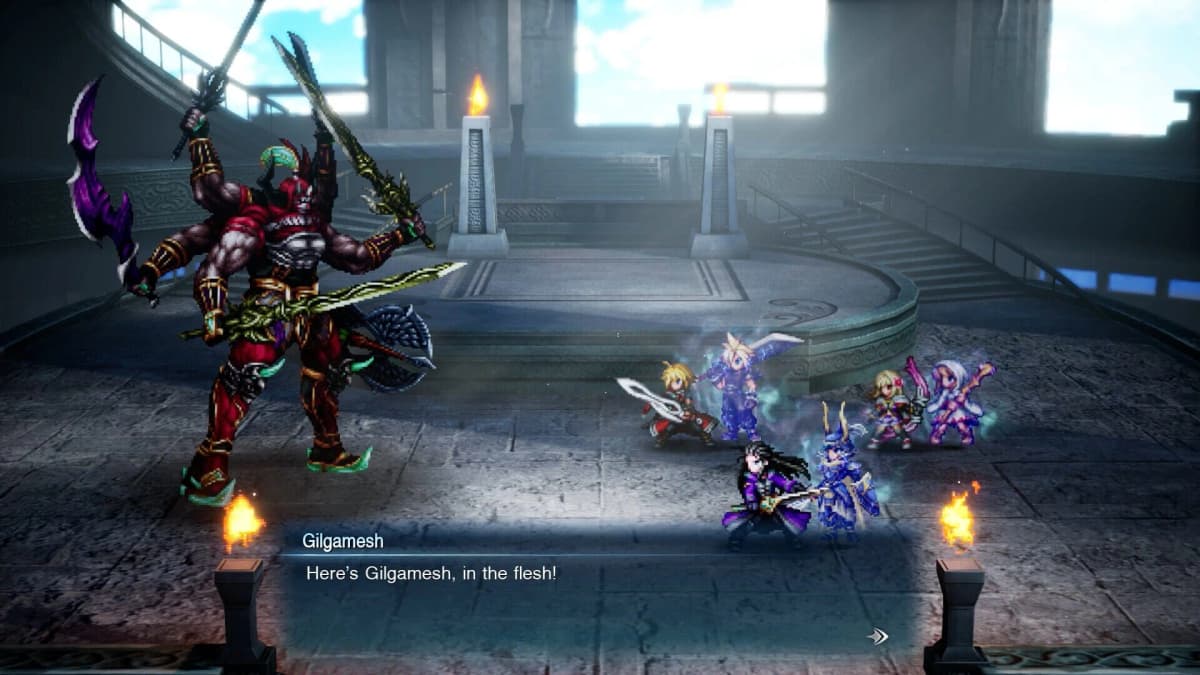
Combat uses a straight turn order displayed across the top of the screen rather than an active-time battle system. That puts the emphasis on sequencing. Players can assess the next few turns, identify the right elemental answer, and decide whether the immediate priority is damage, healing, setup, or preserving a key ability for the right target.
Enemies have elemental weaknesses, and striking those weaknesses increases stagger damage. The broad loop is clear: identify a weakness, build toward a more vulnerable state, then use the party’s stronger attacks while the target is exposed. Visions fit directly into that loop. Cloud’s Thunder access, for example, could let a predominantly physical character contribute to an enemy’s weakness instead of sitting out the most important part of the damage cycle.
That combination should make party composition matter from encounter to encounter. A well-built party will cover several elements, maintain enough healing to survive bad turn sequences, and keep heavy damage ready for stagger windows. There is less room for the old mobile-RPG solution of overpowering every problem with a newly released unit, because Resonance’s fixed progression means its combat can be balanced around the tools the campaign gives players.
Classic summons return as another major combat pillar, although Square Enix has not fully detailed their resource cost, activation rules, or exact tactical role. Their presence makes sense in a game built around stagger and planned turns. The strongest version of this system would make a summon feel like a reward for setting up a favorable battle state, rather than a cinematic button pressed on cooldown.
A Fixed Campaign Changes the Meaning of Progression
The old Brave Exvius loop was built around acquisition. Players drew for units, raised them through several upgrade layers, and dealt with a meta that could shift with every event. Resonance can focus on development instead: discrete character unlocks, predictable upgrades, story-earned Visions, and optional combat choices that reward understanding the system.
No announced live-service hooks, stamina gate, banner schedule, or in-game purchase system hangs over this release. The Japanese product information lists standard physical and digital editions alongside Digital Deluxe and Collector’s editions, but it does not frame the game around recurring content or paid power. That is exactly what this adaptation needs. A Season 1 story designed for a mobile platform has a much better chance of landing as a coherent JRPG when its pacing no longer has to make room for daily energy consumption and limited-time banners.
It also creates a healthier difficulty curve. Players should be challenged by elemental coverage, resource use, turn sequencing, and build choices with their available Visions. They should not hit a wall that quietly expects a lucky pull. That may sound like a low bar, but it is a meaningful change for material born in the gacha era.

HD-2D Gives Resonance a Visual Identity of Its Own
Square Enix calls Final Fantasy Resonance the first Final Fantasy rendered in HD-2D. The look combines pixel-art characters with 3D environments, layered lighting, depth effects, and camera movement. Villages, forests, crystal shrines, and battle arenas gain a sense of scale without losing the immediate readability that sprite-based RPGs do so well.
This style has a practical advantage beyond nostalgia. Turn-based fights need legibility. Players should be able to spot enemy types, read the battlefield, follow turn order, and recognize the effect of a weakness hit without visual noise swallowing the information. HD-2D can make a dramatic summon or a stagger burst feel large while keeping the decision-making layer clear.
The cross-platform release does leave performance details open. Switch owners should wait for final footage and technical coverage before assuming parity with PlayStation 5, Xbox Series X|S, or PC. Square Enix has not set out resolution or frame-rate targets for each version. For a turn-based RPG, consistency matters more than chasing extreme frame rates, but unstable performance would still undercut the presentation’s carefully staged lighting and camera work.
Random Encounters Could Be the Old-School Friction Point
The game’s field footage shows continuous HD-2D areas without obvious roaming enemy models, and Resonance is being positioned as a traditional turn-based RPG. That strongly suggests random encounters, though the game has not yet detailed encounter rates, field-specific rules, or any methods for limiting unwanted battles.
That design can work if encounter frequency respects exploration. Frequent battles become exhausting when a player is trying to examine a town, solve a dungeon route, or backtrack for a chest. On the other hand, a measured random-encounter rate can make resource management meaningful and keep the elemental system active between boss fights. Resonance needs that balance, especially because its Vision builds look most interesting when players regularly face different enemy compositions.
Who Final Fantasy Resonance Looks Built For
- Turn-based RPG players: The visible turn order, weakness-driven stagger damage, and modular Vision loadouts put deliberate planning at the center of each battle.
- Former Brave Exvius players: Season 1 returns without the stamina, banner, and service-game structure that originally shaped its pacing and progression.
- Players who enjoy party customization: Visions appear designed to extend a party member’s options with targeted magic, attacks, stats, and passives.
- Fans of crossover flavor with boundaries: Familiar Final Fantasy heroes contribute through Visions, while the core party remains the focus of the adventure.
Players looking for an action-heavy combat system, direct control over an all-star crossover roster, or a fully modern visible-enemy exploration model should hold off for more detail. Resonance is deliberately leaning into classic JRPG structure, including some of the old friction that comes with it.
Pros and Concerns Before Launch
FinalBoss // Gear
Level up your setup
01Top-rated gaming headsetson Amazon→02High-refresh gaming monitorson Amazon→03Gaming chairson Amazon→04Discounted game keyson Kinguin→
Affiliate links · As an Amazon Associate, FinalBoss earns from qualifying purchases.
Want to Level Up Your Gaming?
Get access to exclusive strategies, hidden tips, and pro-level insights that we don't share publicly.
Ultimate Tech Strategy Guide + Weekly Pro Tips