
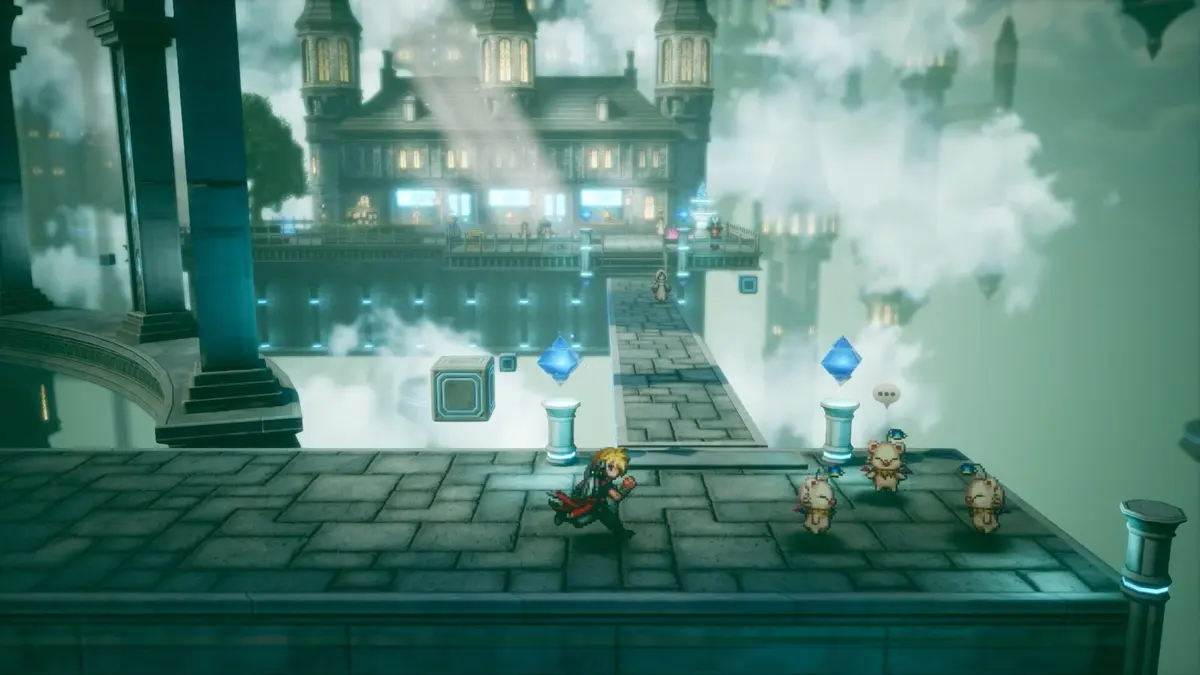
Final Fantasy Resonance carries an unusual inheritance: the first season of a mobile RPG that has shut down. Reimagining Final Fantasy Brave Exvius for consoles and PC gives that story a second life, while putting its pacing under fresh scrutiny. Familiar characters can supply the initial attraction; the decisions between those reunions have to sustain the adventure.
Developed by Square Enix and Lancarse and published by Square Enix, it launches on October 22, 2026 for PC, PlayStation 5, Xbox Series X/S, Nintendo Switch 2 and Nintendo Switch. I find its strongest argument in how it makes traditional battles worth thinking about, rather than simply in the return of a familiar format.
Table of Contents (4)
Stagger makes the planning worthwhile
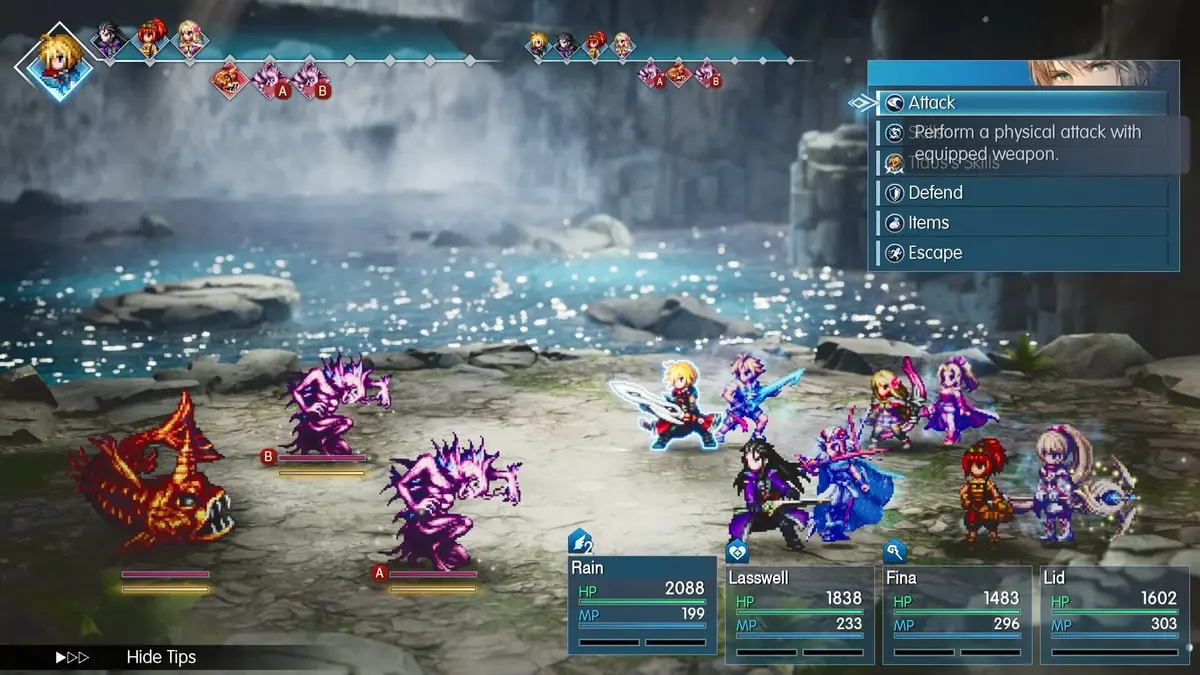
Stagger is the decisive mechanic. Enemies have a break gauge that falls faster when their weaknesses are targeted, and the visible turn timeline lets you plan around the order of actions. Breaking an enemy gives the attacker an additional action at the end of the round, called the Extra Phase. Breaking every enemy triggers Full Break, granting party bonus actions and a Vision Resonance attack.
The important consequence is that a command has value beyond its immediate damage. A weakness hit can help create another opportunity to act, making the timing of a break as interesting as the attack that causes it. I like that emphasis: the payoff belongs to a sequence of decisions, with the big attack serving as its conclusion.
Routine encounters are less persuasive. Repeated stagger-and-finisher cycles make low-interest fights drag, especially when long Resonance animations take over. The same elaborate payoff that makes a meaningful battle satisfying becomes an interruption when an ordinary enemy demands another performance. Combat earns its central place in the recommendation, but encounter repetition takes some of the excitement out of its best ideas.
Visions offer depth, with an uneven spread of roles
Visions are echoes of returning Final Fantasy heroes that can be equipped to party members, granting skills and passive abilities. You unlock them by answering questions at Sanctums of Light scattered across the map. Their strategic value extends beyond the initial choice: mastering a Vision lets a character retain abilities after switching to another, through the AP system.
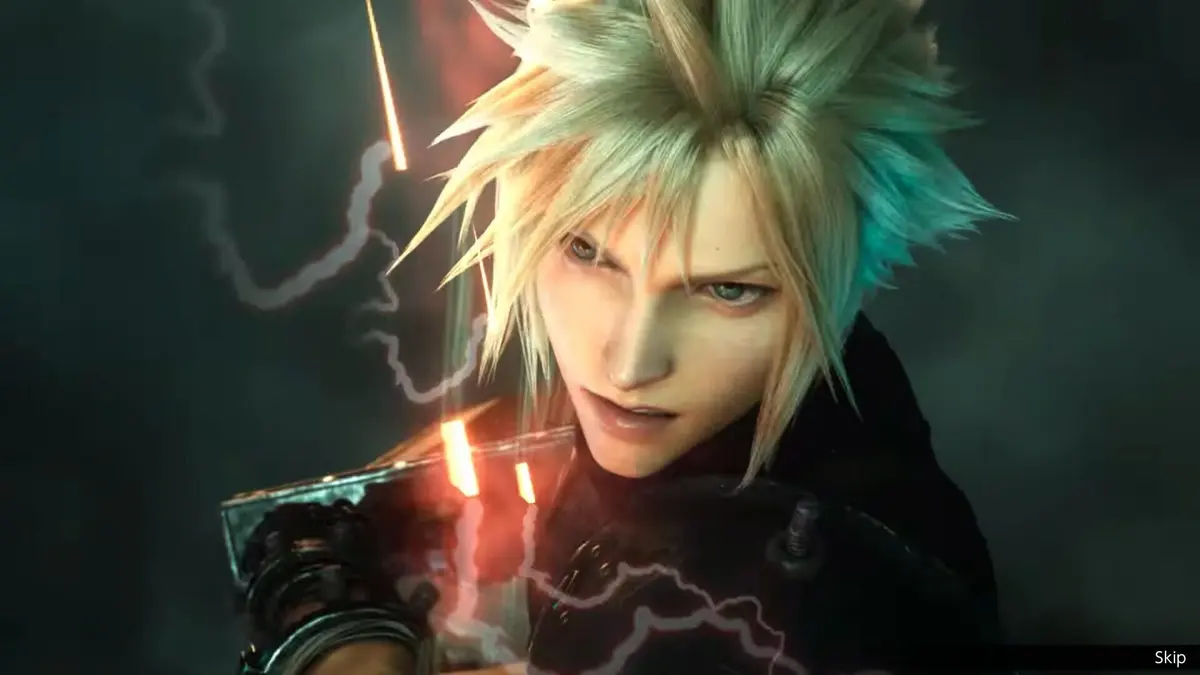
That persistence is the system’s smartest feature. A favorite hero gives you a reason to investigate a Vision, while retained abilities make the choice matter to the party’s longer-term development. Changing an equipped Vision can so feel like building on previous decisions rather than abandoning them. The nostalgia has a useful mechanical purpose.
The distribution of useful roles is less convincing. Medic choices are comparatively limited, and MP consumption across several roles puts pressure on resources. I find that restrictive rather than especially interesting: customization loses some freedom when basic coverage and running costs dominate the decision. Check your healing options before committing to a favorite-character lineup, and judge a Vision by the gap it fills in the party.
HD-2D is the right frame, despite the visible seams
This is Square Enix’s first Final Fantasy in the HD-2D style, combining pixel sprites with three-dimensional environments. Lighting, animated effects and camera movement make the strongest story scenes expressive without asking dialogue to carry every emotion. The appeal goes beyond recognizing a familiar visual tradition; the staging gives that tradition room to move.
Vision attacks can abruptly switch to fully rendered 3D CGI footage imported from the mobile game. Those transitions undermine the otherwise coherent art direction. I would rather stay with the sprites and their surroundings than have a climactic attack pull the scene into a visibly different visual style. The interruption is particularly frustrating because the HD-2D presentation already has enough personality to carry the spectacle.
The soundtrack is another major strength, including reworked Brave Exvius battle music. Its appeal survives the visual inconsistency, though presentation is not uniformly polished. Frame-rate drops on Nintendo Switch 2 also detract from the presentation. The art is a substantial reason to want Resonance, but it should not be mistaken for an entirely seamless package.
The story has heart, but its rhythm needs discipline
Rain and Lasswell are knights of Grandshelt, joined early by the amnesiac Fina. Their adventure leans on familiar fantasy conventions and convenient resolutions, but rewritten dialogue and an appealing cast give it heart. I find that sincerity more valuable than novelty here. A traditional setup can support an engaging journey when the characters make the familiar material worth following.
Pacing is the more damaging weakness. The slower stretches between major scenes weaken momentum, and some side content is overextended. Optional exploration can be rewarding, but side quests are not fully voiced. I would approach those quests as selective detours rather than a checklist to exhaust before allowing the central story to continue.
Smaller usability restrictions add friction around that uneven rhythm. The missing world-map zoom makes navigation less convenient, while limited accessory slots constrain party setup. Neither issue outweighs the combat or presentation, but both matter in a game whose central pleasures involve exploration and shaping a party. These are practical limits to accept, rather than shortcomings the nostalgic atmosphere erases.
FinalBoss // Gear
Level up your setup
01Top-rated gaming headsetson Amazon→02High-refresh gaming monitorson Amazon→03Gaming chairson Amazon→04Discounted game keyson Kinguin→Affiliate links · As an Amazon Associate, FinalBoss earns from qualifying purchases.
Want to Level Up Your Gaming?
Get access to exclusive strategies, hidden tips, and pro-level insights that we don't share publicly.
Ultimate Reviews Strategy Guide + Weekly Pro Tips