
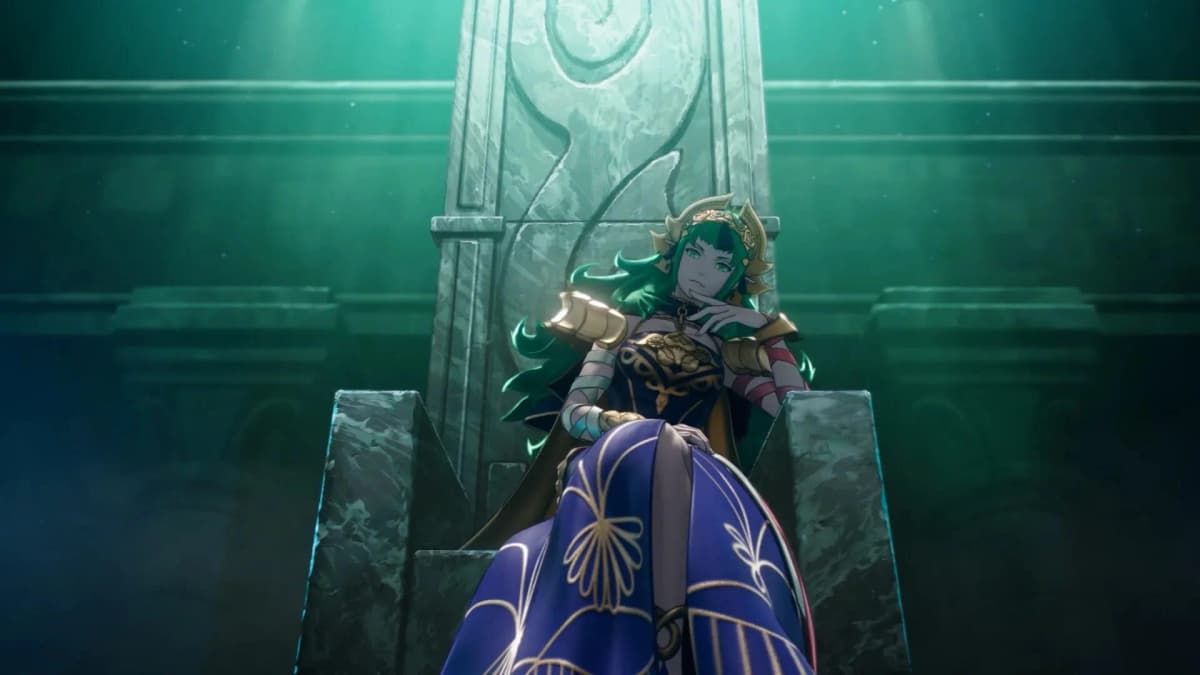
With Cai’s next Heroic Games battle waiting on one calendar, I left his route and moved to Theodora’s. The switch was immediate, but the mental weight was not: another protagonist, another schedule, another stack of preparation to sort before the next important fight. That small act captures both the brilliance and the burden of Fire Emblem: Fortune’s Weave.
This is a tactical role-playing game built around four protagonists, four interlocking campaigns, and a future-facing story that asks the player to keep several lives in motion at once. It is also home to the strongest turn-based battles the series has produced. The problem is never finding a reason to care about the next clash. The problem is reaching it without getting buried under calendars, travel, repeated systems, and the exhausting responsibility of managing a campaign that can stretch beyond 150 hours.
Table of Contents (5)
The battle grid carries the campaign
Fortune’s Weave understands that a great Fire Emblem battle must make every square matter. The grid-based combat asks for careful movement, deliberate weapon choices, and enough foresight to turn a solid opening into a devastating sequence of critical hits, combos, healing, stuns, and follow-up actions. Positioning is not busywork here. It is the language the game speaks best.
The major improvement is how consistently the game rewards tactical setup. A turn rarely ends with the satisfaction of merely removing an enemy. The better feeling comes from arranging a chain of actions that protects a vulnerable ally, opens a path through a formation, or turns a dangerous opponent into a manageable problem before they can dictate the battle. The encounters have a welcome sharpness because the game keeps asking for plans rather than routines.
Ignition techniques strengthen that identity by giving important moments extra tactical force. They belong in a combat framework already defined by costs and consequences. Blaze arts consume HP, while combat arts wear down weapon durability, so power never arrives as a free button to press whenever a situation looks uncomfortable. That friction is valuable. It turns a powerful action into a judgment call: spend health now, preserve a weapon for later, or find a cleaner answer through positioning.
The protagonists also give the battlefield distinct flavors. Dietrich can teleport forward to strike before enemies see him coming, while Theodora’s magical prosthetic arm can seize stone and hurl it across long distances. Those abilities make the four campaigns feel more substantial than a simple narrative reshuffle. Different heroes create different tactical priorities, and that variety holds together even after the broader structure begins repeating familiar rhythms.
That is why I remain so positive about the heart of the game. The best fights create a pressure that is demanding without becoming arbitrary. Every route offers room to experiment with squad composition and progression, but victory still depends on reading the battlefield correctly. Fortune’s Weave reaches for spectacle, yet its finest moments remain remarkably disciplined: a clean formation, a calculated risk, and a plan that survives contact with the enemy.
Four stories give the Heroic Games real dramatic weight
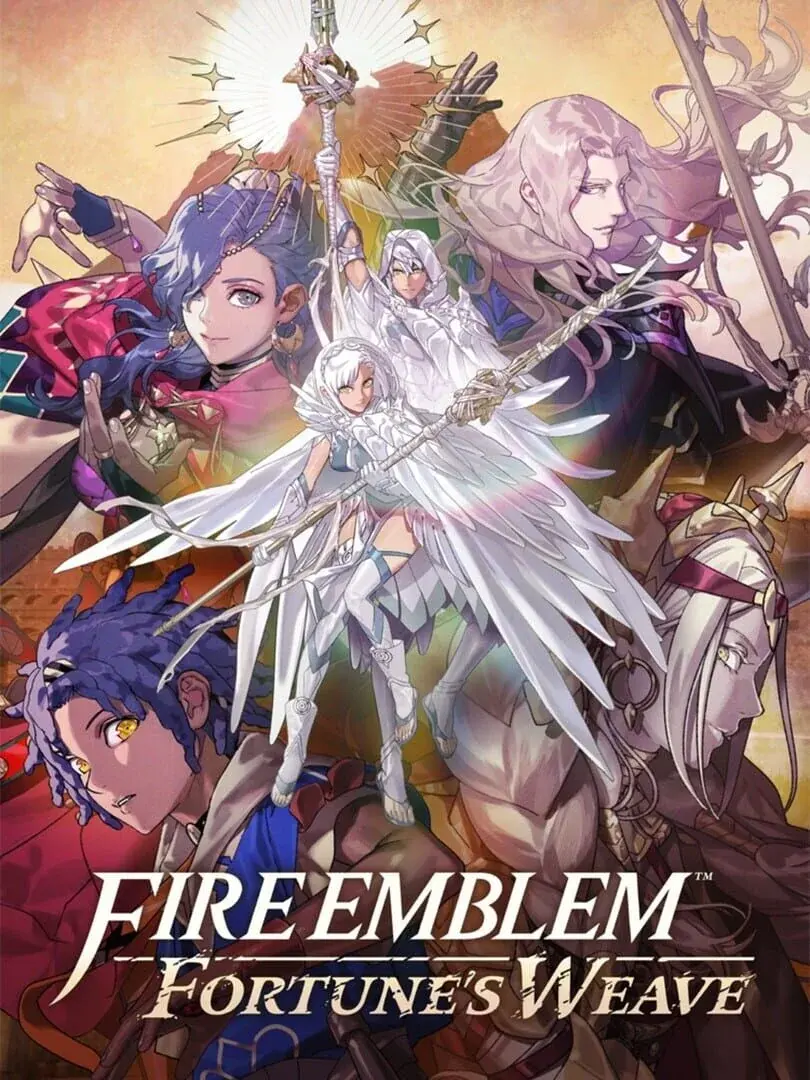
The setting has enough scale to justify the game’s enormous structure. The story begins in 1449 in Dagsion, capital of the Dagdan Empire, where the Heroic Games promise one winner a wish from the Divine Sovereign. Cai, Dietrich, Theodora, and Leda each enter that contest with personal stakes, and the tournament framing gives every route a clear dramatic engine. The competition is not background decoration; it is the structure that keeps ambition, revenge, survival, and political tension moving forward.
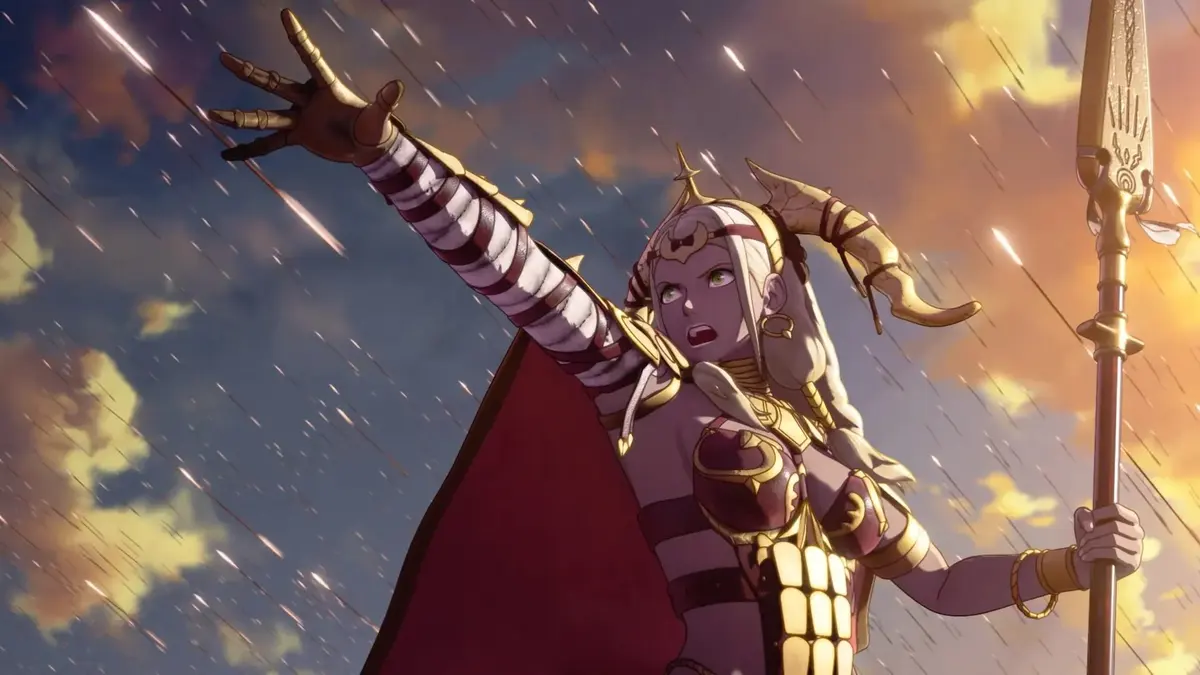
Above those four campaigns sits a larger catastrophe. A nameless avatar hero arrives from a ruined future after being summoned by Sothis, with Balor’s return hanging over the world. The true conflict unfolds five years after the Heroic Games, when the consequences of the tournament have hardened into a devastated future. The avatar’s task is to alter the past, protect the four champions, and bring them together for the conflict ahead.
That time-travel structure is more than an excuse for a late twist. It gives the four protagonists a shared destination without flattening them into interchangeable pieces. Each route can stand on its own as a Heroic Games story, while the broader plot makes the player consider what survival, recruitment, and allegiance mean across the full campaign. The narrative has the confidence to let the player sit with separate perspectives before asking them to appreciate the larger weave.
The result is a richer use of multiple routes than a basic branching story. The campaigns are connected enough to create anticipation when their paths begin touching, but distinct enough that a different protagonist can refresh the tactical and dramatic perspective. That balance is one of the game’s greatest achievements. Fortune’s Weave earns its scale when the four stories illuminate the same crisis from different angles.
The calendar turns ambition into a pacing test
The strain begins between the battles. Fortune’s Weave expands the management-heavy model associated with Fire Emblem: Three Houses, then spreads it across four protagonists with separate calendars and priorities. Players can switch routes at any time, choosing which hero’s schedule to advance and which looming battle to prepare for. That freedom is impressive, but it also makes every return to the hub feel like the start of another administrative shift.
Time advances through a calendar structure of weeks and narrative milestones, with certain activities refreshing weekly. Dagsion and the wider Dagdan Empire become spaces for travel, training, dialogue, equipping, recruitment, and other forms of preparation. Each individual system makes sense. Together, they ask for enormous amounts of attention before the game returns to the tactical arena where it is at its best.
A compact campaign could have made these routines feel like welcome breathing room. Across four linked stories and a campaign measured in well over 150 hours, the same routines accumulate. Re-entering familiar spaces, managing familiar resources, and sorting through repeated preparation creates a rhythm that can dull the urgency of the Heroic Games. The calendar is thematically appropriate; lives are on the line, deadlines matter, and choices need time to develop. Its issue is volume rather than purpose.
Route switching creates another kind of fatigue. Juggling Cai, Dietrich, Theodora, and Leda asks the player to retain four sets of objectives, relationships, and tactical priorities. That can be deeply satisfying for anyone who enjoys living inside a large strategy RPG. For players who prefer a focused campaign with a single clear momentum, it can become exhausting. The game constantly gives you something to do, and that abundance is precisely why it sometimes struggles to let a pivotal moment breathe.
Some repetition also reaches the story layer. Four routes moving through the same tournament, city, and broad historical crisis naturally revisit ideas, locations, and pieces of dialogue. The eventual payoff remains worthwhile, but the road to it could have been more selective. This is a game that trusts its material enough to show it from every angle; a little more restraint would have made those angles hit harder.
Exploration has promise, but the smaller systems lack punch
The larger world gives the game welcome texture. Dagsion functions as a major hub, while the setting also includes a broad explorable world map beyond the capital. Exploratory 3D dungeons add another layer to the routine, breaking up the campaign’s menu-driven preparation with spaces that ask for movement and discovery. The impulse is right: a game about a vast empire, gladiatorial prestige, and a future apocalypse should feel larger than its battle maps.
Execution is uneven. The overworld’s turn-based map controls feel awkward beside the precision of the main combat, and clash battles lack the impact of the grid encounters that surround them. Those weaker systems are not disastrous, but they expose the difference between a game with an outstanding tactical core and a game determined to build an entire mega-structure around it. Every detour away from the main battles needs to justify itself. A few of these detours fall short.
Fortunately, the central combat is strong enough to absorb much of that friction. The world map, dungeons, and hub activities provide context for the campaign; the tactical encounters provide its pulse. When the game lets strategy take over, its ambition feels earned rather than merely large.
Who should commit to the full weave
Fire Emblem: Fortune’s Weave is for players who want a long, dense strategy RPG that treats tactical combat as a serious craft. The four-route structure rewards anyone willing to keep track of parallel storylines, varied squads, calendar decisions, and a long-term narrative that only gains its full force when the separate campaigns are viewed together. Players who loved the management side of Three Houses and wanted that structure expanded will find a great deal to enjoy here.
Players who want a brisker campaign should wait. The Heroic Games are compelling, the future conflict gives the story purpose, and the battle design is exceptional, but the route juggling and repeated preparation demand patience. This is also a Nintendo Switch 2-only commitment, designed for TV, Tabletop, and Handheld play, so the decision is tied to both the hardware and the willingness to accept a massive campaign on its own terms.
FinalBoss // Gear
Level up your setup
01Top-rated gaming headsetson Amazon→02High-refresh gaming monitorson Amazon→03Gaming chairson Amazon→04Discounted game keyson Kinguin→
Affiliate links · As an Amazon Associate, FinalBoss earns from qualifying purchases.
Want to Level Up Your Gaming?
Get access to exclusive strategies, hidden tips, and pro-level insights that we don't share publicly.
Ultimate Reviews Strategy Guide + Weekly Pro Tips