
Table of Contents (14)
Why This Plan Works (and How I Learned It)
After spending well over 300 hours restarting worlds for friends, younger cousins, and my own speedrun-ish challenges, I finally settled on a first 24-hour survival routine that just works. I used to die to the first skeleton, sprint everywhere, and end night one in a dirt box with no food. The breakthrough came when I treated the first day like a timed checklist: secure tools, food, light, a bed, and one safe mine. Follow the steps below and you’ll hit iron gear on day two without panic.
Quick Setup (5 minutes)
Before you even punch the first tree, tweak a few settings that reduce early deaths.
- Difficulty: Easy or Normal for your first world. Hard punishes mistakes you’ll make early.
- Brightness: Max. It’s easier to see caves and mobs at night.
- Auto-Jump: Off (precise movement). Bedrock:
Settings → Keyboard & Mouse/Controller → Auto-Jump Off. - Show Coordinates: Java press
F3. Bedrock:Settings → Game → Show Coordinates. - Controls refresher: Inventory (PC:
E, Xbox:Y, PlayStation:Triangle, Switch:X). Sneak/crouch is your “don’t fall” and “don’t walk off edges” button-keep it handy.
Minute 0-10: Spawn Triage
Goal: wood, basic tools, early food, and a plan for a bed. Don’t sprint yet; hunger drains fast.
- Punch 1-2 trees. Craft 16 planks, 8 sticks, and a Crafting Table.
- Craft: Wooden Pickaxe first. Skip the wooden sword/axe for now-stone is 2 minutes away.
- Find surface stone (riverbank or exposed cliff). Mine 20 cobblestone.
- Upgrade immediately: Stone Pickaxe, Stone Axe, Stone Sword, Furnace, and 16-24 torches if you spot coal.
- Food & Bed prep: Kill 3 sheep for wool if possible (or 1 sheep + craft Shears later). Otherwise grab a couple apples as backup.
What finally worked for me was resisting the urge to craft every wooden tool. The Stone Axe is your early MVP: it chops trees faster and deals strong melee damage. I’ve lost count of the runs saved by swapping to Stone tools within 5 minutes.
Minute 10–30: Claim a Base Spot and Light It
Pick a base location within sight of spawn if possible: near water, trees, and exposed stone. Flat plains or the edge of a forest is perfect.
- Drop your Crafting Table and Furnace. Smelt 8 logs into charcoal if you haven’t found coal: place logs on top, planks below.
- Place 8–12 torches around your area-mobs can’t spawn in light level 8+.
- Build a micro-shelter: 3×3 interior, 2 blocks high, roofed. I usually use dirt and upgrade later. Craft a door (6 planks) and place it.
- Start a chest (8 planks). Dump excess sticks/planks and keep your hotbar lean.
- Cook food. Even baked potatoes beat raw anything—use whatever you have.
Common mistake I made early: half-building a fancy house before sunset. Function beats form today. Four walls, a door, and torches will outperform any pretty base that’s missing a roof.
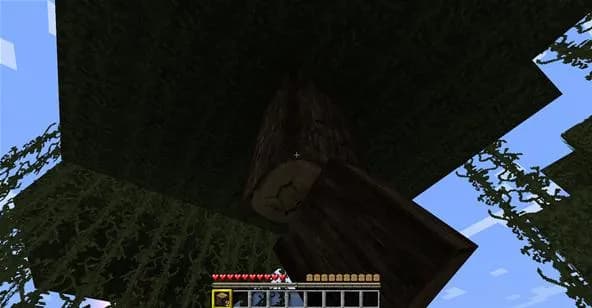
Minute 30–60 (Night 1): Safe Progress, Not Risk
If you have 3 wool + 3 planks, craft a bed and sleep to skip mobs. If not, hunker down and work smart.
- Craft a Shield ASAP (1 iron + 6 planks). If you lack iron, this is your target for tomorrow.
- Staircase mine from inside your shelter: 2-wide staircase downward. Never dig straight down.
- Torch every 8–10 blocks on the right wall. On the way back, keep torches on your left and you’ll know you’re returning to base.
- Mine anything useful: coal, copper (XP and early lightning rod if you like), and especially iron. Smelt iron immediately if found.
- Keep a water bucket slot in mind (1 iron ingot for a bucket) — it’s your lava extinguisher, elevator, and fall saver.
Don’t make my mistake of opening your door when you hear a spider. Mobs camp doors. If you must leave, dig a one-block side exit and place a trapdoor or use a back ladder shaft.
Morning of Day 2: Food Security in 20 Minutes
Hunger wipes more new runs than creepers. Lock this down now.
- Wheat starter farm: Craft a Hoe, break tall grass for 10–20 seeds, till soil adjacent to water, and plant. Place torches around so crops grow at night.
- Animal pens: Fence (6 sticks + 2 planks) and Gate (4 sticks + 2 planks). Lure two animals with food—cows/sheep with wheat, chickens with seeds, pigs with carrots (village loot if you have it). Breed immediately for exponential growth.
- Cooked food stockpile: Aim for 12–16 cooked meat or a stack of bread. Cook everything before adventuring.
What finally clicked for me was breeding two chickens early. Seeds are everywhere, and chickens snowball fast. By day three, eggs plus seeds equals infinite food.
Iron Online: Gear Up Before Exploring
Plan a targeted mining session to secure enough iron for survivability.
- Shopping list: 16–24 iron ore (Shield, Bucket, full Iron Armor, Iron Pickaxe, and Shears if you still need a bed).
- Mining pattern: From your staircase, carve 1×2 side tunnels every 6 blocks (branch mine). Keep your tunnel height 2 blocks—less mob spawns, easier navigation.
- Lava protocol: If you hear bubbling, place a torch, crouch, and mine slowly at head level. Use your bucket to create obsidian or block the flow.
- Return discipline: When your food hits 50% or torches run low, go home. Most of my early deaths were greed runs with no light and no food.
Once I started crafting the Shield before armor, skeletons stopped deleting me. Hold right-click (or LT/L2) to block; it trivializes arrows and many melee hits.
Combat That Saves Your Life (Real Habits)
- Creepers: Backpedal to just outside their fuse range, hit once with an axe, then retreat. Repeat. If one reaches your door, dig a side exit; don’t open forward.
- Skeletons: Shield up, walk in, let an arrow hit your shield, then strafe and swing. Avoid fighting two at once—use corners to isolate.
- Spiders: Fight in 1-block doorways to block their jump. They struggle in tight spaces.
- Endermen: Don’t look at their face. If you do, get under a 2-block roof and fight safely.
Axes hit harder early but swing slower; swords are better for crowds and sweeping. I carry both until enchantments.
Navigation: Never Get Lost Again
- Coordinates discipline: Note base at
X/Zon a sign. Bedrock shows it on-screen when enabled; Java usesF3. - Beacon pillars: Place a 10-block pillar with torches or a campfire smoke stack at base. I keep one on hills near spawn.
- Compass: Points to world spawn (not your bed). If you moved far, write the base coords.
- Map: Craft with paper from sugar cane + compass. Great for exploring plains safely.
Hotbar Setup That Actually Works
- 1: Sword
- 2: Axe
- 3: Pickaxe
- 4: Shovel
- 5: Torches
- 6: Food
- 7: Blocks (stack of cobblestone)
- 8: Water Bucket
- 9: Spare tool or Bow
I wasted hours fumbling for torches mid-fight. Keeping torches at 5 and blocks at 7 became muscle memory and cut my cave deaths dramatically.
Platform-Specific Pointers
- Java (PC): Use
F3for coordinates and biome info. Mouse sensitivity can be lower for precise hits. Mods and shaders are nice later, but vanilla is simpler to learn. - Bedrock (PC/consoles/mobile): Enable
Settings → Game → Show Coordinates. Combat timing is slightly different and shields behave consistently—lean on them. Cross-play means your console friends can join easily. - Consoles: Inventory is
Y(Xbox) /Triangle(PlayStation) /X(Switch). Bump stick sensitivity up one notch for faster camera turns against creepers. - Mobile: Reduce graphics to keep 60 FPS. Enable
Split Controlsfor better mining precision. Long-press for breaking blocks; use crouch to avoid walking off edges.
Common Beginner Pitfalls (I’ve Done Them All)
- Digging straight down: Staircase only. A single lava pocket ends runs.
- Sprinting everywhere: You’ll starve before night. Sprint only in combat or emergencies.
- Under-lighting: One torch every 8–10 blocks in tunnels; four torches in each corner of your room.
- No spawn point: Craft a bed and sleep once. Dying without it can send you thousands of blocks away.
- Adventuring with empty pockets: Always carry food, torches, blocks, and a water bucket.
Fast-Track Upgrades for Hours 2–4
- Enchanting path: Mine obsidian with a Diamond Pickaxe (or later with villagers). Build an Enchanting Table (2 diamonds, 1 book, 4 obsidian). Even basic Protection and Efficiency change everything.
- Villager basics: If a village is near, trap two villagers safely and start trading. Farmer trades turn excess wheat into emeralds; Librarians can roll key enchantments.
- Portal early (optional): Iron gear, food, and a shield before the Nether. Use a lava pool + bucket to build a portal without diamonds if you’re confident.
- Iron farm/auto-farm later: Not day one material, but keep space near base for expansion.
24-Hour Roadmap (What to Do, In Order)
- 0–10 min: Stone tools, furnace, early torches, grab food and wool if possible.
- 10–30 min: Pick a base spot, place torches, build a 3×3 shelter with a door and chest.
- 30–60 min: Bed and sleep; or safe staircase mine from inside. Smelt any iron.
- Morning Day 2: Start wheat farm, fence a pen, lure two animals, cook food.
- Day 2 Noon: Mine for iron until you have shield, bucket, full iron armor, iron pickaxe.
- Evening Day 2: Expand farm, set beacon pillar, craft a compass/map, organize hotbar.
Stick to this plan and you’ll go from panicked nights to controlled progression in a single in-game day. The moment it clicked for me—shield up, torches down, food cooked—I stopped fearing night and started planning projects. You’ve got this. Next step: enchant a pick, explore a safe cave loop, and start thinking about your first Nether trip when iron feels trivial.
FinalBoss // Gear
Level up your setup
01Top-rated gaming headsetson Amazon→02High-refresh gaming monitorson Amazon→03Gaming chairson Amazon→04Discounted game keyson Kinguin→Affiliate links · As an Amazon Associate, FinalBoss earns from qualifying purchases.
Want to Level Up Your Gaming?
Get access to exclusive strategies, hidden tips, and pro-level insights that we don't share publicly.
Ultimate Guide Strategy Guide + Weekly Pro Tips