
Table of Contents (6)
Why this milestone actually caught my attention
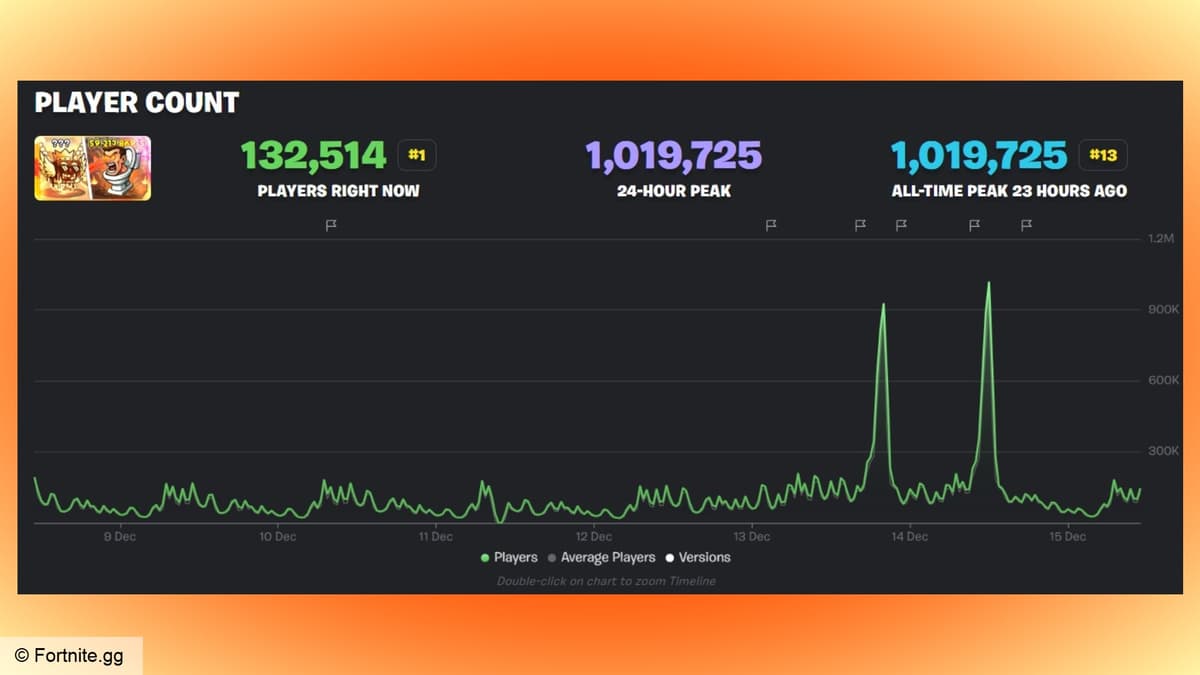
Fortnite Creative’s spinoff Steal the Brainrot just became the first Creative experience on Epic’s platform to exceed one million concurrent players – peaking at 1,019,725 on Fortnite.gg. That’s headline-grabbing in any language, but the real story isn’t just the number. It’s what this says about Epic’s ambitions for user-generated content, the limits of momentum built around viral clones, and how platform economics still favor an older, craftier rival: Roblox.
- Key takeaways:
- Steal the Brainrot reached 1,019,725 concurrent players – the first seven-figure Creative peak.
- Roblox’s original version reportedly peaked at over 25 million – a reminder of platform scale differences.
- Earnings estimates range widely, up to $13.8M, highlighting how lucrative top Creative islands can be.
Breaking down the record
Put bluntly: a Fortnite Creative map cracking a million concurrent players is a big deal for Epic. Historically, Fortnite’s most-played modes have been Epic-built (the battle royale, live events, Zero Build spinoff). Community-made islands rarely touch those levels. The next most-played community map, Super Red vs Blue, peaked around 235,000 — which makes Steal the Brainrot’s jump feel less like a fluke and more like a proof-of-concept that licensed, viral experiences can scale on Fortnite.
That proof has a caveat. Steal the Brainrot isn’t an original Fortnite idea — it’s an officially licensed adaptation of a smash-hit Roblox game, Steal a Brainrot, which reportedly peaked at more than 25 million concurrent players back in October. Comparing seven figures to twenty-five million isn’t just apples-to-oranges — it’s a whole different orchard. Roblox’s platform is built around discoverability and creator economies that have spent years compounding into massive, platform-level hits.
Money, metrics, and why Tim Sweeney liked the post
Numbers beyond player counts are where excitement bleeds into dollars. Fortnite.gg’s estimates — shared publicly by industry figures like Seth Dirks — put Steal the Brainrot’s earnings anywhere from about $3.7 million to a top-end estimate of $13.8 million. Epic CEO Tim Sweeney even chimed in, noting that $13.8M “exceeds the development budget of our first Gears of War game.” That’s a punchy comparison meant to signal the changing economics of content creation.

But let’s be skeptical: these estimates are broad and opaque. Creative islands monetize through multiple channels (cosmetic sales, event tickets, creator codes, etc.), and visibility spikes don’t guarantee sustained revenue. The headline number is impressive, but the range tells you how noisy these signals are.
What this means for players and creators
For players, more blockbuster community islands means more high-quality, communal experiences to hop into. Steal the Brainrot has become a cultural moment — players hunt codes, trade viral characters (Tung Tung Tung Sahur, Swag Soda, Blueberrinni Octopusini — yes, those names exist), and generate the kind of memetic energy that fuels repeat peaks.
For creators, this is both a carrot and a warning. The carrot: Epic’s platform can now deliver massive audiences and serious money. The warning: getting to a million concurrent players is still far from easy; discoverability, platform stickiness, and sustainable monetization matter. A one-off viral hit is great PR, less great as a long-term studio plan unless you can replicate the systems that made Roblox hits persistent.
Why this matters now — and what comes next
“Why now?” because Epic has been pushing harder than ever into creator tools (Unreal Editor for Fortnite, official licensing) and wants to show that Fortnite can be a UGC powerhouse, not just a game with popular mods. Steal the Brainrot is the first visible win in that narrative, and Epic is understandably amplifying it. But the broader test will be whether Creative can consistently produce multiple seven-figure experiences, not just borrow a viral hit from another platform.
Expect more licensed adaptations, more aggressive discoverability tweaks, and likely a few copycat islands chasing the same code-driven virality. As for gamers, enjoy the ride — but don’t assume this single record means Fortnite is now the undisputed home of UGC. It’s a milestone, not a coronation.
TL;DR
Steal the Brainrot hitting 1,019,725 concurrent players is a watershed moment for Fortnite Creative and a solid proof that Epic can deliver massive audiences for licensed, viral experiences. Still, Roblox’s 25M peak and a wide earnings estimate range remind us that scale and sustainable creator economies are different beasts. This is a win — but one with clear limits and plenty of follow-up work for both creators and Epic.
FinalBoss // Gear
Level up your setup
01Top-rated gaming headsetson Amazon→02High-refresh gaming monitorson Amazon→03Gaming chairson Amazon→04Discounted game keyson Kinguin→
Affiliate links · As an Amazon Associate, FinalBoss earns from qualifying purchases.
Want to Level Up Your Gaming?
Get access to exclusive strategies, hidden tips, and pro-level insights that we don't share publicly.
Ultimate Gaming Strategy Guide + Weekly Pro Tips