
Table of Contents (8)
Epic’s layoffs are the moment the “forever game” illusion finally cracked
Epic Games cutting more than 1,000 people in March 2026 – roughly 20% of the company, with WARN filings confirming at least 211 roles gone in Cary and 82 in Bellevue – isn’t just another depressing entry in the endless layoff cycle. It’s the moment the industry’s favourite fantasy finally ran aground: the idea that Fortnite was a “forever game” that could defy gravity, print money indefinitely, and basically own an entire generation’s free time.
For years, publishers built strategies, greenlit budgets, and killed projects based on the assumption that if they could just get their own Fortnite – their own endlessly expanding, FOMO-fuelled live-service ecosystem – they’d be set for a decade. Now we’re looking at the game that defined the model slashing staff, hiking V-Buck prices, and shutting down modes like Ballistic and Festival Battle Stage on April 16, with Rocket Racing following in October.
From where I sit, that doesn’t read like “the metaverse is thriving.” It reads like a company waking up to the fact that even the biggest live-service success story has limits. The reported ~30% drop in Fortnite player hours during 2025 isn’t just a wobble; it’s a hard reminder that no game, no matter how omnipresent it feels, is immune to boredom, burnout, and shifting culture.
Fortnite taught execs all the wrong lessons about live service
I don’t buy the revisionist line that “everyone should have known this was unsustainable.” When Fortnite Battle Royale hit, it looked unstoppable from the outside. It wasn’t just making money; it was setting the rhythm of pop culture. Crossovers with Marvel, Star Wars, Dragon Ball, you name it. Concerts with Travis Scott and Ariana Grande. Kids treating it less like a game and more like a digital shopping mall crossed with a theme park.
Executives saw that and drew exactly the conclusions you’d expect. They didn’t see a once-in-a-generation convergence of timing, technology, and audience. They saw a blueprint. They looked at Fortnite and thought, “We can systematise this. All we need is:
- Constant seasonal content drops
- Big-money IP tie-ins and celebrity events
- A premium cosmetic economy with a battle pass spine
- Enough retention metrics and A/B tests to choke a data warehouse
On paper, that’s tidy. In practice, it meant the entire industry started contorting itself around the “forever game” dream. Mid-budget games got cancelled or contorted into live services. Studios like Mediatonic (Fall Guys), Psyonix (Rocket League), and Harmonix (Rock Band, Fuser) were bought into the Epic ecosystem in part because everyone believed this gravity well would keep pulling in players indefinitely.
The problem is that the fantasy wasn’t just that Fortnite would be big. It was that it would be permanent. Investors and publishers talked about it like a platform that would last basically forever, outliving hardware generations and swallowing more and more of the wider entertainment market. That’s the fantasy that’s dying in 2026, not the game itself.
The numbers finally stopped lining up – and everyone felt it
When Epic says, as Tim Sweeney has essentially admitted, that the company has been spending more than it’s making, that should make everyone who bought into the “Fortnite is unkillable” narrative pause. This isn’t some obscure indie. This is a game with hundreds of millions of registrations, multiple concurrent modes, and a merchandising footprint that stretches from school backpacks to cereal boxes.
Yet here we are: over 1,000 layoffs in 2026, on top of around 830 cuts back in 2023, taking total layoffs above 1,800 in three years. Epic is chasing more than $500 million in cost savings through staff cuts, reduced contracting, slashed marketing, and quietly leaving roles unfilled. And this is happening right after V-Buck price hikes in key regions – the kind of move you make when you’re feeling margin pressure, not swimming in surplus.
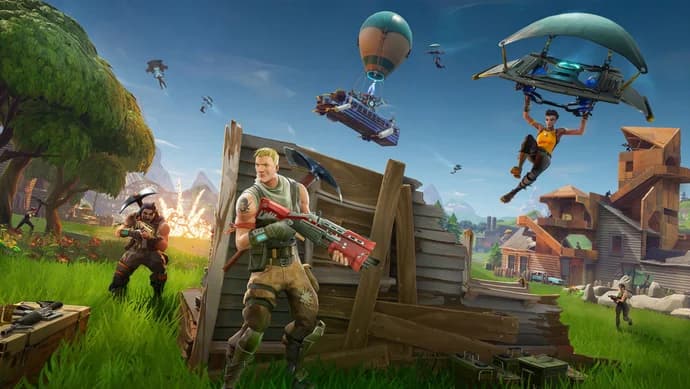
Add to that the scheduled shutdowns of newer Fortnite offshoots – Rocket Racing, Ballistic, Festival Battle Stage – and the picture sharpens. Maintaining a multi-mode “Fortnite ecosystem” clearly didn’t hit the retention and monetisation numbers leadership was banking on. If the “everything lives under Fortnite” strategy was as bulletproof as it looked on slides, you wouldn’t be killing whole modes this quickly after launch.
This is where the live-service logic backfires. When a game is treated as an ongoing service rather than a finished product, its internal KPIs become a guillotine. If engagement falls faster than your projections, if cosmetics stop moving at the rate your revenue models assumed, the response isn’t “let’s be patient.” It’s “cut headcount, cut scope, cut experiments.” For a supposedly forever game, Fortnite’s margins turned out to be remarkably mortal.
No game can monopolise culture forever – and Fortnite was no exception
The thing nobody at the top seems to have wanted to hear is also the simplest: people move on. Fortnite’s original audience aged. Tastes changed. The cultural novelty of logging in to see the next wild live event inevitably faded. You can keep dressing it up – new collabs, new biomes, new licensed skins – but you can’t stop a player base from churning, especially when the entire market has learned from your success and is now competing for the same free hours.
From my perspective, that’s the core myth that’s finally cracking. The “forever game” idea assumes there’s some design and monetisation configuration that can lock in players almost indefinitely, as long as you keep shovelling in enough content and marketing spend. Fortnite came closer to that ideal than anything we’ve seen, and it still hit the same wall that MMOs, MOBAs, and looter shooters hit before it: saturation and fatigue.
Yes, Fortnite is still huge. It will almost certainly keep existing in some form for another decade. But the vision that it would become a permanent cultural fixture – the default digital space for an entire generation – is visibly eroding. A ~30% year-on-year drop in player hours is not what “forever” looks like. It’s what a mature, declining product curve looks like, even if the baseline is enormous.
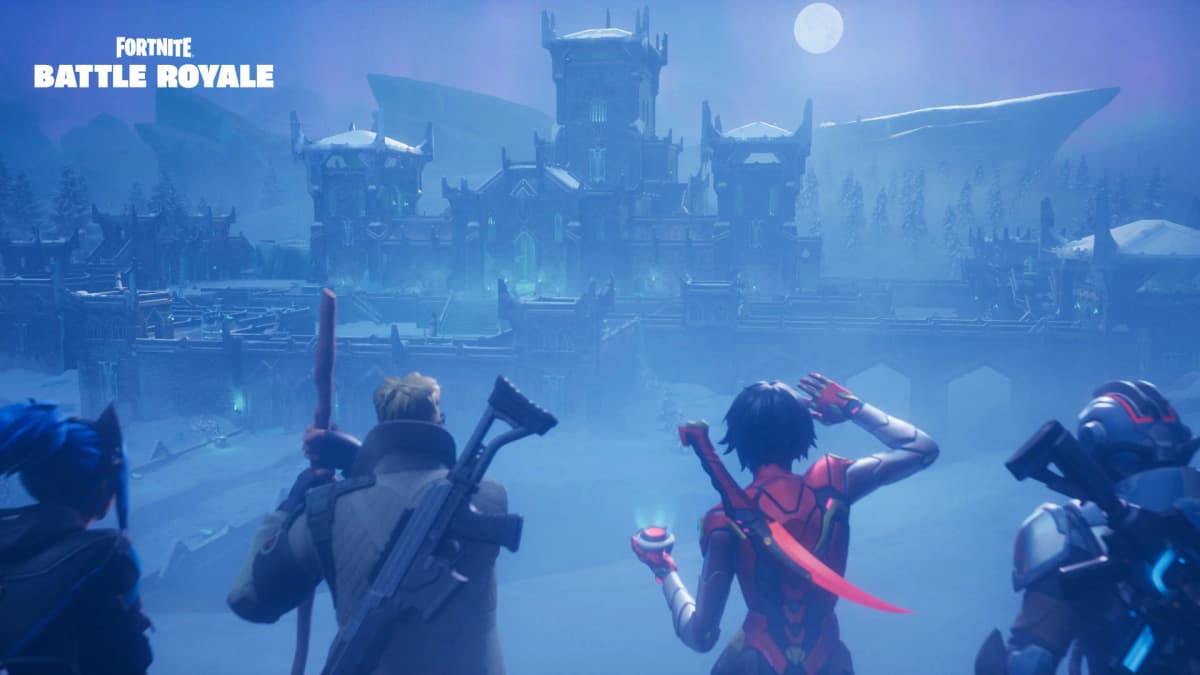
And this is the part I think the industry has been too scared to say out loud: that erosion was always inevitable. No matter how well-run a live-service game is, no matter how many data scientists and monetisation experts you throw at it, you can’t outdesign the basic reality that people like novelty, variety, and fresh identities. The forever game is fundamentally incompatible with how culture actually behaves.
Epic’s AI spin and the temptation to chase the next “forever” trap
Sweeney has been clear that these layoffs are “unrelated to AI,” and that Epic would happily hire more developers if productivity improves. That’s a neat line for investors, but it dodges the uncomfortable part. Whether or not AI was the direct cause, the subtext is the same: leadership still wants a way to generate infinite content more cheaply, to keep the service machine fed without relying on expensive, unpredictable human creatives.
That’s the same mindset that produced the forever game fantasy in the first place. It treats players as a renewable resource to be captured and held, not as people whose interests and lives keep changing. I’ve spent a lot of time in live-service ecosystems – Fortnite, Destiny, Warframe, and a bunch of failed pretenders – and the pattern is always identical. There’s a honeymoon period where you feel like the game could easily be your default hobby for years. Then, gradually, it becomes homework.
The scary possibility is that instead of reading Fortnite’s contraction as a warning about that mindset, the industry just picks a new altar. Roblox is the obvious candidate: massive playtime, UGC-driven, younger demographic. There’s probably a pitch deck circulating right now that treats it as the new “forever platform” the way Fortnite was in 2019. If that happens, we’ll just replay the same saga: tidal waves of investment, copycat designs, pressure for infinite growth, and then the inevitable comedown when culture shifts again.
What Fortnite’s slide should be telling every publisher right now
If there’s one constructive lesson I want to see the industry take from this mess, it’s that betting your entire future on monopolising player attention is suicidal. Fortnite’s dominance trained executives to see “success” as winning a forever war for engagement. Healthy games, by that logic, weren’t just profitable; they had to be endlessly scalable, infinitely extensible, and constantly trending.
But look at where that mindset has led Epic: repeated layoffs over three years, expensive experiments like new Fortnite modes being spun up and then killed off, and a need to squeeze existing players harder with price hikes while trimming the workforce by around a fifth. That’s not the picture of a stable, graceful live-service maturity. It’s what happens when your internal targets are tuned to “permanent rocket ship” and reality delivers “airliner that eventually has to land.”
The alternative is boring in spreadsheet terms but much healthier in creative ones: accept that games are hits-driven, cyclical, and finite. Build portfolios, not would-be monopolies. Let some games be modest successes that peak, taper off, and end, instead of forcing everything to chase Fortnite-scale engagement to justify its existence. If the “next Fortnite” obsession had never taken root, a lot of cancelled live-service experiments over the last decade might have been perfectly solid, sustainable games on their own terms.
The human cost of chasing infinity
The part that sticks with me isn’t just the charts or the business-school takeaways; it’s what this looks like on the ground. When Epic rips out 20% of its staff in one go, that isn’t just a line on a cost-savings slide. It’s hundreds of people in Cary and Bellevue suddenly checking WARN notices, scrambling for healthcare coverage, wondering if their career in games has just been rerouted into another industry entirely.
It’s especially bitter when you remember how often developers were told that live-service titles like Fortnite were the safe bet. The narrative was that these were steady, endlessly expandable platforms where you could build a long-term career, not the boom-and-bust roller coaster of boxed releases. Then engagement dips, V-Bucks get more expensive, a few headline modes underperform, and suddenly the “forever” part of the equation evaporates overnight for over a thousand workers.
And this is only the visible tip. When a giant like Epic pulls back – cutting marketing, shrinking experiments, putting projects on ice – it hits external partners, contractors, local economies around Cary and Bellevue, and the broader ecosystem of studios built on Unreal Engine work and Fortnite-adjacent gigs. The assumption that one or two mega-platforms could sustain the whole industry wasn’t just creatively naïve; it concentrated risk in a way that makes every downturn brutal.
Where this leaves me with live-service games
After watching Fortnite’s arc, I’ve stopped believing in any company’s promise of a “game you’ll play for years.” Not because it’s impossible to fall in love with a game for that long – I absolutely have – but because when that phrase comes out of a publisher’s mouth now, it’s usually code for “we’d like to own your attention indefinitely.”
Fortnite’s contraction doesn’t make it a failure. It makes it a game: spectacularly successful, culturally important, and ultimately subject to the same laws of audience gravity as everything else. What it does destroy, at least for me, is any patience for the idea that the industry should organise itself around cloning that trajectory at all costs.
When Epic walks into a March 26 roadmap meeting trying to explain to its remaining staff how Fortnite evolves from here, I hope someone in that room is willing to say the quiet part: this doesn’t have to be forever. It just has to be good while it lasts. If even the king of live service can’t sustain the “forever game” myth without burning through 1,800 jobs in three years, maybe it’s time to admit the fantasy was the problem all along.
FinalBoss // Gear
Level up your setup
01Top-rated gaming headsetson Amazon→02High-refresh gaming monitorson Amazon→03Gaming chairson Amazon→04Discounted game keyson Kinguin→Affiliate links · As an Amazon Associate, FinalBoss earns from qualifying purchases.
Want to Level Up Your Gaming?
Get access to exclusive strategies, hidden tips, and pro-level insights that we don't share publicly.
Ultimate Gaming Strategy Guide + Weekly Pro Tips