
Forza Horizon 6 on PC has run into the kind of launch mess that looks simple from a distance and turns ugly the closer you get. The easy version is “players are mad about DRM.” The more accurate version is worse: a premium early-access release hit Steam under a cloud of leak paranoia, then collided with login-dependent access problems, progression complaints, and the usual PC launch instability. When a player pays top-tier money to start early and gets blocked by entitlement checks, account sign-ins, or broken saves, the distinction between “DRM issue” and “launcher authentication problem” stops mattering. They just know they bought access and did not get it.
That is the real problem here. Not whether one specific technical layer deserves the blame, but that the player experience is functionally the same: purchase made, game unavailable, trust burned.
Table of Contents (6)
This is what happens when premium access meets brittle PC authentication
Public reporting around the Steam version points to a cluster of complaints rather than one clean failure. Some users have reported being unable to launch at all, while others describe mandatory Microsoft account sign-in friction, progression oddities, save-sync problems, and the usual spread of stuttering, black screens, crashes, and alleged VRAM leakage. Eurogamer Portugal, covering the early-access rollout, described a wave of negative Steam feedback centered on both technical issues and what players framed as DRM or progression blockers.
It is important to separate terms here without letting the publisher off the hook. Steam Early Access is not itself a DRM model. Steam distribution, however, can still create login-dependent failure points through account authentication, cached credentials, offline-mode limitations, and entitlement checks. Public support guidance and long-running community threads make one point very clear: some games simply do not behave like owned software until they have been authenticated online in exactly the way the platform expects. If that chain breaks, players read it as DRM because the result is indistinguishable from DRM. You click Play. Nothing useful happens.
That context matters because some of the current Forza frustration appears to sit in that gray zone. There are reports that Playground support has been pointing players toward entitlement refresh steps, which suggests at least some failures may be tied to account or license recognition rather than the game executable alone. That is plausible. It is also cold comfort. If the fix for a premium launch is “convince the storefront and the Microsoft account layer to remember you paid,” the system is the problem whether or not the acronym is technically correct.

The leak changed the mood before early access even started
This story would already be messy without the leak. With the leak, every later problem gets interpreted through suspicion.
Multiple outlets reported that an unencrypted PC build of Forza Horizon 6 appeared through Steam’s backend before launch and spread online. IGN, PCGamesN, and Rock Paper Shotgun each described the leak as significant, with Playground reportedly insisting it was not caused by a normal preload issue. Reporting citing SteamDB analysis suggested the build likely came from someone with legitimate early access to the files rather than from Steam accidentally handing the public a standard encrypted preload.
That distinction matters for Valve and for Playground internally, but for players the visible effect was simpler: footage and copies were suddenly out in the wild, and the studio responded with aggressive ban language. Reports described warnings of franchise-wide bans and hardware bans for people found accessing or distributing pirated copies before release. That kind of enforcement talk is not unusual after a major leak, but it is combustible when the paying audience is simultaneously struggling with access and authentication. The studio is telling pirates “we see you” while legitimate customers are staring at login errors and wondering whether they are one bad entitlement check away from looking suspicious themselves.
To be clear, there is no credible indication that ordinary buyers wrestling with launcher issues are getting hardware-banned for random failures. Those are separate categories. But this is exactly how trust collapses during a launch: not through one policy, but through the combination of vague system errors, harsh anti-piracy messaging, and support language that sounds like a bank asking you to reboot your identity.
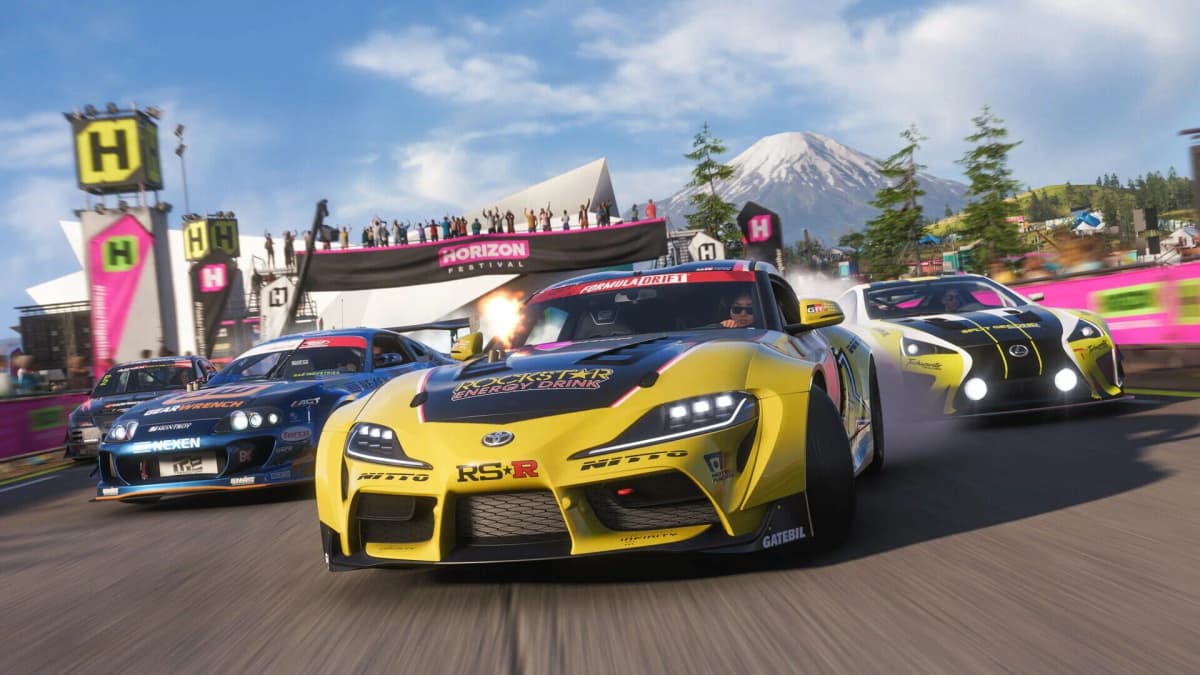
The uncomfortable part is that the game itself seems good
This is not a case where a weak game is hiding behind technical chaos. Early critical reception has reportedly been very strong, with several outlets praising the open world, the Japan setting, and the overall quality of Playground’s formula. That makes the PC backlash more consequential, not less. When the underlying game is good, launch friction becomes less forgivable because it feels self-inflicted.
Forza is not some fragile new live-service experiment trying to discover what a storefront is. This is a flagship Microsoft racing series landing on Steam in 2026. The baseline expectation is not perfection. It is competence. Especially when the product being sold is premium early access, a model that effectively charges players extra to be there before the general audience. The implicit deal is simple: pay more, play sooner. If the reality is pay more, troubleshoot authentication, risk save weirdness, and navigate mixed messaging around progression and account linkage, that is not early access as a perk. It is early access as unpaid QA with a luxury price tag.
There is also a second complaint hiding underneath the technical noise: progression. Some early player reactions have criticized how progression is paced or surfaced, including claims that advancement feels too fast or oddly structured. That is a design conversation rather than an access one, but the two stack badly. If players are already annoyed by sign-ins and entitlement checks, they are not going to be charitable about onboarding, economy tuning, or save behavior. Launch friction poisons the read on everything else.
The real question is whether Microsoft treats this as a support issue or a systems issue
The obvious PR response is to patch the game, improve support messaging, and wait for the full release audience to dilute the Steam review ratio. That may work numerically. It does not answer the more important question.
What exactly is failing in the access chain on PC? Is this a storefront entitlement problem, a Microsoft account dependency problem, a cloud-save conflict, a launch-day server bottleneck, or several of those at once? Right now, too much of the public guidance sits at the level of generic troubleshooting: refresh entitlements, verify files, re-authenticate, clear local issues, try again. Anyone who has dealt with Steam login throttling, cached credential failures, VPN conflicts, or offline-mode weirdness knows that these can all produce symptoms players flatten into “DRM.” Sometimes unfairly. Often understandably.
The studio does not need to win a terminology argument. It needs to state, plainly, which dependencies are mandatory for launch, what conditions are required for offline play to work reliably, whether progression bugs are tied to cloud synchronization, and whether any current fixes are temporary workarounds rather than actual resolutions. Players can handle bad news. What they do not tolerate for long is ambiguity from a company that absolutely knows more than it is saying.
What to watch next
- Whether Playground or Microsoft publishes a specific breakdown of the PC access failures instead of broad support advice.
- Whether Steam user sentiment improves after the full release window, which would suggest early-access load or entitlement handling was part of the problem.
- Whether save corruption, progression complaints, and account sign-in issues get acknowledged as separate bugs rather than folded into one vague “launch issues” bucket.
- Whether anti-piracy enforcement messaging cools down once the leak cycle passes. Right now it is amplifying panic more than confidence.
Forza Horizon 6 may still settle into a normal post-launch recovery. Big PC games often do. But the early signal is not subtle: when a premium edition asks players to pay for convenience, any dependency that turns access into a negotiation becomes the story.
FinalBoss // Gear
Level up your setup
01Racing wheels (PC & PS5)on Amazon→02High-refresh gaming monitorson Amazon→03Gaming chairson Amazon→04Discounted game keyson Kinguin→Affiliate links · As an Amazon Associate, FinalBoss earns from qualifying purchases.
Want to Level Up Your Gaming?
Get access to exclusive strategies, hidden tips, and pro-level insights that we don't share publicly.
Ultimate Gaming Strategy Guide + Weekly Pro Tips