
Table of Contents (11)
Forza Horizon 6 on PC: A Good Port With One Very Costly Menu
The useful starting point with Forza Horizon 6 on PC is simple: the game is not difficult to run until you begin chasing its premium features. Early coverage from Rock Paper Shotgun, PC Gamer, IGN, and Digital Foundry points to the same broad conclusion. This is a well-scaled racer that can stretch from handhelds to expensive desktops, but the moment ray tracing enters the picture, the cost curve stops being friendly.
That distinction matters because it changes the buyer question. The question is not whether Forza Horizon 6 is a broken PC port. It does not look like one. The real question is whether the shiny PC-only rendering upgrades are worth what they demand in actual racing conditions, where image stability, frame-time consistency, and clean motion matter more than a perfect paused screenshot.
This is not a disastrous port. It is a disciplined port with one indulgent menu. If the goal is 1080p or 1440p with strong visual settings and reliable framerates, there is good news here. If the goal is to enable every ray-traced option and call it a day, the good news gets expensive very quickly.
The player question this article answers
The practical question is straightforward: what should actually be enabled, lowered, or ignored to get the best version of Forza Horizon 6 for a given class of hardware? That includes desktops that want 60fps without wasted performance, high-refresh PCs that care more about frame pacing than menu bragging rights, and Steam Deck users dealing with the reality that “Verified” and “comfortable” are not the same thing.
Because the game appears to scale broadly, bad tuning decisions become the main way to turn a smooth racer into a compromised one. That is why ray tracing, upscaling quality, CPU limits, and handheld constraints matter more than the marketing-friendly headline that the game “runs on everything.”
Specifications
Ray tracing is where the math changes
The broader industry context is useful here because it shows that Forza Horizon 6 is not breaking some magical new rule. TechSpot’s 2025 survey of 36 games found that enabling ray-traced global illumination could cut performance by roughly 29% on an RTX 4090 and 27% on a Radeon 7900 XTX in a lighter configuration. At maximum settings, the penalty climbed to about 37% and 44%. Across 59 ray-traced configurations, the RTX 4090’s lead over the 7900 XTX widened dramatically with RT enabled, especially once more demanding modes came into play. The main lesson is blunt: ray tracing is still a large, measurable tax even on very fast GPUs.
Forza Horizon 6 fits that pattern. Reported testing and analysis describe two major PC-facing premium features: ray-traced reflections and ray-traced global illumination. Neither is free. More importantly, they are expensive in a genre that exposes performance weakness instantly. A slower-paced RPG can hide some instability behind camera movement and deliberate pacing. An open-world racer cannot. When the scenery is flying past at speed, any performance drop is easier to feel and any image artifact is easier to spot.
RT reflections are the more obvious visual upgrade. Cars are reflective objects by design, and Forza loves glossy bodywork, wet roads, windows, puddles, polished interiors, and nighttime city surfaces that act like moving mirrors. If a developer wants a ray-tracing feature that players can notice quickly, reflections are the obvious candidate.
RTGI is the more systemic feature. It touches scene lighting and indirect bounce rather than a single class of shiny surfaces. That usually makes it the more dangerous toggle for performance, because it is not isolated to the hero car. It changes how the world is lit, how tunnels transition, how overcast scenes sit, how urban night lighting bleeds, and how objects feel grounded in space. The problem is that a global feature can carry a global bill.
Without a unified set of identical public benchmarks for every RT permutation, it is safest to avoid false precision. But the pattern is clear enough. If only one premium effect is being tested, reflections are easier to justify visually. If the goal is to avoid the worst performance drops, RTGI is the first expensive toggle to leave disabled. The expensive part is not just that ray tracing lowers average fps. It lowers your margin for mistakes everywhere else in the settings menu.

The visual return is real, but it is not proportional to the bill
This is where the game’s PC story gets interesting in a slightly frustrating way. Multiple outlet impressions describe the ray-tracing results as competent rather than transformative. That sounds harsh, but it is also fairly believable in context. Forza Horizon 6 already has a strong baseline presentation, and at racing speed, the difference between “very good” and “technically superior” can collapse faster than benchmark charts suggest.
In a static scene, ray-traced reflections can make paintwork, glass, and wet surfaces look cleaner and more physically convincing. RTGI can improve depth, bounce, and subtle environmental cohesion. On a photo mode pass, that matters. During a night drive through a dense urban district, it matters more. In tunnels, dusk scenes, and weather-heavy conditions, it can matter again.
But Forza Horizon 6 is not a gallery application. It is a fast, broad, frequently sunlit open-world racer. Much of the time, players are not staring at a single body panel and judging reflection fidelity. They are reading corner entry, traffic gaps, braking points, road texture, and environmental motion at speed. In those moments, crisp temporal stability and a solid frame rate buy more than expensive lighting theory.
A screenshot can flatter ray tracing more than a race does. That is not an anti-RT argument. It is a genre argument. The faster the game, the less patience there is for expensive features with subtle returns. The cleaner logic for most hardware tiers is to lock in stable performance first, then test reflections, and leave RTGI as a high-end curiosity unless the hardware margin is obvious.
CPU pressure matters more than the average-fps headline
One of the more useful notes from reported early analysis is that Forza Horizon 6 appears to be notably CPU-sensitive. That is not shocking. Open-world racers do not just render pretty roads. They stream terrain and assets at high speed, manage traffic and AI, process physics, handle weather and lighting transitions, and keep frame delivery clean while the map changes aggressively around the player.
That kind of workload creates a different kind of bottleneck from a pure GPU-bound showcase. It means some systems will look comfortable in average-fps charts while still feeling uneven on the road. A racing game can feel worse at an unstable 95fps than at a properly capped 72fps or 60fps with cleaner frame pacing. The sensation of speed amplifies inconsistencies. Brief hitches are not background noise here; they are part of the handling feel.
This is also why some outlet results are not actually contradictory. IGN’s reported ability to tune toward a 4K/60 target on an RTX 5070 and PC Gamer’s emphasis on CPU heaviness can both be true. One describes a workable GPU strategy. The other describes the engine’s sensitivity to broader system behavior, especially when chasing high refresh rates or running through busier traversal scenarios.
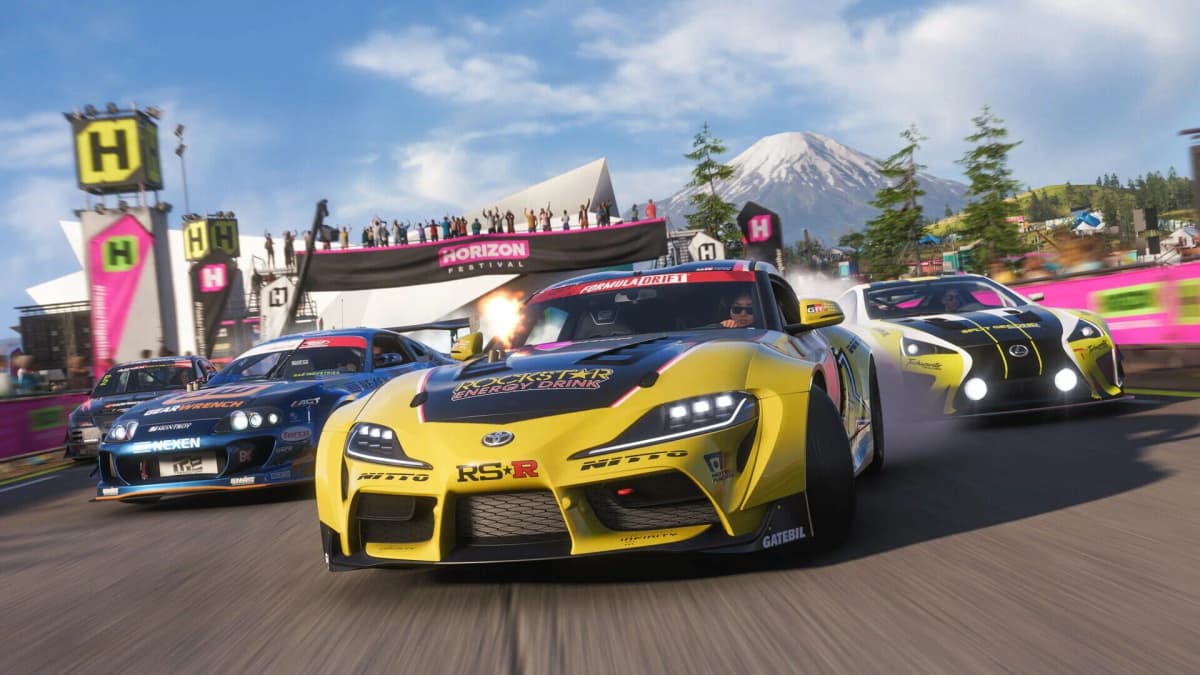
The practical implication is conservative and useful. If the GPU is strong but the experience is not perfectly smooth, do not immediately throw more upscaling at the problem. Start by reducing the settings that usually hit scene complexity, object density, shadow-distance style behavior, and world detail before sacrificing the car model or image clarity. In a Forza game, the car is always on screen. Distant scenery at the edge of visibility is not equally important.
Upscaling helps, but this genre exposes its worst habits
Modern PC graphics menus now treat upscaling as normal equipment, and Forza Horizon 6 appears to follow that pattern with DLSS, FSR, XeSS, and frame-generation support in the mix. On paper, this should make the game more flexible across device classes. In practice, racing games are one of the nastier tests for temporal reconstruction because the screen is full of thin geometry, lateral motion, high-contrast detail, and rapid environmental sweep.
That is where reported ghosting complaints make sense. Fence lines, roadside foliage, lane markings, wheel spokes, power cables, signs, spray, and fast-moving reflections are exactly the sort of elements that can look acceptable in a still frame and then smear, shimmer, or trail once the car is moving. In a racer, image stability matters more than screenshot quality and sometimes more than raw fps gains.
The safest advice is not glamorous. At 1080p, avoid aggressive Performance-style upscaling if image quality matters at all. The base resolution is already low enough that reconstruction artifacts become easier to see. At 1440p, Quality mode is the sensible first stop. At 4K, Balanced becomes more defensible because there is more native information for the algorithm to work with. If ray tracing is off, native rendering or the lightest quality-focused upscaler setting is usually the best-value path on stronger hardware.
Frame generation needs the same kind of restraint. It can improve perceived smoothness when the base frame rate is already healthy, but it is not a substitute for a weak core performance level. If the underlying frame rate is shaky or too low, frame generation can make the benchmark number look better without fixing input feel or visual stability. In a racing game, that tradeoff is easy to notice. Frame generation is a multiplier, not an emergency exit.
Steam Deck Verified is useful, but it does not cancel the compromises
The Steam Deck side of this conversation is a good example of how badges can mislead by omission. “Verified” answers a narrow but important compatibility question: the game works, text and controls are acceptable, and the basic experience is functional under Valve’s standards. It does not promise that the game is flattering on the hardware, and it definitely does not promise that every visual feature on the box is relevant on a 7-inch screen.
By the reported early guidance, Forza Horizon 6 is viable on Steam Deck, but only after meaningful cuts. That makes sense. The Deck survives on efficiency, modest native resolution, and the fact that its small display can hide some compromises that would look rough on a desktop monitor. It does not survive by brute force. RT should be disabled entirely. A low baseline preset is the sensible starting point, with selective recovery of the settings that still matter on a small screen, such as core car readability and basic texture filtering.
FSR 3.1 is part of that survival plan. Balanced is the cleaner first attempt. Performance is there if the frame budget still does not hold, but it should be treated as a compromise mode rather than a free win. A 30fps target is the conservative goal. Higher targets may be possible in lighter scenarios or with harsher settings, but the stable handheld experience is the one worth prioritizing.
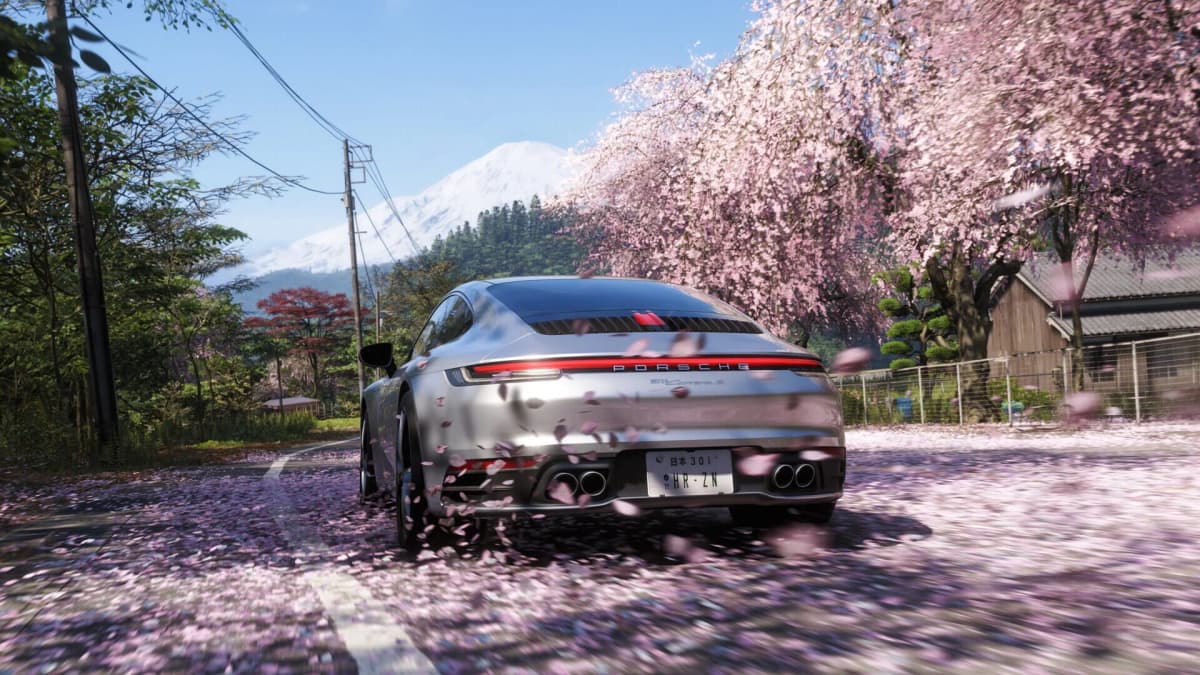
Storage is the other quiet constraint. One of the more practical warnings from early Deck-focused coverage is that the install footprint is large enough to make space planning a real part of the experience. On handhelds, that matters almost as much as frame rate. A game can be technically playable and still be awkward to live with if it consumes too much internal storage or forces constant library reshuffling. Steam Deck Verified is not the same thing as Steam Deck comfortable.
A settings profile that avoids the obvious mistakes
If the goal is to get the best real-world result rather than the most dramatic menu screenshot, the tuning hierarchy is fairly clear.
| Setting category | Recommended approach | Reason |
|---|---|---|
| Texture quality | Keep reasonably high if memory headroom allows | Textures usually age well visually and often cost less than premium lighting features |
| Car detail / hero asset quality | Prioritize | The car is the focal point of the game; this is where visual spending makes sense |
| World density / shadow-distance style options | Lower one step first when chasing smoothness | These settings often hit CPU and scene complexity harder than players expect |
| RT reflections | Only test on upper-tier hardware after the baseline is already stable | They are noticeable, but still expensive |
| RT global illumination | Leave off unless using high-end hardware with obvious headroom | It is the most economically questionable premium toggle |
| Upscaling mode | Native or Quality first; Balanced mainly at higher resolutions | Motion clarity matters in a racing game |
| Frame generation | Use only once the base frame rate is already comfortable | It improves presentation best when it is not covering for poor core performance |
The broad principle underneath that table is straightforward. Spend performance on the things the player sees constantly and avoid spending it on the things the benchmark chart notices more than the human eye does in motion. That means car fidelity, stable image quality, and consistent frame delivery come before expensive scene-wide lighting upgrades.
There is also a more cynical but useful way to say it: PC gets the prettiest version of Forza Horizon 6, but only the upper end of the market gets to enjoy that fact without negotiation.
Who benefits, and who should skip the expensive stuff
The best audience for Forza Horizon 6 on PC is still the mainstream enthusiast with sensible priorities: good desktop hardware, a 1080p or 1440p target, and no need to prove a point with every premium effect enabled. That player gets a lot here. The game seems capable of delivering the clean, fast, high-settings experience that an open-world arcade racer needs.
High-end GPU owners can justify experimenting with RT reflections, especially if the goal is 4K or a premium photo-mode-friendly build. Even there, RTGI remains the setting that should have to prove itself. It is the toggle most likely to turn a strong configuration into an argument with the frame-rate counter.
Steam Deck owners benefit if they treat the game as a competent portable adaptation rather than a technical flex. It is viable. It is not luxurious. That distinction should shape expectations from the start.