
Forza Horizon 6 is experiencing a save corruption failure that is resetting player progress across PC, Steam, Xbox Series X|S, and PlayStation 5. The issue is not a uniform data loss. Reports indicate a patterned failure: progress wipes cluster around specific vehicle modifications and platform-level sync interruptions, particularly involving Xbox Quick Resume and the Microsoft Gaming Services layer on PC. Playground Games has acknowledged the problem and is issuing patches, but until those patches stabilize, players are bearing the responsibility for preventing data loss through manual session management.
Table of Contents (4)
The Failure Pattern Targets Specific Assets and Behaviors
The progress loss is not randomly distributed. Affected players report wipe incidents concentrated around specific vehicles and modification states. The Wuling Sunshine, Chevrolet Bel Air, Ford F-150 SVT Lightning, Lamborghini Countach LP5000QV, and Ford M-Sport Fiesta RS appear repeatedly in player reports as common denominators preceding a save reset. This clustering suggests a serialization error-likely within the vehicle asset pipeline or tuning data stream-that corrupts the save file when the game attempts to write specific modification states to cloud storage.
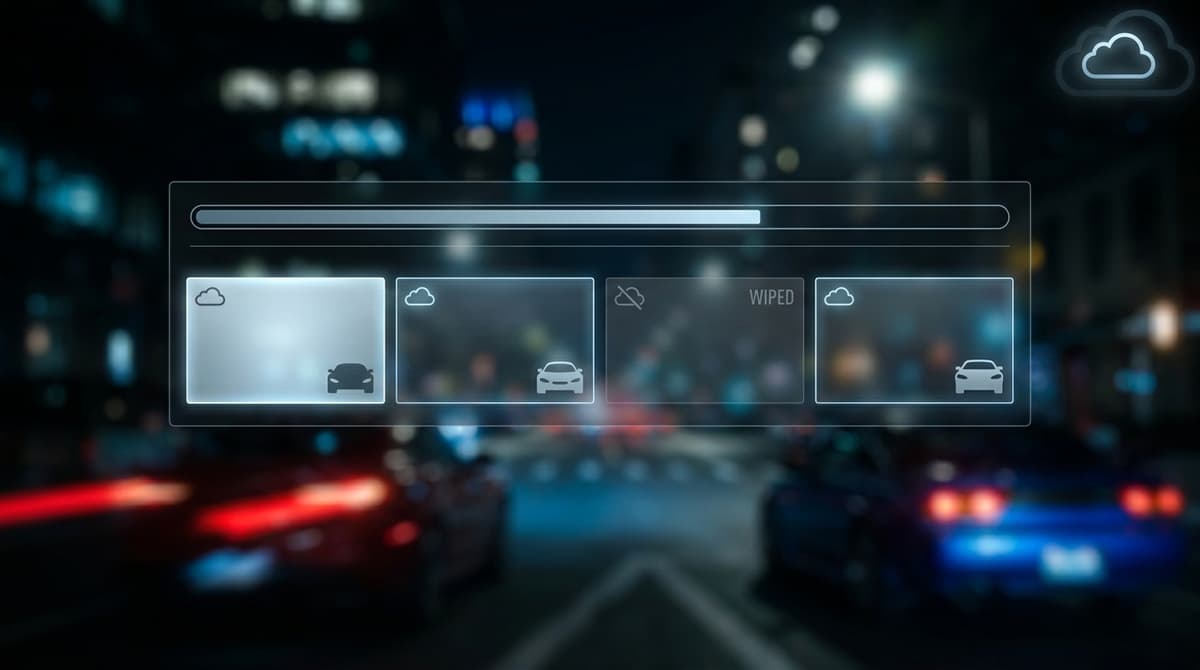
On Xbox Series X|S, the interaction with Quick Resume appears to be a significant accelerator. Quick Resume suspends the game state without terminating the active session cleanly, creating a race condition between local cache writes and cloud sync uploads. When players relaunch the title through Quick Resume after a system reboot or title switch, the local save state and cloud manifest can desynchronize. If the corruption trigger-such as modifying one of the affected vehicles—occurs during that desynchronized window, the cloud save can overwrite valid local data with a corrupted or empty manifest.
On PC, the failure vector runs through Microsoft Gaming Services. Players on Windows and Steam are advised to update Microsoft Gaming Services to version 37.114.10001.0 or later, checked via Windows Settings under Apps or through the Microsoft Store update page. An outdated Gaming Services layer mishandles the cloud sync API calls for Forza Horizon 6, resulting in incomplete uploads or silent overwrite failures. The dependency is not visible to the player until progress vanishes, which indicates a lack of pre-launch validation for the PC release pipeline.
PlayStation 5 reports show fewer platform-service-specific clusters, but the same underlying vehicle-linked asset corruption propagates when cloud sync is interrupted by an application crash or an abrupt termination. The cross-platform nature of the failure implies that the root cause sits within the game’s save serialization logic rather than a single platform’s OS layer, though each platform’s sync infrastructure determines how that corruption manifests and whether it becomes permanent.
The Workarounds Reveal an Infrastructure Problem
The current mitigation strategy shifts the burden of data integrity onto the player. Forza Support recommends disabling Xbox Quick Resume entirely for Forza Horizon 6, exiting the game only through the in-game menu, allowing additional time after quit for the cloud sync indicator to complete, and fully closing the application before switching between Xbox and PC via cross-save. These are not gameplay adjustments. They are manual corrections for a platform architecture that is failing to guarantee transactional save consistency.
Disabling Quick Resume is particularly telling. The feature is a first-party platform convenience designed to mask load times by maintaining suspended memory states. That it must be disabled to prevent catastrophic data loss indicates a fundamental incompatibility between the game’s save pipeline and the Xbox operating system’s suspension model. The game is not receiving a clean shutdown signal, or its autosave routine is not atomic enough to survive a suspended state. A flagship first-party-adjacent title should not require players to opt out of a core console feature to preserve their progress.
The PC directive is equally revealing. Requiring a manual update to Microsoft Gaming Services—distinct from the game client or the Steam client—points to a dependency fracture. The save sync is brokered through a Windows subsystem that can lag behind the game’s deployment schedule. When that subsystem is out of date, the game loses its ability to maintain a coherent cloud state without warning. The fact that this dependency is not enforced at launch or auto-resolved by the platform suggests inadequate integration testing between the game build and the middleware version.
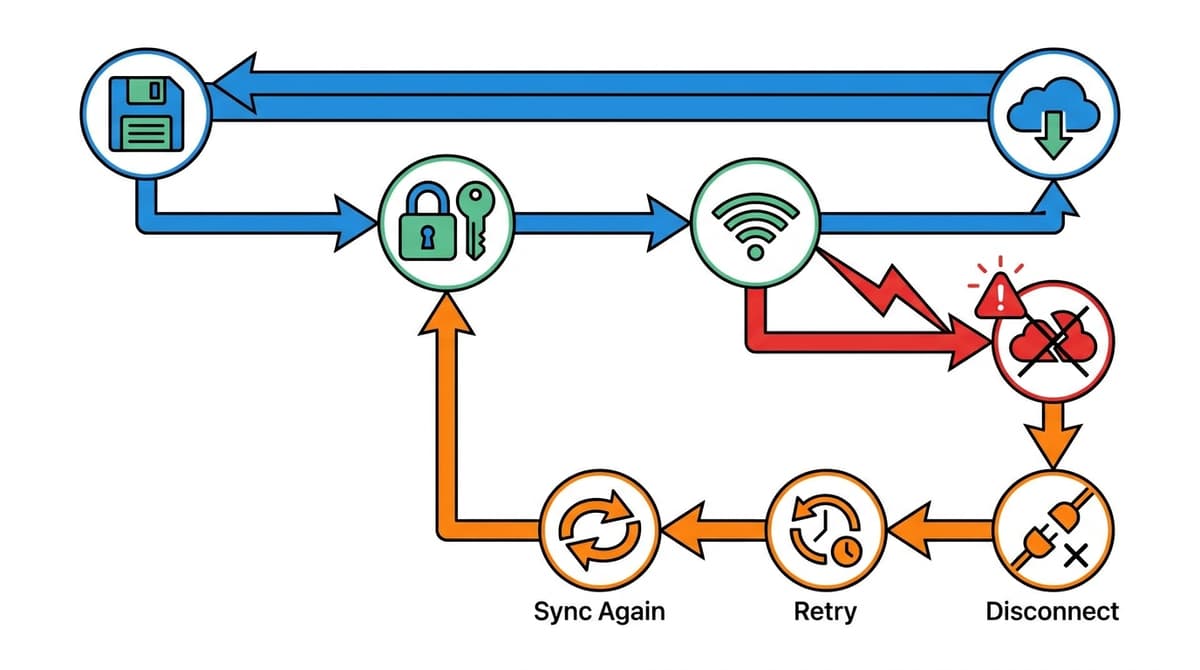
The unavoidable question is why a 2026 release retains a save architecture vulnerable to an interrupted session. Modern live-service titles typically implement atomic save transactions, server-side manifests, and rollback snapshots. Forza Horizon 6’s reliance on a fragile local-to-cloud handoff, combined with vehicle-specific serialization errors, points to a legacy save system pressed into a cross-platform live-service model without sufficient hardening.
What Recovery Actually Looks Like
Playground Games is investigating the root cause and deploying patches. However, the studio has not confirmed that all forms of lost progress are recoverable. Some player reports indicate that partial restoration is possible—inventory items, acquired vehicles, and currency may be restorable from server-side logs—but campaign progress, completed events, and collectible states may not be. This distinction defines the severity of the failure. A currency rollback is an inconvenience. A campaign reset after forty hours is a product-breaking event.
The investigation into vehicle-specific triggers remains open. Playground Games has not confirmed which modifications, paint applications, or tuning adjustments on the affected cars definitively cause the corruption. The current guidance is avoidance: do not modify the Wuling Sunshine, Chevrolet Bel Air, Ford F-150 SVT Lightning, Lamborghini Countach LP5000QV, or Ford M-Sport Fiesta RS until further notice. This is a reactive containment measure, not a fix. It implies that the save system is writing vehicle data in a format that the cloud sync layer cannot parse or reconcile under specific load conditions.
What to Watch
The next patch revision is the immediate checkpoint. Players should verify that any update addresses both the vehicle asset serialization and the cloud sync pipeline, not merely one or the other. A patch that fixes Quick Resume behavior without resolving the underlying vehicle data corruption will only mask the problem. Conversely, a patch that fixes the vehicles but leaves the Microsoft Gaming Services dependency unaddressed will continue to put PC players at risk.
Watch for platform-specific patch notes. Xbox, PC, and PlayStation 5 may receive staggered fixes, and the PlayStation 5 build may require a separate certification cycle. If the PlayStation patch lags behind Xbox and PC, that gap will indicate whether the root cause is unified across platforms or if the consoles are experiencing distinct failure modes under the same symptoms.
Monitor recovery outcomes closely. If post-patch player reports confirm that pre-wipe campaign progress is restorable from server snapshots, the damage is reversible. If reports continue to state that only inventory is restored while event completion and map progress are lost, then the save architecture lacks server-side granularity for true rollback. That limitation would have long-term implications for how Forza Horizon 6 handles future live-service updates and seasonal resets.
Finally, observe whether Playground Games updates the Microsoft Gaming Services minimum version requirement or automates that dependency. If the PC fix remains a manual step buried in Windows Settings, the studio is signaling that the platform layer is outside its direct control—a frank admission, but one that leaves the player base exposed to the same failure mode whenever Microsoft updates its gaming middleware again.
FinalBoss // Gear
Level up your setup
01Racing wheels (PC & PS5)on Amazon→02High-refresh gaming monitorson Amazon→03Gaming chairson Amazon→04Discounted game keyson Kinguin→
Affiliate links · As an Amazon Associate, FinalBoss earns from qualifying purchases.
Want to Level Up Your Gaming?
Get access to exclusive strategies, hidden tips, and pro-level insights that we don't share publicly.
Ultimate Gaming Strategy Guide + Weekly Pro Tips