
Foxhole’s 70-Day ‘Forever War’ Ends After 9 Million Deaths — What Devs Changed and Why It Matters
Game intel
Foxhole
Foxhole is a massively multiplayer game where you will work with hundreds of players to shape the outcome of a persistent online war. Every individual soldier…
Why this caught my attention
Foxhole’s community just lived through a war that sounds like a tall tale: more than 70 days of continuous fighting on the Charlie server, over nine million player deaths, and a stalemate so entrenched the developers stepped in and changed the win conditions mid-campaign. As someone who follows Foxhole and the broader “player-driven war” space (think EVE’s economy wars or PlanetSide 2’s server alerts), this stood out because it tests the core promise of these games: if players make the history, when is it okay for the devs to write an ending?
Key takeaways
- The Charlie server’s “Forever War” dragged on for ~71 days and racked up 9 million virtual deaths.
- Both factions maxed the tech tree, turning the map into a logistics grinder with tiny territorial gains.
- Siege Camp lowered the victory point requirement to break the deadlock and help new players contribute.
- Community reaction was split: relief at closure vs. concern about devs altering rules mid-war.
What actually happened on Charlie
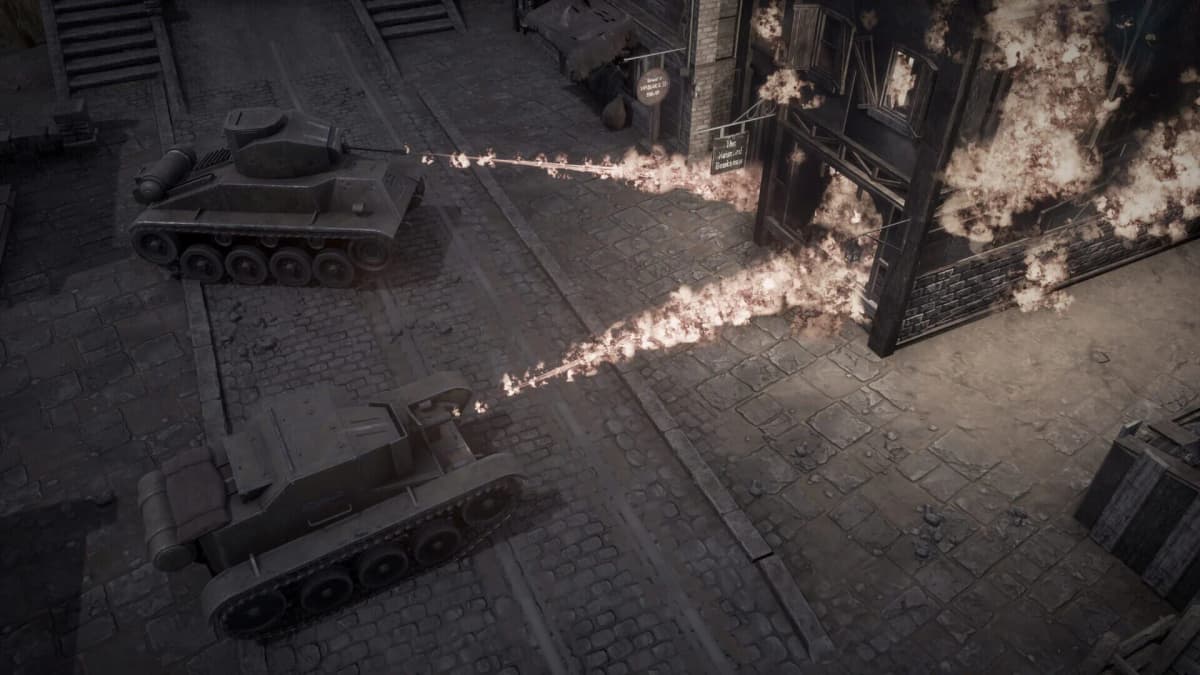
Foxhole’s wars are long-haul by design. You don’t just spawn a tank; someone mined the ore, refined it, crafted components, fueled the truck, built the facility, then a squad fought tooth and nail to move the frontline. On Charlie, that conveyor belt never turned off. Both factions unlocked essentially everything-tanks, artillery, naval guns, late-game logistics-then settled into an attritional loop. Supply lines ran hot with BMATs and diesel. Storm cannon shots traded across no-man’s land. Towns flipped and re-flipped for days with minimal VP impact.
At that point, the numbers get perverse. When every frontline is fortified and both sides can instantly backfill losses with deep stockpiles, the war stops feeling like a campaign and starts feeling like maintenance. New players join in with rifles and a shovel, but the meta expects armored columns and 120mm shells. It’s impressive, sure-but it’s also exhausting.
Why Siege Camp changed the rules
Siege Camp (the studio formerly known as Clapfoot) did something they rarely do: they intervened. Specifically, they lowered the victory point threshold—the total needed to win the war—so a decisive result was actually within reach. Purists will bristle, but I get the logic. When a campaign hits full tech saturation, the marginal value of each play session plummets. Veterans bunker down. Newcomers bounce off. Content scheduling freezes. And the community mood slides from “epic war story” to “are we stuck here forever?”
By trimming the VP target, Siege Camp created gravity. You could feel it in how both factions reportedly emptied depots for a last, glorious push: stockpiled tanks rolled, artillery positions sang, and players burned through reserves they’d been hoarding for weeks. That kind of “all-in” finale is exactly the catharsis a persistent war sometimes needs—but it also sets a precedent.
The community split: authenticity vs. playability
From what I’ve seen across Foxhole spaces, reactions split down expected lines. One camp was grateful: the war had become a slog, and this was a measured nudge that kept the spirit of the game intact. The other camp worried about the slippery slope: if devs can change the end condition mid-stream, what does “player-driven” really mean when the grind gets tough?
Both perspectives have a point. I’ve argued before that live-service war games need rulebooks that anticipate stalemates. EVE did it with resource “scarcity” and industry overhauls (messy but purposeful). PlanetSide used continent locks and alerts to force cadence. Foxhole’s strength is its ironclad logistics sim, but that also means it risks calcifying when both sides reach industrial parity. If the only breaker is “devs lower VP,” players will expect a deus ex patchina whenever morale dips.
Want to Level Up Your Gaming?
Get access to exclusive strategies, hidden tips, and pro-level insights that we don't share publicly.
Ultimate Gaming Strategy Guide + Weekly Pro Tips
How Foxhole could avoid the next stalemate
If Siege Camp wants to keep interventions rare, bake the breaker into the ruleset. Ideas Foxhole could test without betraying its ethos:
- Dynamic victory scaling: after X days, the VP target begins to tick down unless one side gains Y net towns. It rewards momentum, not just entrenchment.
- Tech wear and attrition: late-game equipment could require escalating upkeep or rare materials that slowly deplete, nudging factions back into combined arms instead of endless heavy metal stalemates.
- Logistics strain events: weather or seasonal modifiers that hamper long supply lines, making deep pushes riskier and opening windows for breakthroughs.
- Frontline fatigue: defenses left untouched decay faster, forcing commanders to rotate fronts and preventing permanent Maginot Lines.
- New-player impact levers: limited-time objectives where basic kits (rifleman/engineer) contribute outsized value—think expedited fortification tasks or partisan raids that disrupt enemy fuel.
None of this kills the fantasy of a persistent war. It just acknowledges that a months-long campaign needs a rhythm—build-up, breakthrough, rebuild—so the war feels like a story, not a spreadsheet.
What this means if you’re thinking of jumping in
In the short term, this was the right call. The Forever War got its finale, Charlie’s map can breathe again, and new players won’t be onboarding into a fortified hellscape where their best contribution is hauling crates to a black hole. If you’ve been Foxhole-curious, post-war is actually a great time to learn logistics routes, try builder roles, and slot into squads before the tech race accelerates again.
Long term, I’ll be watching whether Siege Camp codifies a stalemate solution. The studio has big ambitions (see sister project Anvil Empires), and their communities love the promise of history written by players. The trick is preserving that promise while admitting that sometimes, left alone, history gets stuck. Charlie just proved it.
TL;DR
Foxhole’s Charlie server war lasted roughly 71 days and produced over nine million deaths before Siege Camp lowered the victory requirement to break a stalemate. It worked—and the finale was worth watching—but the real win will be designing future-proof systems so the next epic war ends because players made it end, not because the devs had to cut the tape.