
The FPS multiplayer-mode tournament uses a 16-entry single-elimination bracket, and Round 1 opens with eight head-to-head votes. Its matchups force very different kinds of shooter fun — objective play, survival tension, mechanical skill, and social chaos — into direct competition.
This is a reader-voted, single-elimination tournament to decide the greatest FPS multiplayer mode. Each head-to-head produces one winner; the loser is out, and the survivors move into Round 2. The field has 16 selected formats, which means Round 1 starts with eight pairings, not seven.
The bracket compares reusable multiplayer archetypes, not one particular game’s version of them. That matters because map design, respawn rules, scoring, team size, and loadouts can radically change how a mode feels. A strong vote should reward the format readers would choose to replay across many shooters, rather than a favorite memory tied to one specific implementation.
Table of Contents (13)
How the mode categories work
The cleanest way to read this bracket is to treat every entry as a parent category. These are broad FPS mode families that show up across multiple games, not rigid one-to-one rulesets. A mode can still belong to the same category even if one game tweaks respawns, another changes scoring, and a third turns it into a round-based format.
That also means aliases and close variants need to be folded consistently. If two names point to the same core loop, they belong under one bracket slot. If the loop changes the match’s real objective, it deserves its own lane.
- Team Deathmatch means team-based elimination combat. Team Slayer fits here because the important distinction is team play, not the branding.
- FFA/Deathmatch means every player for themself. If a game uses deathmatch-style naming inconsistently, sort it by rules: solo belongs here, team-based does not.
- Bomb covers plant-and-defuse attack-and-defense rounds. Hostage stays separate because rescue and extraction create a different flow.
- Conquest, Domination, and King of the Hill are all control modes, but they are not interchangeable: Conquest is broad territory warfare, Domination is about holding a few fixed points, and King of the Hill compresses the fight around one active zone.
- Attack & Defend is distinct from Bomb because the core pressure is pushing into defended objectives, not planting and defusing a device.
- Payload, Capture the Flag, and VIP all create objective play, but escorting a cart, stealing a flag, and protecting one high-value player ask for different teamwork and map control.
- Gun Game, Infection, Prop Hunt, Battle Royale, and Extraction stand on their own because each one changes the whole shape of the match.
- Smaller variations roll up into their parent mode. Kill Confirmed, for example, sits under Team Deathmatch rather than taking a separate seed.
How the FPS modes tournament works
- The bracket starts with 16 multiplayer-mode categories and eight Round 1 matchups.
- Every round is single elimination: one vote winner advances and one mode is removed.
- The categories are broad FPS formats that have appeared in multiple games.
- Smaller variations are folded into their parent format instead of getting separate bracket slots.
- Round 1 voting is scheduled to close Saturday, October 3 at 11:59 p.m. PDT.
- Results and Round 2 are scheduled for the following week.
The biggest trap is treating this as an objective history of the genre. A knockout bracket measures head-to-head preference. A mode can be historically important, technically deep, or beloved by a dedicated community and still lose because it drew a brutal first-round opponent.
What to expect as the bracket updates
The progression is simple. When Round 1 closes, each of the eight polls produces one winner and one elimination. That cuts the field from 16 modes to eight, and those eight move into Round 2 the following week alongside the published Round 1 results.
From there, single elimination keeps chopping the bracket in half. Round 2 reduces eight modes to four, the next round reduces four to two, and the final decides the overall winner. The useful expectation for voters is the cadence, not the minute-by-minute schedule: vote in the current head-to-heads now, then expect the next set of survivors and matchups the following week.
The eight Round 1 matchups
- Bomb vs. Hostage — Plant-and-defuse versus rescue-and-denial; structured rounds or fluid objectives.
- Gun Game vs. Payload — Weapon progression versus escort teamwork; individual adaptation or coordinated pressure.
- Infection vs. Prop Hunt — Escalating survival versus disguise and searching; threat and movement or deception and comedy.
- VIP vs. Capture the Flag — Protecting a player versus transporting an item; focused defense or map-spanning offense.
- Team Deathmatch vs. FFA/Deathmatch — Team eliminations versus every-player-for-themself; reliable teamwork or pure personal agency.
- Battle Royale vs. Extraction — Last side standing versus loot-and-escape risk; mass-scale survival or high-stakes decision-making.
- Conquest vs. Domination — Large territorial warfare versus tight point control; expansive front lines or concentrated objective fights.
- Attack & Defend vs. King of the Hill — Structured objective pushes versus constant hill contests; phased momentum or nonstop zone pressure.
1. Bomb vs. Hostage
Bomb, or Bomb Defusal depending on the game, is the cleaner competitive format. One side attacks by planting an objective, the other stops the plant or defuses it, and every second after the objective is armed becomes a pressure cooker. The format gives both teams clear jobs, predictable decision points, and plenty of room for coordinated flanks, information play, and clutch retakes.
Hostage asks teams to fight over extracting or protecting a person instead. That seemingly small change produces a more mobile endgame: defenders must protect routes and rooms, while rescuers need enough control to move the hostage safely. Vote Bomb for disciplined rounds with a sharp win condition. Vote Hostage for a rescue objective that can shift the fight across the map.
2. Gun Game vs. Payload
Gun Game earns its bracket spot because it exposes whether a player can adapt. Each elimination advances the player through an ordered weapon list, so one strong loadout cannot carry the entire match. The best rounds turn awkward weapons into the real hurdle, while the final weapon creates a finish-line panic that ordinary deathmatch rarely matches.
Payload runs on the opposite fuel: teamwork. Attackers escort an objective along a route, defenders contest it, and the map naturally produces staged fights around corners, checkpoints, and final holds. Gun Game is the better pick for players who want a compact mechanical challenge. Payload should win for players who value role coordination and a match that tells a clear offensive-versus-defensive story.
3. Infection vs. Prop Hunt
Infection is controlled escalation. Players begin divided between survivors and infected, then every successful infection makes the surviving side’s problem worse. A round that starts with casual movement can collapse into a desperate final stand, and that changing balance is the entire appeal.
Prop Hunt turns the FPS map into a hiding game. One side disguises itself as scenery; the other has to read spaces closely enough to identify the chair, crate, or decoration that is slightly wrong. Infection has more forward momentum and tension. Prop Hunt has the better social chaos, especially when a hiding spot is clever enough to survive several searches.
4. VIP vs. Capture the Flag
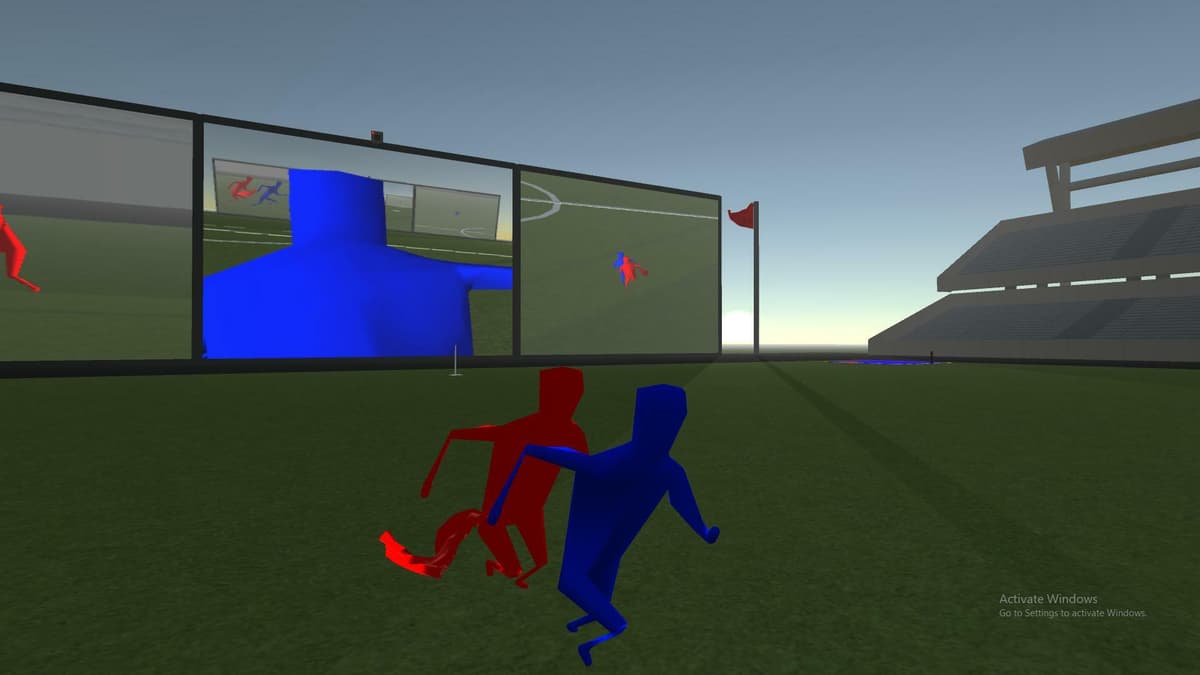
VIP concentrates a whole round around one high-value player. The designated target must be protected, escorted, hunted, or eliminated depending on the ruleset. That focus gives every teammate a reason to care about positioning, but it can also make one player’s early mistake decide the round too quickly.
Capture the Flag remains the more complete format. Teams steal the opposing flag and return it home, so defense, offense, routes, interception, and timing all matter at once. It supports heroic flag runs and last-second returns without asking every player to orbit a single teammate. VIP is the sharper specialist mode; Capture the Flag is the more durable all-rounder.
5. Team Deathmatch vs. FFA/Deathmatch
This is the bracket’s most fundamental argument. Team Deathmatch divides players into sides and rewards collective eliminations. It is easy to understand, supports casual drop-in play, and turns even a simple firefight into a question of spawns, teammate positioning, and whether anyone can stop a streak.
FFA, or free-for-all Deathmatch, strips that support away. Every opponent is a threat, every kill belongs to the individual player, and there is no teammate to blame for a lost duel. It is the purer aim-and-awareness test, but it can become punishing when spawns are poor or a skilled leader controls the map.
Terminology can still confuse this matchup because some series use Slayer-style naming for deathmatch variants. The clean rule is simple: if it is team-based, it belongs with Team Deathmatch; if it is solo, it belongs with FFA. Team Deathmatch deserves the vote for immediate, repeatable team combat. FFA deserves it only if personal agency is the main thing a player wants from a shooter match.
6. Battle Royale vs. Extraction
Battle Royale is built for scale. Players or squads enter a large match, collect gear, survive a shrinking field of opponents, and try to become the last side standing. Its best moments come from the long arc of a match: early scrambling, mid-game rotations, and a final fight where every surviving squad has something to lose.
Extraction makes the exit the point. Players enter a contested map, gather objectives or loot, and need to leave successfully. The decision to stay for one more valuable item or head to an extraction point creates tension that a standard elimination mode cannot reproduce.
Battle Royale has broader spectacle and a cleaner victory condition. Extraction has more meaningful choices per match because success can mean getting out alive rather than wiping every opponent. This is the round where a vote reveals whether a player prefers grand survival stories or smaller, riskier operations.
7. Conquest vs. Domination
Conquest is territory control at its most expansive. Multiple capture points create shifting front lines, and the mode has room for squads to attack, defend, flank, or reinforce distant objectives. Its strength is scale: a player can influence a wider battle even without occupying the same lane for an entire match.
Domination uses control points too, but its loop is tighter and more immediate. Holding designated objectives generates score, so teams are repeatedly pulled into the same high-value zones. That makes Domination easier to read at a glance and better suited to players who want constant contact rather than a sprawling battlefield.
Conquest should advance if a mode needs room for multiple fronts, recoveries, and different player roles. Domination should advance if the best FPS match is a relentless fight over a few locations where every capture changes the score immediately.
8. Attack & Defend vs. King of the Hill
Attack & Defend is about structured pressure. One side pushes into defended space and tries to crack objectives; the other side delays, denies, and punishes every sloppy entry. At its best, the mode creates a strong sense of momentum because a breakthrough feels earned and a full hold feels even better.
King of the Hill compresses the same urge into a simpler fight. Both teams keep crashing into one scoring zone, which makes positioning, timing, and coordinated clears matter immediately. Attack & Defend is the stronger vote if phased objective play is what makes shooters sing. King of the Hill should take it if the best mode is the one that forces nonstop brawls over a single hotspot.
What makes a useful vote
- Choose the mode that stays understandable within a match, even for a new player joining late.
- Reward objectives that create real team decisions rather than merely giving players another icon to chase.
- Consider whether skilled players have room to improve without making losing players miserable.
- Give extra weight to formats that work across different map sizes and player counts.
- Separate a mode’s core design from a favorite game’s weapons, maps, progression, or community.
- Ask which format you would replay across many shooters, not only inside one great implementation.
Now that the full Round 1 field is clear, the tournament’s real divide is easier to see: clean competitive structure versus emergent chaos, team coordination versus individual expression, and short-round intensity versus longer survival stakes. That is exactly why this bracket works. It is not trying to prove one universal truth about FPS design. It is forcing players to decide which kind of fun they would keep coming back to when only one mode gets to advance.
FinalBoss // Gear
Level up your setup
01Graphics cardson Amazon→02Gaming laptopson Amazon→03High-refresh gaming monitorson Amazon→04Discounted game keyson Kinguin→Affiliate links · As an Amazon Associate, FinalBoss earns from qualifying purchases.
Want to Level Up Your Gaming?
Get access to exclusive strategies, hidden tips, and pro-level insights that we don't share publicly.
Ultimate Top Strategy Guide + Weekly Pro Tips