
Frostliner: Why This Train-Bound City-Builder Has Us Hooked
Game intel
Frostliner
The moon shattered. The world froze. Take command of a nomadic train city hurtling through a war-ravaged frozen wasteland. In this survival city builder on rai…
Imagine steering a steel behemoth across a shattered, frozen world—this is Frostliner. Solo developer Nathan Gane’s upcoming PC-exclusive city-builder on rails has already racked up thousands of Steam wishlists ahead of its confirmed 2026 release. Beyond the icy vistas and striking art style lies a web of inventive systems: power networks weaving through carriages, resource loops that keep your train alive, and emergent narratives born from life-or-death choices. We took a deep dive into what makes Frostliner tick, from boiler management to randomized expeditions, and why this indie ambition could redefine survival strategy.
Frostliner: Can This Train-Set City-Builder Redefine Survival?
1. A Mobile City-Building Challenge
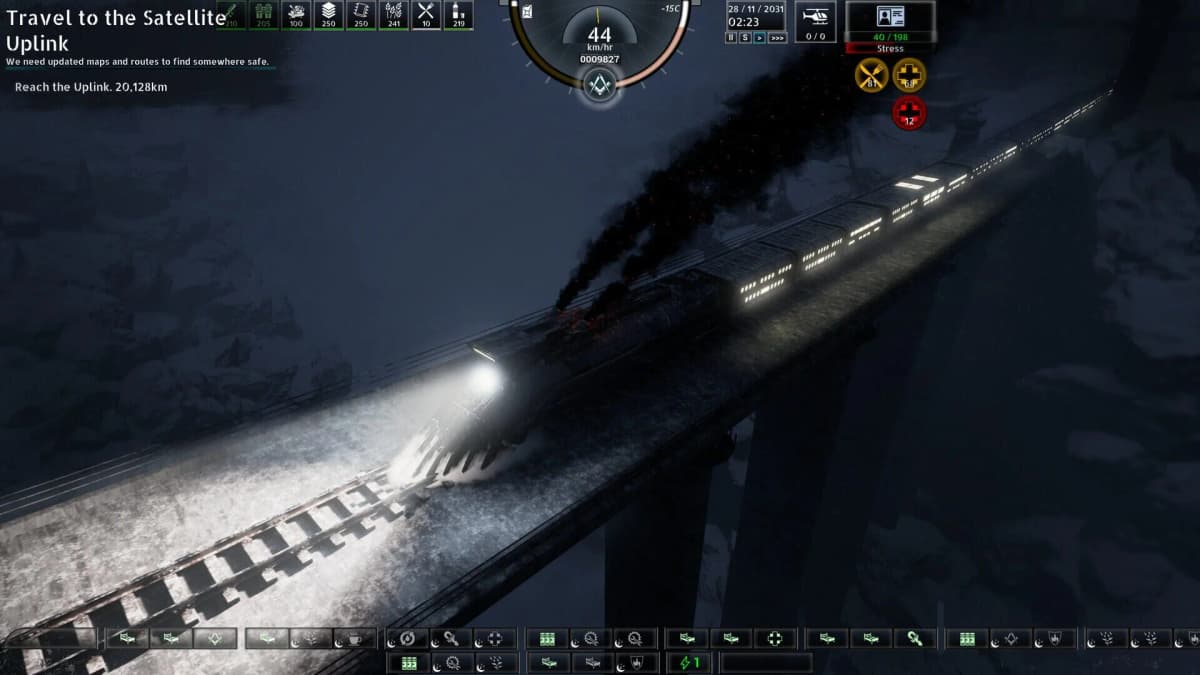
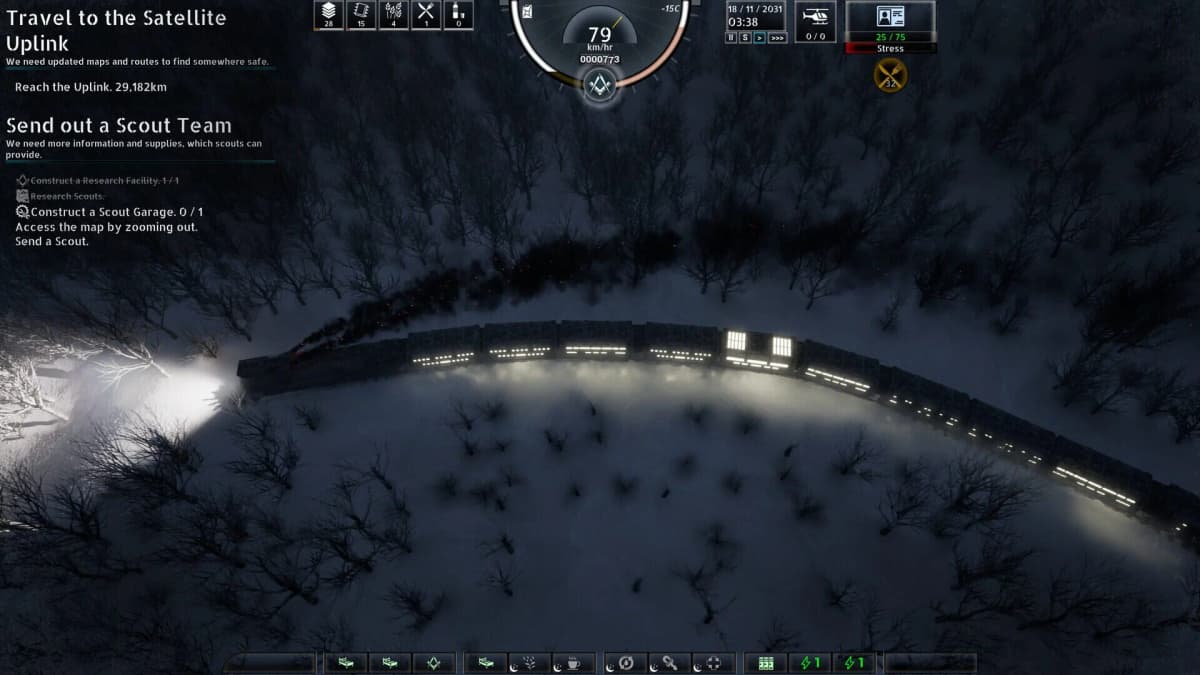
Traditional city builders drop you on a static map. Frostliner flips the script by turning your entire settlement into a locomotive hurtling through a frozen wasteland shaped by a shattered moon. Each carriage you bolt on—be it a hydroponic farm, workshop, or dormitory—boosts capacity but also ramps up total mass, power draw, and heat loss. Add too many cars and your boiler struggles to maintain steam pressure; add too few and frost besieges vital modules. This push-and-pull creates a constantly shifting puzzle: swap out heavy steel cars for lighter composites, upgrade insulation panels, or deliberately pause expansion to focus on core temperature control.
Track nodes and route choices layer another level of strategy on top. Do you risk a detour toward rumored abandoned rail yards for high-value loot or stick to main lines with reliable yet scarce supplies? Every mile affects fuel consumption, crew fatigue, and morale, turning what seems like a linear journey into a branching expedition that rewards foresight and adaptability.
2. On-the-Move Resource Orchestration
- Boiler and Fuel Management: Frostliner’s boiler isn’t a simple “add coal” mechanic. Raw coal, compressed biofuel, and scavenged oil each offer a unique burn curve—biofuel burns cleaner but yields less thermal energy, while oil spikes steam output at the cost of faster engine wear. Players must balance throttle settings and fuel mixes to crest icy passes without running dry miles from a refueling station.
- Power Networks and Adjacency Bonuses: Roughed-in wiring gives way to a modular power grid. Laying down power conduits between generators and high-demand carriages reduces transmission loss by up to 15 percent. Poorly designed loops can create bottlenecks, triggering brownouts that slow production lines or chill living quarters. Strategic adjacency—tucking a workshop next to a generator car or linking medical bays via insulated conduits—reshapes your train into a cohesive, self-sustaining unit.
- Resource Loops and Recycling: Frostliner encourages clever recycling. Scrap metal from dismantled machinery can be melted down in your workshop furnace, and condensate from steam vents feeds into your water purification system. Radiant heat from the boiler warms adjacent water tanks, cutting energy costs. These resource loops reward players who think holistically about their train’s ecosystem.
- Consumables and Morale Tracking: A real-time dashboard tracks rations, water, medicine, and spare parts down to the last unit. Let a deficit persist, and you’ll face sickness, reduced repair efficiency, or even insurrection. Morale links directly to temperature stability and communal spaces—cramped, frigid dorms will see your people lose hope faster than you can gather more coal.
3. High-Stakes Expeditions and Randomized Events
Staying still invites deadly frost; pushing on too fast risks running the rails bare. Frostliner’s expedition system hinges on sending out teams—mechanics, scouts, medics—in modular snowcats to gather resources or rescue survivors. Each member has unique skills: a medic might heal frostbite faster, while a scout can detect hidden supply caches under the snow.
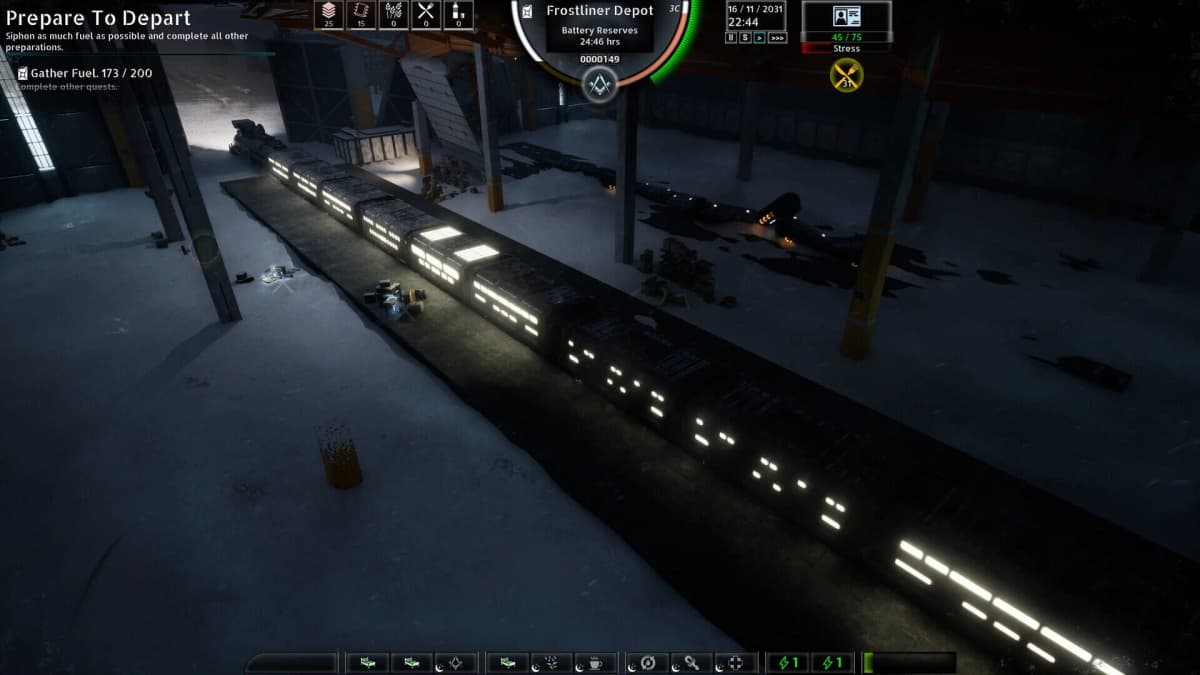
- Frostbitten Refugees: On some desert rail spurs, you’ll find desperate refugees. Rescuing them increases your workforce but drains fuel and rations and adds to compartment loads. Is the extra pair of hands worth the strain on your boiler?
- Icy Tunnel Failures: Unstable tunnels can collapse or pinch your train, causing forced stops. Quick repairs test your workshop layout—modular carriages slow down damage control when parts are scattered across the train.
- Raider Encounters: Raiders may ambush your convoy, demanding supplies in exchange for safe passage. You’ll choose between armed resistance, negotiations, or stealthy evasion—each choice leaves a mark on your supply levels and survivor morale.
Want to Level Up Your Gaming?
Get access to exclusive strategies, hidden tips, and pro-level insights that we don't share publicly.
Ultimate Gaming Strategy Guide + Weekly Pro Tips
4. Layout and Emergent Storytelling
Every carriage is a tile in a shifting spatial puzzle. Place workshops adjacent to power hubs and shave repair times by up to 20 percent; cluster living quarters around insulated cars and boost healing rates and morale. Frostliner tracks these layout-driven synergies and occasionally spins them into narrative events: perhaps a pipe burst in a low-insulation car floods your corridors, or a perfectly arranged medical bay triggers a rare surgical narrative strand. These emergent stories ensure no two journeys unfold the same way.
5. The Indie Ambition: Risks and Rewards
Nathan Gane has poured years of passion into every pixel of Frostliner, from hand-painted environmental backdrops to finely tuned survival loops. That indie spirit shines through in weathered textures, expressive character portraits, and a minimalist UI that keeps your eyes on the systems. Yet solo development brings challenges—performance optimization on complex tracks, balancing deep mechanics with accessibility, and ironing out unpredictable event chains. Gane’s transparent development updates on Steam and community-driven feedback channels will be key to smoothing the final ride toward the 2026 launch.
6. Final Thoughts: Riding Into the Frost
Early wishlist numbers show Frostliner has hit a chord with strategy and survival fans. But hype alone won’t guarantee success. To redefine city-building on rails, the game must deliver tight resource loops, memorable emergent events, and a polished, stable experience across varied PC hardware. If Nathan Gane can fine-tune boiler dynamics, power-grid interactions, and expedition randomness while retaining that handcrafted indie charm, Frostliner may well chart a new course for survival strategy. Until then, we’ll be refreshing our Steam wishlists and perfecting our train layouts, ready to face the frozen frontier.