

Valve has kept Future? No Thanks! off Steam through a review process that began more than three weeks before its planned July 22, 2026 release date and remains unresolved in August. The store page now says the game is not yet available and lists its release date as “To be announced.” That delay would be serious under any circumstances. It becomes unacceptable when Valve can apply an Adult Only classification without identifying the scene, asset, or rule violation that supposedly crossed the line.
Paolo Pedercini, the developer behind Molleindustria, has been clear about the central problem: Steam rejected the game under an adult-only standard even after nudity was removed, while declining to point to the concrete content behind that decision. Valve’s stated position is that the game “contains sexual content that is explicit or graphic and is intended for adults only.” That is a verdict. It is not an explanation.
Steam is entitled to enforce content rules. It has to account for age-gating, storefront standards, regional expectations, and the payment-network pressure that has made sexual-content moderation messier across the entire PC market. But a platform with Steam’s reach has a matching responsibility: when it blocks or heavily restricts a game, it must show the developer what triggered the action. “Adult Only” cannot function as a black-box ruling delivered from above.
Table of Contents (5)
Valve’s label carries consequences beyond a content warning
The lazy answer is that an Adult Only label merely informs customers. That is false in practical terms. On Steam, an adult-only classification changes visibility, audience access, and the basic ability of a small game to reach the people likely to buy it. A release delay around launch compounds that damage. The label acts as a storefront decision with real consequences, so its standard cannot be vague enough that the developer does not know what to fix.
Future? No Thanks! is not being presented as a pornographic product. It is a roughly six-hour satirical open-world comedy built around seven non-linear quests. Its Steam content description mentions cartoon sexual activity, legalized and ethical prostitution, and euthanasia. The demo warning also covers implied off-screen sexual activity, sexual innuendo, mild swearing, and references to sex, gender, death, drugs, tobacco, prostitution, and euthanasia. That is mature subject matter. It warrants a clear rating and a prominent warning. It does not automatically explain why the game should be placed behind Steam’s harshest sexual-content classification.
Pedercini has said there is no intercourse shown on screen. The disputed material involved static, untextured polygons depicting “ass and boobs” for several seconds. The story context concerns Harvey Huffstone, a character seeking euthanasia and trying to complete an item on his bucket list related to sex. Valve may reasonably decide that context, presentation, duration, framing, or interaction changes the classification. The issue is that Valve has not said which of those factors mattered.
That silence leaves everyone else to invent the rule after the punishment has landed. Developers are forced to guess whether the problem is nudity, animation, dialogue, camera framing, the player’s agency in accessing a scene, a store-page phrase, or something else entirely. Players see “Adult Only” and are left unable to tell whether the game contains brief stylized nudity, explicit sexual activity, or a much more graphic category of material. That serves neither side.
The “watch the sex scene” build exposes a broken review process
The most revealing detail in this dispute is the special review build. Molleindustria says Steam would not accept video documentation because the relevant sequence was not immediately accessible during ordinary play. Pedercini then prepared a build containing a button labeled “watch the sex scene” so a reviewer could jump directly to the contested material.
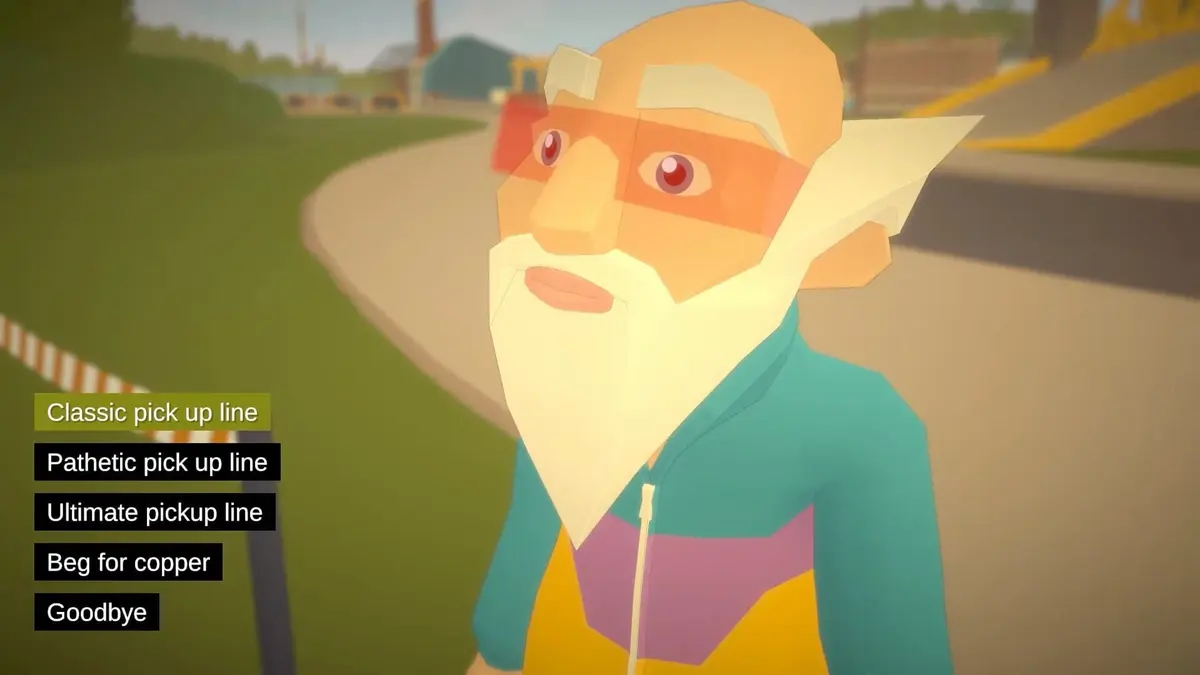
There is nothing inherently unreasonable about a reviewer needing a fast path to a specific scene. A six-hour game cannot always be reviewed by playing every quest in full. The operational failure lies elsewhere: Steam apparently needed a custom workaround to locate a scene, but still did not provide a corresponding written explanation after deciding the game belonged in the Adult Only category.
That is backwards. If a platform requires developers to make difficult-to-reach content instantly inspectable, it should be capable of identifying the inspected content in its decision. A proper notice could state that a particular scene, timestamp, asset, interaction, camera angle, or store-page description failed a defined standard. Valve instead delivered a broad classification that does not tell Molleindustria whether editing the scene, changing the context, revising the warning, or removing an asset would resolve the issue.
Pedercini says the game was rejected even after the nudity was removed. That detail matters because it eliminates the easiest excuse. If the rejected material had been one static depiction of nudity, removing it should clarify the next step. When the answer remains Adult Only and the supposed trigger remains unnamed, the process stops looking like content moderation and starts looking like an unappealable administrative maze.
Steam’s published timing makes the delay harder to defend
Steam’s guidance has described ordinary content review as taking three to five business days, while acknowledging that Adult Content store pages and builds can take longer. Another Steamworks guidance example puts content review at no more than seven business days. Future? No Thanks! remained under review for more than three weeks before its July 22 release date slipped.
Longer review is understandable for borderline material. A platform should be careful when applying its most consequential sexual-content label. Yet careful review requires a process that ends in usable feedback. Otherwise, an extended timeline produces the worst possible result: a missed launch window, a stalled store page, and no actionable account of what caused the decision.
Valve’s documentation currently communicates a general truth — that adult material can take longer. It does not provide a practical benchmark for a game like Future? No Thanks!, where the developer disputes the classification itself. Steam needs a published path for those cases: a clear initial review window, a written escalation notice, a named policy category, and an appeal reviewed by someone other than the first decision-maker.
“Adult Only” needs categories players can actually understand
Steam already displays content disclosures, but the current system collapses radically different experiences under language that is too broad to be useful. A game featuring a few seconds of stylized, static nudity should not communicate the same risk profile as a game built around graphic sexual imagery. Adults can make informed choices when the store gives them concrete information. They cannot make informed choices when a storefront swaps detail for a severe label with no explanation.

The store page for Future? No Thanks! already provides more useful information than the Adult Only ruling does. It tells players about cartoon sexual activity, prostitution, and euthanasia. Those disclosures allow people to decide whether the game fits their boundaries. Valve’s classification adds a heavier implication while withholding the evidence needed to understand it.
I do not need Steam to publish screenshots of disputed scenes or turn every moderation decision into a public spectacle. That would create fresh problems for developers and for users who do not want graphic material pushed into ordinary storefront browsing. Steam can give the developer a private decision memo and give players a clear, standardized content card. Both are basic safeguards.
- Developers should receive the exact scene, asset, interaction, or store-page language that triggered a classification.
- Valve should identify the policy category involved, rather than relying on a general declaration that content is explicit or graphic.
- Borderline cases should include a concrete remediation path: remove, revise, age-gate, reframe, or clarify.
- Appeals should have a fixed timetable and a fresh reviewer.
- Players should see separate labels for brief nudity, implied sexual activity, non-graphic sexual themes, and explicit sexual content.
Pedercini can be wrong about monopoly and still be right about power
Pedercini has framed the dispute as an example of Steam’s monopoly-like control over indie distribution. The legal definition of a monopoly is narrower than frustration with a powerful storefront: it involves a single seller without meaningful substitutes and the ability to charge excessive prices. That debate requires more than one blocked game and a bad review experience.
But the narrower legal argument does not rescue Valve from the larger player-facing problem. Steam is the storefront whose approval matters most for a PC game trying to launch into public view. When its internal decision can delay a release, reshape a game’s content, and heavily limit its audience, opaque moderation has outsized force. A developer does not need to prove a courtroom monopoly claim before demanding basic due process from the most important gatekeeper in PC gaming.
Molleindustria plans to release a version of the game through another store, but alternative distribution does not erase what happened on Steam. The July 22 launch plan is gone. The Steam page remains in limbo. The developer has edited content without receiving a specific explanation of why the revised game still fails Valve’s adult-only standard.
That is the standard Valve should meet: prove the classification to the developer with precise, actionable reasoning, then describe the content to players with enough clarity to make the label useful. Until Steam does that, “Adult Only” will keep functioning less like a safety tool and more like a final ruling nobody is allowed to inspect.
FinalBoss // Gear
Level up your setup
01Graphics cardson Amazon→02Gaming laptopson Amazon→03High-refresh gaming monitorson Amazon→04Discounted game keyson Kinguin→Affiliate links · As an Amazon Associate, FinalBoss earns from qualifying purchases.
Want to Level Up Your Gaming?
Get access to exclusive strategies, hidden tips, and pro-level insights that we don't share publicly.
Ultimate Gaming Strategy Guide + Weekly Pro Tips