
Gamescom was already telling visitors to arrive early for bag checks in 2019. That warning made sense then. A show of this size needs security procedures, controlled entry points, and a crowd-management plan that does more than hope 300,000-plus people will politely flow through Cologne on schedule. The problem in 2026 is that Gamescom has grown into something far bigger than its operational standards can comfortably support.
Gamescom 2026 brought 368,000 visitors from 131 countries to Koelnmesse, with 1,743 exhibitors from 66 countries spread across 233,000 square metres of sold-out exhibition space. Those are staggering numbers, and anyone treating them as anything other than a victory for the European games business is missing the point. Gamescom remains hugely relevant. Publishers, developers, press, creators, and players still want to be there.
But a larger crowd does not automatically mean a better event. It can mean the opposite when the basics begin to buckle: getting to the venue, getting through the gates, finding staff who can solve a problem, keeping expensive developer equipment secure overnight, and leaving Cologne without feeling like the show treated your time and money as disposable inputs.
That is the real Gamescom backlash. This is a quality-control failure disguised as a record-breaking year.
Table of Contents (6)
Gamescom’s numbers are impressive. Its visitor experience is losing the argument.
Gamescom 2025 drew 357,000 visitors from 128 countries, up from 335,000 attendees from 120 countries in 2024. A year later, it climbed again. The event has clearly recovered its momentum and then some. Gamescom Dev alone drew 6,200 visitors across August 23 and 24 in 2026, with 397 speakers, 238 sessions, and 18 stages. Opening Night Live generated 78 million views, while Gamescom’s digital output reached more than 624 million global views by Saturday evening.
That is an enormous platform for the people making games. The Awesome Indies show reaching more than 302,000 viewers, a rise of over 670%, proves the appetite for smaller studios is real as well. The industry side of Gamescom is thriving on paper. The public-facing side has to carry that same standard.
I attended three public days in Cologne, and the exhausting part was never the size of the halls. Huge convention centres are supposed to feel huge. The issue was the constant friction surrounding everything between the interesting bits: delayed travel, packed approaches to the venue, unclear staff readiness, and the looming sense that any disruption could turn a planned day into a logistical punishment.
Players will tolerate crowds for something special. They will line up for a hands-on demo, spend hours navigating a packed hall, and accept that the biggest booths will be busy. What they should not have to tolerate is an event whose travel plan becomes more demanding than its games schedule.
Cologne transit cannot be treated as somebody else’s problem
Gamescom strongly steers visitors toward rail travel. Its train-arrival guidance advertised fares starting at €16.19, while Koelnmesse directed most public-transport arrivals to the South and East entrances. Wheelchair users were directed toward the North entrance, where taxis stop. Those instructions are sensible only when the transport network feeding those entrances is functioning reliably.
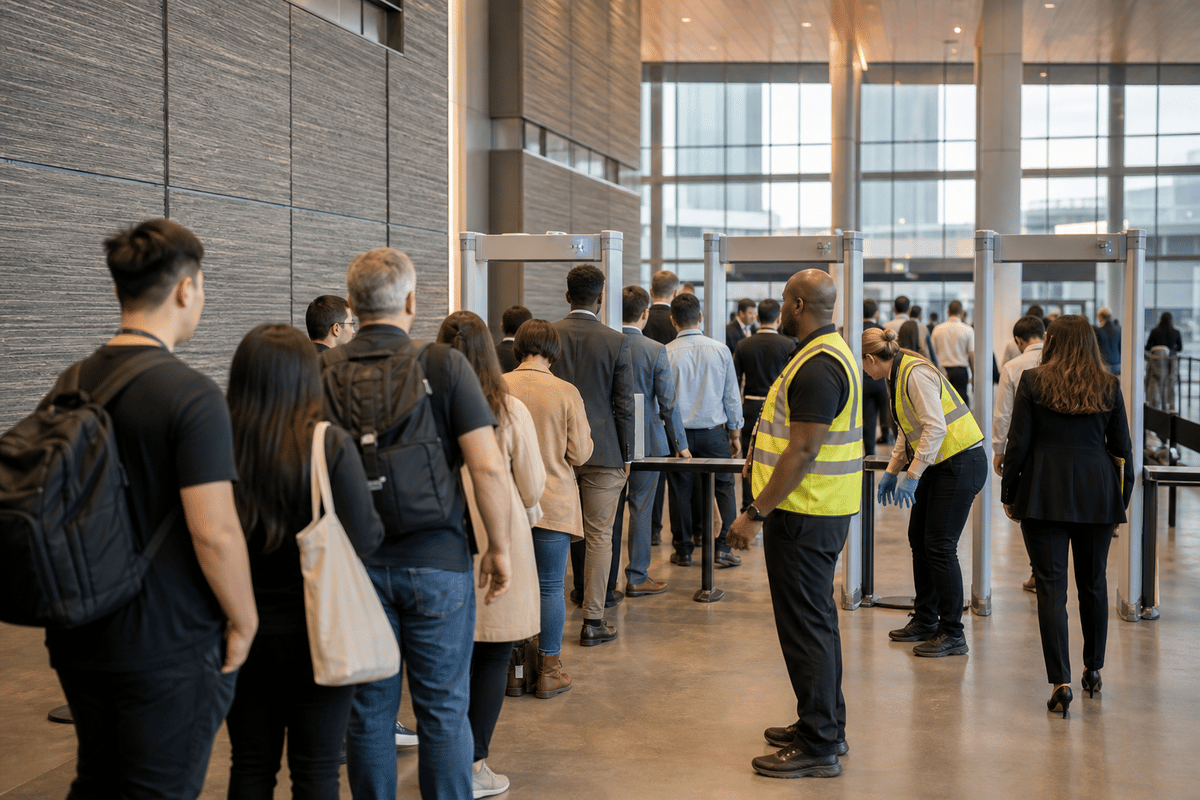
During Gamescom 2026, that reliability was under serious pressure. Construction disruptions meant Cologne’s KVB lines 1 and 9 ended at Heumarkt, with replacement buses running from Neumarkt on lines 101 and 109. The Cologne-to-Düsseldorf rail connection also faced detours, cancellations, delays, and replacement buses through the event period. That combination turns a normal convention commute into an obstacle course before visitors even reach a security checkpoint.
Gamescom cannot fix Cologne’s rail infrastructure by itself. It can, that said, stop treating arrival guidance as a one-page formality. When tens of thousands of people are funnelled toward a handful of gates during a week of known disruptions, the organizer needs a live operational response: clear updates before visitors leave their hotels, visible staff at transfer points, better staggered entry communication, and contingency planning that acknowledges the real conditions outside Koelnmesse.
“Take public transport” is advice. A serious travel plan accounts for what happens when that transport fails.
The hotel bill makes every operational mistake feel worse
Cologne during Gamescom is expensive because demand is brutal. That is not shocking. A city hosting hundreds of thousands of visitors alongside a major business event is going to put pressure on rooms. The issue is that the cost of attendance has become hard to separate from the show’s operational shortcomings.
Visitors are paying for tickets, rail travel, local transport, food, and accommodation. The listed hotel rate also does not include Cologne’s cultural promotion tax, which is charged separately at local rates. That may sound minor in isolation. It stops feeling minor when the final trip costs more than expected and the visitor is then forced into replacement-bus journeys, long gate waits, and a day built around defensive logistics rather than discovery.
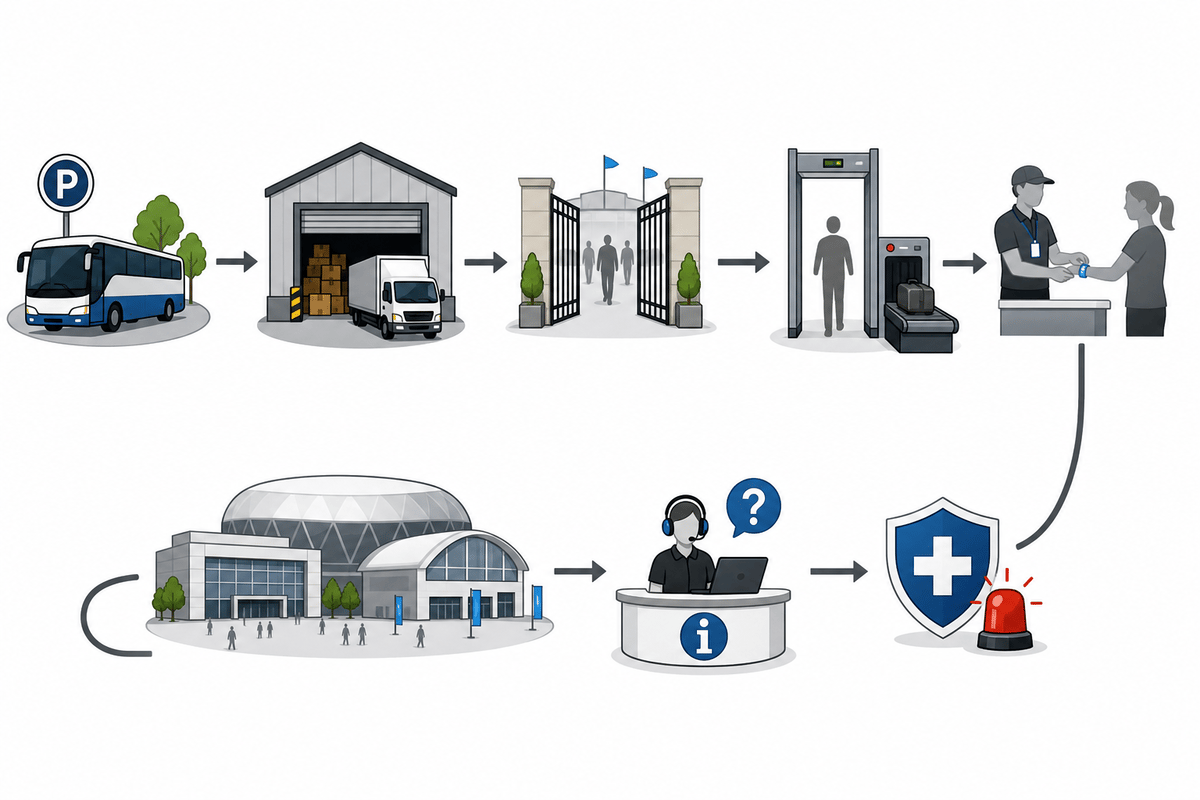
Gamescom does not need to control every hotel price in Cologne. It needs to understand the deal attendees are making. Once a public visitor has spent a meaningful amount to be there, the show owes them accurate travel communication, competent wayfinding, enough trained staff, and an entry process that does not feel random. A premium trip can survive inconvenience. It cannot survive repeated signs that the event has scaled faster than its care for the people carrying its costs.
Security cannot be a paid upgrade for vulnerable indie booths
The hardware thefts are where Gamescom’s “quality control” problem turns from irritating to indefensible. Indie developers had demo equipment and valuables removed during the overnight closure period in both the business area and the indie area. These were not abstract losses. For a small team, a laptop can hold a build, development tools, work files, personal data, and a chunk of the budget that was supposed to get them through the next milestone.
Gamescom’s security model divides responsibility in a way that looks tidy in participation documents and feels rotten on a show floor. Uniformed guards provide general venue-wide security. Individual exhibitors can purchase dedicated booth security. Organizers also advise exhibitors to insure their equipment against theft.
That arrangement shifts the risk downwards. A major publisher can afford a locked-down booth, extra personnel, private coverage, and redundant equipment. The tiny studio in the indie area, the one whose entire value at Gamescom comes from putting a playable build in front of developers, press, and potential partners, gets told that generic security is available and more specific protection costs extra.
Gamescom later apologized for its handling of the theft backlash and accepted that the criticism was justified. Good. An apology matters because the initial response made affected developers feel like they had failed an insurance checklist rather than been let down by the event hosting them. But that apology only has value if the security policy changes before the next show floor opens.
A convention can sell optional guards for unusually valuable displays or elaborate booth builds. It cannot make basic overnight protection for demo hardware feel elective. The distinction matters. A safe exhibitor floor is a core service, especially for the independent studios Gamescom celebrates so loudly in trailers, livestreams, and award-show segments.
Staff readiness is the difference between rules and real safety
Gamescom has detailed procedures. It has designated entrances, security offices at the North and East areas, controlled access, gate checks, accessibility guidance, and formal rules for its business zone. The business area remains restricted to trade visitors, media, and accredited creators for a reason. This is not a casual gathering. It is a complicated international trade fair with public days attached.
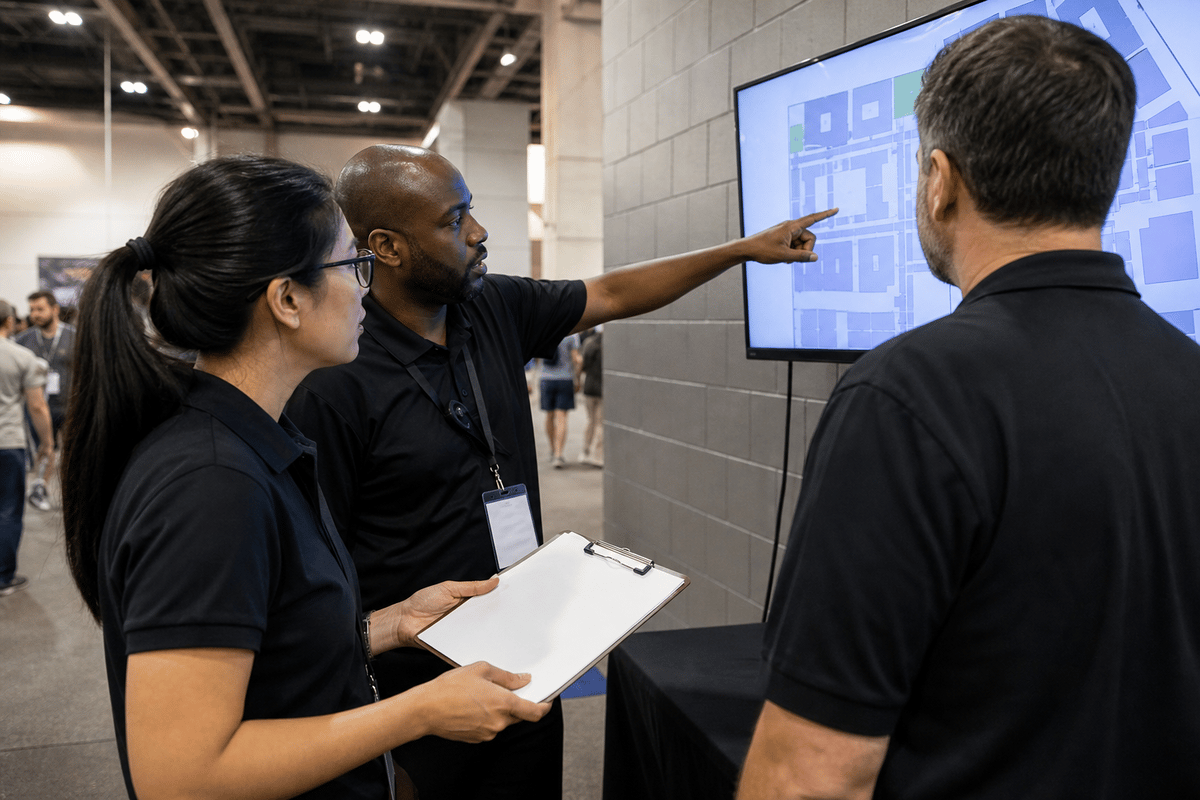
Rules on a website do not help when a visitor needs a person who knows what to do. Security becomes real in the moments that never make the promotional video: an attendee trying to find an accessible route after a transit disruption, an exhibitor discovering missing equipment, a confused queue at a gate, or a staff member being asked to make a judgment under pressure.
Questions around security staffing in 2025 made that gap especially uncomfortable. Claims tied to a large customs control alleged that many workers could not present service passes or guard identification numbers, alongside indications of undeclared work and benefit fraud. The underlying official enforcement material has not been made available, so it would be irresponsible to present those allegations as a final verdict. It would be equally irresponsible for Gamescom to behave as though the question never existed.
At this scale, security staff cannot be interchangeable bodies in uniforms. They are the people attendees and exhibitors meet when the system breaks. Their identification, training, authority, and placement are part of the event experience. If Gamescom wants to keep selling itself as the global meeting point for games, it needs to treat that role with the seriousness it gives to headline reveals and record attendance press releases.
Gamescom 2027 needs fewer excuses and clearer guarantees
Gamescom 2027 is set for August 25 to 29. The show has a full year to decide what kind of event it wants to be. It can keep celebrating annual growth while pushing travel risk, hotel frustration, and booth-security responsibility onto the people least able to absorb it. Or it can accept that a sold-out 233,000-square-metre venue demands a tougher operational standard.
- Publish disruption plans early when major rail routes and local tram lines are affected.
- Provide live, visible travel updates that direct visitors to workable entrance routes rather than generic public-transport advice.
- Guarantee a baseline overnight security standard for exhibitor demo hardware, especially in the indie and business areas.
- Make security procedures, escalation contacts, and staff responsibilities clear before exhibitors arrive to set up.
- Train gate and floor staff to solve access, accessibility, theft, and queue issues instead of redirecting frustrated visitors through another layer of confusion.
My advice to anyone planning Gamescom 2027 is practical rather than glamorous: book accommodation with the full final cost in mind, build extra transit time into every day, travel light through the gates, and treat the venue as a controlled trade-fair environment rather than a carefree fan convention. Indie exhibitors should also budget for equipment protection and backup plans until Gamescom proves it has upgraded its baseline safeguards.
That is the frustrating part. Gamescom still deserves its place on the calendar. The industry needs a gathering this large, international, and visible. But the event’s future depends on something less flashy than attendance records: whether it can make the people inside Koelnmesse feel protected, informed, and worth the trouble it took to get there. Until that happens, every new crowd record will read less like proof of excellence and more like a warning.
FinalBoss // Gear
Level up your setup
01Top-rated gaming headsetson Amazon→02High-refresh gaming monitorson Amazon→03Gaming chairson Amazon→04Discounted game keyson Kinguin→
Affiliate links · As an Amazon Associate, FinalBoss earns from qualifying purchases.
Want to Level Up Your Gaming?
Get access to exclusive strategies, hidden tips, and pro-level insights that we don't share publicly.
Ultimate Gaming Strategy Guide + Weekly Pro Tips