
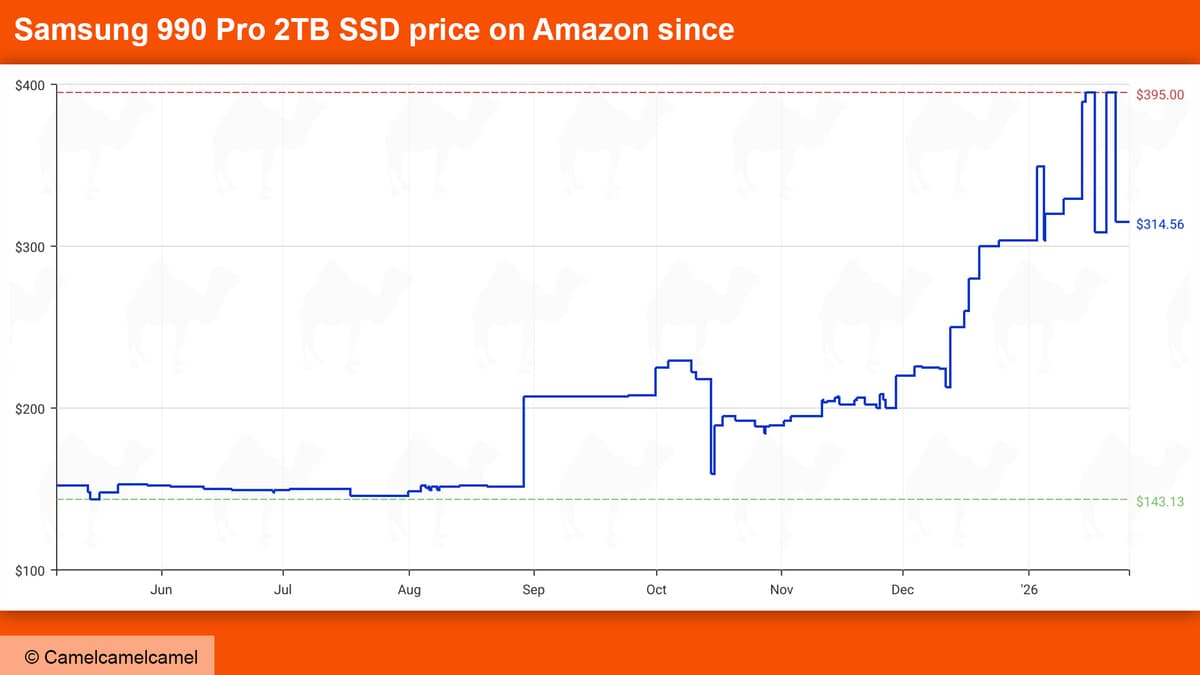
This caught my attention because I buy and test gaming storage for a living: when one NAND giant signals a big price reset, it reshuffles upgrade plans for every PC builder and console owner. Reports that Samsung pushed contract NAND prices sharply higher for Q1 2026 aren’t just semiconductor noise – they’ll show up in your shopping cart soon.
Table of Contents (6)
Gaming SSD Price Surge: Current Market Comparison and Buyer’s Guide
- Samsung reportedly doubled NAND contract prices for Q1 2026, and follow‑ons from other vendors mean higher retail SSD costs soon.
- Expected retail impact: widespread SSD sticker shocks – 20-50% increases likely for many 1-4TB drives over coming months.
- Buyer playbook: buy now if you need performance/capacity, favor Phison/Micron/Seagate models over Samsung‑heavy stock, and insist on DRAM/heatsinks for gaming.
{{INFO_TABLE_START}}
Publisher|Discover Gaming
Release Date|January 2026
Category|Hardware / PC Storage
Platform|PC, PS5, Laptops, Handheld
{{INFO_TABLE_END}}
Why the NAND hike matters (quick context)
AI data center demand – hungry for high‑density flash — and contract price resets late in 2025 pushed Samsung to lift NAND pricing sharply for Q1. When the biggest supplier tightens terms, SSD makers face larger bills for the same flash. With limited immediate fab capacity or rapid migration to next‑node processes, manufacturers can’t flood the market to blunt the shock. Historically that gap translates into retail “chipflation” within weeks to months.

What really changes for gamers
Not all SSDs rise equally. Drives that source Samsung NAND (and especially OEM/flagship models) will feel the hit first. Alternatives built around Micron, SK Hynix, Phison controller pairings or vertically integrated Seagate/TeamGroup parts will be relatively safer. Practical consequences:
- Short term (now-Q2): Best deals vanish; expect 1–2 month window to buy 2TB value drives at current prices before margins are pushed up.
- Mid term (Q2–Q4): Consumer SSD supply tightens as enterprise orders get priority; prices may stabilize only after extra wafer capacity online late 2026.
- Performance priorities unchanged: For gaming, DRAM cache, sustained random IOPS, and a heatsink for PS5/desktops remain the most important specs — don’t buy a cheap throttle-prone PCIe 5.0 stick for a laptop.
My practical buying advice — what to do right now
- If you need a drive today: Buy a 2TB from a value leader (TeamGroup MP44, Lexar NM790, PNY CS2150 or similar) while sub-$0.07/GB deals exist. These offer DRAM or HMB, strong sustained scores, and the best price/GB.
- Want top single-drive performance: The Samsung 990 PRO and WD SN850X remain excellent — but expect bigger price movement on Samsung‑heavy models. If you want stability, favor Micron/Phison‑backed PCIe 5.0 options (Crucial T705) for future‑proofing on desktops, not laptops.
- PS5 owners: Stick to heatsink versions of proven drives (FireCuda, 990 PRO, SN850X). Heatsinkless buys invite throttling and warranty headaches.
- Laptop/handheld buyers: Prioritize <9–10W active power and avoid PCIe 5.0 sticks unless you have active cooling.
- Stock up if sensible: If a 4TB is within your budget at $250–$300 today, it’s a reasonable hedge versus buying smaller drives later at higher per‑GB prices.
How to prioritize features during a price surge
- DRAM or HMB for sustained open‑world performance (less stutter, better texture streaming).
- Heatsink for consoles/desktops; don’t cheap out if you care about peak sequence speeds.
- Endurance (TBW) above ~600TBW per TB for worry‑free multi‑year use.
- Consider power draw: PCIe 5.0 often costs more battery life and heat in portable devices.
Be skeptical of headlines claiming “100% retail price bounce” overnight — contract hikes filter into retail differently across regions and channels. But treat the reports as a credible signal: there will be pain for buyers who wait without a plan.
TL;DR — The short play and the long play
If you need more space or speed this year, buy now: target value 2TB PCIe 4.0 drives with DRAM/heatsink for consoles, and avoid uncooled PCIe 5.0 sticks for laptops. Favor Micron/Phison/Seagate builds if you want a slightly safer bet against Samsung‑led price shocks. If you can wait and only need archival capacity, expect prices to stabilize later in 2026 when capacity catches up — but don’t assume a return to 2024 bargain levels anytime soon.
FinalBoss // Gear
Level up your setup
01Top-rated gaming headsetson Amazon→02High-refresh gaming monitorson Amazon→03Gaming chairson Amazon→04Discounted game keyson Kinguin→Affiliate links · As an Amazon Associate, FinalBoss earns from qualifying purchases.
Want to Level Up Your Gaming?
Get access to exclusive strategies, hidden tips, and pro-level insights that we don't share publicly.
Ultimate Gaming Strategy Guide + Weekly Pro Tips