
Table of Contents (16)
Ghost of Yotei on PS5: A razor-sharp epic that dazzles, stumbles, and keeps pulling you back
I went into Ghost of Yotei carrying two ghosts on my shoulders: five years of fond Tsushima memories and a chip on my blade about sequel-itis. I played on a PS5 in Performance mode, mostly HUD-minimal, with the wind guiding me and the “golden bird” hinting turned off after the first evening. By hour 3, I’d crested a ridge in Ezo’s central expanse and just… stopped. The world fell away into a cratered sea of valleys and a horizon so far I could swear I saw tomorrow. I lifted the new spyglass, tagged three smoke plumes with a flick and a ping, and let the wind tug at my sleeve. For a while, I forgot the revenge plot entirely. That’s the kind of spell this game can cast-when it’s at its best, it makes you look up.
My first 10 hours: “This might be special”
The setup is classic and clean: Atsu, a mercenary with steel for blood and no patience for mercy, is hunting the Six of Yotei-outlaws who erased her family sixteen years ago. Sucker Punch frames the opening like a wind-blasted folk tale, half Kurosawa, half dust-choked western. The title card pops after a spare duel on a wooden bridge and a needle-drop that made my controller hum. In those early hours, every step is intent: you learn to read color gradients in the hills, watch for ash-gray smoke, and let the wind, not a UI checklist, sketch your route. The game’s take on a semi-open world-a central “hub” region with satellite pockets—gives it a rhythm that feels both curated and freeform. It’s the first time in a while I’ve felt a big-budget open world invite me to look at the horizon rather than the compass.
Then the story starts making promises. The first of the Six I tracked—an archer-priest hiding among lacquered torii—teased a conspiratorial tangle I thought would yank the tale somewhere dangerous. I texted a friend, “I think they’re about to do something bold here.” Reader, they weren’t. But we’ll get to that.
The semi-open world that actually made me put the map away
Ghost of Yotei’s central region is the star. It’s generous but not bloated, a basin ringed by crags and punctuated with frozen streams, cedar forests, and volcanic scars. The spyglass quickly became my favorite tool. Perched on a cliff, I’d pull it up, sweep across distant banners and silhouettes, and “pin” routes by sight. That info carries to your map if you want, but I rarely looked. The wind GPS—yes, still here—pulls you along like a story thread without ever feeling like a neon arrow.
What helps is how much of the world is driven by rumor and chance rather than icons. There are no question marks peppering the map. Instead, you catch wind from a grumpy fisherman about “drums echoing in the shale north of the hot springs,” or you shake down a bandit to learn a bounty target rides with crimson tassels. On my second night, I followed a distant, flickering line of lanterns and stumbled into a traveling archery contest. I botched the first two shots, learned the rhythm, and left with a minor charm I actually used for six hours. Small stuff, sure, but it adds up to a world that feels lived-in, not algorithmically populated.
When the game asks for old-school exploration chops, it does so with some finesse. I found my first Altar of Reflection tucked behind a waterfall you could only reach by minding the wind and a subtle discoloration in the rock. Each altar grants a skill point for Atsu’s sprawling grid of passives and actives, and the act of finding them ties progression to curiosity. I liked that. Leveling by looking—there’s a romanticism to it, and it suits this place.
The “pockets” problem: Peaks and valleys in the outer regions
That central hub is so strong it accidentally exposes the weaker seams. The satellite “pockets”—semi-autonomous mini-open worlds you pop into via short loads—range from solid to forgettable. There’s one snow-choked temple valley that nearly matches the central region’s grandeur: red cloth snapping in needle winds, a rope bridge that frames the moon like a blade. Gorgeous. But the others? Serviceable, fine, then just less. Narrower corridors. Cleaner lines. A little too built, not enough found. It’s not that they’re bad—missions there are often snappy and well-paced—but after a dozen hours in Ezo’s heart, they start to feel like side rooms in a mansion with a jaw-dropping foyer.
By hour 18, the frequency of “liberate this camp” tasks ticked up noticeably in those pockets. I could practically hear the content spreadsheet. I still did them—because the combat slaps—but that shift from discovery to duty is obvious in the back third of the game. It’s an old open-world trap, and Yotei doesn’t entirely avoid it.
Hunting the Six: Two missions that stuck with me
Two hunts burned in. First, a bounty chain on a musketeer called the Snow Wasp. I learned about her from a drunk militia captain who kept saying, “She sings to the barrel.” Her crew roamed an iced-over marsh, firing blind through reeds. I approached at dusk, hid in cattails, and used the kusarigama to yank shield-bearers off balance before sprinting in with the twin katana. Halfway through, a disarm prompt flashed—new mechanic—and I ripped the musket from a lieutenant, quick-fired it without aiming, and turned the tide. When the Wasp finally appeared, she didn’t monologue. She tried to reload faster than I could close. She failed. It was clean, ugly, perfect.
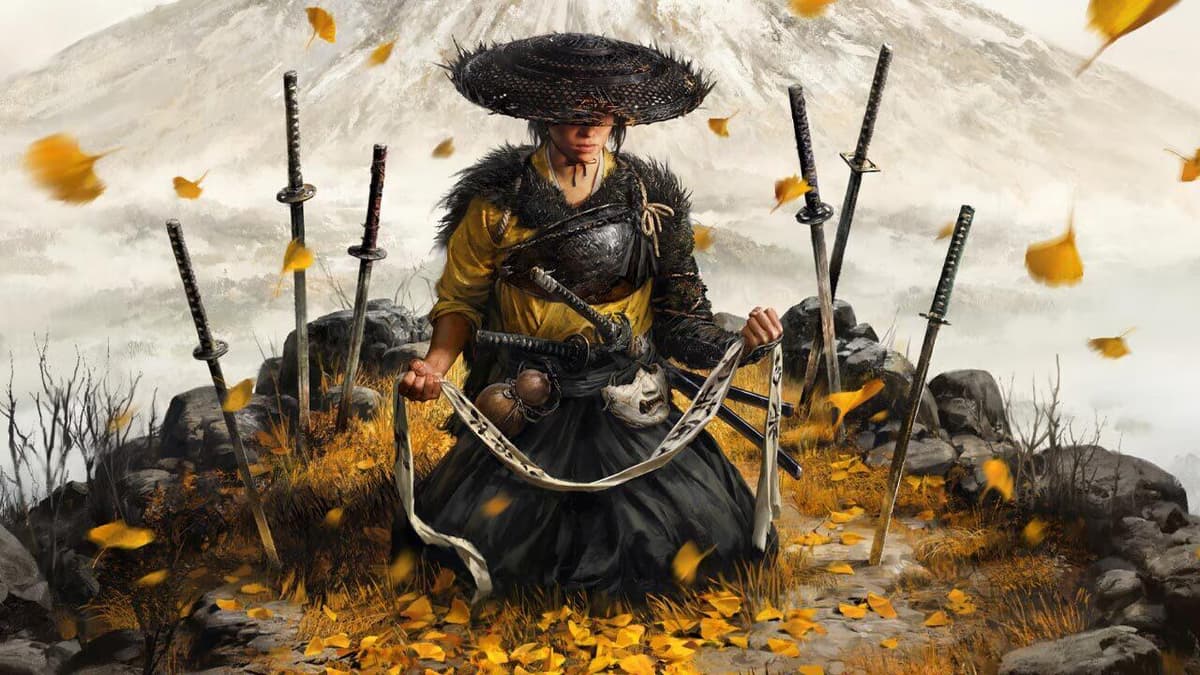
The second was a “myth” quest called the Ashen Brother, passed down like a campfire dare. It wound me through a field of prayer flags to a cave where the walls looked smoked. The payoff wasn’t loot (though I did win a major charm that buffed Spirit gain), it was the mood—low chanting, a flash of a wolf’s eyes in the dark, a duel that made me set the controller down after. These myth quests are the spiritual heirs to Tsushima’s legends but with more variety and a stronger sense of place. I only wish the main plot took similar chances.
Stealth and steel: Familiar edge, a few new cuts
Let’s talk blades. Atsu starts with a katana, then—if you pursue the right senseis—adds a twin katana, a yari (spear), a kusarigama (chain-sickle), and an odachi (big, mean, slow). Instead of traditional XP, you spend points from Altars to unlock skills, while signature moves live with the mentors. It’s Ghost of Tsushima’s posture philosophy in new clothes: think rock-paper-scissors, but with heft. Spears chew through polearm enemies; kusarigama makes short work of shields; the odachi feels like cutting a door in half.
Combat still sings because the timings are crisp. Perfect parries land with a spiteful clink; esquives graze danger by a hair; and if you open your window just right, you get that satisfying, rhythmic “one-two-cut” flow. The Spirit system returns, now with the delightful ability to glug saké mid-fight to refill your meter. It’s both cheeky and tactical—do you burn Spirit on a special, or sip to supercharge your next push and keep healing in your pocket?
New wrinkles do help. The contextual disarm adds a tiny tug-of-war in the chaos, giving you tools to control the scrum. I loved grabbing a fallen spear and hurling it through a charging brute, both because it’s strong and because it looks cool as hell. Firearms creep into the late game too: a snap-shot musket you can quick-pop without aiming adds spice without breaking the era vibe.
But stealth? That’s where I wanted more evolution. Enemy awareness is readable, the whistle still lures, the tall grass still saves you, and chain takedowns still solve clusters. It works; it just feels copy-pasted from Tsushima. After dozens of outposts, I longed for more systemic wrinkles—patrol behaviors that react to weather, tighter vertical stealth routes, anything to push it beyond “hide, whistle, stab, repeat.”
Also, in big brawls, the camera keeps its cool more often than not, but when six enemies pile in and two gunners decide to play whack-a-mole off-screen, I still took a cheap hit or lost my lock. It’s improved, not immune.
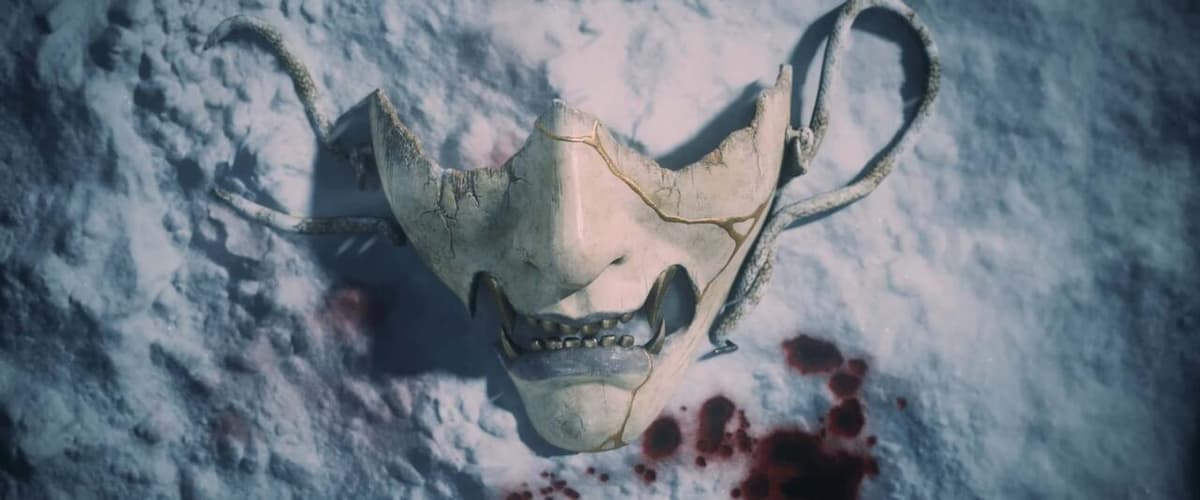
The wolf among blades: Not a mascot, a mechanic
You’ve seen the wolf in trailers. I expected a permanent companion; what I got was better. At first, she’s a rumor. Then she ghosts into scenes, sometimes during a fight, sometimes in a cutaway. Gradually, through the main story, you earn her trust and the right to call her on your terms. She has her own skill tree, unlocked by sniffing out dens and freeing her kin. That loop—rescue, upgrade, integrate—lands. On hour 12, I called her before a camp infiltration and watched her barrel through a line of archers while I slipped behind a hut to one-tap the captain. She’s disruptive in a good way, a strategic wildcard that doesn’t babysit you.
It’s not perfect. There were a couple of times she clipped on geometry or arrived a beat late to a duel, but when it clicks, it feels earned, not gimmicky. A late-game synergy with a Spirit skill let me turn a skirmish into a rout, and I laughed out loud at the audacity of it. More of this personality, please.
Progression by curiosity: Senseis, Altars, and the long view
What stuck with me is how progression respects exploration. Finding Altars of Reflection becomes a mini-pilgrimage with real payoff—no XP faucet, no level ding addiction, just a slow, thoughtful build. Sensei quests add character to that growth. My kusarigama mentor was a sardonic ex-guard who made me win a duel using only disarms before he’d teach the limb-hook. I cursed him in the moment; I thanked him the next time shields turned a fight into a grind.
Armor returns as your stat glue, and charms slot in to nudge your build. I went with a Spirit-generating set plus a minor charm that recovered more health per finisher. It let me play aggressively and made duels feel like chess with knives. By hour 20, I’d settled into a loop: scout with the spyglass, sniff for dens, scoop an altar, pick a sensei errand if it lined up with my path, then advance the main quest. It’s a rhythm the game supports, at least until the late pockets lean on repetition.
Story heat, story chill: The revenge tale that flinches at the end
This is where my heart sank a little. The first third suggests a story willing to bruise. Atsu’s flashbacks drip in just enough to keep her anger from becoming abstraction, and a couple of mid-game reversals landed with a thud I felt in my chest. But somewhere around hour 22, the narrative starts tucking in its elbows. A couple of late-game choices resolve cleaner than they should, and the final confrontation with the mastermind among the Six is predictable, almost polite. I don’t need misery to feel moved, but I do need surprise. The game sets a table for something sharper, then pulls back. When the credits rolled at around 28 hours, I was satisfied by the journey, not the destination.
Presentation-wise, the dialogue scenes lean heavily on shot-reverse-shot “safe cam.” After a while it’s like watching theater through blinds. It doesn’t ruin the mood—performance capture and VO carry plenty—but it does undercut the otherwise cinematic swagger. I missed the stylistic flourishes that defined Tsushima’s myths in these story beats.
PS5 nuts and bolts: Performance, haptics, camera woes
On a technical level, I played in Performance mode and never looked back. Most of the time, combat felt like 60 frames of silk and steel. I did catch some dips during stormy set pieces and dense bamboo groves when particle effects went ham, but nothing fight-ruining. The central hub’s draw distance is a flex; the “I can see that monastery from a valley away” moments are frequent and stunning.
Loads are short across the board. Hopping into a pocket area adds a quick cut—blink and it’s gone—but it breaks the spatial illusion a hair. Fast travel from edge to edge of the hub rarely took more than a couple of seconds for me. DualSense haptics add flavor without novelty fatigue: thunder cracks with a soft bass rumble, blade clashes spark in the triggers, and the musket’s snap has a satisfying, mean click. I wouldn’t buy the game for haptics alone, but I wouldn’t turn them off either.
The only tech thing that consistently annoyed me was the camera’s occasional tunnel vision in mass brawls. Target switching mostly behaves, but it can cling to a gone-down enemy or swing wide when two gunners flit into frame. It’s the kind of thing you adapt to—tilt, swing, roll—but I wanted just a little more brains in that system given how often the game throws you into multi-enemy piles.
Who should prowl Ezo?
- If you loved Ghost of Tsushima’s tactile combat and minimalist exploration cues, this is your next pilgrimage.
- If you crave open worlds that reward curiosity with sights and systems rather than waypoints, the central hub will win you over.
- If you’re here for a radical story swerve or fresh stealth systems, temper expectations.
- If repetition in late-game side content kills your buzz, consider mainlining the story after you’ve sampled the pockets you like.
The moments that changed my mind
Two turning points shaped my verdict. Around hour 15, I was convinced Ghost of Yotei was flirting with greatness. I’d just completed a bounties chain that ended with me and my wolf pinning a fleeing target against a frozen river, the wind howling like an old god. It felt emergent and authored at the same time. Then, by hour 24, after my third “camp with two captains and a watchtower” in as many hours and a story beat that chose the safe road, my enthusiasm cooled. I started treating the pockets like snack bowls—grab a handful, get back to the main course: that magnificent central region and the hunts that lean into its strengths.
Tips that mattered to my playstyle
- Turn off the gold-bird guidance early. The spyglass plus wind is a better loop; it makes every discovery feel yours.
- Prioritize sensei quests for the kusarigama and twin katana. That shield-break into quick-chain becomes your bread and butter.
- Invest in Spirit generation and a heal-on-finisher charm. It enables aggression without turning fights into potion spam.
- Call the wolf before you engage, not mid-fight. She disrupts early lines, making clean stealth-to-steel transitions.
- When a pocket starts feeling like chores, bounce back to the hub. The game shines when you follow the horizon, not checklists.
Bottom line: A blade worth wielding, even if the final cut plays it safe
After 30 hours—credits rolled, a chunk of side content done—I’m walking away impressed, occasionally annoyed, and mostly satisfied. Ghost of Yotei nails feel: the weight of a perfect parry, the way the wind makes you a wanderer, the thrill of spotting something half a province away and actually getting there. It stumbles where a lot of big games do: late-game repetition and a story that takes the safe exit when the scenic route is right there. But I can’t shake the snapshots burned in my head: a wolf’s silhouette on a ridge at dawn, an altar humming behind a waterfall, the snow Wasp’s musket cracking the dusk. That, to me, is worth the price of a ticket.
As a spiritual sequel, it’s less a reinvention than a refinement. The stealth is largely unchanged, the camera’s learned new tricks but still trips sometimes, and the outer regions vary wildly in artistry. But when this game locks in—when you’re reading the land instead of the map, switching weapons like verses in a poem, and letting the wind carry you—there’s nothing quite like it on PS5 right now.
Score: 8/10
A stunning world and satisfying combat carry a conservative story and uneven side regions. When Ghost of Yotei trusts its horizon, it soars.
TL;DR
- Gorgeous central hub encourages real exploration via spyglass, wind, and rumors—no map clutter.
- Combat refines Tsushima’s timing-based blade play; new disarm and throw mechanics add juice. Firearms appear late, sparingly.
- Progression is tied to discovery (Altars of Reflection) and mentor quests; fewer traditional XP treadmill vibes.
- Stealth is effective but barely evolved; late-game side content repeats camp liberations and shrine climbs.
- Story starts strong with grit and mystery but lands predictably; cinematics can feel “safe cam.”
- Performance mode is smooth with rare dips; quick loads; DualSense haptics add tasteful punch.
- The wolf companion is a real system, not a mascot—useful, upgradeable, and fun to integrate.
FinalBoss // Gear
Level up your setup
01Best-selling PS5 gameson Amazon→02DualSense controllerson Amazon→03PS5 SSD upgrades (M.2 NVMe)on Amazon→04Discounted game keyson Kinguin→Affiliate links · As an Amazon Associate, FinalBoss earns from qualifying purchases.
Want to Level Up Your Gaming?
Get access to exclusive strategies, hidden tips, and pro-level insights that we don't share publicly.
Ultimate Reviews Strategy Guide + Weekly Pro Tips