
Table of Contents (10)
The moment I realized Hyrule didn’t want me to hurry
Somewhere around my twentieth hour with The Legend of Zelda: Tears of the Kingdom, I realized I’d basically stopped playing the game the way it “wanted” me to. The quest log was full. Icons littered the map. A sensible person would have opened the menu, hit fast travel, and zipped straight to the next objective.
Instead, I climbed a stupidly tall spire in the Hebra region, pointed myself vaguely in the direction of nothing in particular, and jumped.
The camera pulled out. The music thinned to a fragile melody. The wind hissed past my ears. The land below didn’t rush up to meet me; it unfolded, slowly, like a map someone was still in the process of drawing. I popped the paraglider, and for a long, quiet minute, I didn’t care where I was going. I just cared about staying in the air.
That was the moment it clicked for me: Tears of the Kingdom treats gliding as more than a traversal tool. It turns “getting from A to B” into an excuse to exist in the space between them. And once that sinks in, fast travel starts to feel like sacrilege.
Open worlds taught me to skip the world
I’ve been playing long enough to remember when getting a mount in an RPG felt like winning the lottery. Ocarina of Time handed you Epona and it blew my teenage brain. Then the industry spent the next two decades speedrunning the joy out of traversal.
Assassin’s Creed turned maps into checklists and movement into a conveyor belt of parkour animation. Horizon and its robo-dinos are gorgeous, but you’re still mostly sprinting between icons on a HUD. Even games I love, like Elden Ring, often treat the world as something to get across, not something to linger inside. Torrent is basically your “skip to the good part” button.
Somewhere along the line, “open world” quietly became code for “this will waste your time unless we give you a dozen ways to skip the boring bits.” So we got fast travel from every outpost, auto-run, grapple hooks that erase half the climb, wingsuits that turn mountains into launch pads instead of obstacles. The whole design philosophy is built around one assumption: of course players want to go faster.
Tears of the Kingdom looks at that assumption and tosses it off the side of Sky Island without a paraglider.
Gliding as a conscious act of “staying aloft”
In most games, flight is power fantasy. You get a jetpack, a flying mount, a superhero cape. The goal is speed and dominance: cover more ground, reach the next marker, bypass the friction. You’re above the world, yes, but also weirdly detached from it.
Tears of the Kingdom does something much stranger. It gives you a flimsy bit of fabric and tells you: you are always falling. You will never truly climb under your own power. Your victory is not in beating gravity, but in treating your descent like a dance instead of a faceplant.
This is a game about staying aloft, not flying. You jump from a Sky Island or a tower and there’s a tiny moment of panic – the void grabbing your stomach – followed by this oddly peaceful glide as you negotiate with the air. You’re not rocketing forward like Iron Man. You’re tracing a slow arc, bleeding altitude, trading height for time.
I keep seeing people ask for a “proper” flying mount in TotK, and it honestly misses the point. The fact that you’re always, technically, on your way down is the point. The whole staying aloft game here is this: how long can you inhabit the in-between state? How much can you wring out of a single leap before your boots hit dirt again?
It’s inefficient as hell. And that’s exactly why it works.
Traversal as presence, not productivity
I come from the school of games that taught me slowness can be sacred. Shenmue burned hours of my life making me wait for a bus in a quiet Japanese suburb – and it mattered. The waiting was the game. Tears of the Kingdom taps into that same energy, but swaps back alleys and vending machines for clouds, thermals, and a kingdom shattered into layers.
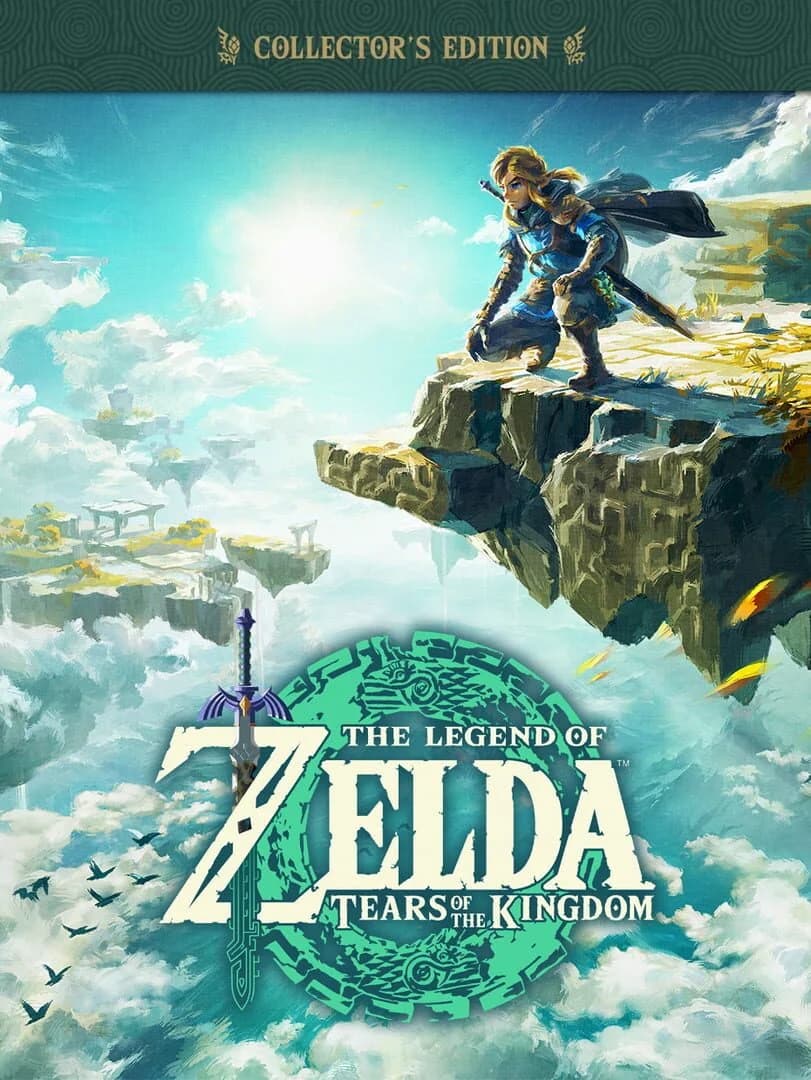
Hyrule doesn’t guilt-trip you for not fast traveling. It bribes you not to. You leap off a cliff headed for some shrine in the distance and, midway through the glide, you spot a weird rock formation, a dragon way off on the horizon, a suspicious swirl of trees that screams “Korok puzzle.” Suddenly the original destination is just one option on a menu of tiny temptations.
That’s what makes this such a different kind of staying aloft game compared to something like a flight sim. In Microsoft Flight Simulator, the joy is in the procedures, the knobs, the simulation of being a pilot. In Tears of the Kingdom, the joy is in being a body in space, listening to what the landscape is whispering as you slide over it.
The paraglider becomes less a tool and more a permission slip. You’re allowed – encouraged, really – to “waste” time. To take the long way down because you want the extra thirty seconds of silence between combat encounters. To float over a region you’ve already cleared just to see it from a new angle. To prioritize the experience of moving over the efficiency of arrival.
It’s such a clean middle finger to the productivity brain that has infected modern open worlds. This isn’t traversal as optimization. It’s traversal as meditation.
Learning to “read” the air without a single tutorial box
What really sells it is how little the game explains any of this. There’s no glide HUD screaming at you about optimal angles or a “lift meter” telling you where the updrafts are. Instead, Nintendo quietly bakes a language of the sky into the world and asks you to become fluent by paying attention.
You start noticing that updrafts gather where flames rise. That ravines can funnel wind. That leaping from a particular Sky Island gives you just enough altitude to coast onto a nearby floating ruin without sweating your stamina wheel. Tulin’s gust isn’t just a “go faster” button; it’s a way to correct a bad approach, to squeeze a little more life out of a doomed glide.
After a while, you can practically feel when you’ve launched from a good spot. The glide lasts just a bit longer than it feels like it should. The terrain rearranges itself under you in satisfying ways. You’re making micro-adjustments with the stick based not on UI, but on how the world looks and sounds.
After a while, you can practically feel when you’ve launched from a good spot. The glide lasts just a bit longer than it feels like it should. The terrain rearranges itself under you in satisfying ways. You’re making micro-adjustments with the stick based not on UI, but on how the world looks and sounds.
🎮 Get This Game at the Best Price
Compare prices instantly and save up to 80% on Steam keys with Kinguin — trusted by 15+ million gamers worldwide.
*Affiliate link — supports our independent coverage at no extra cost to you
That sense of tacit learning is what a lot of games completely whiff on. They treat traversal like a solved problem and then smother it in system junk: stamina upgrades, mount speed upgrades, grappling hook cooldowns, fast-travel currencies. Tears of the Kingdom largely ditches the cruft and says: here’s the sky, here’s some wind, here’s a glider. Figure out how to make them love you.
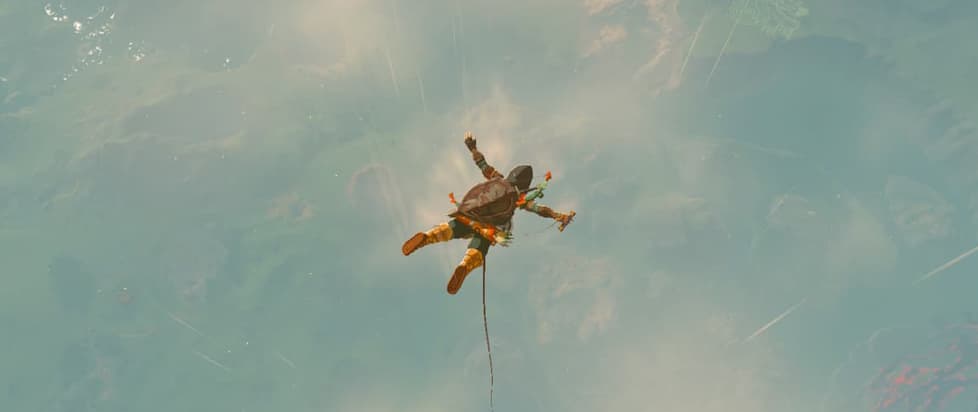
It quietly trains you into a different kind of mastery – not dominating the system with raw power, but attuning yourself to it. You are never in full control up there. You are never truly safe. But you get better at listening.
Verticality that isn’t just a buzzword
Every marketing deck for an open-world game now has “verticality” on it, usually accompanied by some poor designer talking about how their map is “not just wide, but tall.” Then you play the thing and that “verticality” boils down to: you can climb more ladders and maybe there’s a tall tower somewhere.
Tears of the Kingdom actually earns the word. Hyrule isn’t a two-and-a-half-D plane with the occasional mountain; it’s a sandwich. Sky Islands on top, the familiar overworld in the middle, the Depths yawning underneath. And crucially, the paraglider and freefall are the glue between those layers.
Jumping from a Sky Island isn’t just a fancy fast-travel animation. It’s a way of re-mapping the world in your head. Landmarks that felt miles apart on foot suddenly line up under a single arc of flight. Shrines you discovered in isolation become stepping stones in a path only visible from 3,000 feet up. The map stops being a flat board you traverse and starts being a three-dimensional puzzle you thread yourself through.
The best part is how the game lets you weaponize that perspective. You want to raid a Bokoblin camp? Don’t just charge in; climb a cliff, jump, and drop in from above like a silent meteor. Need to cross a chasm that laughed at your climbing stamina? Find a Skyview Tower on the far side, launch, and reverse-engineer your way back with carefully planned glides.
Looking down on Hyrule stops being about feeling powerful and starts being about feeling oriented. The air isn’t an empty gap between “content” on the ground; it’s its own kind of content – a vantage point that rearranges how you understand everything else.
Risk, failure, and the art of almost making it
For all the calm vibes, gliding in TotK isn’t some zen screensaver. There’s a constant edge of risk baked into every launch. Misjudge your stamina and you’ll slam into a cliff face or plunge into a lake miles away from the thing you were aiming for. Overshoot an island and you’ll be stuck scrambling up some miserable rock wall, cursing every time it starts to rain.
I’ve had glides where I’m sweating the glide ratio like a terrified student pilot. Do I aim for the safe flat plateau or risk trying to make the far side of that broken bridge that would catapult me exactly where I want to go? Do I burn Tulin’s gust now and accept I’ll land early, or gamble that a lucky updraft will bail me out?
Those moments when you barely, barely clear a ridge with a sliver of stamina left, or when you mistime it and end up clinging to rock five meters below the ledge you needed – that’s where the system earns its place. Failure isn’t just “you died.” It’s “you didn’t read the air well enough,” “you didn’t respect the distance,” “you rushed the launch.”
The staying aloft game inside Tears of the Kingdom is always half about geography, half about humility. Gravity will win. The ground is coming. The only question is: do you turn that inevitability into a graceful arrival, or a splat?

Why other games feel worse after this
Going back to other open worlds after Tears of the Kingdom is brutal. The moment a game throws me a “hold this button to auto-run to your waypoint” prompt, I feel my soul leave my body. When a map is so boring to move through that the designers assume I’ll want to skip it, that’s an admission of failure.
Traversal should be the spine of an open world, not the busy work between story missions. I don’t want another “staying aloft” mechanic that’s really just a slightly fancier sprint button. I want games that believe so hard in their landscapes that they’re willing to slow me down and make me live in them.
Skill Up talked about how a game like Cairn turns climbing itself into the entire experience – every movement on the rock face is deliberate, risky, meaningful. Tears of the Kingdom quietly does something similar with falling. It takes what most games treat as a failure state or a loading screen and turns it into a space of decision-making, reflection, and sometimes outright awe.
That’s the bar now. If your world is so disposable that instant fast travel feels like mercy, maybe the problem isn’t that players are impatient. Maybe the problem is that you built a world that doesn’t deserve to be crossed slowly.
This is where I draw the line: let me fall, slowly
After dozens of hours falling through Hyrule’s sky, I’ve started making a rule for myself in other games: I don’t hit fast travel on the first playthrough unless I absolutely have to. If the world can’t keep me engaged on foot, on horseback, on some janky glider, that’s not my problem to solve with a teleport. That’s the designer’s problem.
Tears of the Kingdom reminded me that I actually like the in-between parts. I like the walk back to town after a dungeon. I like the long ride across a plain at sunset. I like the minute of hanging in the sky before I crash another homemade death machine into a Moblin camp. Slowness isn’t filler; it’s flavor.
More than that, it nudged something outside of games too. There’s a weird lesson buried in this silly fantasy about a guy with a magic glider: you don’t have to attack every journey like a speedrun. Sometimes you can afford to trade efficiency for awareness. To accept that you’re always coming down, and the only thing you really control is how you spend the seconds before you land.
Tears of the Kingdom could have given us a proper flying machine from hour one. It could have turned Hyrule into a commute you blast through at 200 miles an hour. Instead, it gave us fabric, wind, and gravity, and asked us to make peace with all three.
I’m glad it did. Because once you’ve tasted what it feels like to truly stay aloft – not as a power trip, but as a quiet agreement with the world beneath you – it’s very hard to go back to games that treat the space between points as dead air.
Let other games chase speed. I’ll be on the nearest cliff, taking the long way down.
FinalBoss // Gear
Level up your setup
01Top-rated gaming headsetson Amazon→02High-refresh gaming monitorson Amazon→03Gaming chairson Amazon→04Discounted game keyson Kinguin→Affiliate links · As an Amazon Associate, FinalBoss earns from qualifying purchases.
Want to Level Up Your Gaming?
Get access to exclusive strategies, hidden tips, and pro-level insights that we don't share publicly.
Ultimate Gaming Strategy Guide + Weekly Pro Tips