
When a nine-year-old cult visual novel quietly vanishes from the world’s biggest mobile store, it isn’t just a content warning story. It’s a reminder that for games dealing honestly with mental health, one vague phrase in a platform rulebook can erase an entire platform overnight.
Table of Contents (8)
Key takeaways
- Doki Doki Literature Club has been delisted from Google Play over its “depiction of sensitive themes,” after previously being approved on Android.
- Google hasn’t specified which exact policy clause DDLC violates, creating a textbook case of opaque, inconsistent moderation.
- The removal sends a chilling signal to games that tackle self-harm, suicide, and mental health, even when framed responsibly.
- For indie teams, it underlines how fragile Android distribution is when a single policy interpretation can wipe out a whole platform overnight.
A cult VN meets modern platform risk
Doki Doki Literature Club (DDLC) has been around since 2017. It’s free, it’s infamous, and it has been widely praised for turning a cutesy visual novel into a sharp horror story about depression, obsession, and self-harm. It has also been on mainstream platforms for years: PC, consoles, and, since December 2025, iOS and Android.
This week, that Android run stopped dead. According to developer Dan Salvato and publisher Serenity Forge, Google removed DDLC from Google Play, citing a violation of its Terms of Service over the game’s “depiction of sensitive themes.” Store pages disappeared; existing installs still work, but new players can’t get the game through the official store.
All of this comes after Google already approved the same content for release on the store in late 2025. The mobile version launched as a free download with optional paid DLC, carrying explicit content warnings and an age gate. Nothing in the game suddenly changed this month. What changed was Google’s interpretation.
On other platforms, nothing has moved. DDLC is still up on Steam, console storefronts, and Apple’s App Store. That contrast matters: it tells you this isn’t about a global shift in what’s considered acceptable in games. It’s about one platform’s risk calculation.
“Sensitive themes” is a convenient black box
Google, so far, hasn’t publicly named the exact clause DDLC supposedly broke. The phrase relayed to the devs is that its “depiction of sensitive themes” violates the Play Store rules. In practice, that almost certainly means the game’s explicit scenes of self-harm and suicide.
If you’ve played DDLC, those scenes are the core of its horror turn. A character’s mental health spirals out, culminating in on-screen self-harm and suicide. The game does not encourage players to imitate it, but it does lean into shock and discomfort. It also surrounds that content with prominent trigger warnings, age ratings, and in most regions, store tags that clearly flag the themes.
Google’s public developer policies generally draw a line between depicting self-harm and promoting it. Content that glorifies or encourages self-harm is banned; fictional or educational depictions can be allowed with the right context and safeguards. That’s the theory.
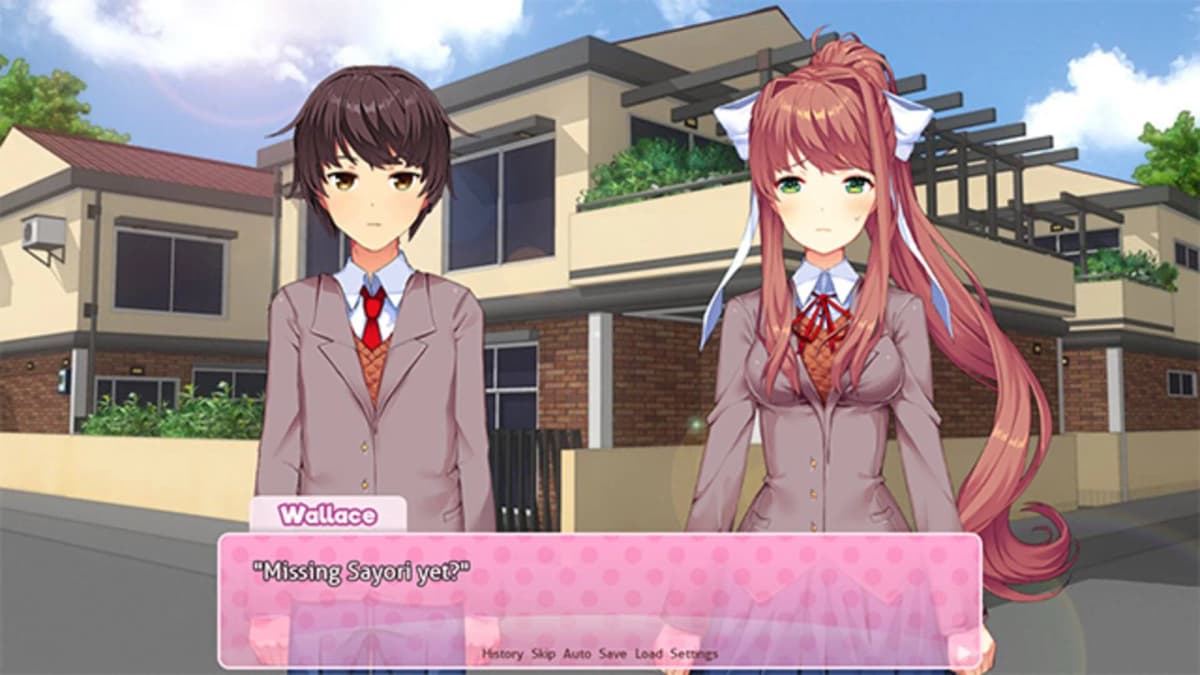
The DDLC takedown shows how messy the practice is. If you’re a developer looking at this from the outside, you now have to assume that:
- Being approved once doesn’t mean you’re safe later, even without changing your content.
- “Sensitive themes” is broad enough that horror, psychological drama, or serious mental health stories could all be at risk.
- You may not be told which specific scene, line, or mechanic supposedly crosses the line.
From a moderation perspective, that vagueness is convenient. It lets Google move aggressively when something looks risky from a PR or legal standpoint without having to explain why similar content remains untouched. But it’s exactly the kind of opacity that makes responsible devs second-guess whether tackling difficult topics is worth the distribution risk.
The inconsistency problem: DDLC is not an edge-case outlier
DDLC is not some underground shock title trying to sneak explicit scenes past moderation. It’s a known quantity. Its handling of depression and self-harm has been dissected in academic papers, video essays, and mental health discussions for years. You don’t have to think it’s perfect to recognize that it isn’t just edgelord bait.
And crucially, Google Play is not devoid of heavy content. Android users can already download narrative games and ports that include suicide attempts, graphic violence, and all the usual horror fare, alongside a steady stream of real-money gambling apps. So when DDLC is singled out for a “depiction of sensitive themes,” the natural question is: why this game, and why now?
If I was in a room with a Google Play policy rep, the first question would be simple: name the exact policy line, and explain why it applies here but not to other titles depicting suicide or self-harm on the store. Without that, this doesn’t read as principled enforcement. It reads as reactive risk aversion.
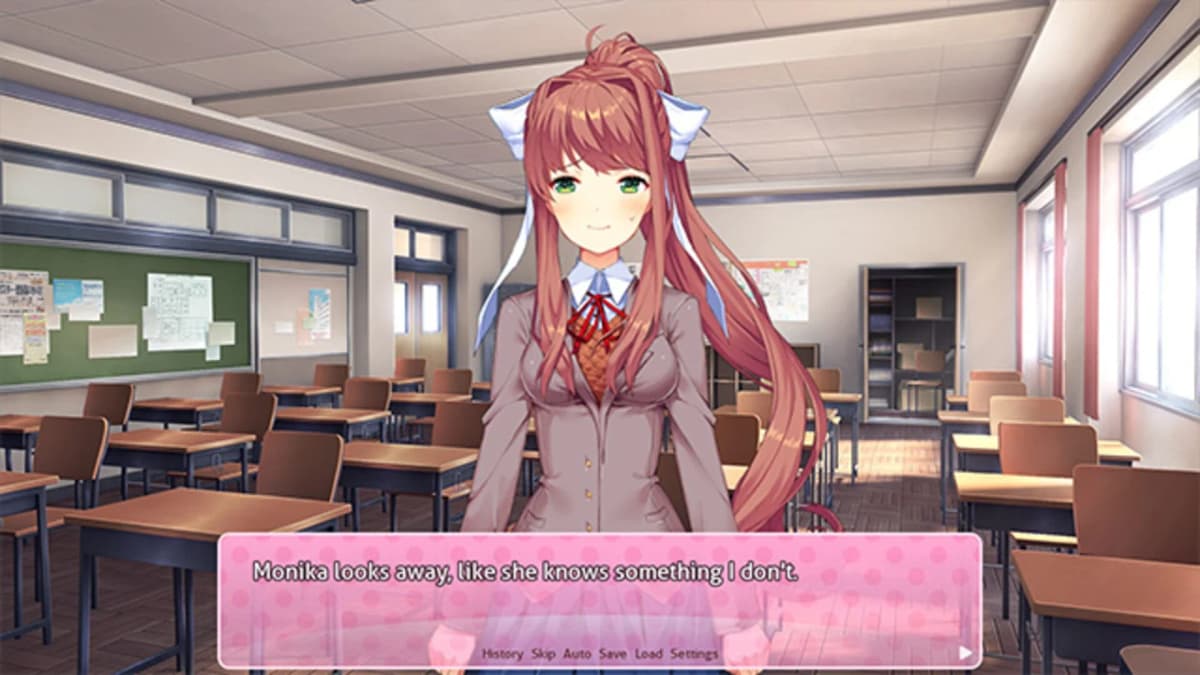
For platform holders, self-harm is one of the scariest liability vectors. It intersects with regional law, app rating boards, and online safety campaigns. It’s also algorithmically easy to flag: keyword scans on store descriptions, reviews, or even user reports can point a moderation team at a game like DDLC in seconds.
Combine that with the fact that DDLC is free-to-play on mobile and not a major revenue driver for Google, and the business logic becomes obvious. From a corporate risk perspective, pulling the game is safer than taking any heat for hosting it. The inconsistency is the feature, not a bug: it allows platforms to quietly erase low-revenue, high-controversy titles while leaving profitable outliers alone.
Mental health stories just got a little riskier
The more interesting question isn’t “why DDLC?” It’s “what does this tell every team currently writing a game about mental health?”
Game devs already walk a tightrope here. Portrayals of depression, self-harm, or suicidal ideation that are too vague feel dishonest. Go too direct, and you collide with the blunt instruments of platform policy. DDLC has long been held up (rightly or not) as evidence that you can go pretty far into that territory and still be platform-safe if you give players warnings and handle the subject with some care.
Google’s move undermines that assumption. It says, in effect: even a known, studied, previously-approved title can be yanked for content that’s been public and unchanged for nearly a decade. That’s the sort of thing that nudges narrative designers toward sanitizing scripts, flattening out rough edges, or avoiding these topics entirely on mobile.
There’s a knock-on effect for preservation and accessibility, too. For players without PCs or consoles, mobile ports are often the only realistic way to experience older cult games. Losing DDLC on Android doesn’t erase it from history, but it does make one of the cheapest, most accessible versions disappear for a huge part of the audience.
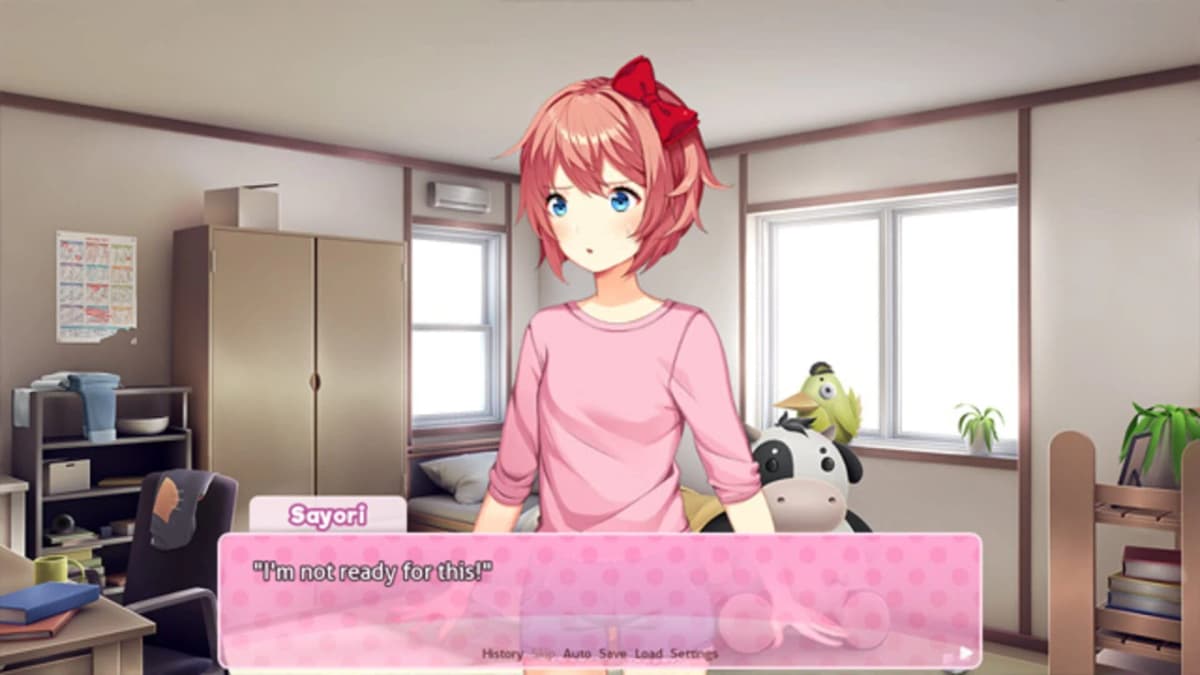
For indie devs, this is a distribution warning shot
Serenity Forge and Team Salvato have said they’re pursuing two tracks: contesting Google’s decision and exploring alternative Android distribution. That likely means downloadable APKs via their own site, itch.io releases, or partnerships with third-party Android stores.
Those options are real, but they’re not equivalent. For the average player, “not on Google Play” might as well mean “not on Android.” Installing APKs manually is niche behavior. Alternative stores have smaller reach and higher friction. You lose organic discovery, visibility in search, wishlists, and easy updates.
Indie devs already depend heavily on platform goodwill. On PC, the most dramatic version of this is Steam bans. On mobile, it’s the App Store and Google Play. DDLC’s removal is a clean illustration of how that power works: a single email citing a vague “sensitive themes” violation can remove one-third (or more) of your potential audience overnight, no matter how long your game has been public elsewhere.
It also lands in a wider moment where creators are increasingly exposed to opaque platform decisions. In publishing, Google’s search changes have recently nuked traffic to some gaming sites over low-quality SEO spam, while missing others doing the same thing. In games, this is the analogous move: a black-box judgement about what’s “safe” that materially alters who gets seen and who doesn’t, with few ways to appeal that don’t rely on PR pressure.
The uncomfortable implication is that if you’re working on anything that touches self-harm or suicide and you’re planning a mobile release, you now have to factor “sudden, unexplained delisting” into your risk assessment. That doesn’t mean don’t make those games. It means that Android cannot be treated as a stable, neutral shelf for them.
What to watch next
- Google’s formal explanation (if any): The key thing to watch is whether Google publicly names the specific policy clause and offers a rationale that distinguishes DDLC from other titles with similar themes on the store. If that doesn’t happen, assume the opacity is intentional.
- Outcome of Serenity Forge’s appeal: If the devs manage to get DDLC reinstated, it will suggest this was either an overreach or a misapplication of the rules. If the decision holds, it quietly sets a precedent for future enforcement.
- Alternative Android releases: A standalone APK, itch.io build, or appearance on third-party stores will show how much of DDLC’s mobile audience is willing to follow it off Google Play. That’s useful data for every indie planning a similar fallback.
- Copycat enforcement: If other horror or mental health-focused VNs start disappearing from Google Play under similar language, this moves from one-off controversy to a clear policy shift.
TL;DR
Doki Doki Literature Club has been delisted from Google Play for violating policies around the “depiction of sensitive themes,” almost certainly tied to its portrayal of self-harm and suicide. The game remains available on PC, consoles, and iOS, but the Android removal highlights how fragile platform approval is for titles that tackle mental health head-on. The next meaningful signal will be whether Google explains the decision or quietly doubles down, and whether Serenity Forge’s appeal manages to drag DDLC back onto the store or leaves it as a warning to everyone building serious, uncomfortable stories for mobile.
FinalBoss // Gear
Level up your setup
01Top-rated gaming headsetson Amazon→02High-refresh gaming monitorson Amazon→03Gaming chairson Amazon→04Discounted game keyson Kinguin→Affiliate links · As an Amazon Associate, FinalBoss earns from qualifying purchases.
Want to Level Up Your Gaming?
Get access to exclusive strategies, hidden tips, and pro-level insights that we don't share publicly.
Ultimate Gaming Strategy Guide + Weekly Pro Tips