
Before a platformer can have a satisfying jump, someone has to connect input, movement and collision. Traditional development tools expose those jobs through code and editor settings. Google Playground puts natural-language prompts in front of them, while Unity Spark promises a more involved browser-based creation workflow. That changes who can attempt a playable idea — and how quickly they can discover whether it deserves more work.
I welcome that change. Letting someone test a game mechanic without first learning an engine is a worthwhile ambition. But the useful promise here is rapid experimentation. Treating a short generated game as evidence that the difficult parts of development have disappeared sets these tools up to disappoint their most enthusiastic users.
Table of Contents (7)
Playground is available; Spark is still heading toward beta
Google launched Playground on October 7 in the United States for users aged 18 and older. It is an experimental platform that runs in a browser on phones and laptops, allowing people to generate simple games from a description, remix existing creations and request changes to characters, rules, physics or environments.
Creators can choose 2D or 3D setups. Multiplayer and leaderboards are supported for selected genres. Games can remain private, be shared through a link or be published to the Explore section after safety screening; players can also report content. That gives Playground a clear purpose: getting small playable experiments into someone else’s hands with relatively little setup.
Unity Spark has been announced for a forthcoming closed beta rather than released as a generally available product. It is designed to work with Google Playground and support iterative 3D creation using Unity’s engine and runtime, with access to the Unity Asset Store. Its ambition is a project that develops through successive changes, rather than a disposable result from one instruction.
That availability gap matters. Players can approach Playground as an experiment they can try now, subject to its US and age restrictions. Developers should assess Spark’s proposed workflow without assuming they can already build their next project around it.
The launch demo answers a very narrow question
Space Corridor, the game shown in the launch demo, gives the announcement a playable object to point at. A demonstration like that can show the journey from an instruction to an interactive scene. It has much less to say about what happens when the creator changes several connected rules, a player finds an unintended route or the project needs another month of development.
I care more about those second and third rounds of changes than the first successful generation. If adjusting movement breaks collision, or changing the objective leaves the old victory condition active, the creator has traded one kind of implementation work for another. The relevant measure becomes how effectively the tool helps diagnose and correct the problem.
Unity CEO Matt Bromberg has explicitly framed Spark around building something worth developing, polishing and sharing, rather than “one-shotting” an entire game. That is the sensible position. A functioning scene still needs consistent rules, readable feedback, suitable performance, usable controls and testing beyond the sequence shown onstage.
The bullshit begins when all that work gets compressed into the phrase “make a game from a prompt.” The phrase describes an entry point. It tells us very little about the quality or durability of the result.
Players should start with a rule they can test
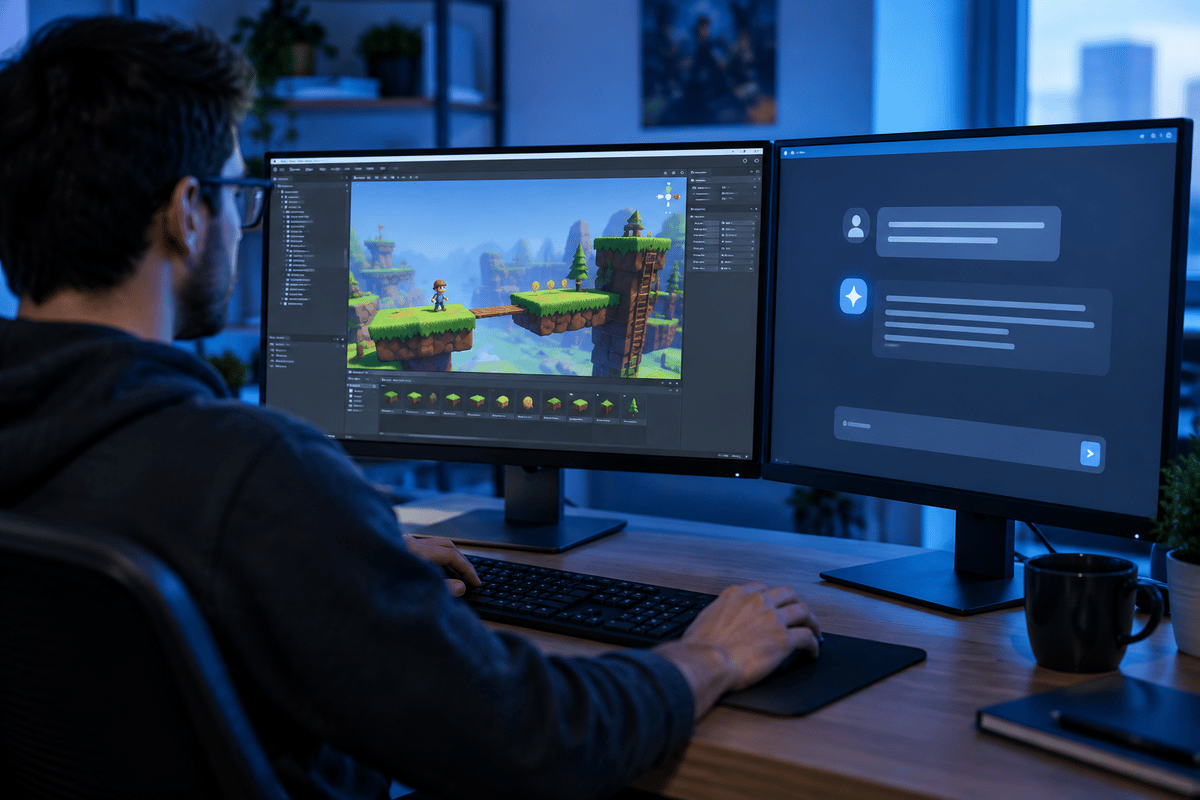
Playground’s most appealing use is specific: taking an idea for a small challenge and finding out whether playing it feels worthwhile. Its prompting tools let users adjust more than the scenery, so the strongest experiments should put that control to work on movement, objectives and physical behavior.
A useful starting request would be: “Create a single-player 2D platformer with one short level, left and right movement, a jump, three hazards and a goal that ends the run.” That is an example prompt, not a guarantee of a particular result. Its advantage is that it gives the creator a small set of observable requirements instead of an expansive wish for an entire game.
- Check the original rules first. Test movement, landing, hazard contact and the goal trigger before requesting additional features.
- Change one connected system at a time. If the next prompt changes gravity, replay the same jumps and check whether the hazards and goal remain reachable.
- Test recovery. Lose deliberately, restart and check that the game returns to its intended starting state.
- Use private sharing before publishing. Send the link to someone who has not read the prompt and see whether the controls and objective make sense without an explanation.
That last test matters because the creator already knows what the game was meant to do. A player only has the game itself. Missing instructions, unclear hazards and an invisible win condition become obvious much faster when someone else encounters them.
There is also a limit to cosmetic iteration. Changing a character or environment can make another version look fresh while leaving every decision unchanged. I would rather see one small challenge with a readable risk-and-reward relationship than a gallery of visually different versions that all play identically.
Spark’s value depends on what survives the next edit
For indie developers, Spark’s most credible opportunity is shortening the route to a rough playable scene. Testing a movement idea, comparing environmental treatments or locating suitable assets can help a developer decide where to commit further effort. Those are concrete production tasks, with outcomes that can be evaluated.
The stronger test is continuity. After several prompts, does the project still behave coherently? Can a creator revise a mechanic without undoing earlier decisions? Does a suggested asset fit the existing scene, or does integrating it create more cleanup? Iteration becomes valuable when improvements accumulate rather than repeatedly displacing previous work.
Spark also has an important initial boundary: projects cannot be downloaded or exported to the desktop Unity engine. That restriction sharply limits the assumption that a browser experiment can become the foundation of a conventional Unity production. Access to Unity’s runtime does not automatically provide a handoff into every familiar Unity workflow.
Given that boundary, I would evaluate Spark as a contained prototyping environment. A developer can potentially learn whether a mechanic warrants a more substantial implementation, but should not plan a production pipeline around moving the generated project into the desktop editor. The idea and the lessons may be transferable even when the project is not.
Asset discovery still needs an art director’s judgment
Spark’s Unity Asset Store integration makes conversational asset discovery part of the pitch. Requests can surface suggestions such as capes or sunrise backgrounds. That could reduce the interruption between imagining a scene and assembling an approximation of it.
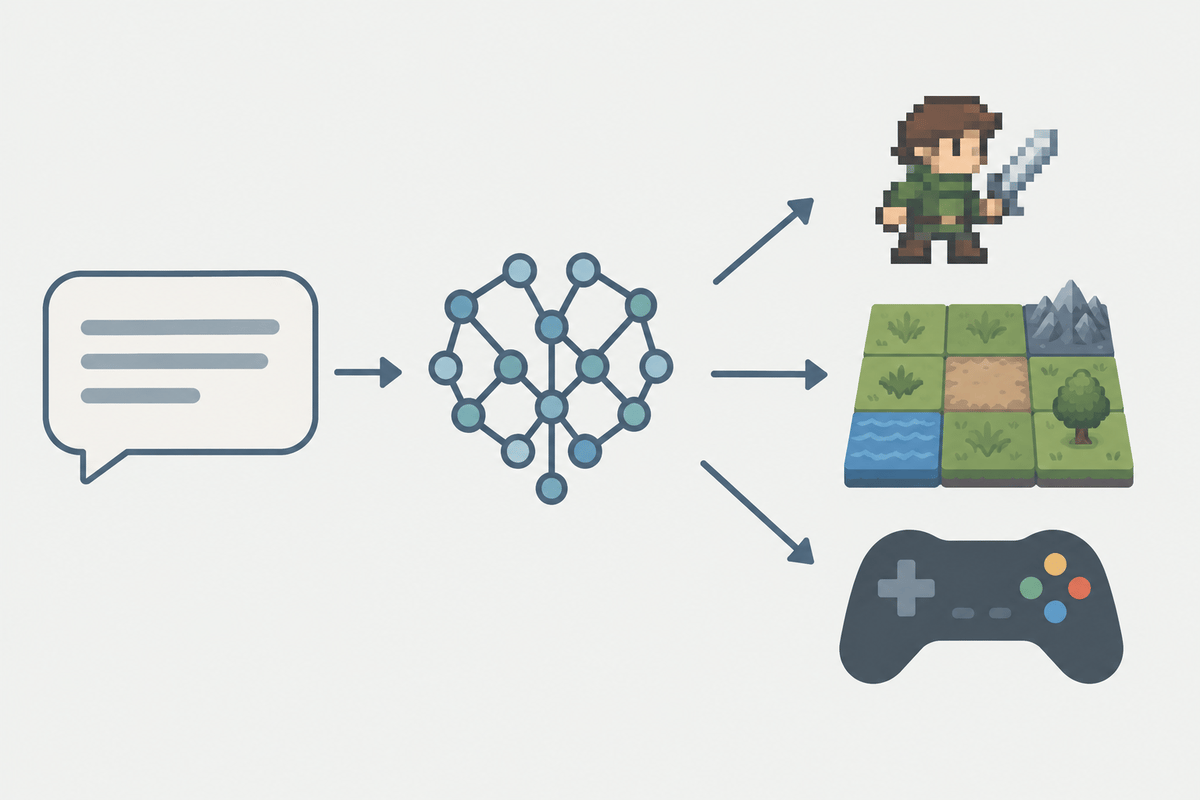
But selecting a plausible asset is only the beginning. A cape needs to fit the character’s visual style and movement. A sunrise background needs to preserve contrast around hazards and objectives. A scene assembled from individually attractive pieces can become difficult to read if those pieces disagree about scale, lighting or visual emphasis.
Developers also still need to check asset licenses, dependencies and compatibility, particularly before taking anything into a commercial project. A conversational recommendation cannot make those obligations disappear. Faster assembly increases the value of careful curation because more material can enter the project before someone examines how it fits.
A five-minute toy can still justify the technology
The strongest objection to demanding production-level reliability is fair: plenty of Playground users will want an amusing physics experiment or a short challenge to send to a friend. They have no intention of maintaining a substantial game. Judging every creation against a polished release would miss the platform’s immediate appeal.
I agree with that narrower ambition. A small toy can be worth making simply because creating and sharing it is enjoyable. Its standards should match its purpose. The controls still need to respond, the central rule needs to hold together, and a multiplayer setup needs more than a selectable label to deliver a dependable shared experience.
Playground’s safety screening and reporting also address a different problem from gameplay quality. Publication does not tell a player that a creation is balanced, accessible or enjoyable. An expanding Explore gallery will make finding worthwhile experiments its own challenge, regardless of how easy generation becomes.
Use the tools to answer a design question
For eligible players, Playground is worth approaching with one small mechanic in mind: a jump to tune, a physics interaction to explore or an objective to test. Keep the first version narrow, change it deliberately and use link sharing to find the gaps between your description and another person’s experience.
For indie developers, Spark’s beta should be judged on repeatable iteration and the usefulness of its contained workflow, with its initial export restrictions treated as a real planning constraint. A compelling demonstration earns attention. Reliable improvements earn a place in development.
My position is straightforward: these tools deserve room to make experimentation easier, without being credited for work they have not done. The first playable version is useful when it helps someone make a better design decision. Human judgment determines whether the next version is worth playing.
FinalBoss // Gear
Level up your setup
01Top-rated gaming headsetson Amazon→02High-refresh gaming monitorson Amazon→03Gaming chairson Amazon→04Discounted game keyson Kinguin→Affiliate links · As an Amazon Associate, FinalBoss earns from qualifying purchases.
Want to Level Up Your Gaming?
Get access to exclusive strategies, hidden tips, and pro-level insights that we don't share publicly.
Ultimate Gaming Strategy Guide + Weekly Pro Tips