

GPD just confirmed three configurations for the Win 5 ahead of an Indiegogo presale and an October 17 launch, and it caught my attention for two reasons: the ridiculous top-end specs (4TB storage and talk of 128GB RAM) and a detachable battery/power cable idea that sounds equal parts clever and chaotic. In a handheld market defined by the Steam Deck’s sensible balance, the Win 5 is swinging for the fences.
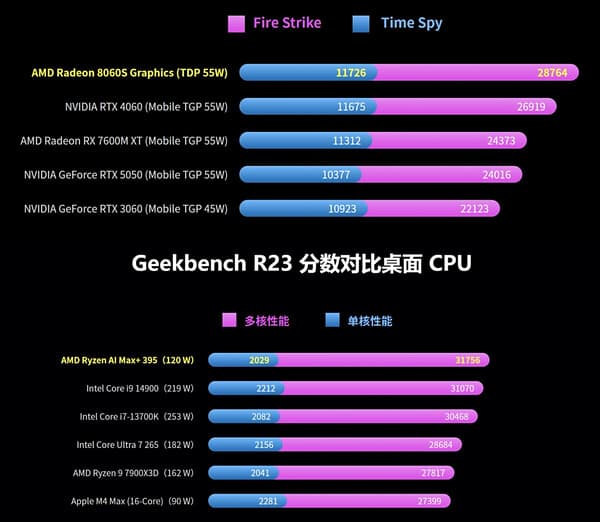
On paper, this is a monster. The base Win 5 uses an “AMD Ryzen AI Max 385,” an eight-core chip with an integrated Radeon 8050S iGPU, paired with 32GB RAM and a 1TB SSD. The two higher-tier models jump to a “Ryzen AI Max+ 395,” a 16-core processor with a quoted boost up to 5.1GHz and a Radeon 8060S iGPU, backed by 32GB RAM and 2TB or 4TB storage.
There’s also a tantalizing mention of a 128GB RAM variant that could appear during the crowdfunding presale “if everything goes well.” If it lands, that’d dwarf the memory in most gaming laptops, never mind handhelds. Realistically, 32GB is already more than enough for today’s handheld workloads, but 128GB would be a flex for creators, heavy multitaskers, or emulation power users running big texture packs and RAM caches.
Here’s where I pump the brakes. GPD’s “Ryzen AI Max 385/395” naming doesn’t match AMD’s public 2024 laptop lineup (think Ryzen AI 9 HX 370, etc.). The company and community keep tossing around “Strix Halo,” which is a real AMD codename, but whether this silicon is actually Halo-class or something closer to Strix Point at handheld-friendly TDPs is a huge question. Until third-party benchmarks confirm clocks, CU counts, and power behavior at 10-30W, take the paper specs as marketing, not gospel.
If the iGPU is as capable as implied, we’re talking 800p to 1080p gaming with medium-high settings at sensible wattages — the dream scenario. But handheld performance lives and dies on thermal headroom and TDP scaling. The Steam Deck (especially the OLED) nails consistency at 10-15W. The ROG Ally X pushed battery life and stability forward, and Lenovo’s Legion Go brought flexibility. GPD will need smart power profiles, quiet-enough fans, and stable drivers to turn theoretical gains into smooth frame times. Big clocks mean nothing if you’re stuck scorching your palms at 25W just to break 40fps.

GPD says it’s working on a new power cable that lets you run the Win 5 from a battery that’s not physically attached to the unit, shaving about 1.1lb off the device in-hand. That’s a substantial ergonomics win — weight is the silent killer of long sessions. But it raises practical questions: how does cable management work on the couch or a commute? Is the pack wearable, or just a brick you’ll juggle on the sofa? And can the system hot-swap or gracefully fail over without crashes? If they nail the UX, it could be a trendsetter. If not, it’s another fiddly accessory that lives in a drawer.
4TB on a handheld is genuinely useful in 2025 — Call of Duty, Cyberpunk 2077, and a couple of Game Pass downloads can devour 1TB fast. 32GB RAM is generous and future-proofed for Windows overhead, shader compiles, and heavier emulators. 128GB is bragging rights unless you’re doing creator work or niche workflows. The catch? Price. GPD historically prices high, and Indiegogo launches often mean early-bird discounts in exchange for uncertainty and shipping variability. With no MSRP yet, it’s hard to judge the Win 5’s value against the Deck OLED, Ally X, or the next Legion Go refresh.
The handheld PC space is maturing. Valve set expectations; ASUS and Lenovo iterated; boutique makers like GPD and AYANEO push boundaries. The Win 5 looks like GPD at its most ambitious — maybe even outlandish. If it delivers deck-beating performance with sensible thermals and a thoughtful power solution, it could be the new premium benchmark. If it leans on flashy SKUs and vague chip names without the engineering discipline, it’ll be another cautionary tale in handheld hype cycles.
The GPD Win 5 promises huge specs, a curious detachable-battery setup, and an October 17 launch — but its chip naming and unknown price are big question marks. Wait for real benchmarks and hands-on thermals before crowning it the Steam Deck slayer.
Get access to exclusive strategies, hidden tips, and pro-level insights that we don't share publicly.
Ultimate Gaming Strategy Guide + Weekly Pro Tips