
Table of Contents (9)
Resident Evil has always stressed me out. Requiem actually scared me.
I’ve always had a weird relationship with horror games. I love them, I obsess over them, and they absolutely wreck me.
Living with general anxiety and occasional panic means my nervous system is already hovering at yellow alert before I even boot something up. A creak in the house? Intruder. Flickering light? Something’s wrong. My brain constantly runs disaster simulations in the background. So when a series like Resident Evil asks, “What if there really was something in the dark?”, it’s not hypothetical for me. It plugs straight into a system that’s already overclocked.
Resident Evil 7 used to be my personal benchmark for “too much.” Jack Baker stomping around that house, the knowledge that he could Kool-Aid-Man through any wall at any time-that’s not just “spooky fun” when you’re wired like I am. That’s your existing hypervigilance turned into a game mechanic.
Resident Evil Requiem beats it. Not because it’s louder or gorier or has bigger monsters (though it absolutely does in spots), but because of Grace Ashcroft.
More specifically: because Angela Sant’Albano and Capcom decided to portray Grace’s anxiety and panic like something a real person might actually experience, rather than a cartoonish “sanity meter” gimmick. And as someone who’s had the real thing, I can tell you: that choice turns Requiem from a fun fright ride into something that, at times, genuinely rattled me in ways I’m still unpacking.
The moment Grace stopped being a character and started being a mirror
The Wrenwood Hotel sequence is where it clicked for me that Requiem was playing in a different league.
You start off with this uncomfortable, Silent Hill 2-style unease: long hallways, too-quiet lobbies, that sense that something’s off but you can’t quite name it. Classic survival horror, sure. I was tense, but it was a familiar kind of tense. I’ve done this dance with countless games.
Then the hotel manager dies. Brutally. Suddenly. And Grace breaks.
Not in the over-the-top “video game protagonist” way-no dramatic anime scream, no instant action-hero pivot. She does exactly what my body does when my brain decides it’s under attack: her breathing stutters and accelerates, her voice drops out, her movements turn clumsy and small. The camera pulls in, the audio design tightens around her ragged breath and swallowed sobs. It’s not played as a “wow, cool set-piece” moment, it’s played as collapse.
I’ve had that collapse. Not because a Tyrant punched someone’s head off in front of me, obviously, but because panic doesn’t really care about scale. My “manager death” equivalent was a crowded train where I suddenly couldn’t catch my breath, my vision pinholed, and I felt like I was about to die despite being objectively safe.
So when Grace hyperventilated in that hotel corridor, I didn’t just think “good acting.” My chest tightened. My hands got clammy on the controller. I had this horrible, uncanny sense of recognition: oh, they’re actually going there.
That’s the moment Resident Evil Requiem became the scariest game in the series for me personally. Because for the first time, the protagonist didn’t feel like an avatar of power fantasy. She felt like someone whose nervous system worked like mine-overreactive, fragile, capable of spiralling completely out of control in seconds.
Grace’s body betrays her – and the game makes you live in that
It’s not just the cutscenes. The genius (and cruelty) of the Grace sections is how aggressively her internal state bleeds into the mechanics.
Take aiming. When Grace is panicked, her aim is terrible. Her hands shake, the reticle drifts, and lining up a clean headshot on some shambling nightmare becomes a mini-boss fight in itself. On paper, that’s just a difficulty tweak: “nervous character has worse accuracy.” But in practice, it does something nastier.
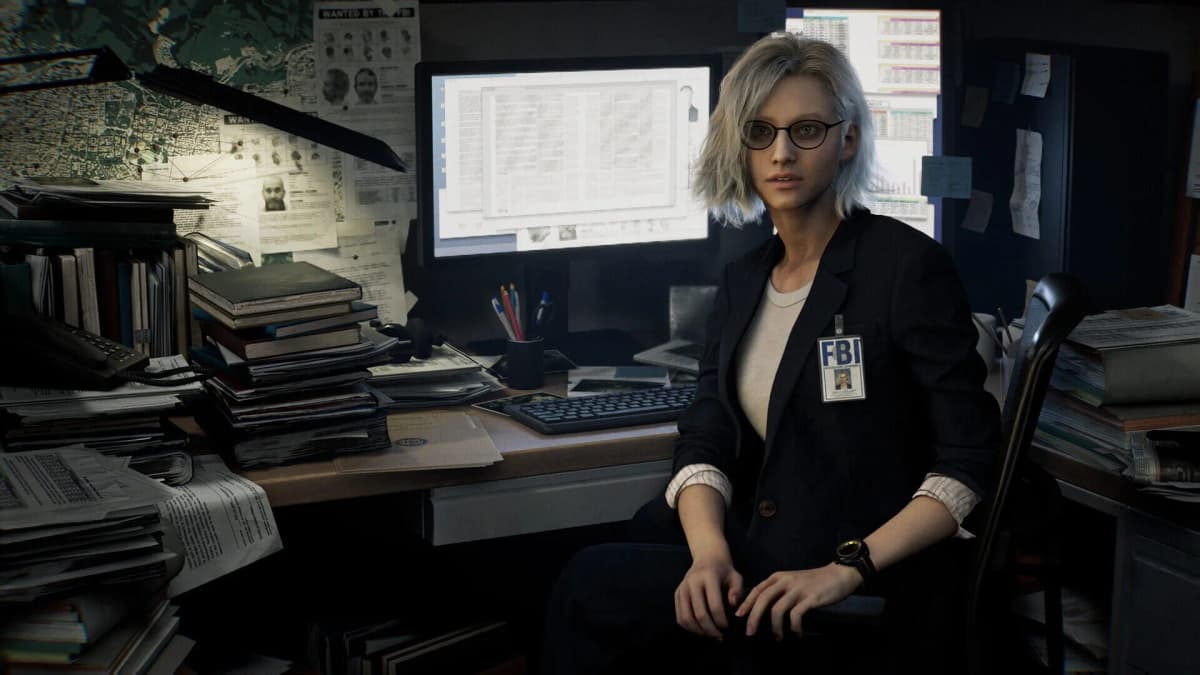
Because when my own anxiety spikes, the first thing I lose is fine motor control. Try sending a text with your heart hammering in your throat. Try holding a cup of coffee when your hands are buzzing with adrenaline. Watching that translated into Grace’s fumbling, jittery aim was like watching my worst days get patched in as a debuff.
Or the way she moves. When things get intense, she’s more likely to trip while running, to slam into walls, to get stuck on corners you’d glide around effortlessly as Leon. It’s believable clumsiness, but it also ramps up that classic survival horror helplessness into something deeper. She doesn’t just feel underpowered—she feels like her own body is sabotaging her.
Add in the audio: Sant’Albano’s performance (and the direction backing it) keeps Grace’s reactions low-key and raw rather than theatrical. Her breathing isn’t this cartoonish “hyperventilation loop”—it’s messy, uneven, with abrupt gasps and swallowed cries. In quieter scenes, you can hear the tiny quiver in her voice, the way certain words catch when she’s not okay.
That’s the stuff that got me. Not the big screams, not the showpiece sobs—the little micro-fractures. I’ve had whole conversations where I’m pretty sure the other person had no idea I was fighting a panic response the entire time. Hearing that same barely-holding-it-together tremor baked into Grace’s line reads? That’s not “relatable protagonist” territory anymore. That’s “this is too real” territory.
And to Capcom’s credit, they don’t slap a giant UI label on it. There’s no “PANIC MODE ACTIVATED” flashing in the corner. They let the performance, the animation, and the feel of the controls do the talking. It’s restrained in the right way: not underselling how bad anxiety can be, but not turning it into a circus act either.
When horror stops feeling abstract
Most horror games scare you with what-ifs.
What if you opened the wrong door and there was something inhuman behind it? What if the town itself hated you? What if your dead wife was sending you letters? It’s all metaphors and symbols and eerie framing—psychological horror in the safe, film-studies sense.
Requiem’s Grace sections are psychological horror in a way that feels less symbolic and more invasive. They’re not asking me to imagine being someone like Grace. They’re asking me to remember what it feels like to be me on a bad anxiety day, then layer zombies and mutants on top of that.
The guilt-driven, self-lacerating tone around Grace’s relationship with her mother, Alyssa, only twists that knife further. You can feel the Silent Hill 2 DNA in the way the environment and pacing press on her unresolved grief and self-blame. It’s not just “spooky hotel with a backstory.” It’s a pressure cooker built out of her own psychology.
And when you live with that kind of mental spiralling, this stuff doesn’t read like distant, gothic angst. It reads like someone externalising the ugliest, most private loops in your head. The monsters become secondary for a while. The real horror is being trapped in a body and a brain you can’t trust, in a space that reflects every awful thought back at you.
That’s the line Requiem tiptoes up to: there’s a difference between “this is a well-written, emotionally charged scenario” and “this is skirting dangerously close to recreating an actual panic attack for the player.” For me, there were at least two moments where I had to pause, put the controller down, and check in with my own breathing. Not because I can’t handle horror, but because the game was hitting too close to a real physiological response.
That’s the line Requiem tiptoes up to: there’s a difference between “this is a well-written, emotionally charged scenario” and “this is skirting dangerously close to recreating an actual panic attack for the player.” For me, there were at least two moments where I had to pause, put the controller down, and check in with my own breathing. Not because I can’t handle horror, but because the game was hitting too close to a real physiological response.
🎮 Get This Game at the Best Price
Compare prices instantly and save up to 80% on Steam keys with Kinguin — trusted by 15+ million gamers worldwide.
*Affiliate link — supports our independent coverage at no extra cost to you
Why I ended up grateful Leon Kennedy crashes the party
Before playing Requiem, if you’d asked me whether the game “needed” Leon Kennedy, I would’ve said no. I like Leon fine, but I was excited for a pure Grace story—a smaller, more intimate nightmare focused on an ordinary woman instead of another supercop.
After finishing it? I’m eating those words with hot sauce.
Leon’s sections are the release valve that keeps Requiem from being unplayable for someone wired like me. They’re bigger, louder, bloodier—classic Resident Evil power fantasy, with roundhouse kicks, meaty shotgun blasts, and that “hot uncle who’s seen too much” vibe Leon’s grown into over the years.
But more importantly, they’re stable. Leon doesn’t panic. His aim doesn’t wobble when you’re cornered. He quips under pressure. The camera sits a little further back, the FOV feels more generous, the controls more responsive. Even when the odds are stacked against him, he feels like a guy who can handle it.
Swapping from Grace to Leon became this palpable psychological gear shift for me. With Grace, every corridor was teeth-grinding; every open space felt like a potential meltdown waiting to happen. With Leon, the exact same level of threat felt survivable. I caught myself actively craving the Leon chapters, not just for the action set-pieces, but because I needed a break from living in Grace’s skin.
That’s smart structure. Without Leon’s segments, Requiem would still be remarkable, but it might also be unbearable for a chunk of players—especially those of us who see too much of ourselves in Grace’s spiralling. Having that counterpoint reminds you, “This is a game. You are allowed to feel strong and capable here too.”
And honestly, the contrast makes both halves stronger. Grace’s vulnerability feels sharper when you know what it would look like to handle these situations with action-hero composure. Leon’s swagger feels less hollow when you’ve just spent hours seeing how a normal human would be shattered by the same events.
Games usually screw this up. Requiem mostly doesn’t.
Let’s be blunt: video games have a terrible track record with mental health.
We’ve had the “crazy asylum” trope beaten into the ground. We’ve had “insanity meters” that are just reskinned stamina bars. We’ve had villains whose entire arc boils down to “they went mad” with zero nuance. Anxiety and panic are usually just excuses for glitchy camera effects or cheesy jump scares, and people who actually live with this stuff get turned into aesthetic decoration rather than human beings.
Resident Evil Requiem doesn’t get everything right—no game dealing with something this personal could—but it does something I wish more horror titles had the guts to try: it treats anxiety as both text and subtext, and lets a grounded performance lead.
You can tell that Sant’Albano and the dev team took care to keep Grace’s reactions within the realm of recognisable human behaviour. There’s an intentional restraint there—she doesn’t dissolve into hysterics every five minutes, but when something truly awful happens, the way she folds in on herself feels earned. The stutter that creeps into her voice after certain traumatic beats isn’t milked for laughs or cheap sympathy; it’s just there, an ugly scar that resurfaces when she’s under pressure.
That matters, because panic disorders and chronic anxiety can be incredibly mundane from the outside. They’re not always explosive, dramatic episodes. They’re a thousand little compromises and coping mechanisms, the way you scan rooms for exits without thinking, the way your speech falters when you’re pushed too hard. Requiem is one of the few big-budget games I’ve played that seems to understand that texture and actually use it.
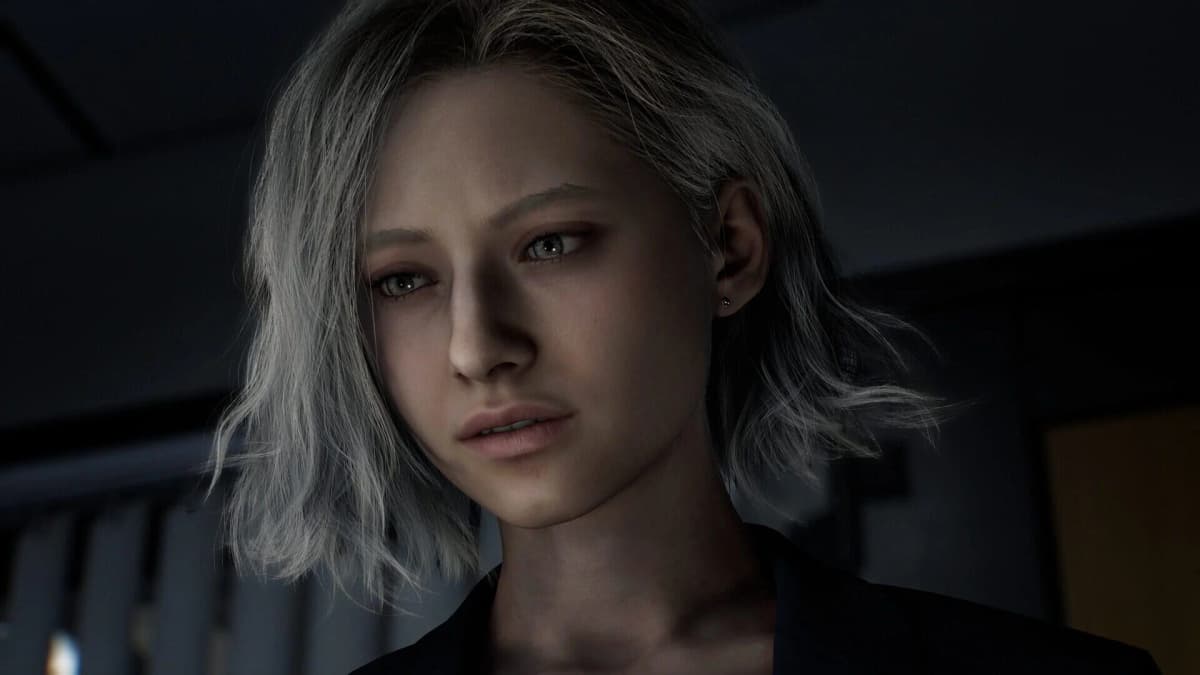
Is it exploitative to make horror out of that? Honestly, that’s going to land differently for different people. For me, the fact that Grace is never the butt of the joke, never painted as weak or ridiculous for struggling, makes a huge difference. The horror isn’t “look at this pathetic anxious mess”; it’s “look at how much this person is going through and still pushing forward.”
The line between catharsis and overload
Here’s where I draw my own line.
I’m glad Requiem exists in this form. I’m glad a major franchise took a swing at depicting anxiety and panic without reducing it to a punchline or a power-up. Grace Ashcroft is one of the most psychologically immersive protagonists Resident Evil has ever had, and her sections are, hands down, the most personally distressing I’ve played in the series.
But I’d be lying if I said I think everyone with anxiety should rush to play it.
On my first run, I had to set my own boundaries. No late-night sessions when I was already fried from work. Regular breaks during the heaviest Grace chapters. Volume tweaks when the breathing audio started to feel too familiar. I treated it like exposure therapy with a big red abort button.
Games can absolutely be a safe space to explore ugly feelings, including panic. But “safe” doesn’t mean “comfortable.” Requiem weaponises some very real sensations—shortness of breath, shaking hands, cognitive overwhelm—and that’s going to hit harder for people who know those sensations intimately. The fact that I could put the controller down, that nothing in my actual life was at stake, is what made it cathartic instead of just cruel.
That’s the tightrope every horror game that touches mental health is going to have to walk from now on. If you’re going to use our real fears and real disorders as raw material, you’d better bring the same level of care and respect Requiem shows with Grace—and you’d better give players enough control to step back when fiction starts blurring into memory.
Why Grace Ashcroft is going to stick with me
After hundreds of hours spent with this series, from fixed-camera tank controls to over-the-shoulder suplexes, I didn’t expect that the thing that would haunt me most would be a woman struggling to get words out because her nervous system is fried.
Not the zombie dogs crashing through windows, not the chainsaw maniacs, not the towering bioweapons—Grace, standing in a hallway, trying not to fall apart. That’s what lives rent-free in my head after Requiem.
And honestly, I think that’s a good thing. Horror should evolve. It shouldn’t just chase bigger explosions and nastier gore; it should dig into what actually scares us now. For a generation where anxiety isn’t some fringe condition but a daily reality, seeing that reflected with nuance in a massive franchise matters.
Grace Ashcroft made Resident Evil Requiem almost too real for my anxiety. There were moments I hated playing as her because it felt like looking into a cracked, blood-smeared mirror. But that discomfort came with a weird kind of validation: yes, this is what it’s like. Yes, this is hard. Yes, it still counts as courage to move forward when your whole body is screaming to hide.
Leon can keep his roundhouse kicks. I’ll remember the sound of Grace trying to steady her breathing in the dark long after the credits roll.
FinalBoss // Gear
Level up your setup
01Top-rated gaming headsetson Amazon→02High-refresh gaming monitorson Amazon→03Gaming chairson Amazon→04Discounted game keyson Kinguin→
Affiliate links · As an Amazon Associate, FinalBoss earns from qualifying purchases.
Want to Level Up Your Gaming?
Get access to exclusive strategies, hidden tips, and pro-level insights that we don't share publicly.
Ultimate Gaming Strategy Guide + Weekly Pro Tips