
Table of Contents (9)
The night Grace walked into Hotel Wrenwood, I realised Capcom actually remembers what horror is
I didn’t expect Resident Evil Requiem to get under my skin the way it did. I expected a slick Capcom rollercoaster: a bit of spook, a lot of shotgun, Leon doing Leon things, and another round of end-of-the-world bioterror nonsense. Fun, loud, disposable. Instead, the thing that’s been sitting in my head days later isn’t some gigantic boss or elaborate set piece – it’s a woman frozen at a hotel doorway, trying to convince herself to take one step forward.
Grace Ashcroft’s introduction at the Hotel Wrenwood isn’t just “good for Resident Evil.” It’s the most confident, character-driven horror Capcom has pulled off in years, and it openly steals one of Silent Hill 2’s greatest tricks: weaponising guilt and memory. The result is a brutal reminder that this series doesn’t need to drown itself in action and lore dumps to be terrifying. It just needs to trap someone with their own past and let us sit in that discomfort.
Requiem is already a monster hit – millions of copies sold in days, glowing user scores, critics happily throwing 9/10s around – but the thing I care about most is what it does in that first hour with Grace. Because for once, Capcom isn’t just scaring us with monsters in the dark; it’s forcing its protagonist to walk back into the worst night of her life and asking us to feel every single step.
Resident Evil has always been great at external horror. Grace is the first time the horror really feels internal.
I’ve grown up with this series. I remember creeping through the Raccoon City Police Department on the original PlayStation, counting ink ribbons and listening for that one zombie groan that meant I’d miscalculated. I remember the first time I pushed open the gas station door in Resident Evil 2 Remake — the way the silence and smeared blood trails did 90% of the work before anything actually jumped out at me.
Capcom knows how to do environmental dread. Jill’s dream at the start of Resident Evil 3 Remake in that cold, cramped apartment; Ethan Winters stepping into that rotting Louisiana house in Resident Evil 7; the snow-choked village in Village where you can’t tell what’s an enemy and what’s just the wind. All of that is classic Resident Evil: “something out there is going to kill you, and we’re going to string you along until it does.”
But it’s always been mostly external. The world is hostile, the monsters are disgusting, the corporations are evil. You’re scared of things. What grabbed me about Grace’s introduction is that, for once, Capcom makes you scared with someone.
Grace isn’t just walking into some rando creepy building. She’s an FBI investigator coming back to the Hotel Wrenwood, the place where her mother, Alyssa Ashcroft — yes, the same Alyssa from Resident Evil: Outbreak — died eight years earlier after they fled together one horrific night. This isn’t a haunted house. It’s the crime scene of her own trauma.
That’s where the “introducción Grace Resident” moment hits different from every other Resident Evil opening. Leon’s gas station? Jill’s nightmare? Ethan’s cursed Airbnb? Those are iconic setups, sure, but they’re anonymous spaces. The Hotel Wrenwood is personal in a way this series has usually run away from. It’s closer to Silent Hill 2’s apartment bathroom than to the RPD foyer — and that’s exactly why it works.
Hotel Wrenwood: classic Resident Evil dread with the volume turned down to “human”
Strip away the lore, and the Hotel Wrenwood is pure, old-school survival horror: suffocating silence, suffocating darkness, and the constant, sick knowledge that you don’t have enough ammo for what you can hear, let alone what you can’t.
Grace’s sections lean hard into what I’ve missed from this series: slow, methodical movement instead of sprinting between explosive set pieces. You’re creeping more than you’re fighting. Zombies aren’t there to be stylishly headshotted; they’re obstacles to be out-thought. Make too much noise, you’re screwed. Waste bullets finishing every single one instead of choosing when to sneak past, you’re screwed later. They even love to get back up if you haven’t dealt with them properly, this miserable, stubborn persistence that feels like the game sneering, “You really thought that was over?”
People talk a lot about Requiem being this “Frankenstein” of the series: Grace’s survival-horror in first-person welded to Leon’s over-the-shoulder action. They’re not wrong. But in those early Hotel Wrenwood hours, before Leon ever shows up, it doesn’t feel like a compromise. It feels like Capcom remembering exactly what made Resident Evil scary in the first place — and then narrowing the lens until it’s just you, a flashlight, and your own heartbeat.

The typical introducción Grace Resident game critics bring up focuses on mechanics: stealth, crafting from limited blood samples, noise management, the way even a bottle tossed down a hallway feels like a lifeline. All true. But the thing that really pushes it into “this might be the best opening in the series” territory is how all of that is welded to Grace’s mental state. You’re not just sneaking around a spooky hotel; you’re retracing the exact path of a childhood nightmare.
The Silent Hill 2 ghost haunting Requiem (and why I mean that as a compliment)
Let’s be honest: if you’re going to borrow from any horror game, Silent Hill 2 is the one you steal from. That game belongs in a museum of guilt and grief. The moment James stares into that mirror, silently judging himself while we all try to figure out what the hell he’s done, is burned into my brain.
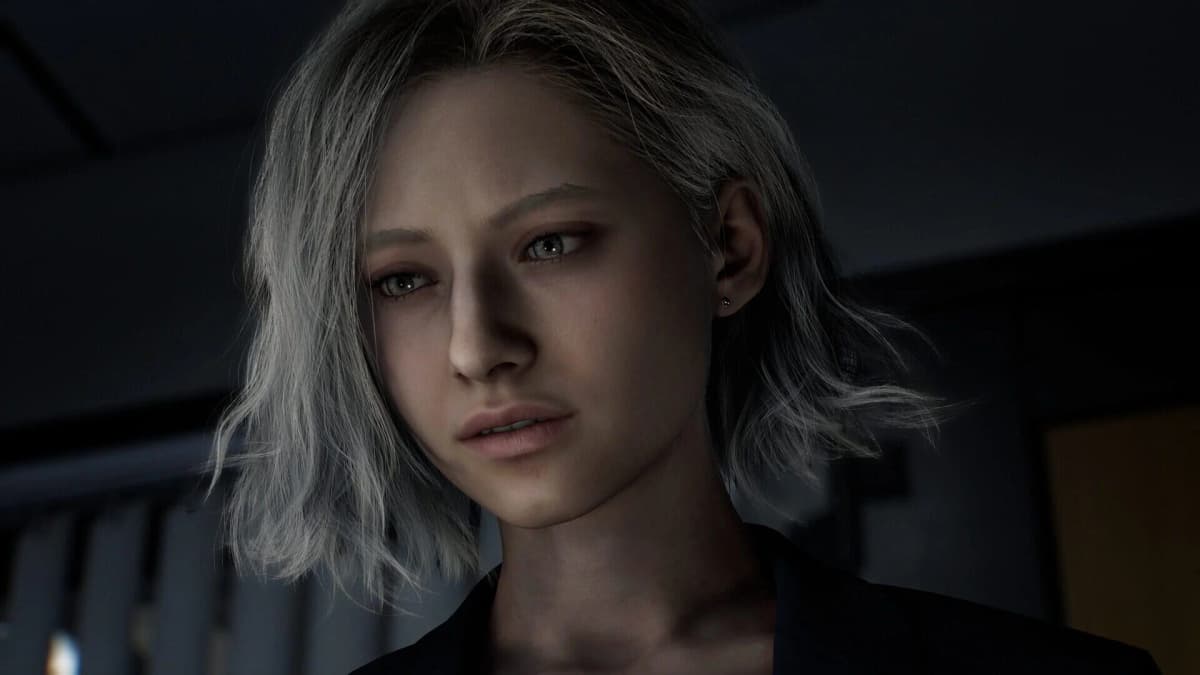
Grace gets her own version of that, and it’s the single most important choice Capcom makes in this whole game. Before she walks fully into the hotel proper, she stops at the door. She doesn’t just open it like a generic horror protagonist whose only emotion is “slightly annoyed.” She hesitates. She breathes. And then you hear it: that crack in her voice, that small, furious frustration at herself for not being over this, beautifully delivered by Angela Sant’Albano.
That’s the moment I felt Silent Hill 2’s fingerprints all over Requiem. Silent Hill turned locations into manifestations of the protagonist’s mind; every corridor said something about James. Requiem doesn’t go that far — the Hotel Wrenwood is still “real” in the Resident Evil sense — but it does the next best thing: it treats the space as a pressure cooker for Grace’s unresolved guilt. The hotel means nothing to us, at first. To her, it’s the last place she saw her mother alive.
When you reach the room where Grace stayed with Alyssa, it stops being a generic creepy suite. There are photos on the bed. Little fragments of a life that was cut off. You’re not just looting drawers; you’re sifting through a moment that froze in her memory eight years ago. Then the game pulls you into a flashback of that night — their escape, her mother’s unexplained death — and suddenly every step you take in the present tense is doubled, because you’re feeling it as an investigator and as the terrified kid who couldn’t save her.
Later, when you go down those stairs to find what Alyssa hid behind a painting, it’s not just, “Ooh, a secret item.” There’s a figure waiting below, something wrong in the dark, sure. Classic Resi. But overlaying that is Grace’s sense of failure, the way the game keeps forcing her back to the exact angles and vantage points where everything went wrong. It’s Silent Hill 2’s emotional geometry applied to Resident Evil’s physical spaces, and it works disgustingly well.
Later, when you go down those stairs to find what Alyssa hid behind a painting, it’s not just, “Ooh, a secret item.” There’s a figure waiting below, something wrong in the dark, sure. Classic Resi. But overlaying that is Grace’s sense of failure, the way the game keeps forcing her back to the exact angles and vantage points where everything went wrong. It’s Silent Hill 2’s emotional geometry applied to Resident Evil’s physical spaces, and it works disgustingly well.
🎮 Get This Game at the Best Price
Compare prices instantly and save up to 80% on Steam keys with Kinguin — trusted by 15+ million gamers worldwide.
*Affiliate link — supports our independent coverage at no extra cost to you
This is the psychological horror Resident Evil has been too scared to commit to
Resident Evil has flirted with psychological horror before, but it’s always backed away before it can get genuinely uncomfortable. The Baker family in Resident Evil 7? Great, but ultimately still a haunted house ride. Ethan’s whole thing about his family? Emotional, kind of, but drowned under “mold this, megamycete that” anime nonsense. The horror never truly belongs to the characters; it belongs to the situation.
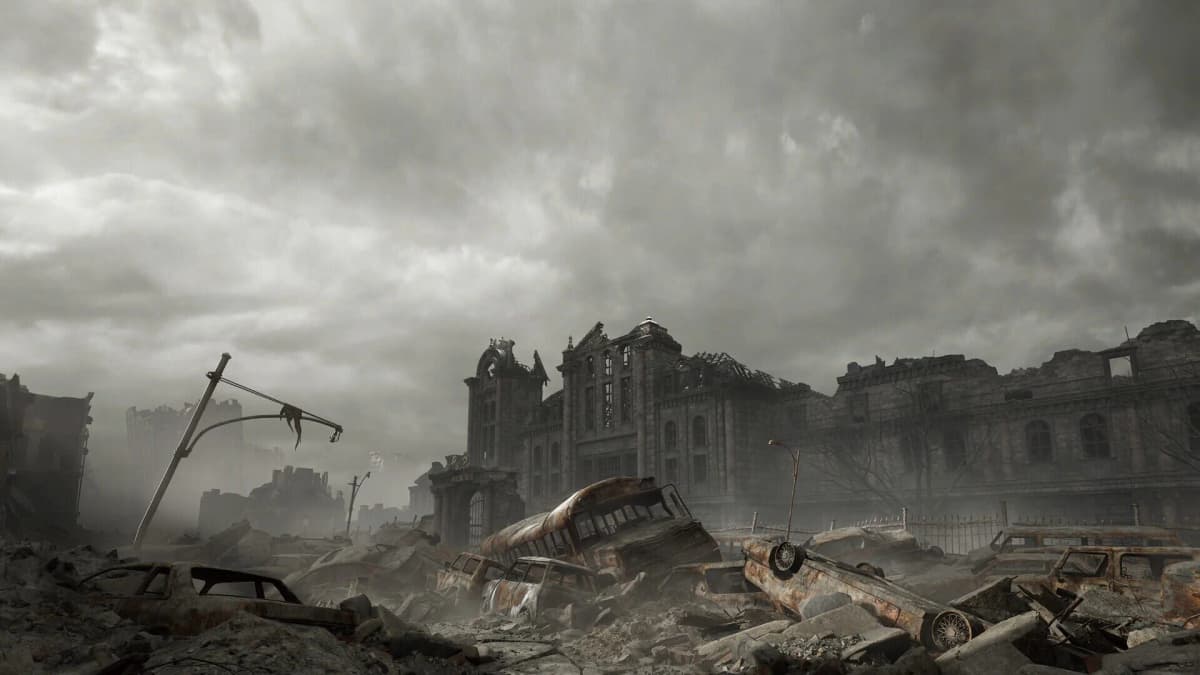
Grace breaks that pattern. Her horror is her horror. Alyssa isn’t just some random corpse in a file. She’s someone we saw back in Outbreak, dragged forward in time to haunt a daughter who’s been stewing in unanswerable questions for most of her life. Why did they run? What really killed her? Could Grace have done anything? Resident Evil has spent decades telling us about evil corporations. Grace’s opening is one of the first times it’s really told us about an evil memory.
That’s why I get a bit irritated when I see takes that reduce the introducción Grace Resident game moment to, “Capcom mixes classic and modern gameplay very well.” Yeah, it does. But that’s not the headline. The headline is that the company best known for cartoonishly huge bioweapons and wrestling moves finally had the guts to slow down and say, “What if the scariest thing in the room is the protagonist’s own brain?”
And it’s not subtle, either. Grace isn’t some blank slate. She’s angry, anxious, stubborn. You can hear the guilt under everything she does in that first act. Angela Sant’Albano doesn’t play her as the usual Resi archetype — no cocky Leon quips, no stilted early-2000s delivery. She sounds like someone who has rehearsed this confrontation in her head a thousand times and is only now facing the reality that it won’t go the way she fantasised.
Is it “deep” in some highbrow literary way? No. But compared to the series’ usual emotional range of “camp” to “slightly sad about helicopter crash,” it feels like a revolution. It’s closer to James Sunderland staring into that bathroom mirror than anything Chris Redfield has ever mumbled about punching boulders or feeling responsible. And that’s exactly where Resident Evil should be in 2026.
Capcom finally remembered it has characters, not just mascots
Requiem’s success means we’re going to see a lot of takes about how Leon “carries” the marketing or how the action half is what keeps mainstream players hooked. But let’s be blunt: Leon is comfortable. Leon is safe. Capcom knows exactly how to sell a game with him on the box. Grace is the risk — and she’s the part that actually moves the series forward.
Bringing back Alyssa Ashcroft from Outbreak is a sneaky stroke of genius. Not because there’s some huge fanbase desperate for Outbreak lore (though I’ll be first in line if they ever reboot it properly), but because it quietly signals that Capcom is willing to treat its universe as a place where people actually live and die, not just where protagonists cycle through bioterror set pieces.
Alyssa’s death could’ve been a line in a file. Instead, it’s the emotional anchor for Grace’s whole storyline. That’s a big shift. Resident Evil has always been about events; Requiem’s opening is about consequences. Eight years later, this woman is still walking into a building that might as well have been built out of her own worst memory. That’s character work. That’s the kind of thing that keeps a horror game lodged in your brain long after you uninstall it.
I’ve seen some criticism that Requiem “tries to please everyone” by letting you swap camera perspectives, or by fusing Grace’s pure survival horror with Leon’s explosive set pieces. And yeah, I get it — the tonal shift halfway through the game is real. You can practically hear the executives whispering, “Okay, enough feelings, time for the big guns.” But that makes Grace’s introduction even more important, not less. It proves that when Capcom stops trying to be everything at once and just commits to a mood, it’s still unmatched.
Does it all hold once Leon crashes the party? Not always — and that’s exactly why Grace matters
I’m not going to pretend Requiem stays as razor-focused as that Hotel Wrenwood sequence. Once Leon enters the picture in Raccoon City, the tempo spikes. You get your big bosses, your gore, your familiar over-the-shoulder blasting. It’s fun. It’s loud. It’s also the safest part of the package.
Some reviews have praised the pacing, saying the game avoids dragging by shifting from Grace’s tense, methodical horror to Leon’s more action-heavy missions, and back again. I see the logic. But personally? I would’ve happily taken an entire game of Grace trapped in spaces like Wrenwood and Rhodes Hill Sanatorium, forced to untangle the mess in her head while zombies scrape at the doors.
The fact that the early enemy design and tension in Grace’s chapters are being called “some of the best in the series” by critics isn’t an accident. Zombies that don’t stay down unless you invest precious resources, stalker types that feel like cousins of Nemesis — these aren’t just mechanical choices, they’re thematic ones. They reinforce the idea that the past never really dies unless you’re willing to pay to bury it. That’s what makes it so frustrating when the game sometimes backs away from that metaphor to throw you into another more traditional firefight.
But even if the back half leans harder into the blockbuster stuff, it doesn’t undo what Grace’s introduction accomplishes. If anything, it throws it into sharper relief. Every time Requiem cuts back to her, you can feel the tension ratchet up again — not just because the enemies are tougher or the spaces are tighter, but because we know what this place means to her now. Leon’s fighting zombies. Grace is fighting a ghost only she can see, and Capcom finally has the courage to show us both battles at once.
Where Capcom needs to go after Requiem
Here’s where I land: if Capcom walks away from Requiem thinking, “Cool, people like Leon and they like big action set pieces, let’s double down on that,” they’ve missed the point. The reason this game is exploding in popularity isn’t just that it’s well-polished or that it runs on every platform imaginable. It’s that, for the first time in a long time, Resident Evil remembers that horror hits hardest when it’s rooted in something painfully human.
Grace’s first hours at the Hotel Wrenwood prove that this franchise can stand shoulder-to-shoulder with Silent Hill 2 in at least one crucial way: it can make the scariest monster in the room a memory. It can make us dread opening a door not because of what’s behind it, but because of what the person holding the handle is remembering. That’s not some niche artsy experiment. That’s the future of survival horror, if Capcom has the guts to follow through.
If Requiem gets DLC — and let’s be honest, of course it will — I don’t want more guns or a bonus arcade mode. I want more Grace. More of this psychological thread pulled tighter, more spaces like Wrenwood that blur the line between crime scene and nightmare. And if Capcom is already sketching out the next mainline game, I hope someone in that room is brave enough to say, “What if we did a whole title with this level of introspective horror, and trusted players to come along for the ride?”
I’ve been playing horror games long enough to be jaded. I’ve seen every cheap jump scare and every “twist” villain reveal. But that moment, early in Requiem, when Grace stops at the hotel door and has to talk herself into walking through? That cut deeper than any exploding head. That’s the kind of horror I’m here for. And if Capcom ignores how powerful that introducción Grace Resident moment is, then they’re not just missing a design opportunity — they’re leaving the best new direction for this franchise locked behind a door their own game just taught them how to open.
FinalBoss // Gear
Level up your setup
01Top-rated gaming headsetson Amazon→02High-refresh gaming monitorson Amazon→03Gaming chairson Amazon→04Discounted game keyson Kinguin→
Affiliate links · As an Amazon Associate, FinalBoss earns from qualifying purchases.
Want to Level Up Your Gaming?
Get access to exclusive strategies, hidden tips, and pro-level insights that we don't share publicly.
Ultimate Gaming Strategy Guide + Weekly Pro Tips