
Table of Contents (7)
HDR’s missing 9,000 nits
The HDR signal used by modern games can describe luminance all the way to 10,000 nits. A strong gaming TV or monitor generally reaches roughly 600 to 1,000 nits in a small bright area, while sustained full-screen white is commonly far lower — often around 200 to 400 nits. That gap is the central problem examined through Gran Turismo 7 at CEDEC 2026.
Polyphony Digital and Sony presented an end-to-end HDR experiment: HDR camera capture, image processing, and a prototype display capable of exceeding 10,000 nits. The point was not to argue that players should expect a 10,000-nit television in their living room. It was to show that HDR changes as soon as any part of the chain — capture, game pipeline, console output, display tone mapping, or panel hardware — runs out of range.
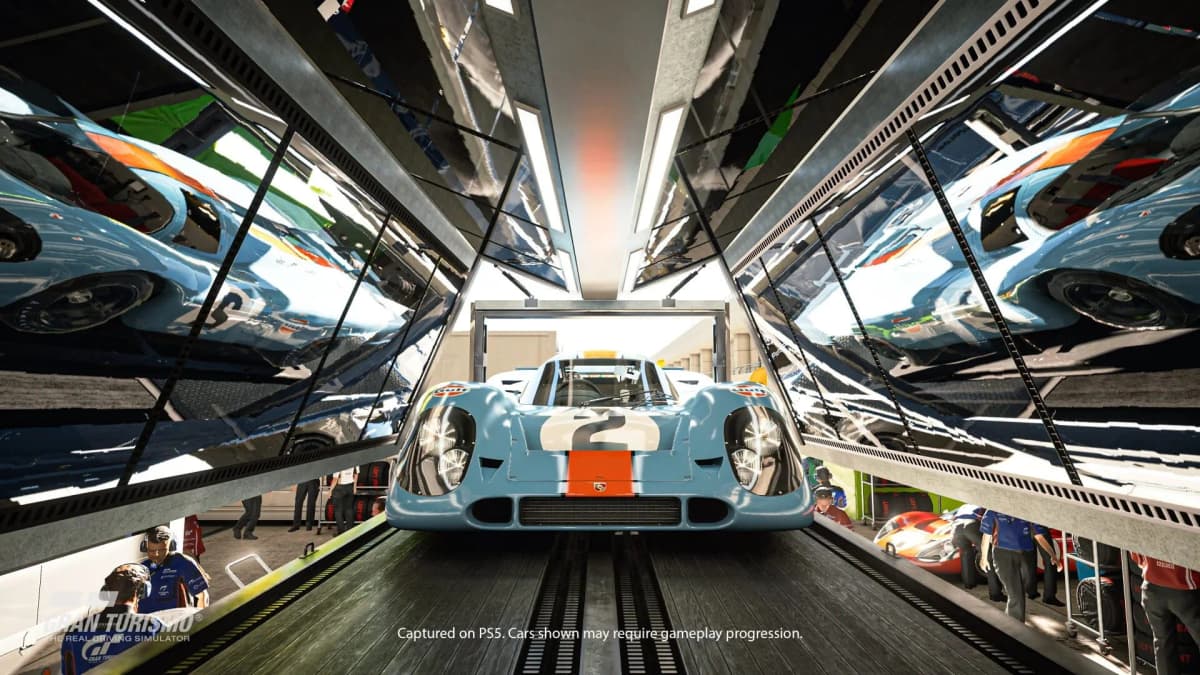
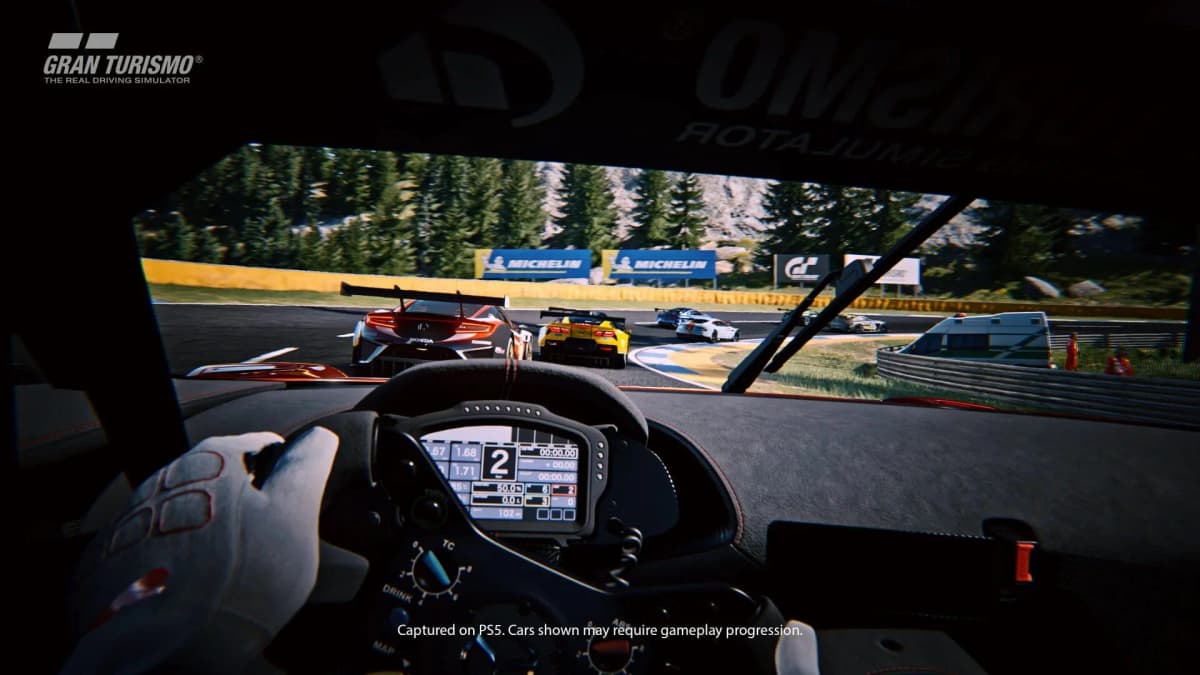
For Gran Turismo 7, that matters because the game is built around surfaces that expose weak HDR handling quickly: direct sunlight on bodywork, chrome reflections, wet asphalt, bright clouds, tunnel exits, headlights, and dark cockpit interiors. A screen can accept an HDR10 signal and still flatten much of that information before it reaches the player’s eyes.
The signal range and the screen range are separate things
| HDR element | Typical range or behavior | What it means in Gran Turismo 7 |
|---|---|---|
| PQ HDR signal ceiling | Up to 10,000 nits | The game pipeline can preserve extremely bright highlight information, even when a consumer display cannot reproduce it directly. |
| Good consumer HDR peak | About 600-1,000 nits on a small highlight window | Sun glints, headlights, and bright reflections can look convincing, provided the display has competent tone mapping. |
| Sustained full-screen brightness | Often around 200-400 nits | Bright skies, white menus, and broad daytime scenes are limited more heavily than a tiny flash of reflected sunlight. |
| OLED black level | Can approach 0.0005 nits | Night races, tunnel interiors, and shadowed cabins gain depth, though peak brightness is usually lower than high-end Mini-LED. |
| Mini-LED HDR display | Often near 1,000 nits with local dimming | Offers stronger bright highlights, but dimming-zone behavior can introduce blooming around headlights or HUD elements. |
The 10,000-nit figure is frequently misunderstood because it sounds like a promise of display brightness. It is a defined ceiling for the PQ, or Perceptual Quantizer, curve. HDR10, HDR10+, and Dolby Vision use that curve to encode an absolute luminance range. The standard gives content creators room to describe very bright material; it does not make a 10,000-nit panel appear in a TV stand.
Every consumer display therefore has to decide what to do with values above its physical limit. That process is tone mapping. A well-tuned display compresses the upper range gradually, retaining the separation between a bright cloud, a white-painted kerb, and the hottest reflection on a windshield. A poor implementation pushes those values into the same white block. The screen remains bright, but detail has been discarded.
What the CEDEC experiment changes in the GT7 discussion
The prototype setup matters because it treats HDR as a complete imaging system. Discussions usually stop at a badge — HDR10, DisplayHDR 600, or “1,200-nit peak” — as if that single number describes the result. It does not. The delivered image depends on how the source captured the scene, how the game preserves light data, how the console transmits it, and how the display maps it against its own peak brightness and black floor.
A display exceeding 10,000 nits can reproduce far more of the intended upper PQ range without compressing it into a narrower band. In principle, that allows more distinction between intense highlights rather than merely making the entire image brighter. The CEDEC presentation puts that distinction at the center of the discussion: HDR is about the relationships between light levels, not a race to make every pixel aggressive enough to light a room.
That also explains why the same Gran Turismo 7 scene can feel materially different across screens after a single calibration pass. The game may output the same HDR information, yet one display can preserve a layered sunset and individual reflections along a car’s fender while another compresses those elements into a handful of similar bright tones. The software has not changed. The display’s usable range has.
Three areas players can see immediately
Highlight roll-off: A 1,000-nit display has to compress anything the game signals beyond its maximum output. On a well-behaved Mini-LED or OLED, a low sun and its reflection on the road should still read as separate layers of brightness. On weaker HDR hardware, the brightest part of the scene can turn into a broad, featureless white area. This is the visible consequence of highlight roll-off.
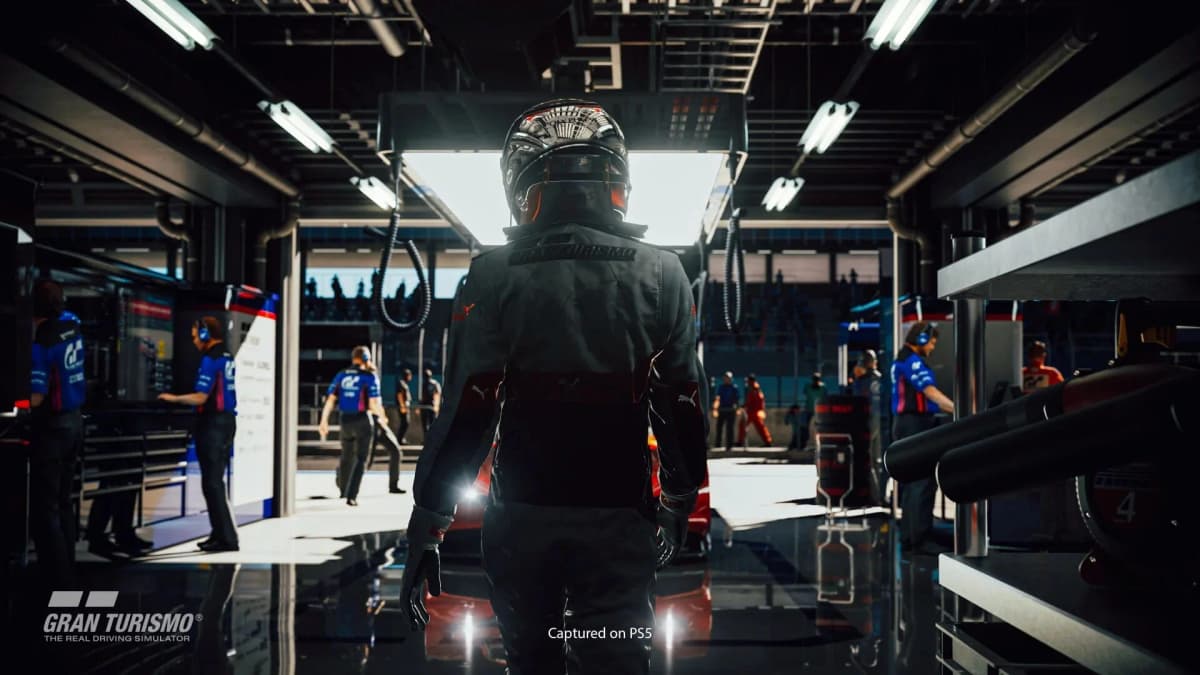
Near-black detail: High peak brightness means little when the display cannot hold a low black floor. OLED has a structural advantage here because every pixel can switch off independently. A high-quality Mini-LED can also perform well, but its local-dimming zones have to balance dark asphalt against nearby headlights and bright HUD elements. Edge-lit LCDs with global dimming have a much harder time maintaining that separation.
Perceived depth: The useful result of HDR is not a numerical peak. It is the sensation that a wet road sits under a bright sky, that a headlight has intensity without bleaching the rest of the frame, and that a cockpit remains dark without losing its shape. This is perceived contrast: the visible spacing between bright and dark parts of an image.
Peak brightness alone is a poor buying guide
A 1,000-nit claim can be meaningful, but only when its conditions are clear. Manufacturers commonly quote peak brightness from small test windows. That works for a sharp flash of sunlight on a car roof. It says much less about a broad, bright daytime scene, where automatic brightness limiting reduces output to control heat and power consumption.
Local dimming and panel type determine whether that peak translates into convincing HDR. A basic HDR400 monitor without effective local dimming may accept an HDR signal but lacks the contrast range to render it convincingly. It can produce a brighter image than SDR, yet grey-black shadows and limited highlight separation remain. That is a poor match for a game whose lighting system relies on dark and bright elements coexisting in the same frame.
| Display type | GT7 HDR strength | Primary compromise |
|---|---|---|
| Basic HDR400 LCD | Can accept HDR input and add modest brightness. | Limited contrast and little meaningful highlight control; HDR can look washed out or inconsistent. |
| OLED / QD-OLED | Excellent black level, per-pixel control, and strong night-race atmosphere. | Lower peak brightness than the best Mini-LED sets and potential automatic brightness limiting in broad bright scenes. |
| Mini-LED HDR1000-class display | Strong bright highlights with better full-scene impact than most OLED panels. | Blooming and dimming-zone transitions can remain visible around high-contrast objects. |
| 10,000-nit prototype display | Can reproduce substantially more of the PQ signal range without severe highlight compression. | Demonstration hardware, not a practical consumer display category. |
Set up Gran Turismo 7 for the display you own
The practical response is calibration, not chasing a theoretical number. Configure the console and Gran Turismo 7 while the television or monitor is already in its HDR Game mode. Picture presets can alter peak brightness, local dimming, processing latency, and tone mapping, so calibrating in one mode and playing in another defeats the exercise.
- Use HDR Game mode: It usually provides the most predictable input handling and avoids picture processing intended for film playback.
- Disable dynamic contrast and “AI” picture controls: These features can alter the image scene by scene, interfering with the fixed HDR mapping established during calibration.
- Keep local dimming enabled on Mini-LED: Turning it off may reduce blooming, but it also removes much of the contrast range that makes HDR worthwhile.
- Avoid Vivid modes: Extra edge enhancement, saturated colour processing, and inflated brightness can make calibration targets misleading.
- Do not force a higher in-game HDR value than the screen can support: Excessive settings tend to clip highlights or bury midtones instead of creating additional dynamic range.
OLED owners should pay particular attention to near-black behavior. Noise reduction, black frame insertion, and aggressive shadow-enhancement controls can introduce banding, crush low-level detail, or make the image unstable. Mini-LED owners should inspect dark scenes with bright point lights for blooming and abrupt zone changes. Neither behavior is represented by a peak-nit number on a product page.
What CEDEC 2026 does — and does not — prove
The Gran Turismo 7 experiment demonstrates the scale of the gap between HDR’s 10,000-nit signal ceiling and ordinary consumer hardware. It also makes a useful case for evaluating HDR from capture through display rather than treating certification labels as a verdict on image quality.
It does not establish that a consumer player needs 10,000 nits for an excellent GT7 experience. Current OLED and Mini-LED displays can deliver meaningful HDR because their usable contrast range is far wider than SDR’s, even though neither reaches the full PQ ceiling under normal gaming conditions. The relevant question is how cleanly a display handles the range it does have.
FinalBoss // Gear
Level up your setup
01Racing wheels (PC & PS5)on Amazon→02High-refresh gaming monitorson Amazon→03Gaming chairson Amazon→04Discounted game keyson Kinguin→Affiliate links · As an Amazon Associate, FinalBoss earns from qualifying purchases.
Want to Level Up Your Gaming?
Get access to exclusive strategies, hidden tips, and pro-level insights that we don't share publicly.
Ultimate Tech Strategy Guide + Weekly Pro Tips