
Table of Contents (8)
Granblue Fantasy: Relink – Endless Ragnarok has a scale problem by design
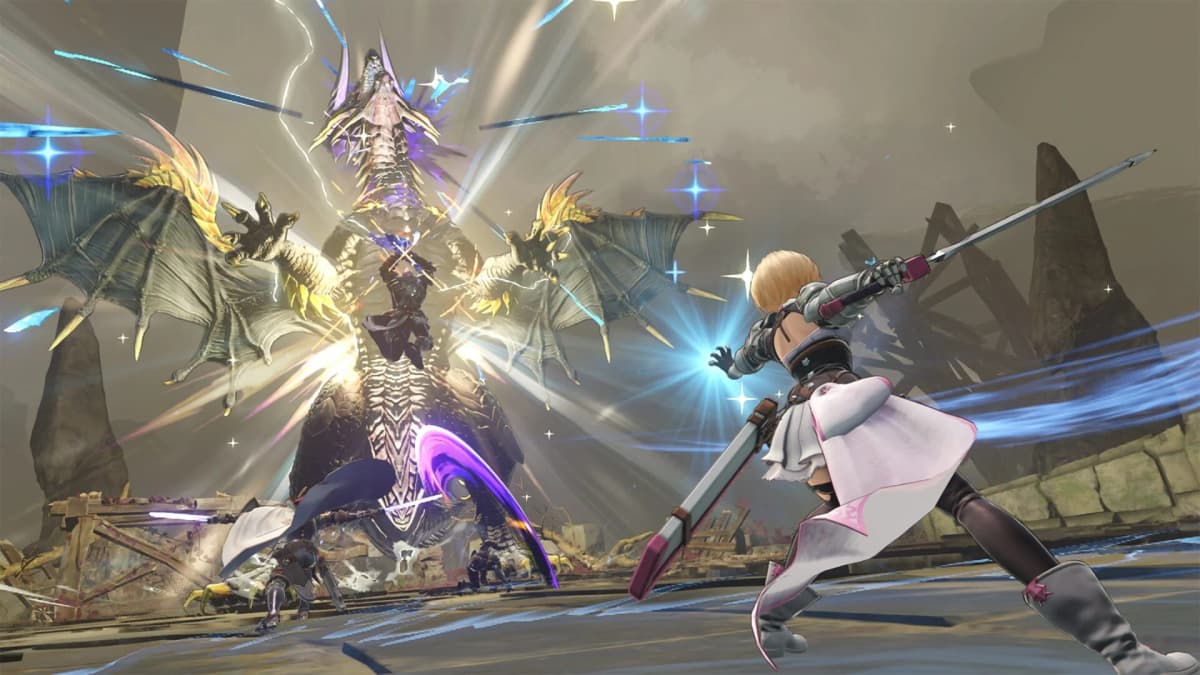
Granblue Fantasy: Relink – Endless Ragnarok asks its combat systems to carry an unusually heavy load. The expanded roster reaches more than 28 playable characters, each with a separate move set, skill kit, role identity, and three Master Styles to level. Four of those characters occupy the field at once. Add bosses with large telegraphs, Skybound Arts, Link Attacks, summons, revives, buffs, and debuffs, and the obvious failure mode is visual and mechanical congestion.
Cygames’ battle design answer is structural rather than cosmetic. The game delegates a large share of encounter management to two AI layers — Character AI and Meta AI — then applies two assist levels, Assist Mode and Full Assist Mode, to reduce the execution burden on the player side. The stated target is sōkai-kan: a clean, satisfying combat rhythm where the party remains active, major openings are converted into damage, and fights do not stall because three allies made the same bad decision.
That matters more in Endless Ragnarok than it did in the original Relink. More characters and Master Styles produce more viable party combinations, but they also multiply the tuning work required to make solo parties reliable. The expansion’s AI architecture is the part doing the unglamorous work: spacing allies, choosing rescues, preserving resources, and keeping the player’s screen from becoming a pile of overlapping animations.
Endless Ragnarok systems relevant to combat flow
| System | How it works | Why it matters in combat |
|---|---|---|
| Playable roster | More than 28 playable characters with distinct kits and roles. | Creates broad party variety, but raises the risk of inconsistent ally behavior. |
| Master Styles | Each character has three independently levelled combat styles. | Expands build and role choices beyond a single fixed character template. |
| Character AI | Individual ally logic that uses the same combat-input framework as the player. | Keeps companions on the same move, combo, and timing rules as playable characters. |
| Meta AI | A party-level command layer that monitors positioning, gauges, rescues, and coordinated actions. | Prevents wasteful overlap and improves the timing of major party damage windows. |
| Assist Mode / Full Assist Mode | Two levels of automated action support built around the same combat logic. | Reduces execution demands while preserving the game’s combat cadence. |
| Primal Burst and summons | Four Skybound Arts can create a Primal Burst; a filled summon gauge allows direct control of a summoned creature. | Gives the party high-value payoff windows that benefit from coordinated timing. |
Character AI plays the game’s combat language
The most consequential technical decision is that companions do not operate through a wholly separate NPC combat model. Cygames built Character AI to emulate player button inputs. High-level decisions are handled through a behavior tree: attack, reposition, support, rescue, or use a buff. A finite state machine then carries out the actual move selection, input timing, combo route, and skill use.
This sounds like an implementation detail. It is not. Separate player and AI rules create a common action-game problem: a move is adjusted for human play, then the bot breaks because its special-case script still expects the old timing, range, startup, or invulnerability window. A shared finite state machine removes much of that duplication. When a developer changes a combo route or an attack’s startup, the AI inherits the changed combat behavior instead of requiring a parallel repair pass.
For a game with a broad roster and three Master Styles per character, this is a practical scaling tool. It establishes a functioning AI baseline whenever a character’s playable combat state changes. The team still needs to tune priorities and behavior-tree choices, but it avoids rebuilding the mechanical foundations of every companion from scratch.
The player-facing effect is equally important. AI allies use familiar actions under familiar constraints. Their competence is not built on a private set of impossible moves. That makes an AI party feel less like decorative background damage and more like a stable four-person composition when playing quests solo.
Meta AI handles the party problems individual characters cannot see
A competent individual ally can still create a poor party. Four allies independently deciding to heal, revive, spend a Skybound Art, or stand at the same point on the boss creates the sort of friction that kills action-game momentum. Endless Ragnarok separates this concern into Meta AI, a supervisory layer that evaluates the state of the whole battlefield.
Its first job is spatial. Allies use follow-position logic to maintain natural distribution around threats, while ally-to-ally collision is removed entirely. That is a decisive design choice. Friendly collision sounds realistic on paper, but in a four-character action RPG it turns dodges, recoveries, and close-range combo strings into traffic management. Removing it preserves the player’s movement and prevents clustered companions from physically blocking the camera-facing action.
Its second job is resource coordination. Meta AI monitors party gauges and delays chain actions until a full sequence is available. The key examples are Link Attacks, Skybound Arts, Chain Bursts, and the expansion’s Primal Burst. The party gains Link Attack opportunities by building an enemy’s stun gauge; successful links raise link level, and a full gauge triggers Link Time, slowing enemy actions and improving the party’s damage conditions. A coordination layer can recognize that these states are more valuable than an isolated skill used the moment its cooldown ends.
Primal Burst makes that restraint more valuable. It requires all four party members to use Skybound Arts within a short window, then pays out with a large cinematic attack involving a Primal Beast. A party that fires one or two Arts early loses the synchronized payoff. Meta AI is so functioning as a timing governor: it protects the party from consuming a limited burst resource before the full conversion is available.
The same logic applies to rescues. When a party member is down or at low health, the system can assign an appropriate rescuer rather than allowing every ally to abandon their position. Support-oriented characters have clearer priorities in this setup, while damage-focused allies can continue maintaining pressure. Reports of AI defensive behavior also point to a short “Judgment Time” in which allies read an upcoming boss action before committing to the next input. That brief pause is more useful than constant aggression when a boss telegraph is about to invalidate an entire combo.
Assist modes are part of the combat architecture
Assist Mode and Full Assist Mode are easy to mislabel as accessibility settings sitting outside the main combat design. In Endless Ragnarok, they are connected directly to the same effort to preserve flow across a large audience and a large roster.
Relink’s core loop has several layers happening at once: tracking boss telegraphs, managing a character-specific combo route, selecting skills, preserving defensive options, building gauges, and recognizing the brief windows where Link Time, Chain Bursts, or Primal Burst matter. A player can enjoy the character fantasy without wanting to manually execute every input in that stack. Assist layers lower that execution requirement while keeping actions tied to the game’s ordinary combat systems.
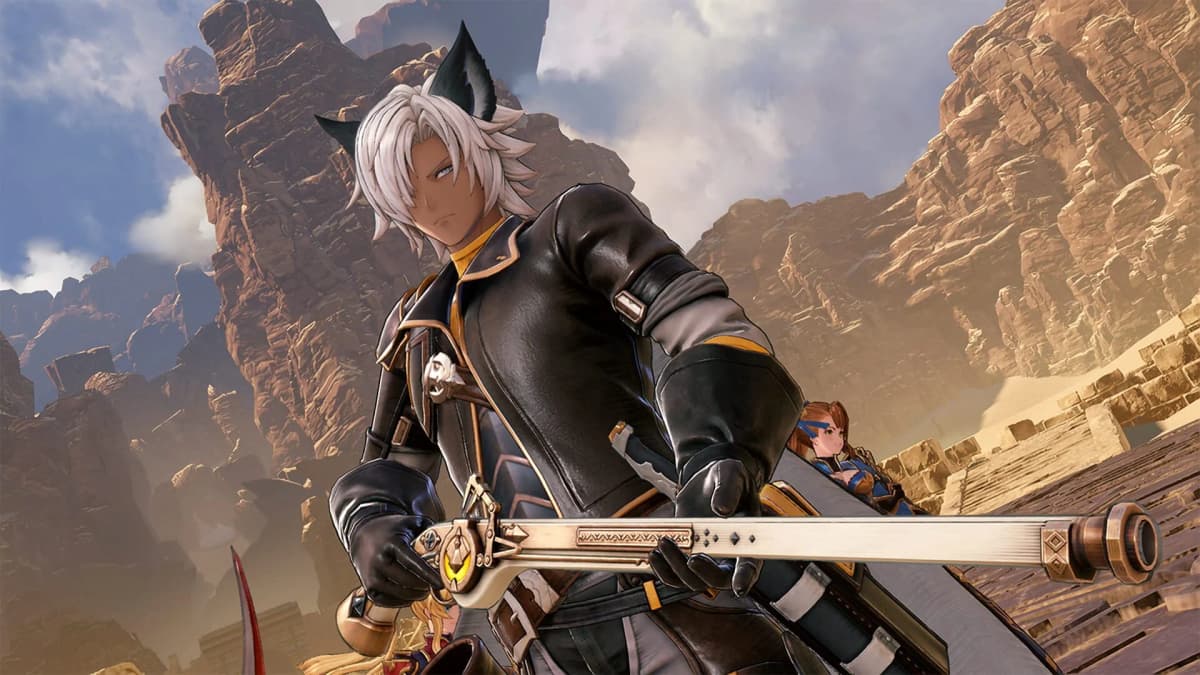
That distinction is important. The assist stack supports a combat loop already designed around clear openings and coordinated payoffs. It is not a substitute for encounter structure. Boss attacks still need readable telegraphs. Damage windows still need obvious value. Character kits still need enough identity that switching from Beatrix to Eustace, Galanza, Maglielle, Fraux, or Fediel changes how the player approaches a fight.
The practical result is a smoother entry point for players returning after a long break, learning a technical Master Style, or moving into higher-difficulty quests. Assist support can reduce the cost of basic execution while the player concentrates on positioning, timing, party composition, and the larger rhythm of a boss fight.
What this changes for solo parties
Solo play is where the design has the clearest value. A four-character action RPG usually asks a solo player to accept one of two compromises: companions are weak enough to be ignored, or they are powerful enough to feel like they are playing the game without the player. Endless Ragnarok aims for a third outcome. The controlled character remains the tactical center, while the other three provide reliable damage, survivability, positioning, and burst coordination.
Party building still matters. A composition with at least one support or healing-capable character gives Meta AI a clearer recovery tool when quests become punishing. Damage specialists remain useful for converting Link Time and Primal Burst windows. The point is not to find one universal “best AI team,” because characters and Master Styles create different needs. The useful rule is simpler: build a party with defined jobs, then allow the AI to execute those jobs without creating unnecessary overlap.
Players should also treat Link Time and Primal Burst as the primary high-damage moments rather than incidental visual rewards. Saving Skybound Arts for a complete sequence is generally more productive than firing them independently. The AI is built to recognize these collective states; the controlled player benefits most by aligning their own resources with that schedule.
Summons add a second layer of player agency to this model. The summon gauge fills during combat, and a full gauge allows direct control of a large summoned creature. That gives the player an explicit high-impact action during an already coordinated battle, rather than leaving every major payoff to companion automation.
Why this approach scales better than bespoke companion scripting
Endless Ragnarok’s broader lesson is that content breadth needs systems discipline. More characters are valuable only if each one can remain legible, functional, and supportable across solo play, co-op, endgame quests, and future balance changes. The expensive approach would be bespoke AI rules for every character, every style, and every edge case. That produces a brittle game where balance patches create a long tail of companion fixes.
Shared player-and-AI combat states solve the character-level problem. Meta AI solves the party-level problem. Assist modes solve the execution-access problem. Taken together, they create a combat framework capable of supporting a roster measured in dozens without asking every player to become an expert in every kit.
The system also protects the part of Relink that would be easiest to lose under expansion-scale complexity: downtime stays limited. Allies spread rather than block each other. Revives receive an assignment. Buffs and burst resources are not casually thrown away. Link Time and Primal Burst become deliberate peaks in the encounter rather than random effects triggered amid animation noise.
Platform and access considerations
Granblue Fantasy: Relink – Endless Ragnarok is available for PlayStation 4, PlayStation 5, Nintendo Switch 2, and PC through Steam. The expansion is not a standalone starting point: access requires clearing the base game’s main story through the Proto Bahamut encounter.
Hardware also affects the experience. PlayStation 5 targets 60 frames per second, while the Nintendo Switch 2 version targets 30 frames per second and can dip below that target in heavier scenes. Relink’s combat depends on reading telegraphs, reacting to short openings, and maintaining visual tracking through four-character effects. A stable 60 fps presentation has a meaningful advantage for that specific workload, not merely a cleaner-looking image.
FinalBoss // Gear
Level up your setup
01Top-rated gaming headsetson Amazon→02High-refresh gaming monitorson Amazon→03Gaming chairson Amazon→04Discounted game keyson Kinguin→Affiliate links · As an Amazon Associate, FinalBoss earns from qualifying purchases.
Want to Level Up Your Gaming?
Get access to exclusive strategies, hidden tips, and pro-level insights that we don't share publicly.
Ultimate Tech Strategy Guide + Weekly Pro Tips