

For most of PlayStation’s history, buying a game meant making a straightforward exchange. You paid a retailer, took home a disc, installed it, and had something tangible to keep, lend, trade, or sell when you were finished. That arrangement was never flawless. Modern discs often need patches, some games demand online connections, and publishers have been treating the disc itself as a glorified key for years. Even so, the physical copy remained a pressure valve against the worst instincts of platform holders.
Sony plans to close that valve in January 2028. The company says it will stop manufacturing physical discs for all new PlayStation releases, while games released before the cutoff will remain unaffected. From that point onward, the default route for new PlayStation games becomes the PlayStation Store and digital retail codes. The result is brutally clear: PlayStation’s physical library becomes a finite back catalogue instead of a living release format.
That is why the backlash is justified. Sony and its publishing partners keep treating this as a question of demand: players buy digitally, so discs have outlived their usefulness. Players are arguing about something much more important: the practical rights and options that disappear when digital becomes the only door into a new release. Those are separate arguments, and the industry is deliberately acting as though they are the same.
Table of Contents (6)
Sony’s digital sales figure explains the confidence, not the consequence
Sony reported that full-game digital downloads represented 85 percent of PS4 and PS5 software sales in the fourth quarter of its 2025 fiscal year. Capcom has said physical sales account for roughly 10 percent of its business. Those are the kind of figures executives love because they turn a structural consumer change into a simple spreadsheet decision.
Capcom and Sega can look at the coming cutoff and see a manageable business adjustment. Their calculations make sense on narrow commercial terms. Manufacturing, shipping, retailer margins, returns, and inventory risk all look less attractive when most transactions already happen through digital storefronts. Sony gets a cleaner supply chain, publishers get more control over pricing, and the PlayStation Store becomes even more central to every purchase.
But an 85 percent digital ratio does not prove that the remaining 15 percent is meaningless. It only proves that players have bought a lot of digital games under the current rules, prices, hardware choices, and retailer conditions. It tells Sony nothing about whether those players would accept higher effective prices, no used market, weaker access guarantees, or a future where their library depends entirely on account status and platform policy.
I have little patience for the argument that physical buyers are a tiny, sentimental minority whose choices no longer matter. That is the sort of logic companies use when they want to convert every player into a permanently captive customer. A minority does not need to be large for its consumer protections to be worth preserving. Plenty of players buy digitally most of the time and still want a disc option for the releases that matter most.
Grand Theft Auto VI turns a policy change into a player problem
Grand Theft Auto VI is the exact kind of blockbuster that exposes how hollow the “discs no longer matter” line has become. Rockstar Games is already associated with a disc-free, code-in-box version of the game: a retail package that gives buyers something to put on a shelf while withholding the local installation medium that made a physical release valuable in the first place.
A box containing a download code offers the weakest possible version of collecting. It can look premium in a display case, but it cannot be installed without a download, cannot function as an independent backup path, and gives the buyer none of the resale flexibility of an actual disc. Calling that product physical is marketing theatre. The box is physical. The purchase remains a platform-controlled digital entitlement.
Sony says games released before January 2028 are unaffected, so Grand Theft Auto VI does not need to land after the cutoff for this debate to matter. The point is larger than one launch window. If Rockstar can sell one of the biggest releases in gaming through a decorative box and a code, Sony’s full shutdown becomes easier to normalize. The industry gets to train players to accept less before the last actual discs even leave the production line.
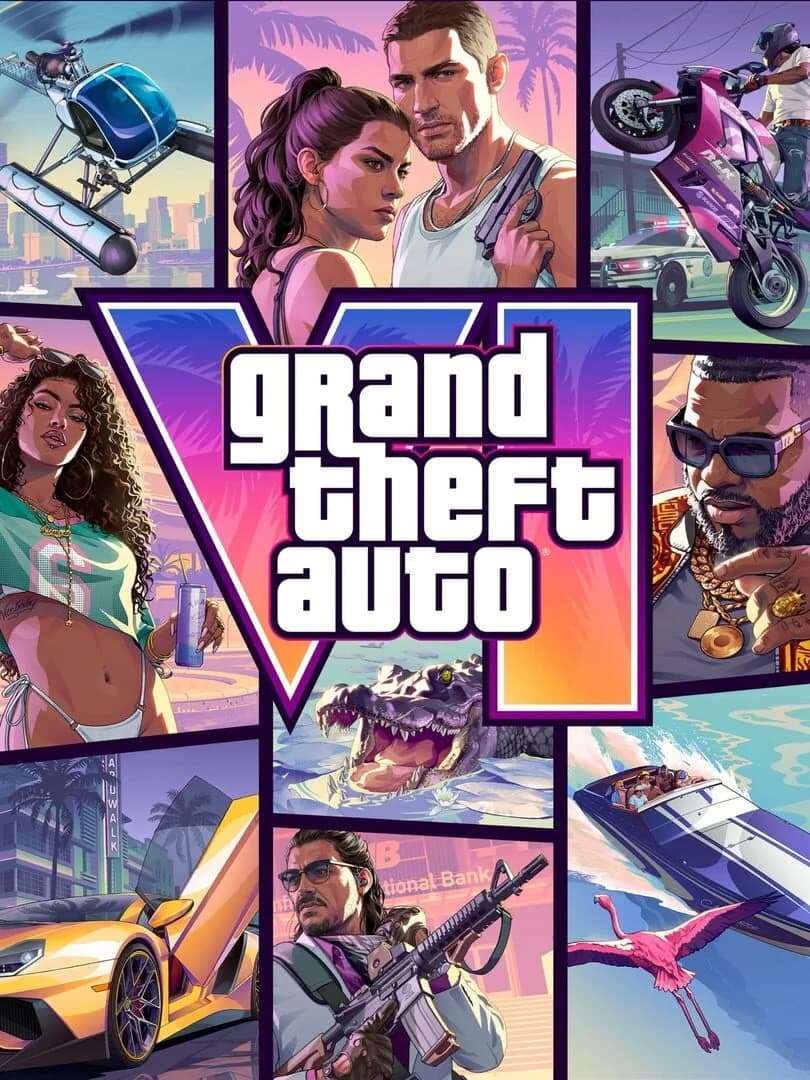
That is the part publishers are missing. A huge release has always carried more than a sales number. It creates demand from collectors, players who buy at local retailers, people splitting costs through resale, households with weak broadband, and anyone who wants a reliable way to reinstall a game years later. Grand Theft Auto VI will not make those needs disappear because digital sales are convenient for the majority.
A disc carries four protections that download codes cannot replace
First, a disc provides an access fallback. Digital access depends on an account, a storefront, regional availability, licensing arrangements, and a platform holder continuing to recognize a purchase. A disc has limits, especially in an era of enormous patches, but it remains a local object that exists outside a storefront’s current mood. Once Sony stops producing new discs, future PlayStation releases lose that fallback entirely.
Second, discs sustain the used market. A physical copy can be resold, traded, loaned, gifted, or bought secondhand. That matters because a game’s real cost is often far lower than its launch price when a player can sell it after finishing it. The used market also forces publishers to compete after release. Digital-only stores love to pretend every purchase is forever, while players understand that many games are a one-time experience they may want to pass along rather than archive indefinitely.
Third, discs offer a preservation asset. They are no perfect answer to preservation, and pretending otherwise would be dishonest. Many modern games ship incomplete, receive crucial patches, or connect to services that can disappear. Yet a disc still gives collectors, archives, and researchers a physical reference point: an original build, packaging, data, and evidence that a release existed in a particular form. Remove discs from future releases and preservation becomes even more dependent on platform servers, private accounts, and publisher goodwill.
Fourth, discs reduce the punishment for poor connectivity. A local install medium matters to players with data caps, unstable service, shared household bandwidth, regional outages, or limited time. Digital-only releases turn every installation into a bandwidth test. They also give account authentication and server reliability a larger role in whether somebody can play a game they paid for. Fast fibre connections make this easy to ignore; they do not make the problem imaginary.
These are not four separate collector complaints. They describe the same underlying issue: ownership is a bundle of useful choices. Sony’s 2028 plan removes several of those choices at once and hands control over to a digital ecosystem whose rules can change above the player’s head.
PlayStation’s own digital library history gives players every reason to worry
Sony has already shown how fragile a digital library can feel when rights holders and licensing agreements change course. PlayStation’s planned removal of Discovery content on December 31, 2023 was reversed on December 21 after updated licensing agreements. The reversal was welcome, but the lesson was ugly: access could have vanished because a corporate arrangement changed.
Then there is the planned September 1, 2026 removal of affected StudioCanal titles from users’ PlayStation video libraries. Video agreements and game agreements operate under different contracts, but that distinction offers limited reassurance. The essential fact remains that a paid digital catalogue can be altered after purchase when the rights structure shifts.
This is why players connect Sony’s disc shutdown to campaigns such as Stop Killing Games. The concern is not that every digital game will vanish tomorrow. The concern is that the player has no independent route left when a platform holder, publisher, or rights holder changes the terms years later. A physical copy does not solve every preservation problem, but it prevents the entire future of access from resting on a single corporate promise.
Publisher confidence needs proof, not a quarterly sales chart
If Sony and major publishers want players to accept that physical games have become obsolete, they need to provide something stronger than reassurance and download-ratio statistics. Digital distribution can earn trust, but it must first match the protections that physical ownership offered in practice.
- Long-term access parity: Digital purchases need a published, predictable multi-decade redemption and redownload guarantee that survives console transitions.
- Competitive pricing: Digital launch prices must match or beat the effective cost of a disc after resale, used-market competition, retailer discounts, and borrowing.
- Offline resilience: Players need to install and play without repeated authentication failures, mandatory always-online checks, or massive download dependence.
- Preservation guarantees: Publishers need to preserve original builds and provide archival access instead of leaving a game’s history trapped behind patches, delistings, and dead services.
- Clear consumer rights: Account transfers, family sharing, redownload rules, delisting protections, and regional access need plain, durable policies that cannot be rewritten whenever convenient.
Until that standard exists, publisher confidence amounts to confidence in their own revenue model. They see 85 percent digital sales and conclude that the customer has voted. I see a market where physical alternatives still discipline prices, preserve access, and protect people who cannot treat an online storefront as a permanent utility.
Sony is turning physical PlayStation into a closed chapter
The most damaging part of Sony’s announcement is its finality. The company is not trimming disc production or testing a smaller physical range. It is ending new-disc manufacturing in January 2028. Existing PlayStation discs will remain, but no new supply means physical gaming becomes a historical category on the platform.
That changes the economics immediately. Collectors lose future releases to preserve. Late adopters lose a deeper secondhand pool. Retailers lose the ability to compete with the PlayStation Store using inventory and discounts. Players who sell one finished game to fund the next lose a familiar way to manage an expensive hobby. Every future blockbuster becomes a more tightly controlled digital transaction.
Grand Theft Auto VI matters because it makes the future impossible to dismiss as an abstract policy argument. When a game that large can arrive in a code-in-box package, the industry is testing whether players will accept a physical-looking product stripped of physical ownership’s practical benefits. Sony’s 2028 shutdown turns that test into the permanent PlayStation default.
FinalBoss // Gear
Level up your setup
01Top-rated gaming headsetson Amazon→02High-refresh gaming monitorson Amazon→03Gaming chairson Amazon→04Discounted game keyson Kinguin→
Affiliate links · As an Amazon Associate, FinalBoss earns from qualifying purchases.
Want to Level Up Your Gaming?
Get access to exclusive strategies, hidden tips, and pro-level insights that we don't share publicly.
Ultimate Gaming Strategy Guide + Weekly Pro Tips