
By the time I had raised the church’s decoration score with human-fat candles, the workday had already followed a reassuringly cozy rhythm. Wood had been chopped, ore had been mined, food had been cooked, and another handful of chores had been cleared from the list. Then the candle recipe landed with its full, ugly weight. Graveyard Keeper 2 makes that transition its central joke and its central strength: the same routine that begins as cheerful medieval busywork steadily turns the dead into stock, staff, fuel, ingredients, and profit.
That is why this sequel works when it works. Lazy Bear Games understands how satisfying it is to turn a rough patch of land into a functional operation, then understands something more unsettling: a graveyard is an extremely efficient place to build an industrial supply chain. Published by tinyBuild, Graveyard Keeper 2 arrived on September 22, 2026 for PC, PlayStation 5, Xbox Series X|S, Nintendo Switch, and Nintendo Switch 2. At $24.99 in the US, it offers a lot of interconnected systems for the money, provided you have the patience to let its layered production demands become the point rather than the obstacle.
Table of Contents (6)
What Matters Before You Buy
- The daily loop revolves around chopping wood, mining ore, cooking, levelling skills, earning points, and unlocking new technology.
- Corpse processing is not a side attraction: autopsies provide organs and tissue for alchemy, crafting, candles, undead labor, and other production needs.
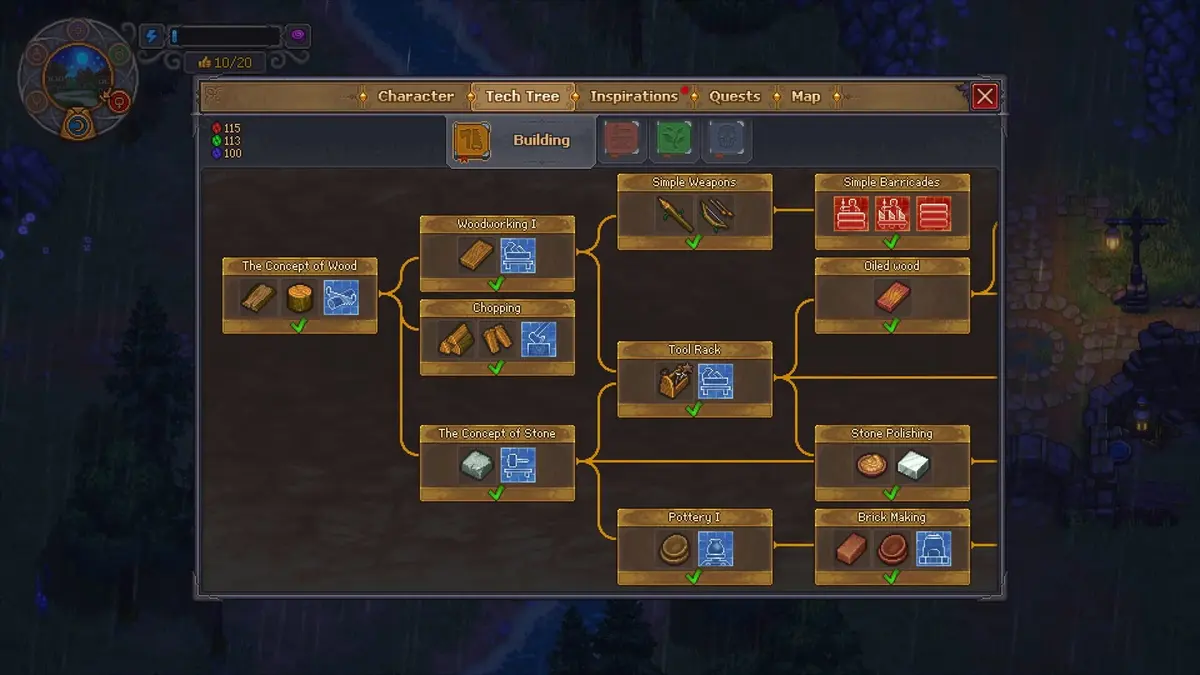
- Multiple technology trees and linked workstations make progression satisfying, but individual requests often require several intermediate components.
- Zombie stations and conveyor belts eventually reduce manual busywork, although suitable undead workers and infrastructure must be established first.
- Farming, fishing, quests, combat, commerce, graveyard decoration, and village obligations keep the management loop broad rather than purely corpse-focused.
The Cozy Routine Has Real Mechanical Pull
The opening attraction is easy to understand. Graveyard Keeper 2 gives almost every ordinary task a practical purpose. Wood supports building and crafting. Mining feeds the workshops. Cooking restores the energy required to keep gathering and processing. Skill progression unlocks technology, and technology expands what the operation can produce. Few actions feel isolated because almost everything leads to another bench, another recipe, another piece of infrastructure, or another responsibility around town.
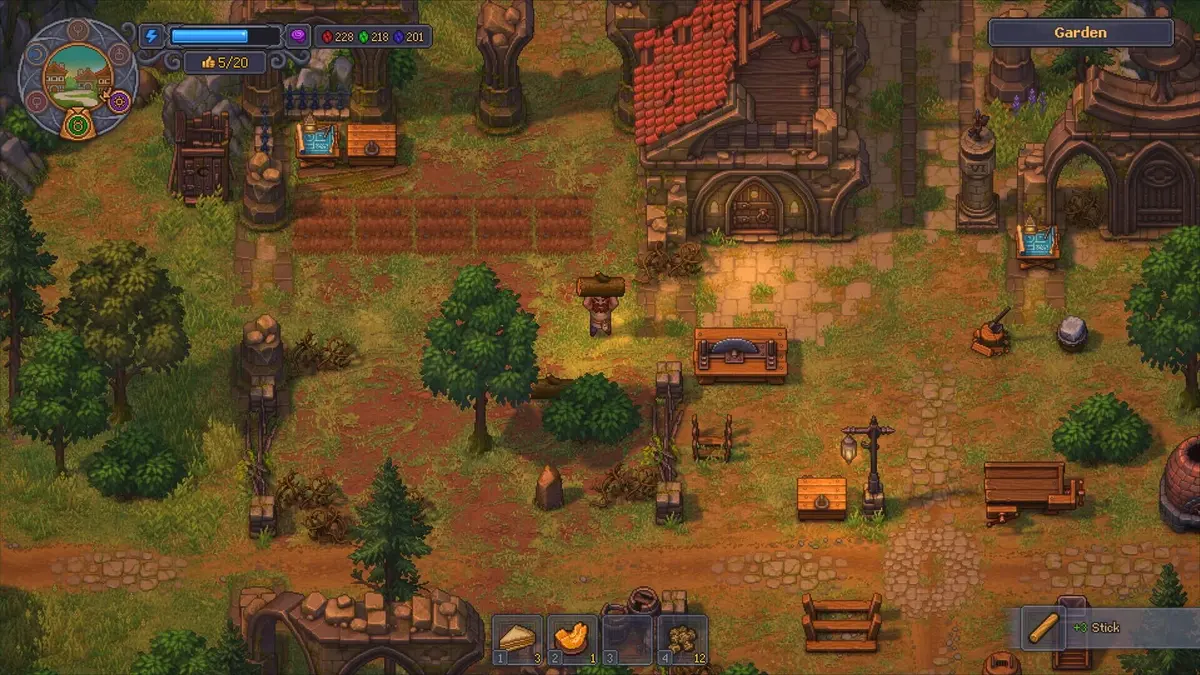
The home base reinforces that pleasing sense of a working estate. A morgue, graveyard, sepulchre, alchemy laboratory, and kitchenette occupy the same larger ecosystem. In another management game, those spaces would be separate themes stitched together for variety. Here, they feed one another. A meal keeps the keeper working. A harvest creates ingredients. Waste can become peat, and peat supports an orchard. A better workshop opens a more advanced recipe. Each step has a tangible place in the wider machine.
Farming is a good example of the game’s patient rhythm. Soil needs preparing, seeds need planting, and crops take one or two in-game days to grow before harvest. The returns can be sold or turned into meals, which gives agriculture a useful dual role in both commerce and survival. That pacing is simple enough to be relaxing early on. The problem is that Graveyard Keeper 2 rarely lets any simple task remain simple for long.
Technology trees keep widening the field of responsibility. New options bring more resource generators, new disciplines to master, and more reasons to revisit earlier materials. The result is engrossing because advancement feels earned. It is also where the grind begins to show its teeth. A small request can involve gathering raw materials, refining them into intermediate parts, taking those parts to another workstation, waiting for a process to finish, then combining the result with something from an entirely different branch of the operation.
That complexity creates the game’s best kind of pressure when I am in the mood for planning. A productive day has shape: gather, process, queue, harvest, cook, build, repeat. The same complexity becomes friction when a supposedly minor objective sends me across several stations for one missing component. Graveyard Keeper 2 wants players to think like workshop managers, not merely gatherers. Anyone who enjoys tracing a production bottleneck back through several layers of materials will find a great deal to chew on here.
The Graveyard Is a Supply Chain, Not a Sanctuary
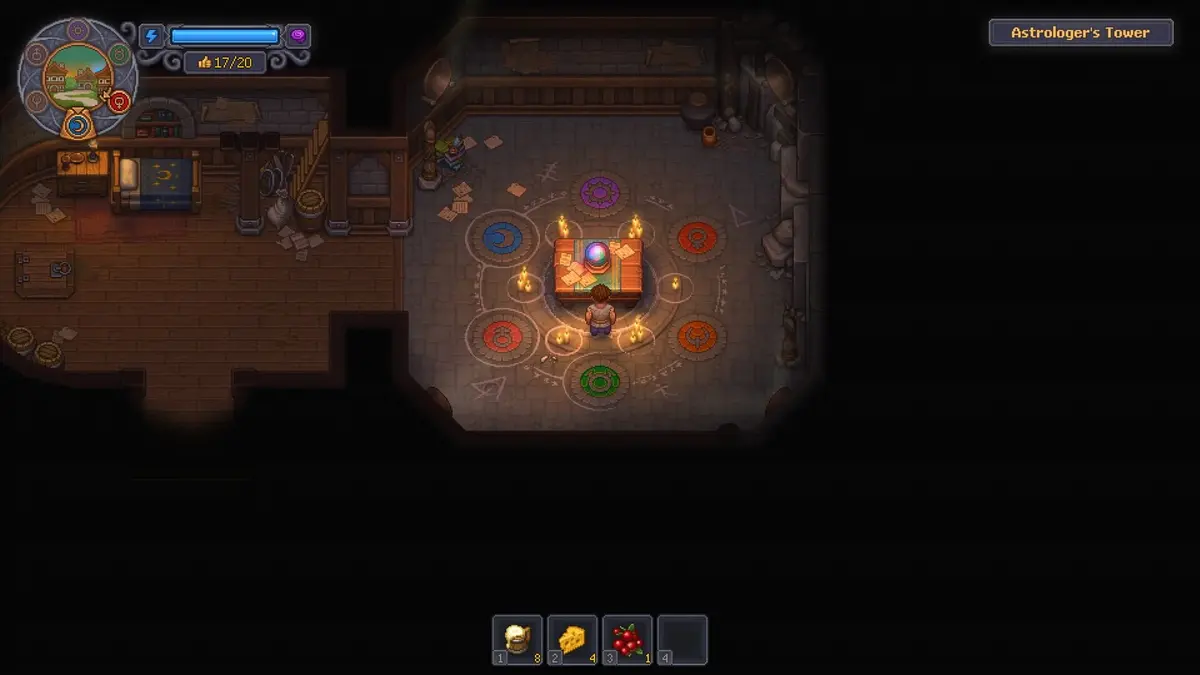
The game’s dark identity lands because it does not separate its gruesome ideas from its comfortable ones. Bodies arrive at the morgue, where autopsies allow vital organs and tissue samples to be removed before burial. Those remains feed alchemy and crafting systems. Corpses can also be resurrected, turning the dead into soldiers or laborers. A peaceful domestic loop and a macabre resource economy occupy the same workspace, often within minutes of each other.
Graveyard Keeper 2 gets its moral bite from routine rather than speeches. There is no need for a grand villainous declaration when the next useful recipe already makes the point. Human-fat candles improve the local church’s decoration score. That is funny in the game’s pitch-black way, but it also reveals the design’s underlying logic. The dead are valuable because the economy says they are valuable. The more efficiently the player operates, the more that logic spreads through every system.
The graveyard itself keeps the contradiction visible. Fencing, memorials, and grave quality matter because cemetery score matters. The game encourages care, presentation, and a kind of administrative respect for the people buried there. At the same time, the morgue and workshop systems encourage extracting every useful material before the body reaches its final resting place. The contrast gives the management loop a sharper personality than a standard farming-and-crafting setup could manage.
I appreciate that this friction is mechanical rather than cosmetic. Corpse-derived products are tied to progress, so the grim comedy remains active after the initial shock wears off. The player is not merely decorating a spooky setting; the player is optimising it. That makes the game’s cozy atmosphere feel deliberately compromised. Every successful upgrade can carry the quiet knowledge that the operation has become more capable because someone’s remains became another input on a production line.
Automation Helps, but It Does Not Erase the Work
Zombie labor is Graveyard Keeper 2’s answer to its own workload. Resurrected corpses can fill production roles, while zombie stations automate crafting that would otherwise remain manual. Conveyor belts transport and combine resources, giving the base the satisfying look of a medieval factory assembled from equal parts ingenuity and bad taste. Watching a messy process become a functioning chain is one of the game’s strongest rewards.
Automation also arrives with meaningful constraints. It takes zombie stations, conveyor infrastructure, and appropriate workers before the repetitive labor eases. Undead workers have different upgrade ceilings, so the nearest available corpse cannot necessarily take on an advanced recipe. That prevents automation from becoming a simple “problem solved” button. Labor quality matters, work must still be organised, and the production line needs the right materials flowing into it.
This is where the game feels most like a management experience rather than a cozy life sim. The objective is often less about surviving a difficult fight than understanding why a requested product is stalled. Perhaps a material remains unrefined. Perhaps the correct bench has not been unlocked. Perhaps the conveyor chain lacks an input. Perhaps the available zombie lacks the capability for a more complex job. That kind of troubleshooting will either become the game’s long-term hook or the reason to step away.
Combat, village assistance, local demands, fishing, exploration, commerce, and undead hordes stop the operation from becoming a pure spreadsheet. Still, the production system remains the center of gravity. The extra activities add texture, while the benches, queues, crops, corpses, and work assignments create the rhythm. Graveyard Keeper 2 is at its best when those systems click together and the whole estate starts behaving like a machine you designed.
Who Should Take the Keeper’s Job
This is an easy recommendation for players who enjoy survival-crafting loops built around planning, stockpiling, and gradually replacing manual labor with smarter systems. The best moments come from turning a chaotic collection of chores into a reliable routine, then finding the next weak link and rebuilding the system around it. Players who like grim humor and can accept corpse processing as a core resource mechanic will find the premise unusually committed.
Skip it if a cozy game needs to remain low-stakes, cleanly relaxing, or free of repetitive material chains. The grind is real. Progress can demand several linked crafting stages before a modest goal is complete, and automation takes time to build into something genuinely relieving. Anyone looking for a light farming diversion may find the management burden more exhausting than amusing.
Bottom Line
Graveyard Keeper 2 succeeds because it commits fully to its contradiction. It makes farming, cooking, crafting, and decorating feel warm enough to invite routine, then steadily reveals that the most efficient routine is built on organs, candles, and undead labor. The result is engrossing, funny, and far more memorable than a safer management game would have been.
The practical advice is simple: buy in if you enjoy multi-stage production chains and are willing to let the game’s morbid resource economy become part of the appeal. Wait if repetitive crafting dependencies drain your patience before automation has time to pay off. Graveyard Keeper 2 earns a 7/10: good, inventive, and deeply committed to its grim premise, with enough grind to keep it from becoming essential for every cozy-crafting fan.
FinalBoss // Gear
Level up your setup
01Top-rated gaming headsetson Amazon→02High-refresh gaming monitorson Amazon→03Gaming chairson Amazon→04Discounted game keyson Kinguin→Affiliate links · As an Amazon Associate, FinalBoss earns from qualifying purchases.
Want to Level Up Your Gaming?
Get access to exclusive strategies, hidden tips, and pro-level insights that we don't share publicly.
Ultimate Reviews Strategy Guide + Weekly Pro Tips