
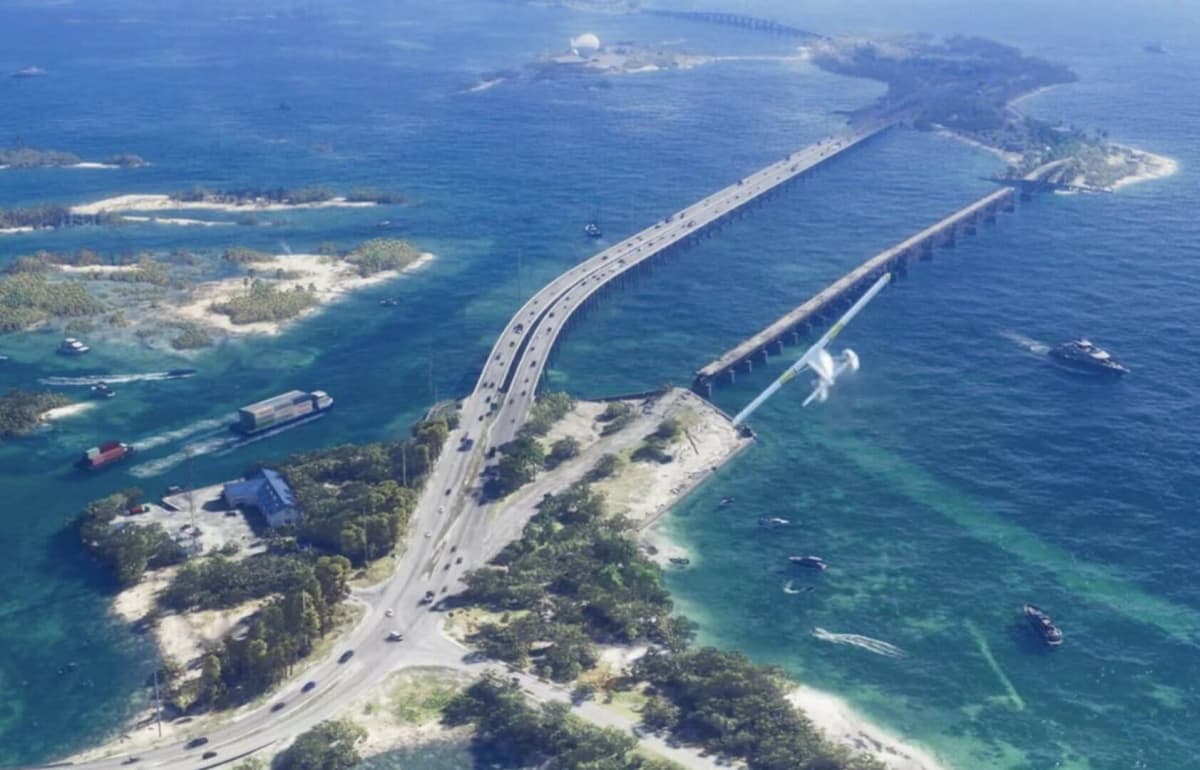
Plan long drives in Grand Theft Auto VI around changing visibility and persistent wet roads, not around assumed hurricane destruction mechanics. Leonida can be sunny in one district while heavy rain hits another, so a route that looks clear at departure may cross a storm cell, then finish on puddled streets after the rain has moved on.
That is the meaningful change. Weather becomes a local condition to read and work around instead of a map-wide visual filter. Tropical storms and hurricanes bring dense cloud cover, powerful wind, downpours, thunder, lightning, and water pouring from roof edges and lampposts. The immediate risk is reduced information: less sightline clarity, harder road reading, and a greater chance of arriving at a corner or intersection too fast.
Table of Contents (7)
GTA VI weather at a glance
| Weather feature | What it changes for players |
|---|---|
| Localized rain | Clear weather in one part of Leonida does not guarantee a dry route through the next district. |
| Persistent puddles and wet surfaces | Roads and low-lying areas can remain wet after rainfall ends, creating a post-storm route condition worth checking. |
| Dynamic cloudscapes | Clear skies can give way to towering storm clouds and lightning, making the horizon useful route information. |
| Tropical storms and hurricanes | Heavy rain, wind, thunder, lightning, dense atmosphere, and runoff can obscure traffic, threats, and landmarks. |
| Dynamic wind | Offshore breezes after sunset, rising warm air, and building-blocked gusts add location-specific environmental movement. |
| Launch date and platforms | GTA VI launches November 19, 2026, for PlayStation 5 and Xbox Series X/S. |
Read the sky before committing to a route
Dark cloud formations and visible lightning should be treated as a reason to slow the plan down, particularly before a timed objective, a long escape, or a drive involving a vehicle you do not want damaged. The weather system’s clouds move across Leonida rather than sitting above the entire map, so the safer route may be the one that avoids the storm’s path rather than the route with the lowest distance on the map.
Keep an alternate road available when crossing coastal highways, bridges, open swampland, or unfamiliar suburbs. Those spaces provide fewer visual anchors once rain and spray thicken the view. Dense city streets create their own problems: streetlights, signs, traffic, and water runoff can turn a normally readable junction into a cluttered mess.
- Timed activity: Favor a route with fewer blind turns and a clear fallback road, even if it is marginally longer.
- High-speed driving: Avoid committing to long bridge or shoreline stretches while a storm front is directly ahead.
- Escape route: Treat rainfall as concealment only after testing how police, traffic, and sightlines behave in that area.
- Exploration: Use clear-weather districts for long-distance travel, then enter the storm zone after reaching its edge.
Wet roads are the first mechanic worth testing
Puddles and wet surfaces remain after rainfall, which means the dangerous part of a trip may come after the dramatic clouds have passed. Rockstar has not set out exact traction, braking, hydroplaning, or puddle-physics rules, so players should establish what wet ground does before relying on a favorite vehicle during a serious mission.

Use the same stretch of road in dry and wet conditions. Pick a recognizable corner, approach it at repeatable speeds, and compare braking, turn-in, recovery, and acceleration out of the bend. A few controlled runs tell you much more than one chaotic chase through a storm.
| Test | Where to run it | What to watch |
|---|---|---|
| Dry versus wet braking | A straight urban road with fixed landmarks | Whether stopping distance changes before a junction or parked vehicle. |
| Cornering stability | A medium-speed paved bend | Whether the vehicle pushes wide, rotates, or loses grip when braking and steering overlap. |
| Vehicle class comparison | The same route in a motorcycle, sedan, SUV, and performance car | Whether weight, wheelbase, and drivetrain materially change control on wet pavement. |
| Surface comparison | Road, grass, sand, mud, and swamp-edge terrain | Whether rain leaves certain terrain types slower or harder to recover from. |
| Post-storm puddle pass | Low streets and drainage-prone areas after rain stops | Whether individual puddles affect grip, steering, camera visibility, or vehicle momentum. |
Until those tests show otherwise, brake before the corner, not while rotating into it. That is the safest approach if the game models reduced grip, and it costs little even if wet pavement is mainly a visual effect.
Wind changes the scene before it changes the handling
Leonida’s wind system reaches beyond trees swaying in the background. Gusts affect hair, debris, water ripples, rooftop swirls, and grass in the swamps. It also accounts for offshore breezes after sunset, rising warm air, and wind blocked by buildings. That is unusually granular environmental simulation for an open-world city, but atmospheric movement and direct vehicle physics are separate systems.
Direct wind forces on steering, motorcycles, boats, and character movement have not been laid out. Test exposed roads first, especially coastal drives and bridges, then repeat the same vehicle run through sheltered streets. If gusts affect control, heavier vehicles and gentler lane changes become the sensible storm choice. If wind mainly affects visibility and atmosphere, headlights, slower entry speeds, and route familiarity matter more than vehicle mass.
Storms complicate combat and stealth through visibility
Heavy rain, darkness, spray, lightning, and dense clouds can make distant threats harder to identify. That cuts both ways. A storm can obscure the player from a long sightline, while also hiding approaching traffic, pedestrians, law enforcement, and threats near an intersection. Avoid building an entire stealth route around rain until NPC detection and sound behavior have been tested.
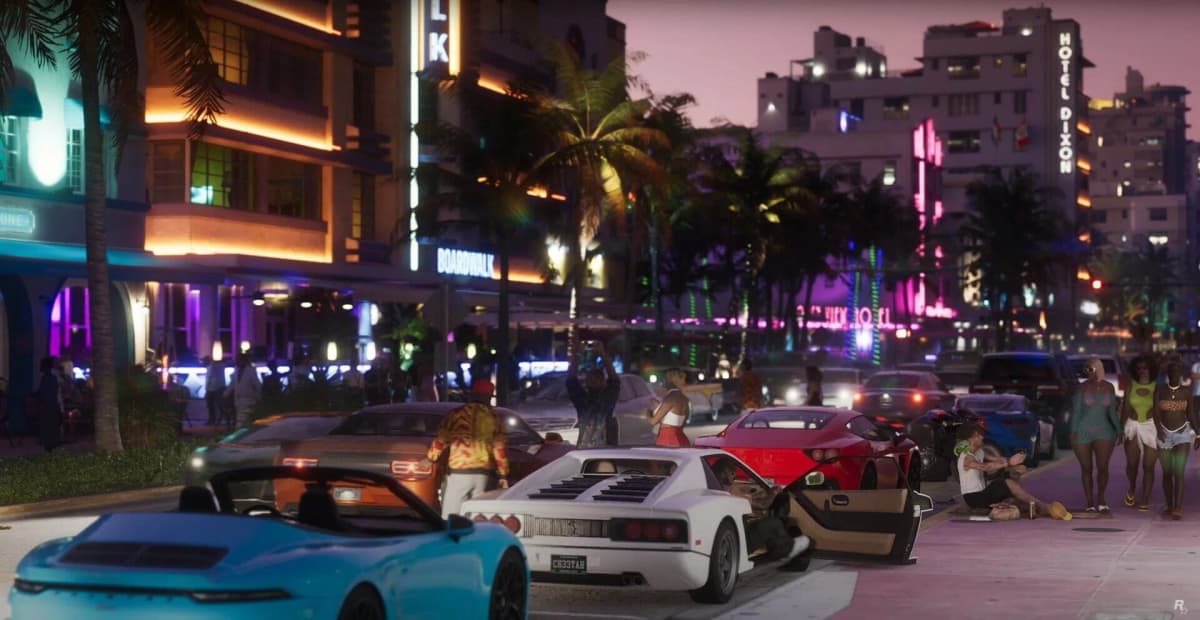
Early testing should focus on clean, repeatable situations: stand at the same distance from an NPC in clear weather and rain; fire the same weapon from cover and in the open; compare vehicle pursuit visibility on dry nights and stormy nights; then check whether lightning produces brief silhouettes or exposure windows. These are useful field checks, not announced penalties or bonuses.
Rain could make a pursuit less readable rather than easier. A player who cannot see a side street, a stopped vehicle, or an incoming police cruiser has gained no real advantage from the weather.
What hurricanes do and do not change
Hurricanes and tropical storms are part of Leonida’s climate, complete with heavy rain, strong winds, thunder, lightning, thick cloud layers, and dramatic runoff. Their presence gives the map a much more Florida-specific rhythm than the occasional rainstorm found in earlier Rockstar worlds.
The deeper disaster-model details remain undefined. There is no stated rule that hurricanes overturn cars, knock characters down, flood roads into impassable routes, destroy buildings, or force mission-specific survival sequences. Treat those scenarios as possibilities to investigate after launch, not features to plan around now.
The practical launch-day routine
- Drive one familiar urban route dry, then repeat it during rain and after rain has stopped.
- Run that route in a motorcycle, ordinary car, SUV, and fast performance vehicle.
- Test a coastal road and bridge during a tropical storm before using either in a mission or pursuit.
- Check whether puddles are cosmetic, traction-affecting, or both.
- Test aiming, cover, and enemy visibility in rain before treating storms as a stealth advantage.
- Keep a clear-weather alternative for timed objectives and routes carrying valuable vehicles.
- Use the horizon, lightning, and cloud density as warnings that conditions may worsen ahead.
FinalBoss // Gear
Level up your setup
01Top-rated gaming headsetson Amazon→02High-refresh gaming monitorson Amazon→03Gaming chairson Amazon→04Discounted game keyson Kinguin→Affiliate links · As an Amazon Associate, FinalBoss earns from qualifying purchases.
Want to Level Up Your Gaming?
Get access to exclusive strategies, hidden tips, and pro-level insights that we don't share publicly.
Ultimate Tech Strategy Guide + Weekly Pro Tips