
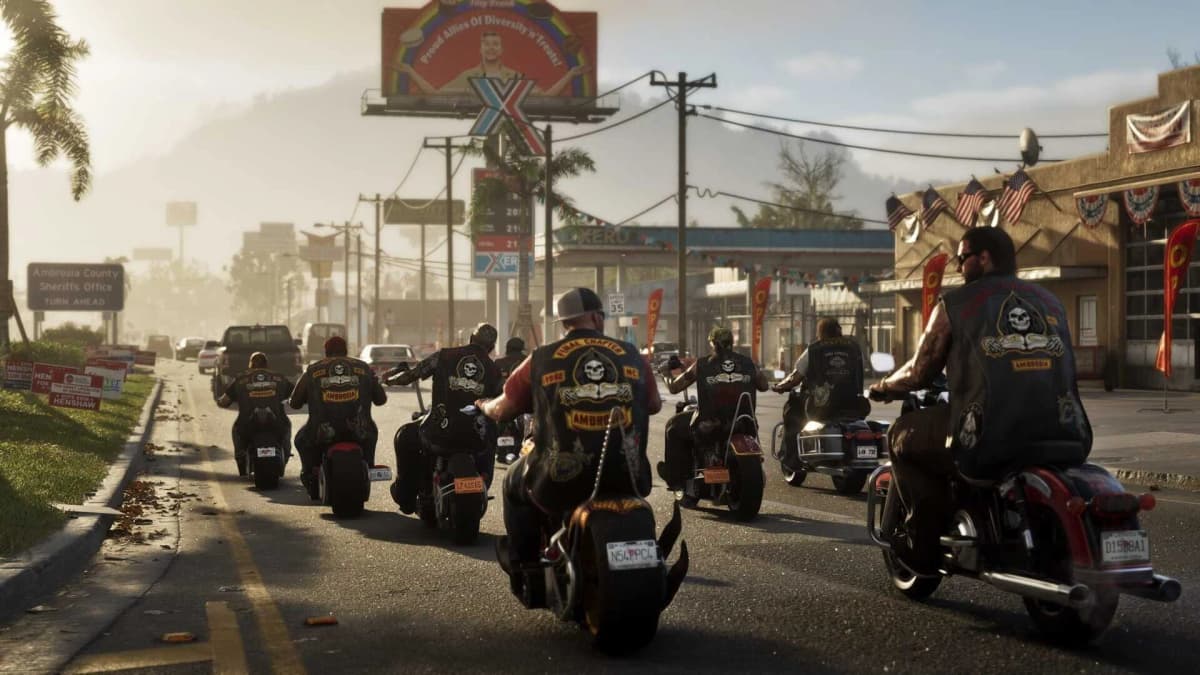
Grand Theft Auto VI’s detail hunt has mistaken evidence for a verdict. A sharply sculpted iguana, a raccoon digging through trash, a cat near a storefront, and an alligator turning up where concrete meets swamp all prove that Rockstar Games can build a staggeringly convincing image. They do not, by themselves, prove that GTA 6 will feel alive once players are driving too fast, escaping the police, casing a robbery, or trying to cut through a crowd.
That distinction matters more than the latest “200 details you missed” video ever will. GTA 6 has already won the screenshot war. Rockstar’s December 4, 2023 reveal and its May 6, 2025 second trailer put Vice City and the wider Leonida setting on display with an absurd level of confidence: humid streets, crowded businesses, strip-mall interiors, expensive marinas, roadside grime, club spaces, coastal highways, and wetlands that feel like they belong to the same anxious, overheated state.
The real test lands on May 26, 2026, when Grand Theft Auto VI is scheduled to launch for PlayStation 5 and Xbox Series X|S. Rockstar has not announced a PC release date. By then, every scale, drink can, wall stain, and background animal will have been freeze-framed into oblivion. What survives the first week of actual play will be the stuff that changes player behavior.
I have zero patience for pretending visual detail is meaningless. It matters. It establishes mood, place, and tone before a character says a word. But visual detail also creates a debt. Once Rockstar puts that much care into the world, players are right to expect the world to push back.
Table of Contents (5)
An Iguana Is a Test, Not a Trophy
The iguana has become the perfect symbol of the GTA 6 realism debate. Its visible scales make for a great zoomed-in image. Fine. Rockstar’s artists deserve the applause. Yet an animal model earns its place in an open world through context: where it lives, how it moves, what it notices, and whether the player’s presence changes anything.
Official footage has loaded Leonida with wildlife across distinct habitats. American alligators turn up in swamps and urban-adjacent water. Dolphins, flamingos, pelicans, manatees, sharks, turtles, raccoons, beach dogs, birds, cats, and iguanas all help sell the setting as a humid coastal ecosystem rather than a city map with decorative animals sprinkled around the edges.
That is already smarter than the old open-world habit of treating wildlife as a collectible checklist. A cat beside a business and a raccoon in a trash pile matter because they place animal life inside human routines. They make the world feel occupied after the mission designer has stopped pointing at it. A flamingo flock makes a coastline feel regional. An alligator beside a suburban canal makes the same space feel dangerous in a very Florida-specific way.
The standard for animal fidelity has to be behavioral. Wildlife needs to read as habitat-appropriate, reactive, and sensitive to the time and chaos around it. A beach dog wandering near tourists should not feel identical to a stray near a highway. An alligator should create a different kind of tension from a pelican or a manatee. The player should sense the difference before opening a menu or reading a label.
That is the version of realism I want from GTA 6: wildlife that changes the emotional temperature of a place. A scale-perfect alligator that exists to stand still for a screenshot is expensive set dressing. An alligator that alters how a player approaches water, hides evidence, flees through a canal, or reads a neighborhood becomes part of the game’s language.
Vice City Needs Rooms That Say Something
Environmental storytelling is where GTA 6 could genuinely separate itself from the open-world crowd. The trailers have shown apartments, convenience stores, bars, clubs, roadside spaces, boats, marinas, swamp infrastructure, prison-adjacent scenes, and homes across wildly different social strata. Each location carries a readable identity before anyone explains it.

A clean waterfront apartment, a cluttered roadside room, a packed nightclub, and a tired storefront should communicate different forms of comfort, status, surveillance, boredom, and risk. That is how a place becomes more than an attractive map. Rockstar has always understood the broad visual language of excess. GTA 6 needs to make that excess specific enough that players can feel who occupies a space and what kind of trouble belongs there.
Players do not need every door in Leonida to open. That demand has become its own tedious form of internet theater. A city with thousands of accessible but interchangeable rooms would be a monument to wasted effort. I would take fewer interiors with purpose every single time: places with useful sightlines, distinct crowds, meaningful exits, evidence of routine, and consequences for barging in at the wrong moment.
Interior count is a terrible measure of ambition. A room earns its place when it tells the player how to behave. A cramped convenience store should make a robbery feel close, loud, and dangerous. A marina office should carry different escape routes and different witnesses from a roadside business. A cluttered apartment should reveal whether a character is scraping by, hiding something, performing wealth, or preparing to leave town.
That is where the environmental storytelling angle becomes more than marketing language. The best interiors create tiny readings of class and routine while the player is in motion. They affect pace. They affect cover. They affect who can see what happened. They affect whether a getaway feels clean or desperate. A beautifully furnished room that functions as a narrow corridor is still a narrow corridor.
The Feature List Has Gotten Out of Control
The GTA 6 detail hunt has also produced a massive fan-made feature list: more than 600,000 movement animations, a creature study book, dog interactions, switchable wall lights, vehicle scanning, advanced lock-breaking, a six-star wanted system, criminal profiling, physical fitness changes, weight gain, relationship choices for Jason and Lucia, and social-media live streams running through the in-game phone.
Some of those ideas would fit GTA 6 beautifully. A phone that behaves like an object held in the character’s hand rather than a flat HUD menu would make sense. Vehicle theft that involves alarms, trackers, cameras, clothing, faces, and witnesses would give crime actual texture. Lucia using binoculars for scouting could turn a heist setup into something more deliberate than driving up and following a waypoint.
But a neat idea is not a confirmed system, and a trailer frame is not a signed contract. Rockstar has not published a technical breakdown of GTA 6’s animation tech, wildlife AI, interior access, ecology logic, or simulation systems. Treating every alleged mechanic as settled fact is how excitement curdles into launch-week outrage.
The 600,000-animation claim is a perfect example. Even if that number proves accurate, the number itself is useless without a player-facing result. A game can bury itself under animation work and still feel stiff if actions interrupt poorly, crowds fail to react, companions get in the way, or scripted behavior collapses when a player does something stupid. GTA players specialize in doing something stupid. The systems have to survive that pressure.
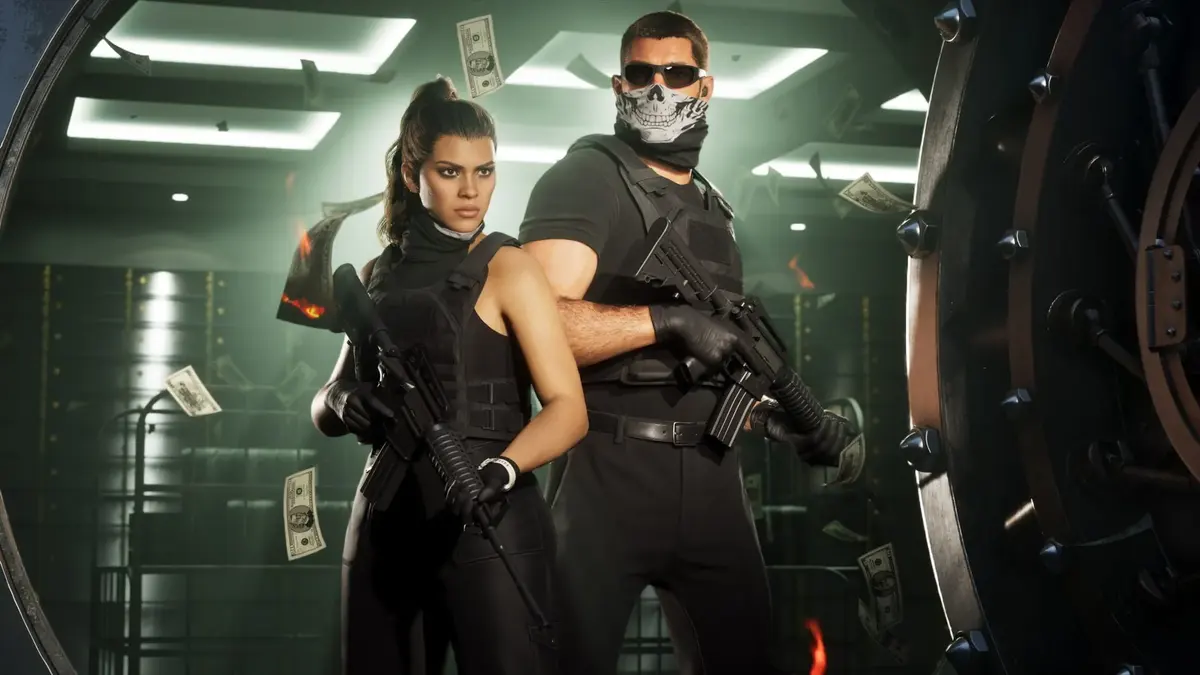
I care far more about whether Jason and Lucia can move through a packed store without the world turning into a mannequin parade than I do about a giant animation total. I care whether a pursuit through a wetland gives the player new risks and trade-offs. I care whether street life can absorb a minor disruption without every pedestrian instantly becoming either oblivious or hysterical.
Realism Has to Create Friction
The strongest version of GTA 6 realism will create friction. It will make the player slow down when the world demands it, think twice when the environment gives away too much information, and adapt when a familiar plan goes wrong. That is where dense crowds, believable interiors, animal presence, traffic, weather, and surveillance become more than visual flexing.
A city with real character should complicate crime. A crowded club should be harder to read than an empty parking lot. A neighborhood full of balconies, storefront windows, cameras, and lingering pedestrians should produce a different kind of danger from a marsh road or a marina. A getaway should feel shaped by the district rather than by a GPS line painted across the screen.
Rockstar’s trailers already show the raw material for that kind of world. Vice City looks crowded enough to create pressure. Leonida’s wetlands look distinct enough to create contrast. Its businesses and homes look authored enough to carry stories without dumping exposition into every room. The visual foundation is there, and it is spectacular.
The hard part is letting players touch it. Rockstar cannot build a world this specific and then keep most of its specificity behind glass. The best details need to emerge while a player is improvising: during a botched robbery, a tense escape, a lazy drive, a late-night detour, or an accidental encounter that spirals because the surrounding space makes it spiral.
GTA 6 Has Set Its Own Impossible Standard
There is a fair counterargument here. GTA has never required every lamp, animal, business, or bystander to behave like a fully simulated life form. Part of the series’ power comes from spectacle. Rockstar builds places players want to stare at, parody, disrupt, and revisit long after the main story is over. The visible care in GTA 6’s spaces has value before any mechanic enters the equation.
Still, Rockstar has spent two trailers teaching players to look closer. Every close-up animal, every lived-in apartment, every packed beach, every boat, every grime-streaked storefront, and every densely layered street tells us this world deserves scrutiny. The studio invited the detail hunt. It cannot be surprised that people now want those details to carry weight.
Grand Theft Auto VI does not need to simulate every inch of Leonida to justify the hype. It needs a world where the details that matter keep mattering after the player grabs the controller. The iguana should be more than a trophy. The apartment should be more than a backdrop. The crowd should be more than a moving wallpaper.
Can Rockstar turn this painstakingly dressed world into one that survives the freedom a Grand Theft Auto game demands once players stop taking screenshots and start breaking its rules?
FinalBoss // Gear
Level up your setup
01Top-rated gaming headsetson Amazon→02High-refresh gaming monitorson Amazon→03Gaming chairson Amazon→04Discounted game keyson Kinguin→Affiliate links · As an Amazon Associate, FinalBoss earns from qualifying purchases.
Want to Level Up Your Gaming?
Get access to exclusive strategies, hidden tips, and pro-level insights that we don't share publicly.
Ultimate Gaming Strategy Guide + Weekly Pro Tips