
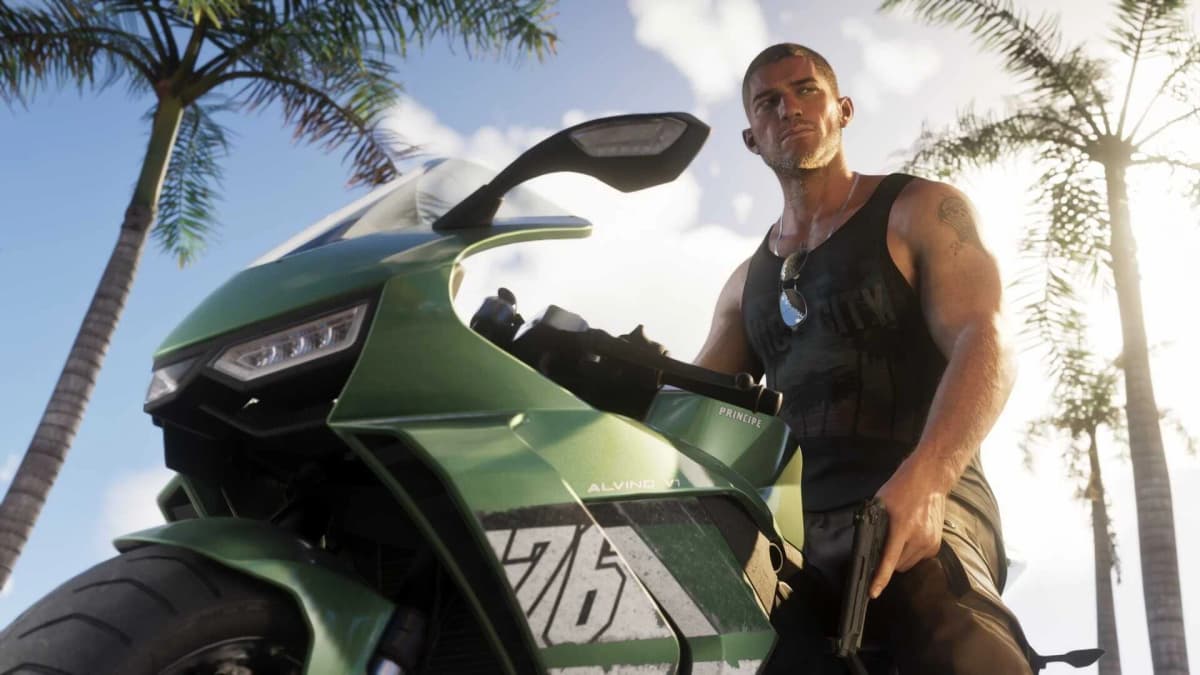
Rockstar has been delaying games since before some of its current player base was born. Grand Theft Auto IV slipped from October 2007 to April 2008. GTA V got pushed from spring to September 2013. Red Dead Redemption 2 endured multiple delays before landing in October 2018. So when Rockstar announced on May 2, 2024 that GTA VI needed extra time and was moving to November 19, 2026, I didn’t see a crisis. I saw a company following its own playbook. The announcement said Rockstar needed that time to deliver the level of quality players expect and deserve. In a landscape where studios routinely fire half their staff after shoving a half-finished live-service disaster out the door, those words shouldn’t feel radical. But they do.
I’ve sat through enough midnight launches that turned into troubleshooting sessions to know the difference between a marketing delay and a real one. I’ve watched flagship after flagship crater itself on the altar of immovable release dates. Cyberpunk 2077 wasn’t a one-off; it was the canary in the coal mine for an industry that decided release dates were just suggestions and roadmaps were excuses. Anthem, Fallout 76, Battlefield 2042-the list of games that should have been delayed into oblivion but weren’t is long enough to fill its own encyclopedia entry. So when a studio with Rockstar’s resources admits it needs more time, my gut reaction isn’t outrage. It’s gratitude. Because the alternative is a launch where Vice City is beautiful but empty, where the physics break every other mission, and where the first six months are spent apologizing instead of playing.
This isn’t a small slip. We’re looking at a game that, by the time it lands, will have spent well over a decade in the cultural imagination. The gap between GTA V and GTA VI will likely stretch toward thirteen years. That’s longer than the entire console generation that birthed the PlayStation 2. In that time, Rockstar released one of the finest open-world games ever made in Red Dead Redemption 2, shipped the technically staggering Red Dead Online, and watched GTA Online become a billion-dollar ecosystem that completely redefined what post-launch content could look like. The studio didn’t spend that decade sitting idle. It spent it raising the bar for itself, which is exactly why the delay had to happen. You don’t build a world meant to last another ten years on a broken foundation.
GTA VI also arrives at a strange inflection point for gaming. The live-service bubble is bursting. Players are exhausted by battle passes and seasonal roadmaps. Single-player campaigns are making a quiet comeback because people finally remembered that stories with endings are more satisfying than hamster wheels with cosmetics. Rockstar, intentionally or not, is positioned to capitalize on that fatigue. A massive, open-world crime epic that delivers a complete experience you buy once and own forever could feel like a revelation simply by being finished. The delay ensures that nostalgia for “completed games” isn’t just a marketing angle; it’s the actual reality of the product.
Table of Contents (7)
The Delay Is a Feature, Not an Apology
Let’s be blunt about what Rockstar said on May 2, 2024. The company didn’t cite supply chain issues. It didn’t blame a crowded holiday calendar. It said GTA VI needed extra time to hit the level of quality players expect and deserve. That’s a direct admission that the game wasn’t ready, and more importantly, that the studio wasn’t willing to pretend otherwise. In an industry where executives will look you dead in the eye and call a clearly unfinished product “early access” or “a living game,” there’s something almost old-fashioned about admitting you need another eighteen months.
That eighteen-month figure matters too. GTA VI is roughly eighteen months behind its original internal plan. That isn’t a minor scheduling hiccup. That’s a fundamental recognition that the game’s systems, world density, or technical backbone weren’t where they needed to be. And instead of carving content out to hit a deadline-the standard operating procedure for most AAA development-Rockstar appears to be holding the line on scope. That’s expensive. That’s risky. And it’s absolutely the right call.
I’ve played enough open-world games that are ten miles wide and two inches deep to know what happens when a map gets rushed. Beautiful vistas with nothing to do. NPCs that repeat the same three lines of dialogue. Physics that glitch the moment you push them outside a scripted demo. GTA VI is supposed to be the next evolution of the genre, set in and around a modern Vice City. If that world doesn’t feel alive—if the AI doesn’t react dynamically, if the missions don’t intertwine with systemic gameplay, if the driving and shooting haven’t evolved past 2013—then the decade-long wait becomes a punchline instead of an event. The delay is the price of avoiding that punchline.
I see this delay as a tradeoff where the audience gets a more polished, fully realized game rather than an incomplete release. I don’t need an analyst to tell me that, though. I can see it in how Red Dead Redemption 2 moved. The way Arthur Morgan’s footsteps actually changed cadence on different surfaces. The way wildlife behaved like wildlife and not animated targets. The way strangers remembered you across dozens of hours. That level of detail doesn’t get bolted on in a six-month day-one patch. It gets baked in over years of iteration, and sometimes that iteration needs more calendar space than the accounting department prefers.
There’s also the simple reality of scale. GTA V launched on Xbox 360 and PlayStation 3. GTA VI is being built natively for PlayStation 5 and Xbox Series X|S, with no announced PC version at launch. That console-first strategy tells me Rockstar isn’t compromising for last-gen hardware or trying to synchronize ten different platform builds on day one. It’s targeting specific silicon, maximizing what current-gen machines can actually do rather than what they could do in 2020. People forget that by late 2026, developers will understand the PlayStation 5 and Xbox Series X|S better than they ever did in 2020. Rockstar isn’t just building for the consoles we bought at launch; it’s building for fully matured development pipelines. That’s where the delay pays technical dividends. You don’t achieve that mastery on a two-year production schedule. You achieve it by letting your smartest engineers iterate until the loading times vanish and the world streams seamlessly.
The Industry Is Already Moving Around It
Here’s where you know GTA VI isn’t just another big release. Take-Two and Strauss Zelnick have reaffirmed that November 19, 2026 date repeatedly, and the industry has listened. Marketing is expected to begin this summer. That slow drip—the deliberate, almost cruel spacing of trailers and screenshots—isn’t just Rockstar being coy. It’s a power move. When a publisher knows it owns the back half of 2026, it doesn’t need to shout. It can whisper, and every other studio in the business will still hear it.
We’ve seen this gravitational pull before. When Rockstar announces a window, competitors flee. They don’t do it because Take-Two called them; they do it because getting steamrolled by GTA VI’s launch week is a financial death sentence. But here’s the crucial part: Rockstar didn’t delay because it was scared of competition. There’s no solid evidence that this push to 2026 happened because some other blockbuster forced its hand. Theories about hardware timing and profitability are exactly that—theories. The delay is about readiness and polish. Rockstar moves on its own calendar, and the rest of the industry adjusts accordingly.
That confidence is earned. GTA Online has generated billions in revenue and fundamentally changed how publishers think about post-launch content. Rockstar isn’t a studio begging for attention in a crowded October; it’s the reason other publishers check their own calendars twice. If GTA VI needs until November 2026 to be right, the industry will wait. Gamers will wait. And critically, the game will arrive in a window where it doesn’t have to split mindshare with another massive franchise. That’s not the reason for the delay, but it’s a hell of a side benefit.
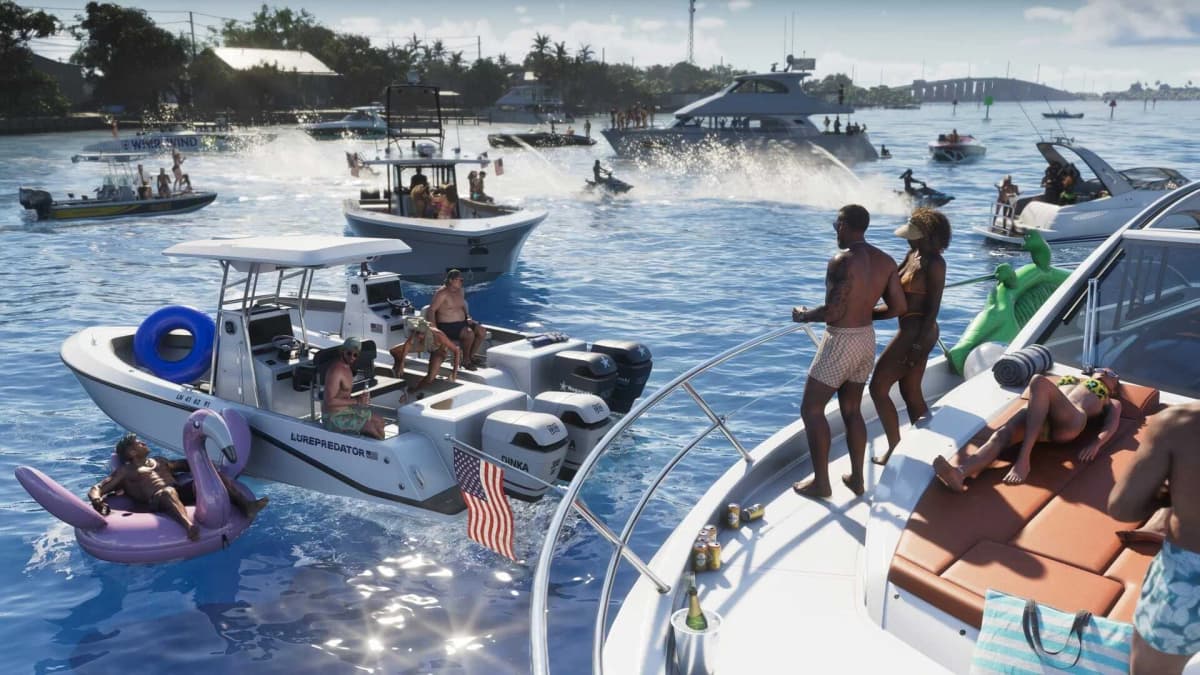
The staggered marketing strategy also suggests a maturity that other AAA launches lack. We’re not getting an eighteen-month hype cycle full of vertical slices that won’t reflect the final product. We’re getting a slow build toward a known date. That pacing protects both the developers—who don’t have to crank out convention demos that waste production time—and the players, who don’t have to suffer through three years of feature promises that get quietly cut. When the marketing kicks off this summer, it’ll mean Rockstar actually has something concrete to show, not just a target render and a prayer.
What Eighteen Extra Months Actually Buys
So what is Rockstar doing with all this time? If I had to guess based on the studio’s track record and the systemic issues that plague GTA Online, they’re not just polishing graphics. They’re rebuilding the underlying logic of how a Grand Theft Auto game functions. GTA VI should learn from GTA Online’s live-service systems by reducing grind-heavy progression, modernizing its controls and menus, and increasing mission variety beyond repetitive fetch-and-sell mechanics. That isn’t just quality-of-life stuff. That’s foundational design work.
GTA Online made Rockstar unfathomable amounts of money, but it also calcified certain ideas about how these games should play. The UI is clunky. The mission structure often devolves into driving somewhere, shooting everyone, and driving back. The economy is deliberately punitive unless you buy in. If GTA VI enters 2026 carrying that same baggage, the backlash will be immediate. Players have spent thirteen years with GTA V’s mechanics. They’ve memorized the rhythm. If the new map is just Los Santos with better water reflections, the delay will feel like a betrayal.
But if Rockstar uses this extra time to fundamentally modernize the interaction model—to make the world feel less like a theme park and more like a simulation, to give players meaningful choices in how they build their criminal empire, to create emergent moments that don’t rely on scripted set pieces—then the wait pays dividends beyond a smooth frame rate. Think about the last time a GTA mission genuinely surprised you. For me, it was the heist setups in GTA V, where you chose your crew, your approach, and your escape route. That was 2013. In the years since, other games have pushed systemic mission design forward while GTA Online mostly asked you to shoot identical waves of enemies in identical warehouses. If GTA VI uses this extra development time to create heists and missions with actual strategic depth, where preparation matters as much as execution, then the wait isn’t just about polish. It’s about relevance.
Red Dead Redemption 2 proved this studio still knows how to make systemic, detailed worlds. It also proved they can tell a mature, character-driven story inside that world. GTA VI needs to bridge those two impulses: the narrative weight of Red Dead Redemption 2 and the anarchic freedom of GTA. You can’t build that bridge in a rush. You build it by letting designers tear down and rebuild systems until they actually work together instead of against each other.
There’s also the technical reality of a console-first launch on PS5 and Xbox Series X|S with no PC date announced yet. That decision, while frustrating for PC players, tells me Rockstar is targeting a level of performance and world density that current-gen consoles can barely contain. They’re not scaling down for parity. They’re building to the ceiling of what’s possible on a PlayStation 5, then presumably porting up to PC later when they can properly optimize for an infinite array of hardware configurations. That’s the opposite of the cross-gen compromise that made other massive open-world launches so catastrophic on day one. It requires time. It requires focus. And yes, it requires PC players to be patient one more time.
The Caveat That Complicates Everything
I can’t write this article without addressing the shadow hanging over it. Development conditions for GTA VI have included intense crunch and compressed timelines, renewing serious concerns about labor practices. The game may be eighteen months behind its original internal plan, but that doesn’t mean the team is working reasonable hours. It likely means the opposite: that the scope remains massive and the calendar is unforgiving, and the people actually building this world are paying the human cost for this “extra time.”
This is where the argument that the delay is “worth it” gets uncomfortable. Worth it for whom? For players, absolutely. We get a better game. For Take-Two’s shareholders, presumably. But for the artists, engineers, and QA testers pulling extreme hours? The delay is just another chapter in a crunch story that has followed Rockstar for decades. I want GTA VI to be great. I also want the people making it to have lives outside the office. Those two desires shouldn’t be in conflict, but in game development, they almost always are. The brutal truth is that Rockstar’s quality bar and its labor practices may be inseparable. The same obsession with detail that produces breathtaking worlds also produces exhausted developers.
I don’t have a clean answer for that tension, and anyone who tells you they do is selling something. What I know is this: a delayed, polished game is better than a rushed, broken one. But a delayed, polished game made under humane conditions would be better still. We shouldn’t let the “worth the wait” narrative sanitize the conditions behind it. If GTA VI ships in November 2026 and it’s phenomenal, we should celebrate the art while continuing to scrutinize the process. The delay buys quality. It doesn’t automatically buy ethics.
We’ve Seen What Happens When Giants Rush
Let me put this in perspective. In the time between GTA V and GTA VI, we have watched multiple flagship franchises crater themselves on the altar of immovable release dates. Bethesda pushed Fallout 76 out before it had a skeleton, let alone flesh. BioWare coughed up Anthem after years of development hell and somehow made it worse. Battlefield 2042 arrived as a technical parody of its own marketing. These weren’t niche indie experiments that ran out of crowdfunding. They were flagship titles from the biggest publishers on earth, and they all launched with the structural integrity of wet cardboard.
Rockstar is not immune to failure. The Grand Theft Auto: The Trilogy – The Definitive Edition was a mess that should embarrass everyone involved. But that was an outsourced remaster. The mainline entries are different. They’re the crown jewels. If GTA VI launched in a state comparable to those disasters, it wouldn’t just be a bad game. It would be an identity crisis for a studio that built its reputation on perfectionism. The delay is Rockstar recognizing that its brand cannot absorb a broken launch. Not at this scale. Not with these expectations.

And let’s be clear about what expectations mean here. GTA VI isn’t just expected to sell well. It’s expected to define the back half of the 2020s. It’s expected to set the standard for open-world design for another decade. It’s expected to justify the longest gap between mainline entries in franchise history. You don’t meet those expectations with a day-one patch that fixes the saves. You meet them by delivering a finished product on November 19, 2026 that makes people forget they ever complained about the wait.
There’s a cascading effect here that benefits everyone. When the biggest game on earth voluntarily delays to ensure quality, it implicitly shames the publishers who won’t. It sets a precedent that shareholders hate but players should love: the product matters more than the quarterly earnings call. Every time a studio points to GTA VI’s November 2026 date and decides not to cram their own game into October, that’s a small victory for development teams who need more time. Rockstar’s delay doesn’t just buy GTA VI breathing room. It buys the entire industry a reminder that release dates should serve games, not spreadsheets.
There’s also a player-behavior angle here that I think gets ignored. Gamers are increasingly cynical about preorders. We’re tired of being beta testers for full-priced games. Rockstar, by delaying rather than promising a roadmap of fixes, is implicitly acknowledging that we deserve a complete experience on day one. That gesture—backed up by the actual time and money to finish the game—rebuilds trust in a way that no “we’re listening” blog post ever could. When Strauss Zelnick stands by that November date, he’s making a bet that a delayed but whole product outperforms a punctual but fractured one. History suggests he’s right.
The Console-First Strategy Makes Sense, Even If It Stings
I know the PC crowd is already sharpening their pitchforks. No announced PC version at launch. No date. Just “console-first” and a whole lot of silence. I’ve been a PC gamer long enough to know how frustrating that is. But I’ve also been a PC gamer long enough to remember the GTA IV port, which ran like a slideshow on hardware that could power NASA, and the initial Red Dead Redemption 2 PC launch, which had its own teething problems. Rockstar does not have a flawless track record on PC.
By focusing on PlayStation 5 and Xbox Series X|S for the initial launch, Rockstar is doing two things. First, it’s narrowing the QA footprint to platforms with fixed hardware specs, which dramatically reduces the variables that can go wrong on day one. Second, it’s signaling that GTA VI is built to a level of density and simulation complexity that might not even run on the PC hardware spectrum yet—or at least not without another year of optimization. The delay to 2026 gives them room to perfect the console build. It also, logically, gives them a longer runway to eventually deliver a PC version that doesn’t require twelve hotfixes in its first week.
Is that ideal? No. PC gamers deserve same-day releases. But if the choice is between a simultaneous launch where the PC version is a stuttering mess, or a staggered release where both platforms work? I’ll take the stagger. The wait for GTA VI has already been eternal. A few extra months for a proper PC port won’t kill us, especially if it means we avoid another situation where the settings menu alone requires an engineering degree.
The Practical Takeaway: Protect Your Hype, Not Your Preorder
So here’s where I land. The wait for Grand Theft Auto VI is excruciating. The reports of crunch are troubling. The lack of a PC date is annoying. And yet, the November 19, 2026 delay is still the best possible outcome for anyone who actually wants to play the game rather than stream it to laugh at the bugs.
We’ve been trained to treat delays as failures of management, as broken promises to consumers who deserve better. But maybe the real failure is the opposite: the industry-wide compulsion to hit a date no matter what dies in the process. Grand Theft Auto VI will arrive on November 19, 2026 for PlayStation 5 and Xbox Series X|S, and when it does, it will either validate every argument I’ve made here or prove that even eighteen months wasn’t enough. I’m betting on the former, not because I’m a blind Rockstar fanboy, but because I’ve seen what happens when this studio has time to finish its work. Red Dead Redemption 2 wasn’t just good. It was undeniable. It silenced skeptics with sheer craft.
GTA VI has to be undeniable too. The wait ensures it has a fighting chance.
My practical advice is this: don’t preorder. Not because I think Rockstar will botch it, but because no one should ever preorder anything in 2026. Use that extra time to build a proper skepticism, to demand transparency when marketing ramps up this summer, and to remember that a release date is only as good as the product attached to it. But also, use that time to recognize that Rockstar is one of the few studios left with both the resources and the stubbornness to delay a guaranteed blockbuster rather than ship a compromised one.
If GTA VI lands in November 2026 and it’s the generational leap we need—if Vice City feels alive, if the missions are varied, if the systems are modernized, if the frame rate is stable—then this entire conversation will look silly in hindsight. We’ll forget we were ever angry about 2026. We’ll be too busy driving down Ocean Drive at sunset while the radio plays something perfect. That’s the promise of the delay. Not perfection, but completeness. Not hype, but delivery.
The gaming industry has spent the last decade teaching us to expect broken games on day one. Rockstar is taking an extra year and a half to try something different: finishing the game first. I don’t know about you, but after everything I’ve played and everything I’ve refunded, I’ll take that trade every single time. Clear your calendar for late 2026. Keep your money in your wallet until the reviews land. And when the game finally boots up—hopefully on hardware that isn’t on fire, patched into oblivion, or demanding a season pass just to see the ending—remember that the wait wasn’t capitulation. It was the only way to get there.
FinalBoss // Gear
Level up your setup
01Top-rated gaming headsetson Amazon→02High-refresh gaming monitorson Amazon→03Gaming chairson Amazon→04Discounted game keyson Kinguin→
Affiliate links · As an Amazon Associate, FinalBoss earns from qualifying purchases.
Want to Level Up Your Gaming?
Get access to exclusive strategies, hidden tips, and pro-level insights that we don't share publicly.
Ultimate Gaming Strategy Guide + Weekly Pro Tips