
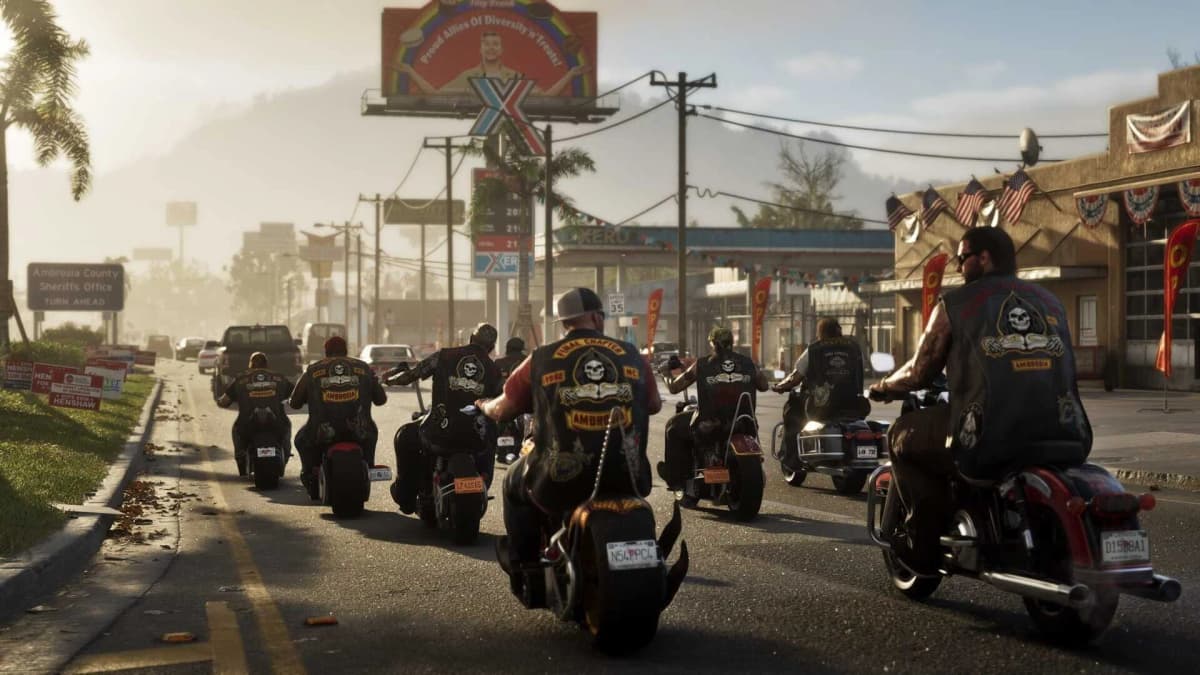
Spend time together between crimes, and Jason and Lucia can strengthen their relationship. Complete their missions together, and that alone may not be enough to keep them together. I find that prospect exciting and slightly exhausting: GTA 6 could make ordinary open-world decisions emotionally consequential, or make its central romance feel like another obligation on the map.
That tension is where Rockstar’s replayability pitch gets interesting. Development lead Rob Nelson says Grand Theft Auto VI’s story is designed to be enjoyed several times. My standard for that claim is straightforward: changing how I play should change something I care about later. A different escape route earns another attempt at a mission. A different relationship, opportunity or consequence can earn another campaign.
Table of Contents (6)
Jason and Lucia’s relationship gives replays a purpose
Jason and Lucia begin the story wanting their relationship to work. Maintaining that connection involves spending time with them in the open world, beyond completing their shared missions. That gives downtime a narrative role: the player’s priorities can become part of the couple’s story.
This is the strongest part of the design for me. Choosing to keep them together or pursue their individual activities is a decision expressed through play. It can happen repeatedly, without requiring a dramatic dialogue prompt every time. Both protagonists also have substantial backstories, conveyed through direct explanation and less explicit details, giving their independent lives a reason to matter.
A replay could so explore a different balance between intimacy and independence within the same campaign. I would value that more than hunting for a single spectacular decision near the ending. A relationship shaped by dozens of ordinary choices could make familiar scenes carry different emotional weight.
But relationship maintenance can become tedious quickly. If shared activities amount to repeatedly servicing an invisible meter, the system would punish curiosity about the protagonists’ separate lives. My preference is for the game to make distance interesting as well as consequential. Conflict should create worthwhile storytelling rather than simply mark the player down for spending time apart.
Separate Criminal Profiles could make behavior matter
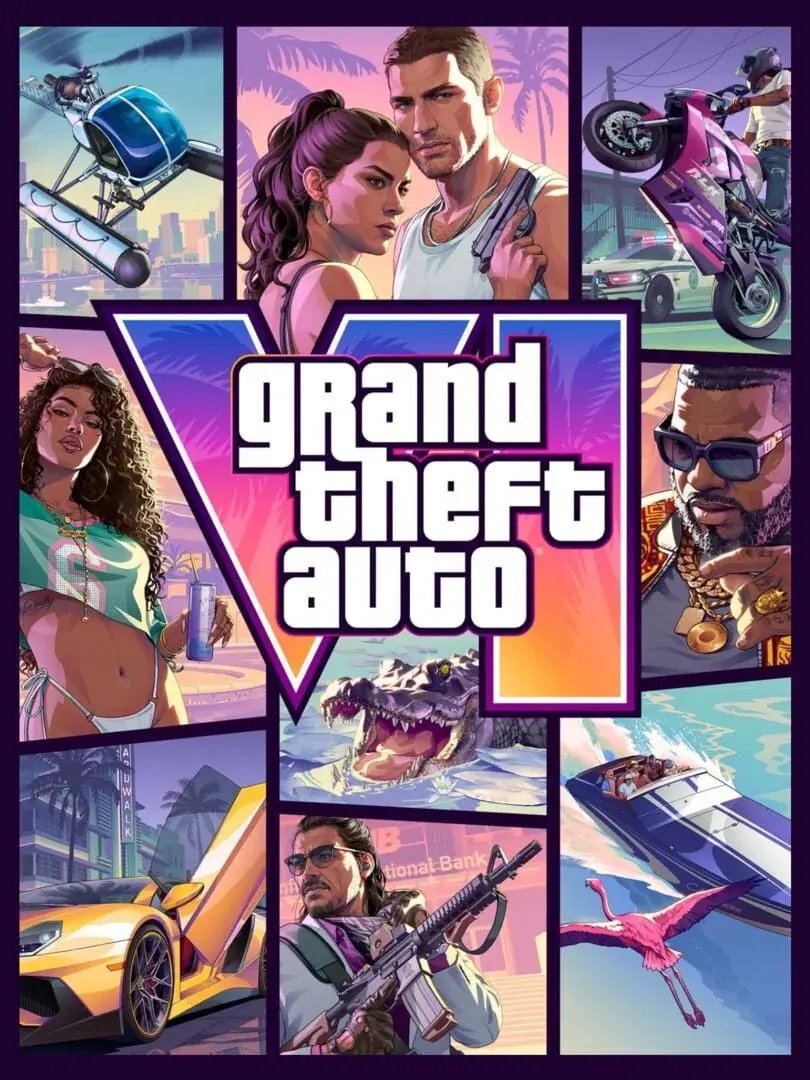
GTA 6’s Criminal Profile tracks how a character operates, using four states: Professional, Violent, Aggressive and Psycho. Jason and Lucia have separate profiles, so their reputations can differ during the same playthrough. Rockstar describes the system as reflecting player actions, with consequences for world reactions and narrative development.
The separate profiles are an important detail. They let the player establish different habits for each protagonist instead of stamping the entire campaign with one shared identity. Combat also supports different degrees of force: threatening, knocking out, incapacitating or killing. Those distinctions give the profile system behavior to work with beyond a simple choice to fight or walk away.
I would judge that system by how its consequences affect subsequent play. A reputation that changes the circumstances of a later encounter gives me a reason to behave differently on another run. A label that changes while every important situation proceeds identically would hold much less interest.
Rockstar says there is no correct or incorrect way to play. That principle matters here. If one profile consistently produces the most useful opportunities, players have an incentive to optimize toward it. Different criminal identities need worthwhile consequences of their own, even when those consequences are unpleasant. Otherwise, replaying becomes an exercise in finding the preferred behavior.
Mission freedom earns attention, but story replay asks for more
The mission examples offer tangible variation. An apartment-tower sequence has multiple escape routes. Another scenario lets players choose between driving and being a passenger. A chase suggests an optimal route without forcing the player to follow it. Missions can also use both protagonists together, with one driving while the other shoots through a window.
Those choices matter at the controller. Driving and shooting demand different attention, and taking another escape route changes the immediate problem. Switching control between Jason and Lucia is immediate, while the character outside the player’s control continues their routine behavior. The pair can therefore remain active participants rather than having one effectively disappear when control changes.
I welcome that flexibility on its own merits. It still sets a different standard from story replayability. Returning to a sequence for another role or route can be satisfying without creating a reason to restart everything around it. For Nelson’s broader claim to carry weight, enough decisions need to leave consequences beyond the sequence where they happen.
Small decisions are the real test of Rockstar’s ambition
GTA 6 combines large choices that carry immediate weight with smaller decisions that accumulate over time. Optional objectives can also have narrative ramifications. That combination offers a more persuasive foundation for repeat playthroughs than mission variety alone.
A major choice announces its importance. Accumulated decisions ask the player to develop habits, then live with their effects. That fits the relationship system particularly well: time spent together can mean more when it represents a sustained priority rather than a last-minute attempt to secure a desirable outcome.

The difficult part is making those connections legible. I do not need a notification explaining every consequence, but I do need enough context to understand why a later situation feels different. A character’s response, a changed opportunity or a recognizable callback could supply that connection. If the effect is too obscure to notice, it will struggle to motivate a deliberate second run.
Optional objectives pose a related challenge. Their consequences should give completion and omission interesting meanings. Treating every skipped objective as a mistake would encourage an exhaustive checklist run, narrowing the variety the system is supposed to support.
An 80-hour run makes the replay promise expensive in time
Nelson described a personal playthrough lasting approximately 80 hours, including optional goals with narrative consequences. That describes his run, rather than a required completion time, but it gives this discussion useful scale. Starting over can be a substantial commitment.
I would rather have one coherent, satisfying campaign than feel obliged to repeat it to assemble a complete account of its protagonists. Meaningful variation should reward another run while allowing the first to stand on its own. Discovering a different side of Jason or Lucia would be compelling; discovering that the emotional substance had been withheld would be frustrating.
The second run needs a different relationship with the story
Rockstar’s design gives me a credible reason to care about replayability. The relationship system, separate Criminal Profiles, cumulative decisions and consequential optional objectives all give player behavior potential weight. I do not need several entirely separate campaigns to find that worthwhile.
I do need consequences that survive beyond the immediate action. If a different routine changes how Jason and Lucia relate to each other, or how earlier decisions bear on later situations, another playthrough has a purpose. Extra routes alone would leave the story-replay claim doing too much work.
I want a second run to reveal a different relationship between Jason and Lucia while leaving my first run whole. Those demands can pull against each other: the more essential material Rockstar reserves for alternative choices, the easier it becomes to make one playthrough feel insufficient. That is the unresolved tension in this promising design — and the one that will decide whether I want to start again.
FinalBoss // Gear
Level up your setup
01Top-rated gaming headsetson Amazon→02High-refresh gaming monitorson Amazon→03Gaming chairson Amazon→04Discounted game keyson Kinguin→Affiliate links · As an Amazon Associate, FinalBoss earns from qualifying purchases.
Want to Level Up Your Gaming?
Get access to exclusive strategies, hidden tips, and pro-level insights that we don't share publicly.
Ultimate Gaming Strategy Guide + Weekly Pro Tips