
I remember the exact moment GTA 6 made GTA 5 look old. I had GTA 5 running on my PC in the background – fully modded, ray-traced, the whole diva treatment – while I freeze-framed the GTA 6 trailer on another screen. One second I was looking at Trevor’s angry plastic face; the next, Lucia’s tiny facial twitch as she listened to someone talk nonsense. That micro-expression alone did more to sell “next-gen” to me than a decade of buzzwords.
I’ve sunk an embarrassing amount of time into GTA 5. Story on PS3, again on PS4, then the “definitive” PC version with a mod folder that could crush a lesser SSD. GTA Online has eaten entire weekends with friends. So when I say GTA 6 actually looks like a generational leap over GTA 5, I’m not parroting trailer hype – I’m comparing it to thousands of hours of muscle memory in Los Santos.
And here’s the thing: this isn’t just about prettier screenshots. The jump in graphics, the way Rockstar has retooled the RAGE engine, the shape and density of the new Vice City map, even the way online play is being rethought – all of it adds up to a game that could make GTA 5 feel like a really good prototype. But it also comes with trade-offs: hardware demands, live-service baggage, and the very real risk that the industry learns exactly the wrong lessons again.
Table of Contents (7)
GTA 5 Still Looks Good – But GTA 6 Makes It Look Like Wax
Booting up vanilla GTA 5 in 2026 is still impressive. The art direction carries it hard: the smoggy sunsets, the way Los Santos glows at night, the cinematic camera angles. When it dropped in 2013, it absolutely melted my brain. But once GTA 6 footage hit, GTA 5 stopped looking “timeless” and started looking like a very polished last-gen game.
Side-by-side comparisons tell the story brutally. GTA 5 characters have that smooth, waxy skin that screamed “PS3 hero asset” even back then. In GTA 6, skin actually behaves like skin – pores, subtle imperfections, even that slightly gross sheen of sweat under Vice City’s humidity. In one shot, the folds and tension in Lucia’s prison jumpsuit sell more realism than any number of GTA 5 cutscenes where clothes might as well be painted on.
Lighting is where the generational gap turns into a canyon. GTA 5 leaned heavily on baked lighting and clever tricks. GTA 6 is clearly pushing proper global illumination and much more advanced reflections. Car doors reflect neon signs and passing headlights in a way that actually matches the scene, glass distorts and refracts light realistically, and interiors finally feel like they’re sitting inside the same lighting model as the street outside, not pasted on like stage sets.
The poolside comparisons that have done the rounds are wild. In GTA 5, NPCs stand around like store mannequins, their drinks look like colored cylinders, and the water might as well be animated wallpaper. In GTA 6, Lucia lounges with a relaxed, believable posture, fingers resting on the glass, the cocktail’s liquid catching sunlight and casting tiny distorted highlights onto the table. Even the condensation on the glass looks right. That’s the kind of thing I usually only geek out over in tech demos, not a mainstream blockbuster trailer.
Explosions and weather make the gap even nastier for GTA 5. In GTA 6, smoke plumes roll and drift with real volume instead of clipping into buildings, debris hangs in the air, and fire spills across surfaces instead of just spawning a few orange sprites. Water has proper foam, more convincing waves, and wet fur on animals that makes RDR2’s already absurd attention to detail look like a warm-up lap. Once that level of simulation exists in a Rockstar open world, GTA 5’s murky ocean and canned particles start to feel like stage props.
The RAGE Engine Glow-Up: From Theme Park to Living System
Under the hood, GTA 6 might be the biggest flex Rockstar has ever pulled. RAGE was already a monster in GTA 5 and Red Dead Redemption 2, but the new version looks like a ground-up rethink of how everything in the world talks to everything else.
Animations are the easiest thing to notice. In GTA 5, characters snap between canned states: stand, crouch, take cover, sprint. It works, but once you’ve played RDR2 or watched modern animation tech breakdowns, the seams start to show. GTA 6 is stitching those seams shut. Characters shift weight when turning, adjust their footing on slopes, and interact with objects in ways that look almost improvised. Lucia vaulting a counter or scrambling across a car hood has a messy, physical energy that GTA 5 simply cannot fake.
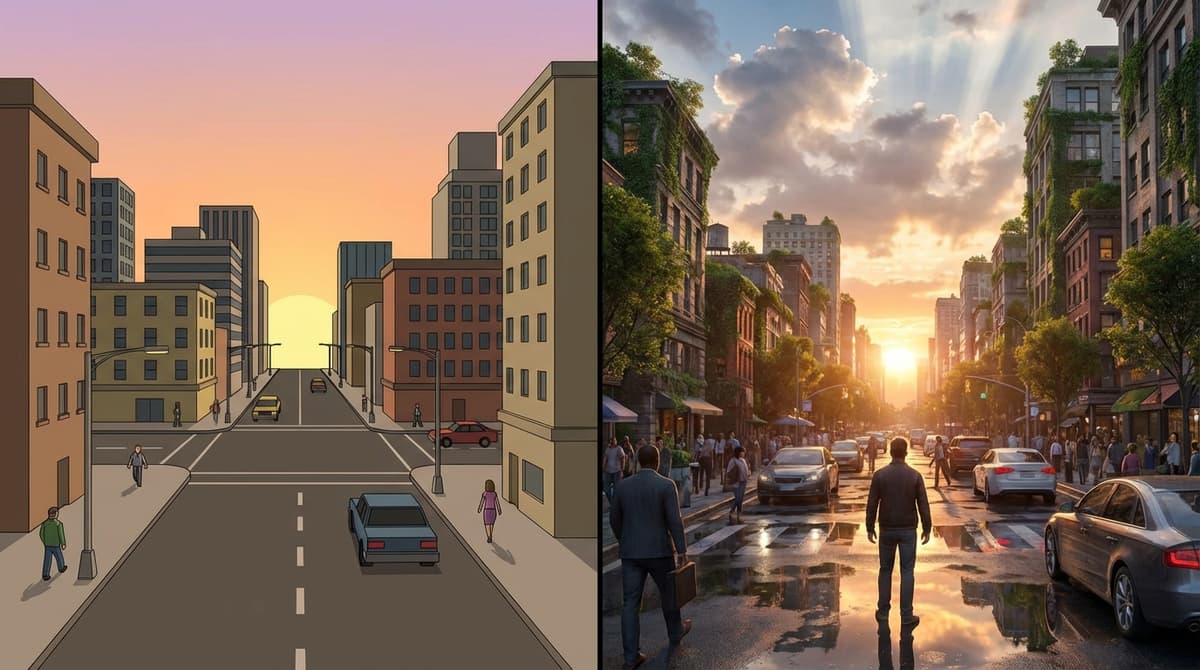
Physics has clearly gone up a weight class. Cars deform more believably, glass shatters into proper shards instead of generic chunks, and environmental clutter actually reacts when chaos erupts. The closest comparison is Unreal Engine 5’s Chaos physics system, but this is Rockstar doing it inside an open world that also has to run on consoles. As someone who has spent hours in GTA 5 just trying to cause weird chain reactions with physics props, this upgrade matters more to me than another ten million pixels.
Then there’s crowd and interior tech. Every long-time GTA player knows the “copy-paste pedestrian” look: the same handful of character models walking prescribed routes, occasionally bumping into each other and mumbling stock lines. Previews and technical breakdowns of GTA 6 keep pointing to more procedural crowds and interiors – more unique NPC behavior, more varied interiors that aren’t just copy-pasted bars with different neon signs. That’s the stuff that fuels organic stories, whether it is a random bar brawl that spirals into a shootout or a stealthy robbery that goes sideways because someone actually noticed something off.
GTA 5’s Los Santos is an incredible stage. GTA 6’s Leonida and Vice City are being built more like an ecosystem. For someone who obsesses over Shenmue-style tiny details and systemic cause-and-effect, that difference is massive.
Map Size: Bigger, Sure – But More Importantly, Busier
GTA map debates always devolve into “How many square kilometers is it?” as if raw acreage automatically equals quality. GTA 5’s landmass sits around the 40 square kilometer mark. Analysis of GTA 6’s trailers and leaked coordinates point to something in the 50–70 square kilometer range. So yes, on paper, GTA 6 is larger.
But the more time I spend thinking about GTA 5’s map, the more obvious it becomes that size was never its real limitation. The empty desert stretches, long bare highways, and copy-paste countryside were fine in 2013 because the city itself was the true star. After hundreds of hours in GTA Online, though, those dead zones started to feel like filler between the fun.
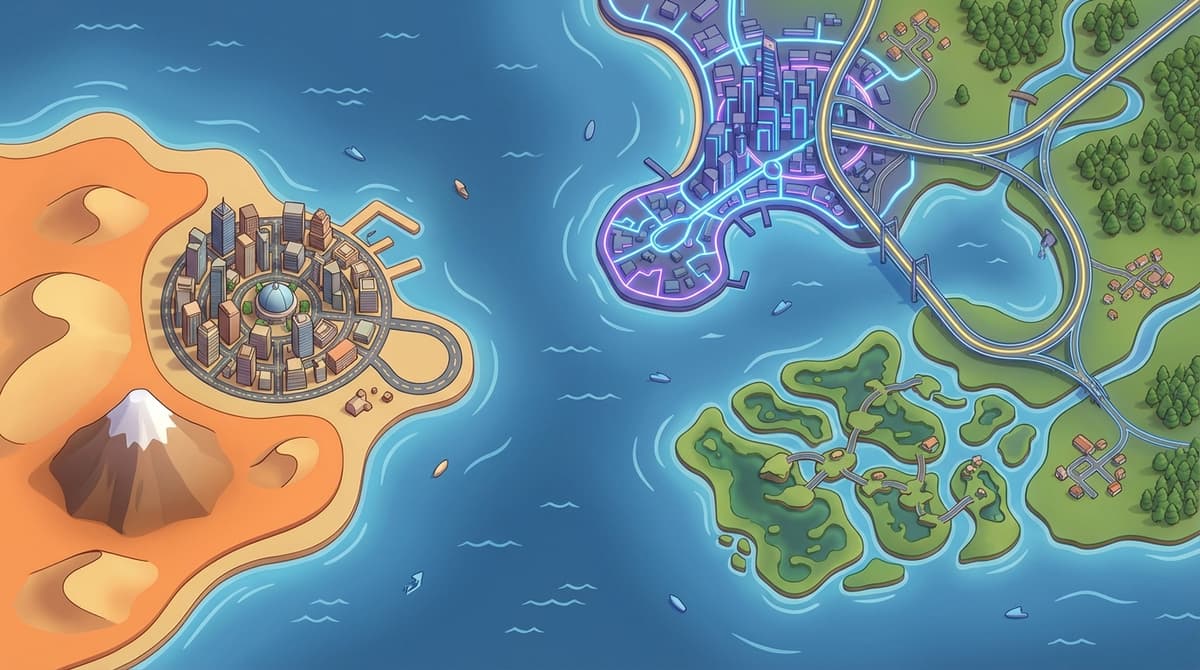
GTA 6 looks like an explicit response to that. Vice City itself is denser and more vertical, with crowded high-rises, stacked freeways, and neighborhoods that actually feel distinct rather than “rich hills” and “poor flats.” Outside the city, there are swamps, coastal highways, islands, and what looks like rural areas that still feel populated and meaningful. Early estimates put NPC density at something like three times GTA 5’s crowds, and it shows – beaches packed with partiers, convenience stores that feel genuinely cramped, traffic that looks dangerous even before someone pulls a gun.
Rockstar seems to be chasing “every corner has a story” rather than “drive 10 minutes to find the next interesting thing.” That is exactly what an open-world veteran wants. After games like Elden Ring, where curiosity is rewarded constantly, going back to big but empty maps feels like a chore. If GTA 6 really pulls off that level of density across a 50–70 square kilometer space, GTA 5’s San Andreas is going to feel like a movie backlot by comparison.
Lucia, Jason, and Why Dual Protagonists Beat the Old Trio
I loved GTA 5’s three-protagonist gimmick. Michael, Franklin, and Trevor gave the story a variety of voices that the series badly needed. But once the novelty faded, that system also revealed its limits. Each character was locked into their role, their arc, their neighborhood. The switching was also flashy rather than functional; jumping into Trevor mid-binge was funny, sure, but outside of heists it rarely added much to the moment-to-moment gameplay.
GTA 6’s Lucia and Jason setup looks sharper and more focused. The emphasis seems to be on their relationship – Bonnie-and-Clyde energy with room for tension, romance, and betrayal – rather than just three parallel lives that occasionally intersect. Switching between them in the middle of chases, robberies, or messy domestic arguments has way more potential than GTA 5’s random “what is Trevor doing now” cutaways.
Activities are getting the same “stop being fluff” treatment. GTA 5’s yoga, golf, and tennis were fun once then largely existed for completionists. In GTA 6, things like gym sessions, chilling by the pool, or messing around on social media clearly tie into stats, reputation, and progression. If building muscle actually changes Lucia’s melee effectiveness, or posting chaotic clips to an in-game platform changes how NPCs react, that’s the kind of subtle integration that makes systems stick.
Heists especially look like they are moving away from GTA 5’s “pick an approach, watch a cutscene, then shoot a lot” formula and towards something more reactive: disguises, blending into crowds, dealing with civilians as unpredictable variables instead of moving props. As someone who loves planning the perfect run and then watching it fall apart for hilarious reasons, this is the upgrade I wanted most.
GTA Online vs Whatever GTA 6 Becomes: Hope, Hype, and Red Flags
GTA Online is the most fun I have ever had in a game I regularly hate. The highs are unmatched: five friends, a stupid plan, a stolen helicopter, and a 2 a.m. laughing fit that makes waking up the next day a war crime. The lows are just as memorable: griefers on flying bikes, menu modders on PC, and a grind designed around nudging players toward Shark Cards.
With around half a million people still logging into GTA Online daily in 2026, Rockstar is never walking away from that gold mine. GTA 6’s online mode is inevitably going to be the new main event. Early talk around larger lobby sizes (50+ players), better creator tools, cross-play across platforms, and actual systems to curb griefing sounds fantastic on paper. Bigger, more connected, more creative – who would say no to that.
But this is also where I draw a hard line. I am not doing another decade-long treadmill just because the world looks prettier. If GTA 6 Online launches as GTA Online 2.0 – same stingy payouts, same pay-to-skip grind, same chaos where one bored player can ruin a server – I am out. The base game’s improvements deserve better than that.
The hopeful angle is that Rockstar seems to understand some of the pain points. Talk of reputation systems, more social spaces, and better tools for roleplayers suggests they know the real magic of GTA Online came from communities, not from grinding the same missions for a slightly shinier car. If GTA 6’s tech – denser crowds, smarter NPCs, more dynamic physics – is handed to those communities with proper tools, the results could be ridiculous in the best way.
The Harsh Hardware Reality: GTA 6 Will Punish Old Rigs
All of this fidelity comes at a cost, and not just in development time. GTA 5 in 2026 is extremely forgiving. A mid-range GPU like an RTX 3060 can push high settings at high frame rates, especially if resolution scaling and a few smart tweaks are in play.
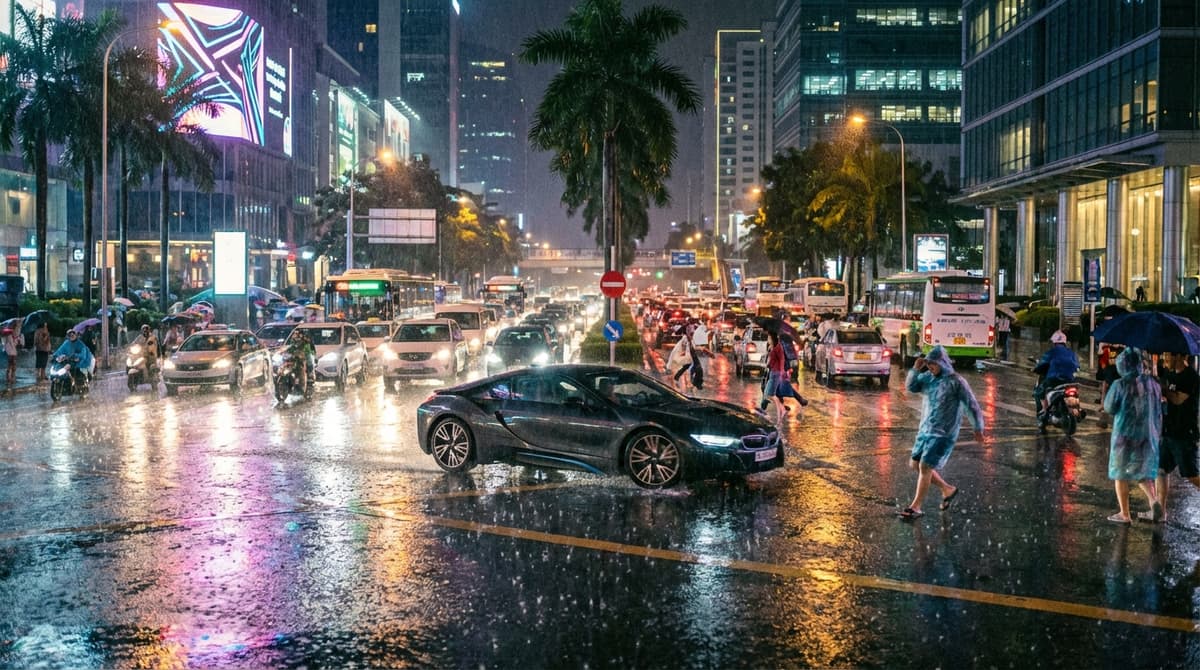
GTA 6 is clearly built to push modern hardware harder. Ray-traced global illumination, dense crowds, complex physics, and detailed interiors do not come cheap. Expect heavy reliance on modern upscalers like DLSS and FSR just to keep frame rates respectable. On consoles, this almost certainly means a choice between a sharper 30 fps “fidelity” mode and a faster but less pristine performance mode. On PC, anyone chasing 1440p or 4K at high refresh rates is going to need something in RTX 40-series or equivalent territory.
My stance is simple:
- Happy with story mode at 30–60 fps and not chasing maxed-out settings? A current-gen console will probably be fine.
- Want high refresh rates at 1440p with most bells and whistles on? Budget for a serious GPU upgrade.
- Still on PS4 or Xbox One? GTA 5 is where life will stay for a while, and honestly, it is still a hell of a place to be.
I love seeing Rockstar swing this hard technically, but there is no point pretending this is an easy upgrade for everyone. GTA 6 is shaping up to be the game that finally forces a lot of people to retire hardware that handled GTA 5 just fine for years.
So Where Does That Leave GTA 5?
Here is the wild part: even after everything I have just said, GTA 5 is still absolutely worth playing. Modded on PC, with fan-made ray tracing, texture overhauls, and new missions, it can feel shockingly close to “modern.” The core shooting and driving still feel great. The city is still one of the most entertaining sandboxes ever built.
But once GTA 6 lands, GTA 5 will finally become what it has secretly been for a while: the warm-up. The training arc. The comfort food open world that people go back to for nostalgia and chaos while GTA 6 becomes the main stage for cutting-edge tech, serious roleplay, and whatever new meta nonsense the community invents.
For me personally, here is how this changes things. I will be there for GTA 6’s single-player on day one, no hesitation. The graphics, the systemic upgrades, the denser map – they are exactly the kind of next-gen I actually care about. I will take my time, soak in the details, and probably lose weeks to just wandering Vice City listening to the radio.
GTA 6’s online mode, though? That has to earn me. After a decade of GTA Online’s grind and nonsense, I am done handing Rockstar blind faith. If GTA 6 really uses its new tech to build a fairer, smarter, more creative online world, I will happily dive back in with friends. If it is just GTA Online with better reflections and more expensive cars, I will stick to story mode, modded GTA 5, and the memories of the good times instead.
Either way, the comparison is already settled in my mind. GTA 5 was the revolution for 2013. GTA 6, if it actually delivers on what these trailers and tech breakdowns promise, is the revolution for 2026 – not just a prettier coat of paint, but a new baseline for what open worlds can feel like. And as someone who has lived in Los Santos for over a decade, I am more than ready to move to Vice City.
FinalBoss // Gear
Level up your setup
01Top-rated gaming headsetson Amazon→02High-refresh gaming monitorson Amazon→03Gaming chairson Amazon→04Discounted game keyson Kinguin→Affiliate links · As an Amazon Associate, FinalBoss earns from qualifying purchases.
Want to Level Up Your Gaming?
Get access to exclusive strategies, hidden tips, and pro-level insights that we don't share publicly.
Ultimate Gaming Strategy Guide + Weekly Pro Tips