
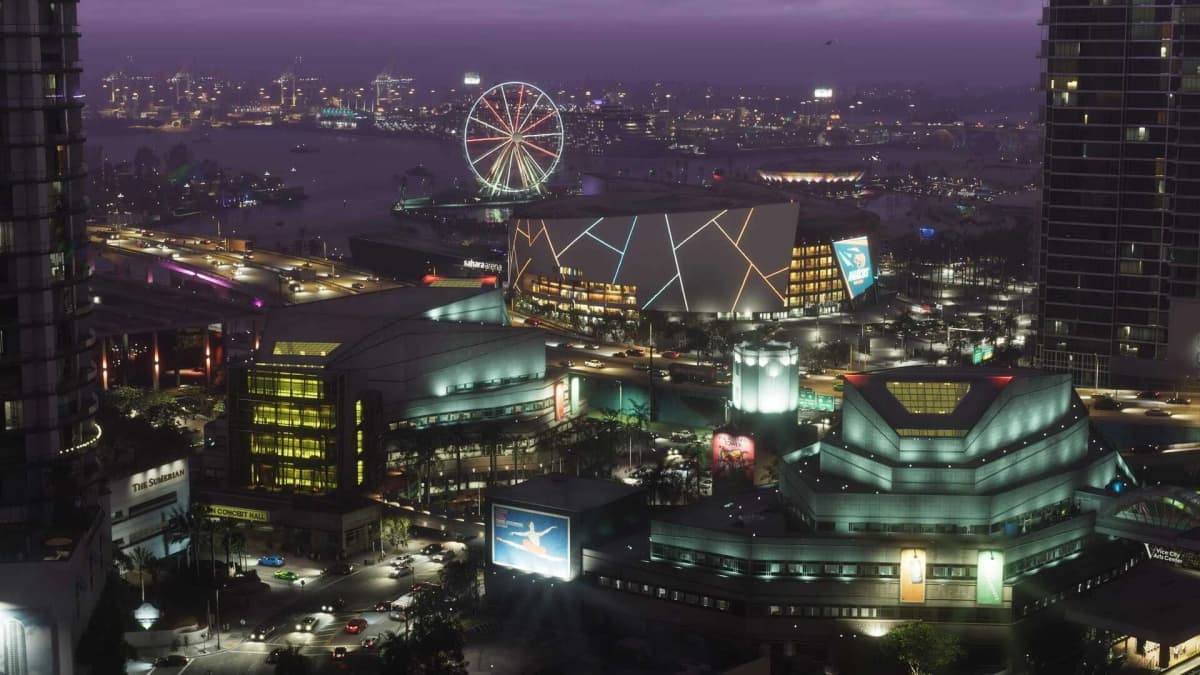
Grand Theft Auto VI is scheduled for 26 May 2026 on PlayStation 5 and Xbox Series X|S, and Rockstar has framed it as the biggest, most immersive evolution of Grand Theft Auto. That is a suitably large promise. The problem is that the conversation has already turned two production numbers — roughly 150 square kilometres and more than 600,000 animations — into proof that Leonida will feel alive.
It is not proof. It is a scale pitch.
Rockstar North may have built a larger world and a vastly deeper animation library than it had for GTA V or Red Dead Redemption 2. Those are meaningful investments. They also tell players almost nothing by themselves about the moments that decide whether an open world earns its size: the drive between destinations, the behavior of people on the sidewalk, the usefulness of a detour, the variety of a random encounter, and the number of times the game falls back on the same old loop after the first ten hours.
I have no interest in rewarding a game merely for having an enormous asset count. Grand Theft Auto VI needs to make that production weight visible in play. Until it does, “150 km²” and “600,000 animations” are impressive numbers looking for a player-facing argument.
Table of Contents (4)
The 150 km² figure has become more solid than it deserves
The 150 km² map figure is everywhere because it is easy to repeat and easy to visualize. It suggests a version of Vice City and the wider state of Leonida that dwarfs what Rockstar previously built. Rockstar has not published an official square-kilometre specification for Grand Theft Auto VI, however. The number remains an estimate built from community mapping rather than a hard technical figure on Rockstar’s own game page.
That distinction matters because map size has always been the laziest way to talk about open worlds. A square kilometre can mean a packed city block, a road across wetlands, a stretch of coastline, water that exists mainly for scenery, or an inaccessible piece of background geography. Treating every part of a map as equal content is how publishers turn a geographic measurement into a marketing magic trick.
The more useful comparison is the broad one: Rockstar’s current scope talk places GTA 6 at around three times the playable area of Red Dead Redemption 2 and about twice the size of GTA V. Even that framing leaves the central question unanswered. Three times more land only becomes three times more valuable when missions, activities, encounters, interiors, and movement systems expand with it.
| Game | Map-area figure used in current comparisons | What the number can actually tell players |
|---|---|---|
| Grand Theft Auto VI | About 150 km² is a community estimate; Rockstar has not published an official km² total | Leonida is positioned as substantially larger than Rockstar’s previous open worlds |
| Grand Theft Auto V | About 75 km² in commonly cited comparisons | A useful baseline for how much extra territory GTA 6 may have, not a measure of activity density |
| Red Dead Redemption 2 | About 50 km² of estimated playable area in current comparisons | The reference point for Rockstar’s claim that GTA 6’s overall map is roughly three times larger |
GTA V had wide spaces that worked because Los Santos was a memorable gravitational centre and because vehicles made the surrounding map feel like a place to move through rather than a series of loading corridors. GTA 6 has a harder job. Vice City cannot carry an expanded state on vibes alone. If the outer regions mostly serve as long drives between the good material, the extra distance will eventually feel like filler with better lighting.
That is why “bigger than Red Dead Redemption 2” should make players more demanding, not more forgiving. A map three times larger creates three times the opportunity for dead space, repeated roadside events, thin mission coverage, and scenery that looks expensive while doing little. Rockstar knows how to build vistas. The test is whether those vistas contain reasons to stop.
600,000 animations are useful only when players can feel them
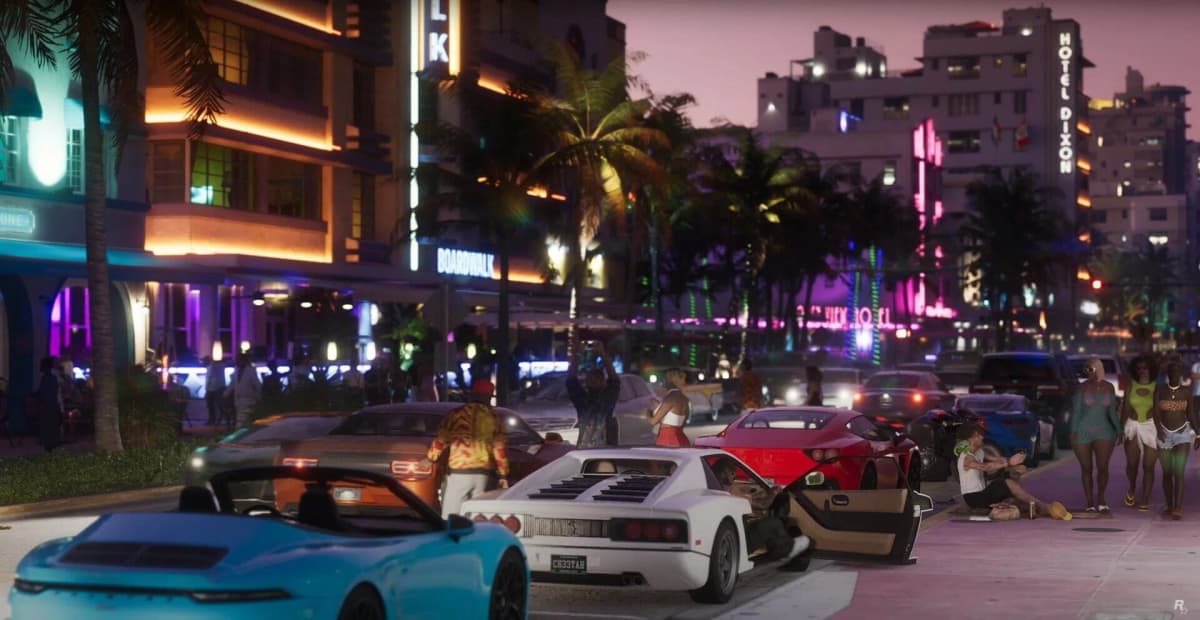
The reported animation count is more exciting because it speaks to the exact area where GTA 6 could separate itself from the standard open-world assembly line. Rockstar has built more than 600,000 animations for GTA 6, compared with around 55,000 for GTA V and about 300,000 for Red Dead Redemption 2. That is an enormous jump over GTA V and roughly double Red Dead Redemption 2’s cited total.
| Game | Reported animation count | Relative scale |
|---|---|---|
| Grand Theft Auto V | About 55,000 | Baseline for the current comparison |
| Red Dead Redemption 2 | About 300,000 | More than five times GTA V’s cited count |
| Grand Theft Auto VI | More than 600,000 | About ten times GTA V and roughly double Red Dead Redemption 2 |
Raw animation totals can be misleading. A development team can build multiple minor variations for posture changes, vehicle transitions, terrain adjustments, cinematic moments, contextual idles, damage states, and rare scripted scenes. That work is valid, difficult, and often invisible. A player does not experience “600,000 animations.” A player experiences whether civilians react believably when a car mounts the curb, whether a confrontation flows without stiff snapping, whether a crowd responds as individuals, and whether the game keeps repeating the same gestures every time chaos breaks out.
The reported on-the-fly animation retargeting system is where the number starts to become interesting. Rockstar North co-studio head Rob Nelson has described a setup that adapts animations across NPCs with different heights and body shapes, rather than relying on a narrow set of matching character builds. Jason and Lucia can interact with people who have far more physical variation than Rockstar’s older crowds allowed, while the system keeps those interactions aligned with each other and the environment.
That is a legitimate technical advance because the old open-world tell is painfully obvious once it appears: different character models moving as if they were built around the same invisible skeleton. Everyone sits, walks, reaches, fights, and clips through the world with the same underlying proportions. The scene may have high-resolution faces, but it still reads as a game crowd.
GTA 6 can avoid some of that artificial sameness. It can make a tall pedestrian, a smaller pedestrian, and a heavier pedestrian occupy space differently during the mundane interactions that sell a city. That would be more valuable than a thousand bespoke cutscene motions. But Rockstar must show that retargeting survives busy streets, combat, vehicle crashes, chase sequences, and the player’s inevitable attempts to break the simulation. A polished interaction between two characters in a controlled presentation does not settle the matter.
“Alive” means the world keeps producing consequences
Players use “alive” as shorthand, but the standard should be more precise. An alive GTA world does not merely contain lots of people. It gives the player a feeling that systems are colliding without waiting for a mission designer to pull a lever.
Rob Nelson’s comments about discovery point in the right direction. GTA 6 aims to let discovery emerge without constantly routing players through objectives, blips, and map icons. That idea has more potential than any map-size number because it addresses a real open-world disease: the moment a game mistakes a crowded minimap for an interesting place.

Icons are efficient, but they are also a confession. They tell players that the world cannot reliably attract attention on its own, so the interface has to beg for it. If GTA 6 can make a strange situation, a conversation, a suspicious vehicle, a local business, a police response, or an environmental detail naturally pull the player off course, then Leonida will earn the “alive” label. If every meaningful activity still needs a colored symbol and a checklist, Rockstar will have built a larger version of the same obligation treadmill.
The important distinction is between density and clutter. Density means the player has meaningful choices in a small amount of time. Clutter means the game has covered the map with low-value tasks designed to make the activity screen look generous. GTA 6 needs density.
- Mission routes need incidental events that feel distinct rather than recycled roadside scripts.
- Neighbourhoods need businesses, interiors, service systems, and civilian routines that make a return visit worthwhile.
- Driving, boating, and walking need different payoffs instead of functioning as three ways to cross the same empty distance.
- NPC reactions need to persist long enough to create consequences, rather than resetting as soon as the player turns a corner.
- Combat and police encounters need to produce changing situations, not merely larger crowds performing more elaborate collapse animations.
Those are the outcomes that turn a larger map into a better game. Rockstar can have 150 km², 125 km², or some other final measurement entirely. The exact area matters far less than the ratio between travel time and worthwhile interruption. A twenty-minute drive through a world that produces distinct, reactive situations is a success. A five-minute drive through scenery with nothing to do is still wasted time.
Rockstar should be judged by demonstrations, not production arithmetic
The next useful look at Grand Theft Auto VI should spend less time admiring camera sweeps over Leonida and more time exposing the systems to normal player behavior. Show a full trip across Vice City and out into a different region. Show the player entering places that matter, starting trouble, escaping it, returning later, and finding that the world has not simply forgotten what happened. Show a crowded street where different bodies interact with cars, sidewalks, doors, and one another without the usual open-world stiffness.
Rockstar should also put the animation claim under pressure. A side-by-side sequence against GTA V and Red Dead Redemption 2 would be far more convincing than another total. Demonstrate vehicle exits, physical confrontations, civilian panic, police responses, and unscripted crowd behavior from the same player action. If GTA 6’s 600,000-animation library reduces visible repetition and produces more believable outcomes, the difference will be obvious in minutes.
Until that proof arrives, the responsible response to Rockstar’s scale claims is straightforward: the numbers establish that GTA 6 is expensive, ambitious, and technically dense. They do not establish that every extra kilometre contains value or that every extra animation improves play. Rockstar has set the bar high enough that a merely bigger Grand Theft Auto will feel like an underuse of its own work.
FinalBoss // Gear
Level up your setup
01Top-rated gaming headsetson Amazon→02High-refresh gaming monitorson Amazon→03Gaming chairson Amazon→04Discounted game keyson Kinguin→Affiliate links · As an Amazon Associate, FinalBoss earns from qualifying purchases.
Want to Level Up Your Gaming?
Get access to exclusive strategies, hidden tips, and pro-level insights that we don't share publicly.
Ultimate Gaming Strategy Guide + Weekly Pro Tips