
Table of Contents (7)
Mario 64 just won a Guinness record. Speedrunners knew this years ago.
This caught my attention because I’ve watched Super Mario 64 runs since the Siglemic-era marathons and the Cheese world record wars; the game refuses to die. Now the mainstream has noticed too: nearly three decades after launch, Super Mario 64 (1996) has been recognized by Guinness World Records as the most speedrun game on the planet, with 49,013 verified runs on Speedrun.com as of June 12, 2025. The most popular category? The legendary 16-Star. Rounding out the podium for most-run games: Celeste and, curveball, Subway Surfers.
Key Takeaways
- Guinness used Speedrun.com’s verified runs – a community-driven metric that rewards participation, not just prestige.
- Super Mario 64’s 16-Star category remains the gateway drug for speedrunning: short, stylish, and brutally learnable.
- Celeste’s second place tracks with its precision platforming community; Subway Surfers shows how mobile-friendly categories inflate totals.
- SM64’s staying power comes from a perfect storm of movement depth, glitch tech, accessibility, and a thriving ecosystem of tools and routes.
Breaking down the record: 49,013 runs and why 16-Star rules
Guinness didn’t conjure this out of nowhere – Speedrun.com is the de facto hub where communities define categories, set rules, and verify submissions. Counting every accepted run across SM64’s categories, the tally lands at 49,013, with 16-Star contributing a massive share. If you’ve ever watched a Games Done Quick block, you know why: 16-Star is the perfect balance of spectacle and approachability. You still get the classics – Lakitu skip, bomb clip, cannonless, owl-less, MIPS clip, and of course BLJs to crash the endgame — without the endurance burn of 120-Star.
Celeste being up there makes total sense. It’s a modern gold standard for speed-friendly design: clean physics, frame-tight tech, accessible practice tools, and a community that respects both full-game runs and ILs. Subway Surfers is the eyebrow-raiser — but it illustrates the metric. Easy-to-grasp, mobile-native categories with short run times generate a ton of submissions. That doesn’t cheapen the grind; it just shows that “most speedrun” means “most verified runs,” not “most technically demanding.”
Why SM64 still owns speedrunning in 2025
Three things keep SM64 on top: movement, glitches, and access.
Movement: Few 3D platformers feel this expressive. Mario’s analog control, momentum, and chaining options — triple jumps, dives, wall kicks, long jumps — are still unsurpassed. The game rewards both clean lines and improvisation when things go sideways. That makes the skill ceiling effectively infinite, which is catnip for runners chasing months-long PB slumps.
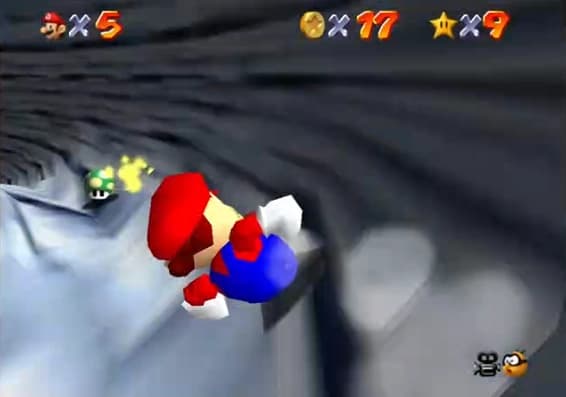
Glitches: SM64’s engine breaks in beautiful ways. Backwards Long Jumps (BLJs) redefine level boundaries. MIPS clip turns the castle’s resident rabbit into a skeleton key. Tiny-Huge Island cannonless and Whomp’s Fortress owl-less are rites of passage that teach camera control and micro-adjustments. The fact you can route around difficulty — 0-Star, 1-Star, 16-Star, 70-Star, 120-Star — means everyone finds a home, from glitch fiends to “pure” completionists.
Access: It’s everywhere. Emulation is robust and widely accepted with category-specific rules. There are practice ROMs, savestates, and peripherals to grind muscle memory. The community has matured moderation, clear rulesets, and beginner resources that actually onboard humans, not just robots. Decompilation and PC ports sparked new interest (and debates) but ultimately made learning easier. It’s one of the few classic games where the on-ramp is smoother today than a decade ago.

Read the metric with a skeptic’s eye
Guinness’ record is celebratory, but it’s also a snapshot of one platform’s counts. Speedrun.com is comprehensive, yet not every community tracks there, and category design skews totals. Mobile games like Subway Surfers rack up runs because attempts are quick and the hardware is ubiquitous. Meanwhile, long-form monsters (think 100% RPGs) have vibrant communities but fewer verified runs. So “most speedrun” isn’t a crown of difficulty. It’s a crown of activity, longevity, and accessibility. By that definition, SM64 is the obvious winner.
Another caveat: 16-Star dominance doesn’t mean the game is shallow. It means the five-to-twenty-minute window is where most newcomers live. The deeper you go, the more the game reveals. Watch a top 120-Star route and you’re seeing a masterclass in risk management — late-game TTC and Rainbow Ride coin routes are still heart-attack material even for veterans.
So you want to start running it in 2025?
If this record nudged you to try, here’s the real talk: start with 16-Star. Learn Lakitu skip, bomb clip, Whomp’s Fortress cannonless, MIPS clip, and a consistent Bowser throw setup. Don’t chase world-record strats on day one; chase repeatable strats that give you splits to be proud of. Time your runs the way the leaderboard does, read the version rules (N64, VC, emulator, and PC ports can be separated), and submit even if your PB feels slow. Adding one more verified run is literally what this record celebrates.
Also, watch different runners. SM64 is a style game — the line you love might be from a 2014 tutorial or a 2025 route. And don’t sleep on Celeste: if you prefer deterministic precision over physics-driven improv, its Any% and B-sides will scratch the itch without the RNG and camera wrestling that comes with a 1996 classic.
TL;DR
Guinness anointed Super Mario 64 as the most speedrun game with 49,013 verified runs, and the 16-Star category leads the charge. The stat reflects community accessibility and staying power, not just difficulty — and that’s exactly why SM64 still runs the castle.
FinalBoss // Gear
Level up your setup
01Best-selling Switch 2 gameson Amazon→02Switch 2 accessorieson Amazon→038BitDo controllerson Amazon→04Discounted game keyson Kinguin→Affiliate links · As an Amazon Associate, FinalBoss earns from qualifying purchases.
Want to Level Up Your Gaming?
Get access to exclusive strategies, hidden tips, and pro-level insights that we don't share publicly.
Ultimate Gaming Strategy Guide + Weekly Pro Tips