
Hades II showing up on Xbox Game Pass day one isn’t just “cool, another big indie on the sub.” It’s Microsoft dropping the best-reviewed game of 2025 into your library in its most complete form, right at the moment Supergiant proves it can actually iterate on a near-perfect roguelike without breaking it.
Table of Contents (8)
Key takeaways
- Hades II hits Xbox Series X|S, PC via Xbox, and Xbox Cloud on April 14 as an Xbox Play Anywhere title, day one on Game Pass, with all post-launch patches and bonus content baked in.
- The sequel swaps Zagreus for Melinoë and adds a Magick/Omega system, making combat less pure twitch and more about positioning, timing, and resource management.
- Runs now split across two distinct paths – back down into the Underworld or up a besieged Mount Olympus – effectively doubling your strategic choices before you even swing a weapon.
- Crossroads replaces the House of Hades as a deeper hub, while Animal Familiars and new Nocturnal Arms push build variety beyond the first game without losing its pick-up-and-run clarity.
Game Pass just landed the best-reviewed game of 2025
Across the European press, there’s basically one point of agreement: Hades II isn’t just “as good as” Hades, it beat it at its own game. Outlets like PC Games and 3DJuegos point to a Metacritic average hovering around 95, calling it a clear contender for 2025’s GOTY. Areajugones flat-out labels it the “hidden GOTY” of the year.
Up to now, all of that acclaim has mostly been a PC and Switch story. The game left Early Access and launched fully in September 2025 on PC and Nintendo’s platforms, including Switch 2, while PlayStation and Xbox owners watched from the sidelines. That exclusivity window ends April 14, when Hades II finally drops on PS5 and Xbox Series.
For Xbox, there are two extra twists:
- Day-one Game Pass: Numerama and multiple outlets confirm it’s in the subscription on launch day, putting a 40-ish euro premium roguelike right next to your backlog with zero extra spend.
- Play Anywhere + Cloud: Buy it once on Xbox and you own it across console and Xbox on PC, with progress synced, plus cloud streaming if you’re in supported regions.
3DJuegos and Xbox’s own announcement both stress that the Xbox build arrives with all post-launch patches, QoL tweaks and “some bonus content” already folded in. After months of tuning on PC and Switch, Xbox players are basically getting the “director’s cut” as their first contact with the game.
If you sat out the Early Access grind and the timed exclusivity, this is the upside of waiting: you get the version everyone else bug-reported and balance-ranted into shape.
Melinoë changes how Hades fights, without breaking it
The original Hades worked because Zagreus felt instantly right in your hands: short, snappy dashes, a long-range Cast, and weapons that clicked after a couple of rooms. Supergiant doesn’t throw that away in Hades II – it bends it around a different character.
Melinoë, Zagreus’ long-lost sister, is built to feel like she shares blood with him but not a moveset:
- Longer dash, sprint instead of blink-spam: Zagreus was about tight, jittery repositioning. Melinoë trades that for a longer dash and a new sprint, shifting the rhythm from machine-gun dodges to planned routes through chaos.
- AOE Cast instead of a sniper shot: Her Cast isn’t a ranged tag anymore — it’s an area-of-effect trap around her position that can imprison enemies and is heavily modified by god Boons. That alone rejigs how you approach clustered fights and choke points.
- The Magick bar and Omega moves: This is the real structural change. Every basic action can be overcharged into an Omega version if you spend Magick. You’re constantly choosing between safe, cheap play or burning Magick on huge spikes of damage or control.
Multiple previews and reviews point to a subtle shift in the vibe: where Zagreus rewarded raw reflex, Melinoë nudges you toward planned aggression. You’re not just reacting; you’re setting the board — trapping enemies, circling for backstabs, lining up Omega windows, then cashing out in a flurry.
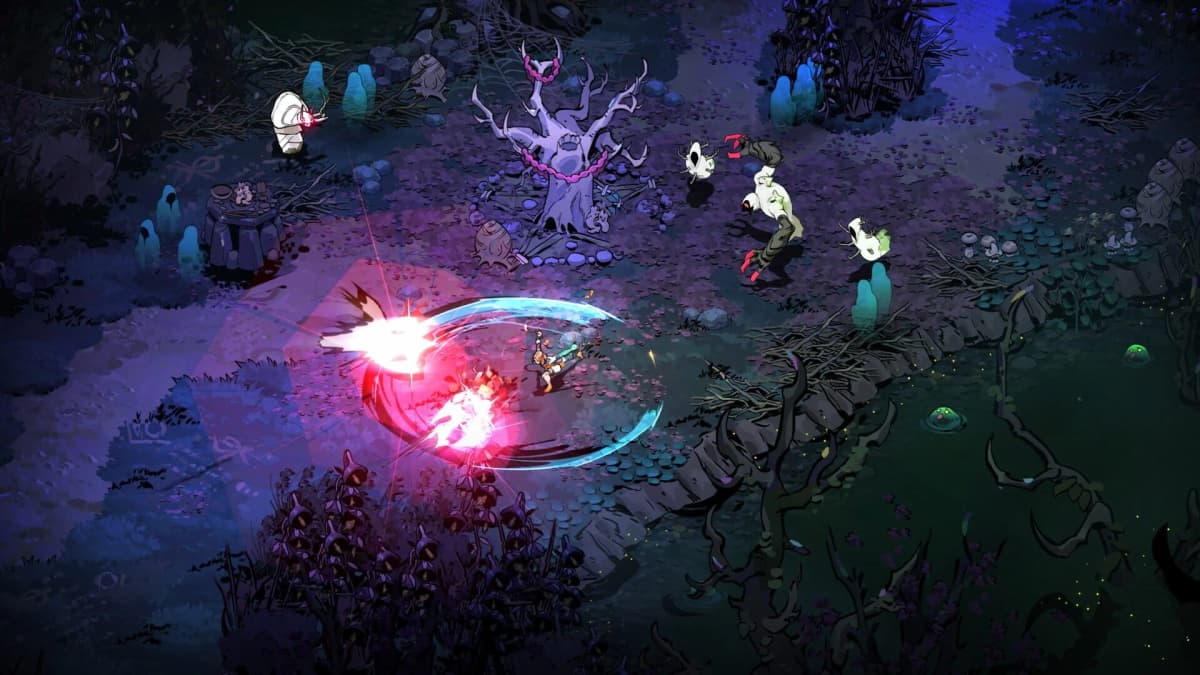
The Nocturnal Arms — Hades II’s new weapon set — reinforce that shift. You’ve got everything from agile blades to a lumbering axe and stranger archetypes that Supergiant’s not spoiling in official materials. Each weapon has multiple Aspects that meaningfully change how it works, just like the first game, but layered on top of Magick they push builds into genuinely distinct playstyles.
The key thing Xbox players should know: this still feels like Hades. It’s fast, responsive, and brutally readable in the middle of a screen full of particle effects. But the extra systems give veteran players more levers to pull. If you burned out on the first game after beating Dad for the 30th time, Hades II is tuned to give you a richer planning phase in every room, not just more chaos.
Dual paths and a deeper hub: same roguelike DNA, bigger decisions
Structurally, Hades II is where Supergiant could have easily overreached. Instead, they bend the run structure without snapping it.
In Hades, Zagreus had one direction: up and out of the Underworld. In Hades II, Melinoë has two missions that create a permanent fork in your run planning:
- Descend into the Underworld to hunt down Cronos, the god of time.
- Ascend Mount Olympus, now in a bad way and under siege.
Each path is effectively its own game lane — new biomes, enemy sets, bosses, and NPCs. That means every time you start a run, you’re not just picking a weapon and a Keepsake, you’re picking a campaign for that attempt. Do you go where you’re currently stronger? Where you need a specific resource? Where a particular god’s Boons might tilt things in your favor?
It’s a clever answer to a classic roguelike problem: repetition. The first Hades leaned on escalating Heat and weapon variety to keep things fresh. Hades II adds the macro choice of which ladder you’re climbing at all. As Numerama notes, it keeps the game accessible, but gives experienced players a lot more meta to chew on between doors.
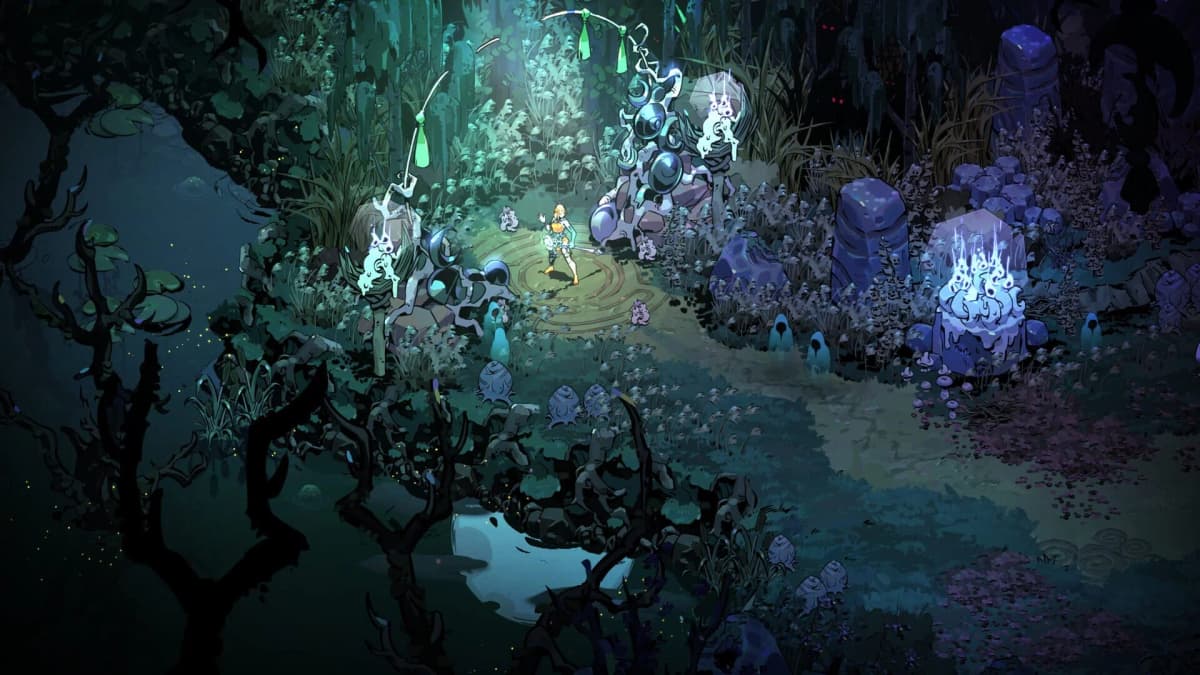
All of this is anchored by Crossroads, the new hub. Where the House of Hades was part rest area, part story dump, Crossroads is more like a small village for witches, gods, and the occasional ghost. From here, you:
- Adjust and upgrade your loadout in more granular ways.
- Customize the area cosmetically far beyond the first game’s decorations.
- Push relationships forward with a refreshed cast of gods, demigods, and hangers-on.
The narrative trick that made Hades work — using repeated failures as story fuel instead of dead ends — is intact. PC Games and others highlight how runs are still heavily contextualized: characters react to how you died, where you went, and what you’ve been up to, instead of just resetting the board with a “try again.” For a genre that usually shrugs off death as pure stat loss, that integration still matters.
Animal Familiars are the new Companions (and yes, they’re busted in the right way)
In Hades, your late-game reward for currying favor with certain characters was a Companion: a limited-use, screen-clearing special attack. Hades II turns that system into something more persistent and more characterful with Animal Familiars.
Instead of a one-button nuke, you’re adopting creatures that join you throughout entire runs. They:
- Add extra chip damage or crowd control.
- Offer run-saving utility like time-savers or defensive buffs.
- Layer more long-term progression on top of your standard build.
Mechanically, they’re another axis of customization on top of weapons, Aspects, Boons, Keepsakes, and Arcana (the game’s meta-progression cards). The risk with systems like this is obvious: bloat. Too many overlapping modifiers and suddenly you’re theorycrafting more than playing.
The early consensus from outlets that reviewed the PC/Switch versions is that Hades II mostly avoids that trap. Familiars feel strong and occasionally overpowered, but Supergiant’s usual restraint keeps them from turning the game into an auto-battler. They sit in the sweet spot: strong enough to matter, not so strong that they play the game for you.
Xbox gets the “complete” Hades II out of the box
There’s one practical advantage Xbox players have that’s easy to overlook in the hype cycle: you’re not buying version 1.0.
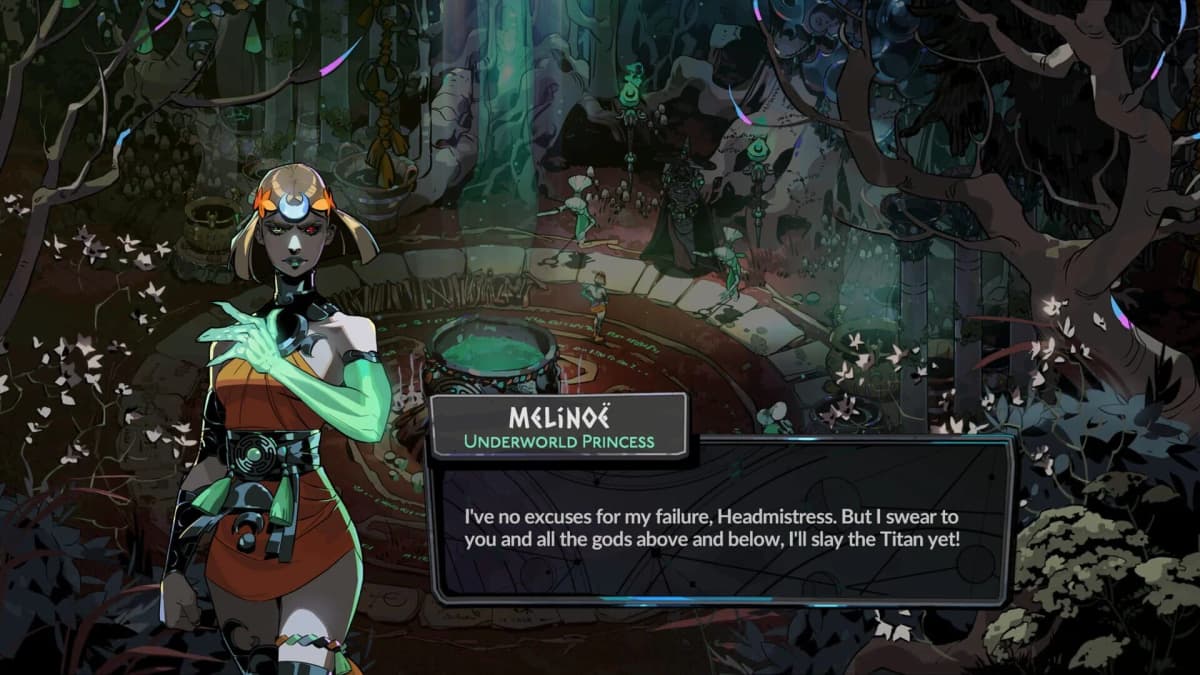
Since its 2025 launch on PC and Nintendo’s consoles, Hades II has been patched multiple times. Balance passes, bug fixes, UI tuning, and some extra content tweaks have all gone in. 3DJuegos and Xbox’s own write-up both underline that the incoming Xbox release includes every one of those patches plus additional QoL and “bonus content,” making it the most complete package to date.
The trailer shown during the Xbox Partner Preview even included shots that fans on forums and social channels claim they hadn’t seen in the current builds, sparking speculation about either a final content update or at least some fresh polish landing across all platforms around April 14. Supergiant hasn’t confirmed a big “final patch,” but it would be bizarre for Xbox to get content the PC audience doesn’t, so expect parity — or close to it — across the board.
The uncomfortable bit the PR doesn’t spell out? This rollout is effectively Hades II: Version “We’re Actually Done Now”. If you already bought on PC or Switch, you helped pay for the tuning and now you’re watching console players walk into the perfected version on Game Pass. That’s the live-service-but-not-quite dynamic we keep seeing with single-player games that spend time in Early Access, then go wide later.
From a pure consumer angle on Xbox, though, it’s hard to be mad: either you grab it via Game Pass and treat it like a free upgrade to your backlog, or you buy it outright at around the 40 euro price point other platforms are using, knowing you’re not beta-testing someone’s dream roguelike. You’re getting the finished article.
What to watch next
There are a few specific things worth keeping an eye on as April 14 hits:
- Patch parity on launch day: Does Supergiant push a simultaneous update to PC and Switch that lines up with the Xbox/PS5 release? If patch notes drop that mention new content or major balance changes, that’s your signal this is the “definitive” milestone.
- Game Pass traction: Hades became a word-of-mouth monster. Watch Xbox’s own charts and social chatter the week after launch; if it spikes, expect Hades II to be one of the platform’s evergreen recommendations, the way Slay the Spire and Vampire Survivors became permanent fixtures.
- Performance and input feel on Xbox: The original ran well across platforms, but Hades lives and dies on latency. Once players get hands-on, pay attention to whether Series S holds frame rate and how responsive Omega inputs feel on controller.
- Post-console support: If Supergiant talks about “final” patches or content updates after the console drop, that’ll tell us whether Hades II is entering its maintenance phase or if there’s still experimental balancing and additions to come.
For now, what matters is simple: on April 14, if you’ve got an Xbox and an active Game Pass sub, you can walk straight into one of the most finely tuned action roguelikes ever made — not a promise of what it might become, but the version every other platform spent the last year sculpting.
TL;DR
Hades II finally lands on Xbox Series X|S (and Xbox on PC/Cloud) on April 14, day one on Game Pass and as a Play Anywhere title, after a year of PC and Switch exclusivity. Supergiant kept the first game’s tight roguelike loop but shifted the feel with new protagonist Melinoë, a Magick/Omega system, dual Underworld/Olympus paths, a deeper Crossroads hub, and Animal Familiars. Xbox players are effectively getting the fully patched, bonus-content version from day one, making this the best way to experience what many critics already called 2025’s real GOTY.
FinalBoss // Gear
Level up your setup
01Best-selling Xbox Series X|S gameson Amazon→02Xbox controllerson Amazon→03Top-rated gaming headsetson Amazon→04Discounted game keyson Kinguin→Affiliate links · As an Amazon Associate, FinalBoss earns from qualifying purchases.
Want to Level Up Your Gaming?
Get access to exclusive strategies, hidden tips, and pro-level insights that we don't share publicly.
Ultimate Gaming Strategy Guide + Weekly Pro Tips