

Microsoft has not publicly cancelled a specific next mainline Halo game. But calling this a routine studio handoff would be corporate anesthesia. On September 22, 2026, Xbox cut 268 more roles, shifted future Halo development leadership to Activision, and left Halo Studios with a much smaller support-focused role. The franchise has not been buried. It has been put under new management during a fire sale of internal certainty.
That matters more than the sloppy “Halo’s next game is cancelled” headline. Fans deserve the straight answer: no public announcement has named a cancelled numbered sequel, its codename, its scope, or its former release target. What Microsoft did confirm is still seismic. The next Halo title will come from a new Activision team built separately from ongoing Call of Duty development, while Halo Studios continues supporting the games and community already in market.
I think Xbox made the right call in admitting that the existing structure was failing to produce a credible future. I also think handing the franchise to an unnamed team inside Activision is an enormous gamble. Microsoft has traded one kind of uncertainty — Halo Studios’ stalled long-term pipeline — for another: whether a company built to operate an industrial-scale shooter machine can protect the stranger, more deliberate identity that made Halo matter in the first place.
Table of Contents (6)
The cancellation story gets the detail wrong and the alarm right
The mainline game was not publicly declared dead. That distinction is worth defending because it changes what players should demand next. A cancellation would mean Microsoft threw away a specific project. A transfer means Microsoft threw away confidence in the team structure that was meant to deliver that project. The latter is arguably worse for the franchise, because it leaves the audience with no clear sense of what remains, what moved, and what, if anything, was quietly abandoned or reassigned.
Before the reset, Halo Studios was tied to a muddled collection of possible directions: remakes of Halo 2 and Halo 3, a future Halo 7, and smaller campaign-focused projects. Their exact stages of development remain unclear. None of those projects has been publicly mapped to Activision’s new team. None has been publicly ruled out. That silence creates the ugliest possible outcome for a long-running series: fans can see movement, but they cannot see a plan.
Xbox leadership needs to stop benefiting from the ambiguity. A franchise transfer lets executives present “the next Halo” as a fresh start while declining to explain what happened to the work already in progress inside the old structure. That may be tidy on an organizational chart. For players who have spent years waiting for a stable direction after Halo Infinite, it reads like the company wants credit for decisiveness without accepting the responsibility of clarity.
The 268 eliminated roles sharpen the point. This was not a creative reshuffle where a healthy studio handed a project to a sibling team with a better fit. This was part of a wider Xbox reset affecting studios and central management. Activision’s remit also expanded to World’s Edge and Rare. Halo was moved amid a larger effort to make Xbox’s internal structure leaner and more controllable.
That wider context matters, because it strips away the comforting fiction that this was a neat, carefully staged succession plan. Microsoft can call it a reset, and maybe it is one, but resets done in the middle of layoffs do not feel like fresh starts to the people left wondering who still owns the future. They feel like triage.
Halo Studios has been reduced from custodian to caretaker
Halo Studios was the new name for 343 Industries in 2024. The rebrand and transition toward Unreal Engine 5 — Epic’s widely used engine, replacing reliance on Slipspace, the in-house technology associated with Halo Infinite — carried a simple promise: the old bottlenecks were being addressed, and the franchise could finally move forward on cleaner technical footing.
Two years later, the studio’s public role is support. A small team remains in place to look after the existing Halo community and games in market, including Halo Infinite and Halo: Campaign Evolved. That work has value. Keeping playlists healthy, responding to community needs, protecting live services, and maintaining a game people still play are real jobs. The people doing them deserve better than being treated as the cleanup crew for a management reset.
But support work is not stewardship. A support-first studio cannot be the creative home of a franchise’s future if every meaningful new decision is being made elsewhere. It cannot offer the audience the reassurance that a coherent team is carrying lessons from one major release into the next. It becomes the department responsible for keeping the lights on while another group decides where the road goes.
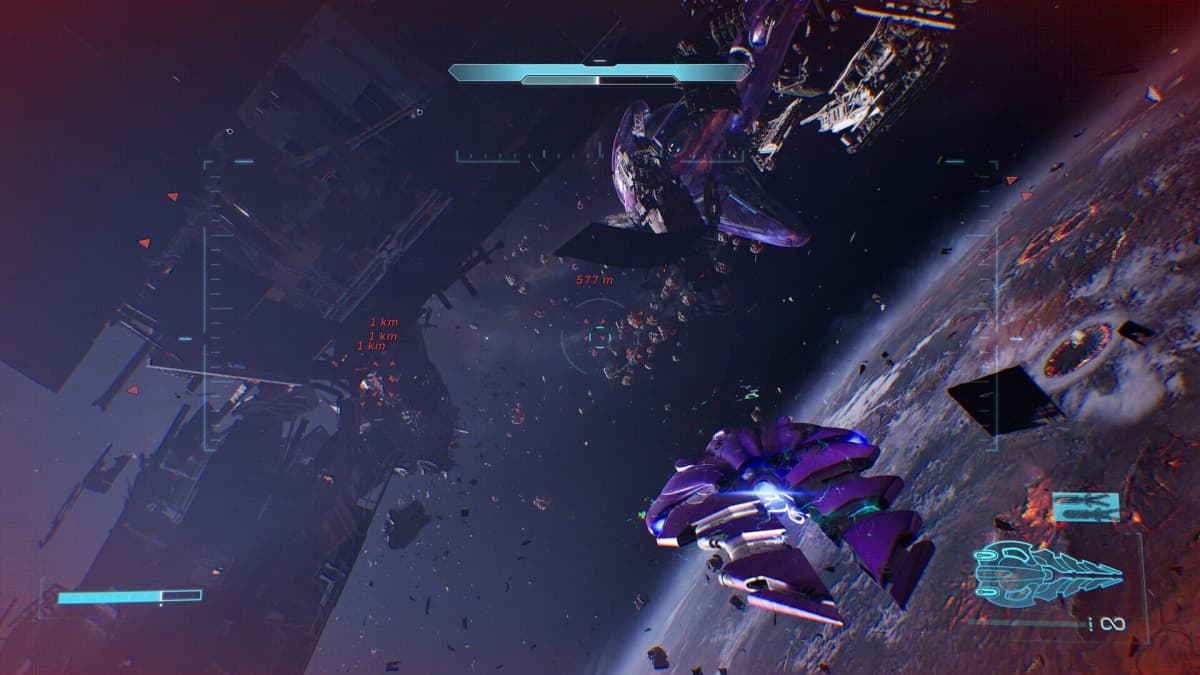
That is the continuity problem Microsoft has created. Halo Studios’ people know the community, the campaign expectations, the multiplayer scars, and the precise reasons every Halo Infinite update mattered. Activision’s new team may inherit documents, code, prototypes, and production tools. It cannot automatically inherit institutional memory. Microsoft has said nothing about which Halo Studios developers, if any, are joining the Activision team. It has not named the team’s leadership, location, size, or timeline.
A “purpose-built” team sounds impressive until you notice how much of the purpose remains unstated. Purpose-built by whom? Led by whom? Building what kind of Halo? Those are not minor details when Xbox is asking players to trust another reboot of its defining franchise.
The naming change from 343 Industries to Halo Studios now reads less like a confident new era and more like a brief stop on the way to a larger corporate reroute. That may be unfair to the developers who had to live through it. It is still how the move looks from the outside. If the studio that was supposed to embody Halo’s future is now primarily maintaining what already exists, then the symbolic demotion is as important as the organizational one.
Activision brings production muscle, not automatic understanding
There is a legitimate upside here, and pretending otherwise would be lazy. Activision knows how to marshal large shooter productions. It has the scale, technical infrastructure, publishing discipline, and staffing capacity that a major Halo project requires. Microsoft explicitly separated this new team from existing Call of Duty work, which matters. The best version of this move gives Halo a dedicated staff rather than treating it as another obligation piled onto a studio already carrying an enormous annual workload.
If Xbox gives that team time, a clear mandate, and protection from frantic internal reshuffling, Activision could solve the one problem Halo has been unable to escape: production confidence. A new game needs to arrive with enough content, enough polish, and enough conviction that players are not left waiting for the version that should have existed at launch. That standard should be non-negotiable.
Still, efficiency is not identity. Halo should never become a generic military-shooter operation with a famous helmet attached to it. Its combat works because of space, speed, readable encounters, weird weapons, vehicle chaos, and a tone that can pivot from lonely science-fiction ruins to gleeful sandbox nonsense without feeling embarrassed by either. A franchise this old survives by preserving its specific texture, not by chasing the broadest possible engagement model.
That is why Rob Kostich and the executives overseeing Activision have a harder job than “make the biggest Halo ever.” Bigger has never been Halo’s missing ingredient. The franchise needs a team willing to make sharp choices: campaign first or multiplayer first, sequel or genuine reboot, long-term platform or self-contained release, nostalgia or discovery. A purpose-built team without those answers is only a new logo on an old uncertainty.
And there is a subtler danger here. Activision’s strength is repeatable large-scale execution. That is not a flaw. It is exactly why Microsoft made this move. But Halo is not supposed to feel like a product line optimized into submission. Its best moments are slightly awkward, slightly eerie, and often willing to let silence do as much work as spectacle. If the handoff produces smoother pipelines but flatter instincts, Xbox will have fixed the schedule and damaged the soul.
Halo: Campaign Evolved has become the franchise’s public test case
Halo: Campaign Evolved now carries an unfair amount of symbolic weight. It is the named Halo project players can actually point to while the next mainline game disappears behind Activision’s closed door. Positioned as a remake of Halo: Combat Evolved, it also marks a historic platform shift: Xbox Series X|S, Xbox on PC, Steam, and PlayStation 5. A first-party Halo release on PlayStation is not a footnote. It is a strategic break with the series’ old identity as an Xbox-only crown jewel.
I have no problem with Halo reaching PlayStation players. More people getting access to a great campaign is good for the franchise, full stop. Platform expansion does not weaken Halo. A confused strategy weakens Halo. Microsoft cannot treat a PlayStation launch as proof that it has solved the franchise’s future while refusing to explain who is responsible for that future.
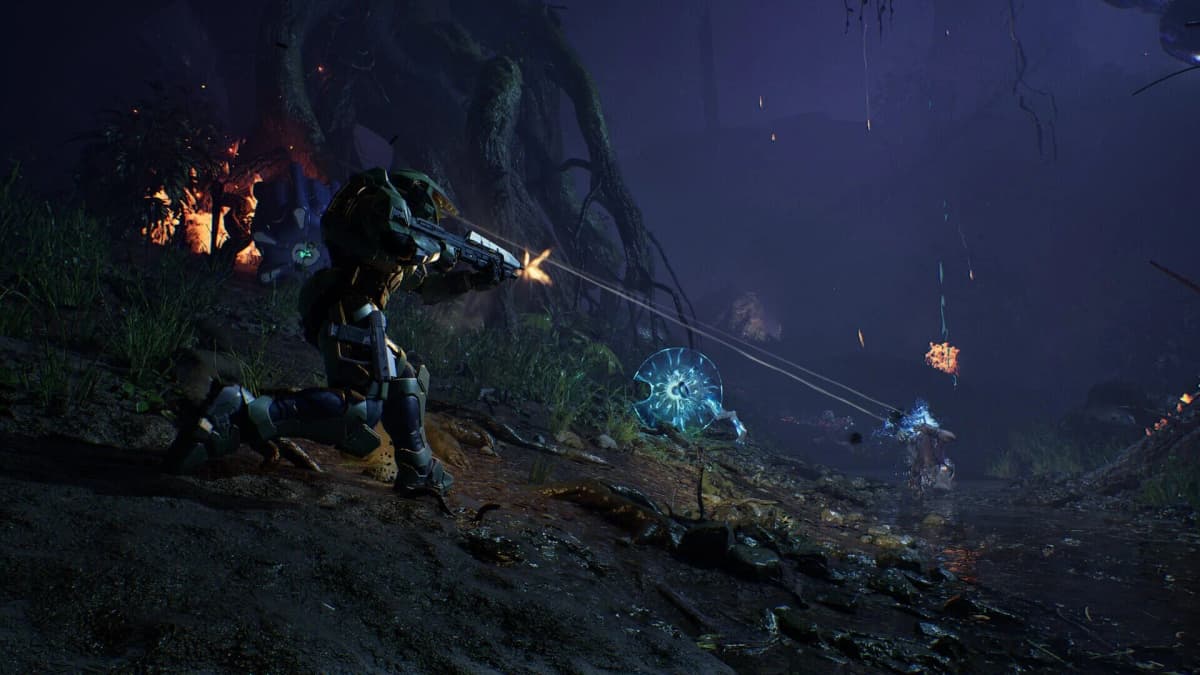
On the narrow question of Campaign Evolved itself, the public release plan was clearer than the wider franchise messaging. The game launched on July 28, 2026, with early access beginning July 23 for Premium Edition and Collector’s Edition owners. It was also positioned for day-one access through Game Pass Ultimate and PC Game Pass. In other words, the basic storefront facts were there. The deeper confusion sits elsewhere: how this remake fits into the series’ larger direction after Xbox shifted future Halo leadership to Activision.
That distinction matters. Players can understand a release date, an early-access window, and a platform list. What they cannot understand is why one arm of Xbox is asking them to celebrate a glossy remake while another arm is quietly rebuilding the franchise command structure behind it. Campaign Evolved has therefore become more than a product. It is now a stress test for whether Microsoft can present a coherent Halo strategy at all.
The game’s role is symbolic in another way too. Because it looks backward to the original Halo, it invites the most dangerous kind of nostalgia: the kind that can be sold as confidence even when the present tense is still shaky. Remaking Combat Evolved may be smart. It may even be necessary as a reintroduction for PlayStation players and newer audiences. But if it becomes a substitute for answering what the next new Halo is supposed to be, then Microsoft is using the series’ origin story as cover for its unfinished future.
Halo Fest cannot substitute for a roadmap
Halo Fest is still set for Seattle from December 11 to 13, 2026, with a concert at Benaroya Hall on the 11th and convention programming at the Seattle Convention Center’s Summit Building on December 12 and 13. The event surviving the restructuring is good news for the community. Fans deserve the anniversary celebration, the panels, and the chance to gather around a series that has shaped two and a half decades of Xbox history.
But the event calendar is not a development roadmap. “Surprises” do not answer whether Activision’s team is making a sequel, a reboot, another remake, or something completely different. They do not explain whether work from Halo Studios survived the reset. They do not tell players whether Campaign Evolved stands alone or begins a larger plan.
Microsoft needs to resist the temptation to use a big anniversary weekend as a fog machine. Halo Fest should celebrate the people who kept the franchise alive through every messy transition. It should not ask them to applaud a future they have not been allowed to see.
That does not mean the event is meaningless. Community events matter, especially for a series with a fan base old enough to remember LAN cables, system link weekends, and the years when a new Halo release could bend the entire shooter market around it. But community goodwill is not infinite, and nostalgia is not governance. If Halo Fest offers warmth, remembrance, and maybe a nice surprise, great. If it is forced to carry the burden of strategic reassurance, it will expose exactly how little Microsoft has explained.
Xbox has bought itself time, not trust
The Activision move may save Halo from years of drift. That is the optimistic case, and it is plausible. A dedicated team with real resources could finally deliver a Halo game that feels finished, focused, and confident on day one. I want that outcome badly, because the series deserves more than endless structural reinventions.
But Xbox does not get trust for moving boxes around and calling it a reset. It earns trust by naming the creative leadership, defining the next game’s direction, protecting the remaining Halo Studios staff doing vital support work, and explaining how the post-Campaign Evolved roadmap is supposed to function across Xbox, PC, and PlayStation 5. Campaign Evolved had a public launch plan. What the audience still lacks is a public explanation of the franchise plan around it.
Until that happens, Activision taking over Halo is not a triumphant revival. It is a high-stakes admission that Microsoft’s old plan failed, followed by a promise that the new one will eventually be explained.
FinalBoss // Gear
Level up your setup
01Best-selling Xbox Series X|S gameson Amazon→02Xbox controllerson Amazon→03Top-rated gaming headsetson Amazon→04Discounted game keyson Kinguin→Affiliate links · As an Amazon Associate, FinalBoss earns from qualifying purchases.
Want to Level Up Your Gaming?
Get access to exclusive strategies, hidden tips, and pro-level insights that we don't share publicly.
Ultimate Gaming Strategy Guide + Weekly Pro Tips