
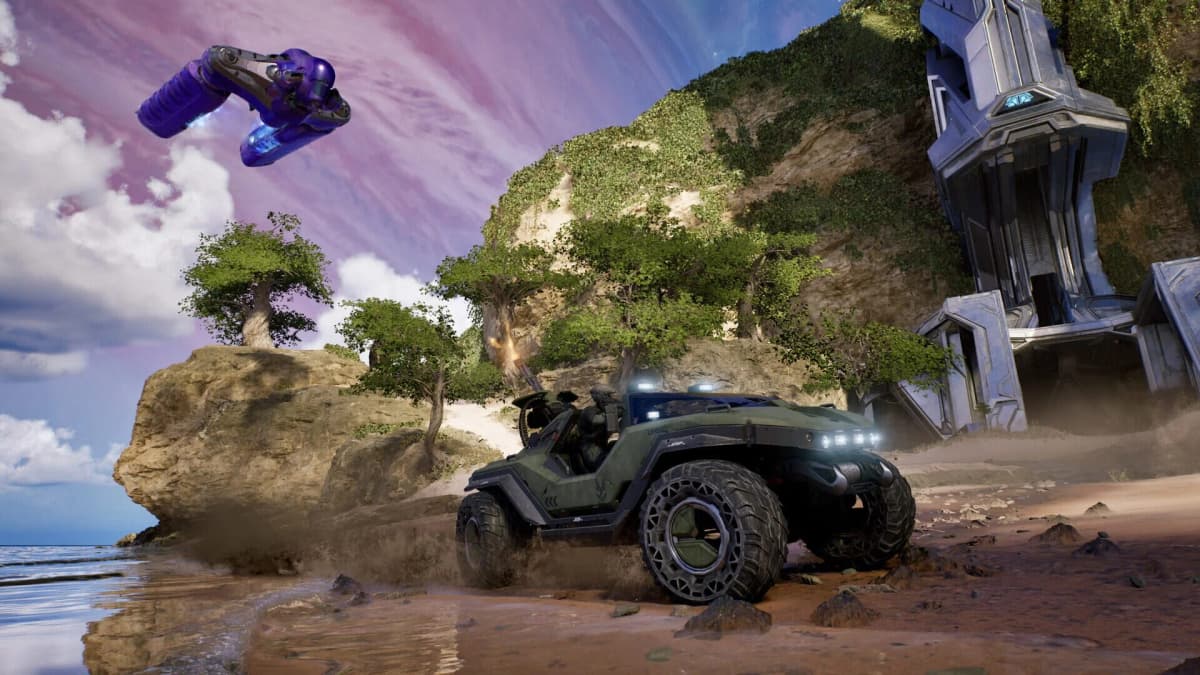
Understand what this project is before you argue about the score. Halo Studios walked away from Blam! and Slipspace, the engines every previous Halo was built on, and rebuilt Combat Evolved in Unreal Engine 5 as the asset pipeline and proof of concept for everything they ship next. That’s why a 25-year-old campaign is being sold to you again at $50 with no PvP attached, and it’s fair to be annoyed about it. It is also, awkwardly, the best this campaign has ever looked and the best it has ever flowed.
Table of Contents (6)
What Unreal Engine 5 Actually Bought
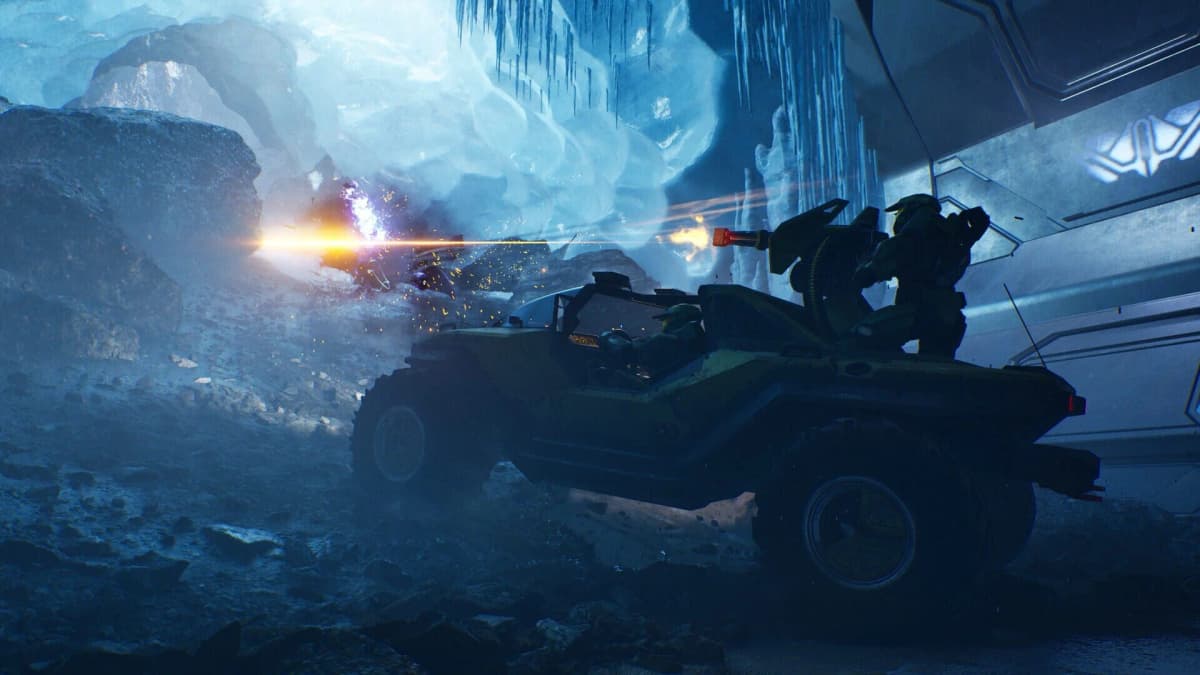
Start with the opening corridor of the Pillar of Autumn, because it settles the Anniversary comparison in ten seconds. Anniversary lit that hallway like a supermarket. Campaign Evolved runs it on emergency lighting, dark and red and low, and it finally feels like a ship being boarded. The crewman’s console throws light across his face. The light bridge on the second mission is an emissive surface projecting up under the Warthog’s chassis. The grav lift to the Covenant cruiser casts real light across the ground, and the ride up into the ship is seamless now instead of a cutscene cut.
Technically this is hardware Lumen ray tracing on every platform plus Megalights — one of the first big shipping titles to use it — which means an absurd number of dynamic lights in one scene without the whole thing falling over. It fixes the rendering complaints that dogged Halo Infinite: indirectly lit scenes no longer get flat-tinted blue, big structures actually occlude what’s under them, and enemies sit in the lighting instead of glowing on top of it. The 343 Guilty Spark swamp is the showcase — snarled trees, dark water with real ripple and reflection, the best that area has ever looked.
The Readability Fight, and Where I Land
We’ve run both sides of this split on the site, so here’s mine: the Unreal Engine 5 overhaul does not hurt combat readability. The post-processing and the HUD do, and both are things Halo Studios could have put a toggle on and chose not to.
Chromatic aberration and film grain are forced on at all times, on console and on PC, with no option to disable either. Layer that over the temporal upscaling every Unreal Engine 5 game needs to hit a decent resolution and you get a soft, faintly boiling image. The PS5 Pro build running PSSR2 is the cleanest console version by a clear margin for exactly that reason. But note what that is: an image-quality problem you could point a slider at, not a lighting or art problem. Silhouettes still read, plasma still reads, and you always know which Elite is shielded and where the fire is coming from.
The HUD is the worse offender and it isn’t the engine’s fault at all. Combat Evolved put everything in three corners. Campaign Evolved uses all four plus the top centre, dedicates a panel to your grenade count, shows you pictures of the two guns you’re already holding, and draws a floating marker over every weapon on the ground — so a room with a plasma pistol, a plasma rifle and a needler has three tags bobbing in your sightline for no reason. Then there are objective markers over enemy heads, which is how the brig on Truth and Reconciliation now works: Keyes warns you the Covenant are running stealth armour, and you find the invisible Elites by reading the giant red diamonds above their heads. That’s a designed moment deleted by a UI setting. On art direction I’ll split the difference — the exteriors are superb, but Covenant interiors have gone uniformly wet-purple, like the cruiser was shrink-wrapped and power-washed before you arrived, and the Forerunner metal is spit-shined until every surface mirrors light instead of holding it.
The Library Is the Single Best Thing Here
The Library, the level everyone skipped, has been rebuilt from scratch. The direction is inverted: instead of grinding up the tower for half an hour, you start at the top and work down, and the Flood’s corruption thickens on the walls and ceilings the deeper you go until pustules are clogging the hallways. The recycled three-or-four-room geometry is gone in favour of areas with distinct layouts, the flat elevator platforms have been redesigned along the lines of Halo 2’s, there are new light-bridge switch puzzles, and there are mini-boss encounters the original had no equivalent for.
The sandbox undercuts it. The Flood leap less and close slower, and Chief can now sprint — a good change nearly everywhere else in the game and a disastrous one against enemies whose whole threat model was that you couldn’t get away. The rest of the campaign quietly benefits from the layout passes: connecting tunnels shortened, and the back half of Truth and Reconciliation, where you rescue Keyes, redesigned with fewer repeated corridors.
The Sandbox Is Where the Points Actually Go
Two changes rebalance the entire game and neither is good. The assault rifle can now aim down sights and it’s accurate at long range, even with a reduced magazine. The opening beach on the Silent Cartographer used to force the magnum into your hands because the AR was useless past thirty metres; now you hold the AR the whole level. The battle rifle was burst-fire for a reason — that was the tax on reach — and the AR pays no tax at all. Second, health packs are gone in favour of fully recharging health, which removes the running cost of a bad push. Add sprint and you get a Halo about throughput rather than positioning.
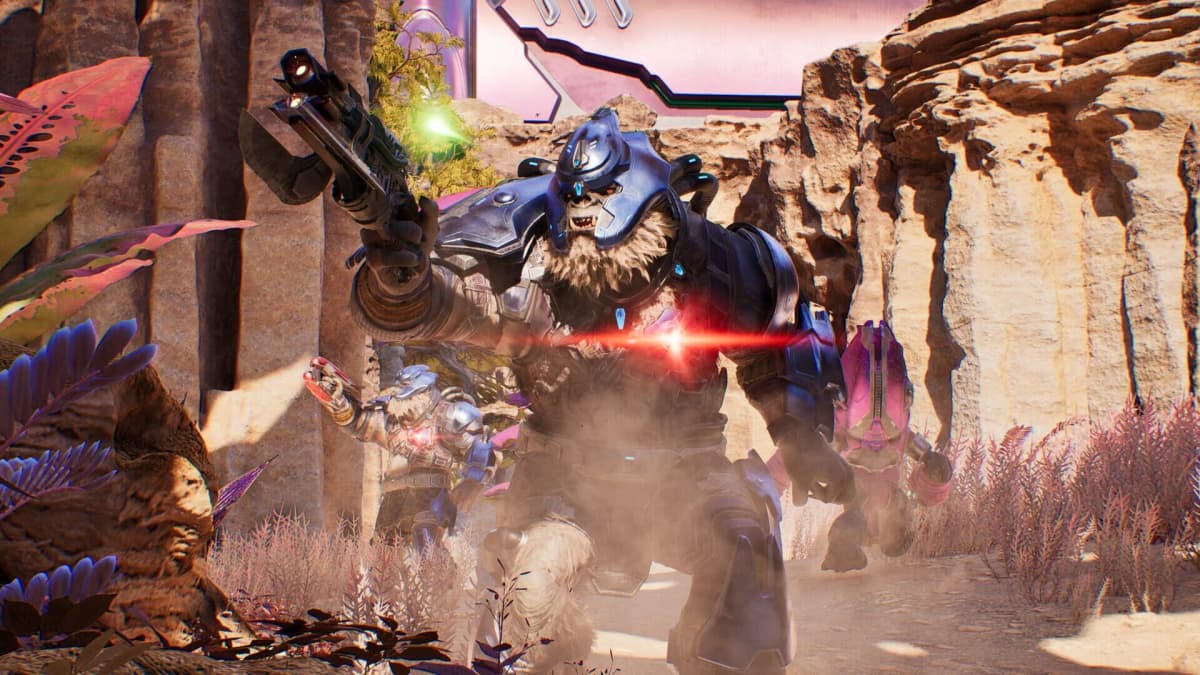
Enemy AI compounds it. The Elites sidestep less, reposition less aggressively and place grenades less well, and higher difficulties compensate by putting more of them in front of you rather than making each one deadlier — boot the Anniversary version of the cafeteria Elite on the Autumn straight afterwards and the gap is unflattering. The one straight upgrade is the Hunters: they guard their front properly now and it’s much harder to bait them into the old matador charge. Vehicle hijacking is new to CE and it’s good, the SMG and a few other later-game weapons are in the mix, and the Warthog is heavier, less bouncy and less prone to the stupid physics moments that made it fun.
Operation: Meteorite Is the Weakest Halo Here
The three prequel missions are the only genuinely new content and they’re the part I’d cut. Chief and Sergeant Johnson board a Covenant capital ship to pull intel pointing at the Covenant homeworld, and all three blur into one long reheated Truth and Reconciliation. The art team’s idea for differentiating the interiors was to make some rooms white instead of purple, with no transition and no explanation — walk through a door and it’s purple again.
The writing is the real damage. Chief and Johnson trade easy buddy-cop banter — “you’re always hungry”, “just going to hurt my feelings, huh” — and then in the main campaign, which happens after this, Johnson meets Chief on the ring and calls him sir. Chief barely speaks in Combat Evolved; the reticence is the character. There’s a Prophet who introduces the Unggoy, the Kig-Yar and the Sangheili one at a time like a boxing announcer while Chief and Johnson stand there not shooting anyone. Halo Studios wrote these from nothing, which makes them the clearest signal we have about the next Halo. Meanwhile CE was scoped at 25 missions with content cut for the ship date, and none of it was restored.
The Mix, the Cutscenes and the Crash Log
The audio is where Halo Studios simply made a mistake. The remade pistol is punchy and the swamp ambience beats the original’s, but the assault rifle now sounds like a generic machine gun, the sniper rifle is a flat downgrade, and Guilty Spark is mixed so low during the Library that you read subtitles mid-fight. Worst of all, the music sits behind everything — the first time the percussive Halo theme comes in, the moment the franchise is built on, you can barely hear it. Cutscenes are pre-rendered video rather than realtime, which costs quality everywhere and stutters outright on Xbox Series X, and the direction is slack: the Guilty Spark exchange at the end of the Library uses the same dialogue as the original and runs twice as long because nobody cut the pauses. Johnson’s original voice, David Scully, has retired; the replacement is fine, the writing around him isn’t. Cortana looks different and is played airier and more human from her first scene, pre-spending development she’s meant to earn across the next two games.
Four-player campaign co-op is the format this is built for, and a Legendary run with a competent squad lands around five hours — though couch co-op requires each player to have their own Microsoft account, and launch-week stability was rough enough that crashes and disconnects added an hour to that run. That’s patchable. The mix, the HUD and the missing multiplayer are not.
It stays at 8.5 because everything I’ve docked it for sits at the edges, while the middle is still one of the best campaigns ever built, in its best-looking and best-flowing form yet.
Halo: Campaign Evolved
The engine move worked. Hardware Lumen and Megalights give the ring the weight it never had, the Library has been rebuilt into an actual level with mini-bosses and light-bridge switches, and moving Chief around has never felt this good. What holds it back is a sandbox pass nobody asked for — an assault rifle with a scope, no health packs, Elites that stand still — plus a HUD and a set of forced post-processing effects that Halo Studios simply refused to let you turn off.
- Hardware Lumen and Megalights on every platform
- The Library rebuilt top-down into a real level
- Sprint and hijacking without breaking CE’s tempo
- Four-player co-op, about five hours on Legendary
- Emergency-lit Autumn, the swamp, the grav lift
- Chromatic aberration and film grain forced on everywhere
- Objective markers hovering over invisible Elites’ heads
- ADS assault rifle wrecks the weapon sandbox
- Elites neutered; difficulty is just more of them
- Operation: Meteorite writes Chief and Johnson wrong
Buy it for the campaign and the co-op. Skip Operation: Meteorite entirely. And if Halo Studios is listening: patch in a slider for the film grain, and get the music back in the mix where it belongs.
FinalBoss // Gear
Level up your setup
01Best-selling Xbox Series X|S gameson Amazon→02Xbox controllerson Amazon→03Top-rated gaming headsetson Amazon→04Discounted game keyson Kinguin→
Affiliate links · As an Amazon Associate, FinalBoss earns from qualifying purchases.
Want to Level Up Your Gaming?
Get access to exclusive strategies, hidden tips, and pro-level insights that we don't share publicly.
Ultimate Reviews Strategy Guide + Weekly Pro Tips