
Table of Contents (6)
A digital manual is not a neutral bonus
A digital manual sits in an awkward category. It can be a nostalgia item, a reference document, an onboarding tool, or some mixture of all three. That ambiguity matters, because publishers love ambiguous extras. They let marketing present something as a charming throwback while edition design quietly treats it as leverage. That is why the backlash around Halo: Campaign Evolved has landed harder than the usual argument over skins, early access, or a branded steelbook.
The recent reporting is straightforward on the core point even if some price details vary across outlets. Multiple reports say Halo: Campaign Evolved keeps its digital game manual out of the Standard Edition and reserves it for the Premium and Collector’s Editions. GamesRadar’s quoted description is the key detail: this is framed as a “modern homage” that includes updated gameplay information, controls, and lore. Once those words are attached to it, the manual stops being a cute collectible in PDF form and starts looking like functional support material.
That distinction is the whole case. If this were simply a scan of the old 2001 booklet, tucked into a premium bundle for nostalgia addicts, I would not care very much. Collector bait is collector bait. But a document with updated controls and gameplay information is not decorative. It has use value during play. It helps the person who bought the actual game understand the actual game. Putting that behind a more expensive edition is not catastrophic, but it is still bullshit.
Why this Halo case triggered more irritation than normal
Part of the anger comes from timing and packaging. Premium editions have been trained into the market so aggressively that many players already expect the usual stack of extras: five days of early access, a digital art book, some cosmetics, maybe a short story. Annoying, yes, but familiar. The manual lands differently because it belongs to an older idea of what shipped with a game in the first place. It is not perceived as an indulgence. It is perceived as something that used to be basic.
That memory matters even for people who no longer sit down and read manuals cover to cover. Old manuals did three jobs. They explained systems before the game had to. They gave texture to the fiction. And they covered the little gaps in understanding that interfaces often left behind. Modern games mostly replaced that function with in-game codex pages, tutorial pop-ups, wiki dependence, and YouTube cleanup crews. So when a publisher brings back the manual format and then says only premium buyers get it, players recognize the move immediately. A piece of orientation is being reclassified as a luxury good.
The other reason the backlash stuck is simple economics. Recent reports broadly agree that the Premium tier sits about $20 above the Standard Edition, even if exact listed prices have not been presented consistently across every outlet. That price jump is doing heavy work. A lot of buyers will look at the Premium bundle and see early access as the main practical benefit, with the manual acting as filler that helps justify the upsell. In other words, the manual is not merely locked away; it is being used to make the paid tier look more substantial than it otherwise would.
That is a small decision with a very recognizable smell. Publishers are always hunting for low-cost digital items that can pad premium packages without creating meaningful new content. A manual is perfect for that strategy. It is cheap to distribute, easy to market as nostalgic, and vague enough that some people will dismiss criticism as overreaction. From a packaging perspective, it is efficient. From a player-respect perspective, it is grubby.
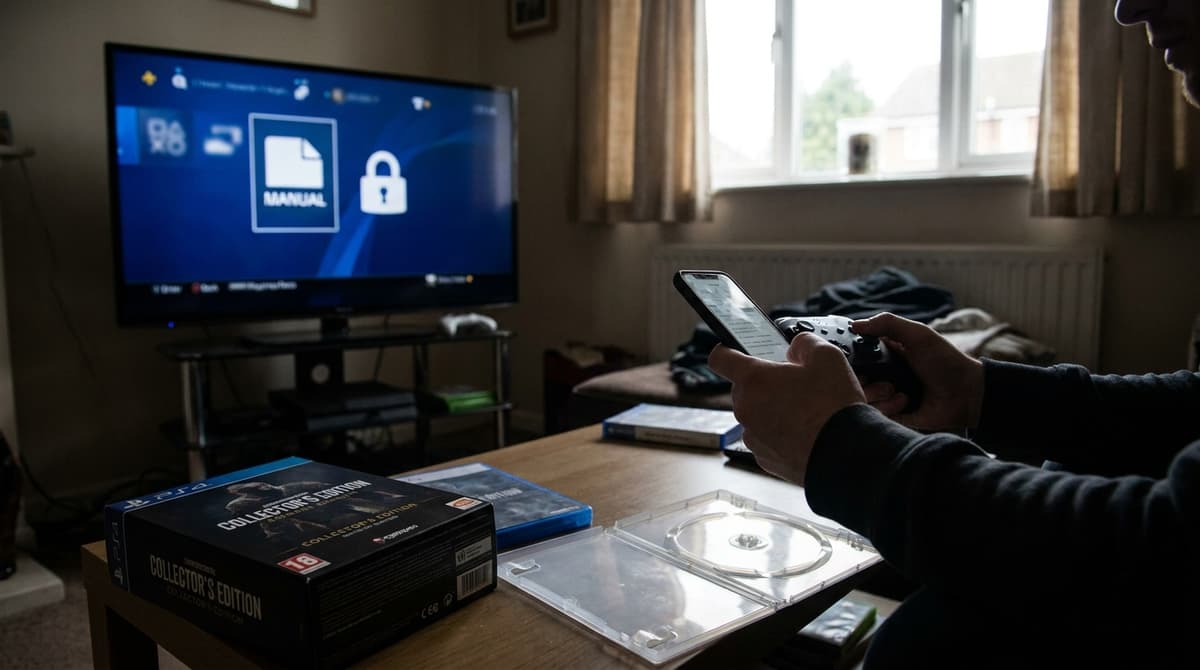
What a manual actually controls for the player
The least serious response to this story is that nobody needs a manual in 2026. Strictly speaking, that is true in the same way it is true that nobody needs subtitles until they do, or a glossary until a game’s terminology gets messy, or a clean weapon stat page until the sandbox becomes opaque. A lot of game support material only becomes visible when the game itself fails to communicate cleanly. Its value is situational, but still real.
A manual controls clarity. It tells players what the rules are before trial and error wastes their time. It controls onboarding. It gives a clean reference point for controls, mechanics, and system expectations outside the heat of a mission. It controls context. Lore in a manual is not trivial fluff when it frames factions, technology, combat language, or the stakes of the setting. And in games with build choices, loadout decisions, or mission structure, that kind of documentation can influence how someone approaches the experience from the very first hour.
Halo is not the most system-dense series on the market, but that is not the point. The principle still applies. If the publisher says the document contains updated gameplay information and controls, then Standard Edition buyers are being denied a sanctioned reference document about the game they purchased. They can still play, obviously. They can learn by doing, search online, or watch a creator explain it. But that misses the player-facing consequence. Official guidance has been converted into a premium perk. The burden shifts outward from the product to the community, and that is a very familiar modern pattern.
I do not miss manuals because of paper smell or childhood ritual. I miss them because they did a job, and too many modern releases pretend that job can be replaced entirely by a mess of pop-ups, half-finished menus, and external community labor. If a publisher wants credit for reviving the manual, then the publisher also inherits the responsibility that came with it. You do not get to present the manual as part of the authentic game experience and then sell that authenticity back only to the people who paid above base price.
The “it’s only a bonus” defense does not hold up
There is a reasonable counterpoint here, and it is worth stating cleanly. A manual is not the executable game. The campaign will still be playable. Nobody is being locked out of missions, multiplayer maps, or core mechanics. If a premium buyer gets a nicer wrapper around the same underlying game, some people will say that is exactly what premium editions are for. In the abstract, that argument works.
It stops working when the wrapper contains substantive explanatory material. The line is not whether the thing is technically optional. Almost everything outside the executable is technically optional. The line is whether the gated content helps a normal player understand, navigate, or contextualize the shipped experience. A soundtrack does not. A statue does not. A skin does not. An updated manual covering controls and gameplay does.
This is why the reporting has split into two tonal camps. One camp treats the manual as a quirky extra and views the backlash as overblown. The other treats it as a minor consumer-rights issue because manuals historically belonged to the functional side of packaging, not the luxury side. I am firmly in the second camp. Not because this is the crime of the century, but because small edition-design decisions teach publishers what they can get away with. When players shrug at utility being tiered off, the next line moves.
And that line has been moving for years. Early access was normalized as a paid advantage over patience. Mission packs became preorder bait. Cosmetics turned into status markers for spending rather than play. None of those practices killed games on their own. What they did do was redefine the Standard Edition as the version that is complete only in the most legalistic sense. It runs. It contains the campaign. Therefore it is complete. That definition is far too thin, and publishers know it.
What this says about premium editions more broadly
The ugliest trick in modern edition design is not locking away major content. That causes immediate revolt. The more effective trick is slicing away small pieces of comfort, clarity, and texture that seem too minor to fight over individually. Each one can be defended as a bonus. Taken together, they create a familiar pressure: buy the nicer package or accept the intentionally thinner one.
A digital manual fits that model perfectly. It is cheap to create relative to major content. It looks harmless. It activates nostalgia. It gives premium buyers one more item to point at when explaining the price jump to themselves. And because it is not a mission or weapon, defenders can act as if the controversy is absurd. That is why this case matters more than the object itself. The manual is small. The logic behind the gate is not.
I am not against premium editions in principle. If someone wants to spend extra on a statue, a physical art book, or a fancy box, fine. That is what collector culture is for. The problem begins when premium editions start absorbing basic support functions and selling them back as deluxe flavor. The standard rule should be boring and strict: if a piece of content explains the game, contextualizes the game, or materially helps the average player use the game, it belongs with the standard purchase.
The only useful buy-check in cases like this
Players do not need a sermon every time a publisher invents a new edition perk. They need a filter. This one is simple enough to apply across almost any release.
- If the gated item is archival or decorative, treat it as collector material and decide based on personal taste.
- If it contains updated controls, system explanations, lore framing, or strategy value during active play, it should be considered standard support material.
- If the premium package leads with early access and then pads the rest with low-cost digital extras, assume the bundle is designed more to create friction than to deliver real additional value.
- If the publisher’s description is vague enough that you cannot tell whether the item is functional or ornamental, treat that vagueness as intentional and wait.
Applied to Halo: Campaign Evolved, that filter leads to a pretty blunt result. The collector’s physical manual is fine as a premium keepsake. The premium-only digital manual is where the package crosses the line. The publisher’s own description pushes it over that line by highlighting updated gameplay information, controls, and lore. Those are not luxury features. Those are support features wearing a nostalgia costume.
The most irritating part of the whole thing is how avoidable it was. Put the digital manual in every edition and let premium buyers have the physical version, the art book, the early access, and the rest of the usual bundle clutter. Nobody would have cared. By gating the digital manual instead, the product team turned a harmless homage into a trust problem. That is why the backlash feels proportionate to me. It is not outrage over a PDF. It is resistance to the slow, tedious process of teaching players that even the instructions are now tiered.
FinalBoss // Gear
Level up your setup
01Best-selling Xbox Series X|S gameson Amazon→02Xbox controllerson Amazon→03Top-rated gaming headsetson Amazon→04Discounted game keyson Kinguin→
Affiliate links · As an Amazon Associate, FinalBoss earns from qualifying purchases.
Want to Level Up Your Gaming?
Get access to exclusive strategies, hidden tips, and pro-level insights that we don't share publicly.
Ultimate Gaming Strategy Guide + Weekly Pro Tips