
Table of Contents (13)
Double Dragon: Revive – Eight Hours of Punch-Drunk Love and Old-School Friction
I jumped into Double Dragon: Revive on PS5 with a weird cocktail of hype and dread. Hype because I grew up on belt scrollers-my muscle memory still thinks Streets of Rage 4 is a fitness plan-and dread because the trailers made the art look like… a mismatch. After eight hours, a couple of full runs, some doomed boss retries, and a lot of improvised interior design via thrown thugs and broken windows, I’ve got a clear picture: this is a revival that hits hard and handles heavy, with a mean difficulty streak and a look that never fully gels. And yeah, co-op was unavailable during my review window, which stings for a series that practically invented the buddy beatdown.
My First 90 Minutes: The Art Put Me Off, the Hits Pulled Me Back
My first session was all side-eye at the visuals. The move to 3D character models just doesn’t vibe with Double Dragon’s gritty, ’80s alleyway swagger. The faces feel plastic, the proportions a bit toy-like. Cutscenes are static, anime-inspired panels with full voiceover-nice in theory, but they lack life and staging. It’s not technically ugly, just off-tone, like someone switched the channel mid-fight. If you’ve played River City Girls 2, the brothers felt more at home there than they do here.
Then I punched someone into a fridge and the door slammed shut, instantly killing them, and I stopped caring for a bit. That’s the pattern of Revive: aesthetics say “eh,” combat says “one more run.” The soundtrack helps too. It modernizes classic tracks without butchering them—cleaner synths, heavier drums, and enough melody to tickle memory. By the end of night one, I was humming while menuing and forgetting how much the characters still looked like action figures.
The Combat Is Deliberately Heavy—You Either Settle Into It or Bounce Off
By hour two I realized the weight wasn’t latency; it’s intent. Movement has inertia. Attacks come out with meaty startup and satisfying thud. If you’re coming from the razor precision of Shredder’s Revenge or SOR4, Revive feels like fighting in a leather jacket. You can still dodge and adjust spacing, but the game wants you to commit. After a while, I started timing knockdowns instead of fishing for frame-perfect interrupts, and that’s when the fights clicked.
Not everything about the feel is romantic old-school grit, though. Wake-up frames are a mess. There’s no real invincibility on stand-up (and I never found a quick rise), so bosses and mobs can keep pressure up in ways that read as cheap. The pickup button sharing real estate with the grab is aggravating too. Standing over a bat and mashing to grab it, only to latch onto a goon and eat a counter? That happened a lot. Angling on the Z-axis is also finicky. You know that “am I one pixel too high?” dance? It’s here, and it’s not shy.
Environmental Kills Are the Secret Sauce
The environmental interactions are the reason I kept grinning. They’re not just gimmicks; they’re central to the rhythm. Kick a paint bucket to blind a cluster. Punt a flour sack so a heavy swings wild while choking. Vault a railing and dropkick a guy into a plate-glass window. The basketball hoop finisher is as stupid and joyous as it sounds. I had a moment in stage three where I strung together a knockdown, a hop over a waist-high fence, and a flying knee that angled a boss into a vending machine—instant kill, controller flying into the couch.
It’s not perfectly executed. Some stages scatter interactive props like confetti and others forget them altogether, or park them in weird spots without enemy flow. A few rooms screamed for a throwable barrel that never showed up. But when it aligns—the enemy waves, the props, your position—Revive feels closer to physics-driven mayhem than most beat’em ups dare to try. It rewards spatial awareness as much as combo routing, and that’s an identity the series has always flirted with.
Four Playable Characters: Two Brothers, Two Wildcards
Across my runs, I rotated through the four characters. Billy and Jimmy are the bread and butter: similar reach, similar kit, classic strikes that string together in predictable, dependable ways. It’s almost too close. Swapping between them feels more like flavor text than a distinct tactical choice, though their specials do diverge just enough to matter for boss control.

The two additional fighters are the real spice. One leans grappler—chunky grabs, satisfying slams, a whiff of risk-reward when you commit to close range. The other skews nimble, with faster strings that make crowd control easier but environmental setups trickier. In rooms where the instant-kill hazards line up, the grappler sings. In tight corridors with waves spawning on both sides, the speedster saved my hide. The downside is that the environmental interactions sometimes seem tuned around the brothers’ knockback values; a couple of times I sent a baddie sailing past a hazard because my fighter’s launch angle was different.
Little touch I appreciated: the pause menu’s move list is clear and accessible, and the feedback on impact—camera shake, subtle rumble—sells the weight without straying into parody. I do wish there was a training room or at least a spawn dummy somewhere to practice environmental setups. Learning spacing mid-run is fun chaos, but it also feeds frustrating deaths when the game’s wake-up rules are so unforgiving.
Level Design: Familiar Lanes With Just Enough Detours
Stage design does the usual beat’em up tour—alleys, bars, rooftops, factories—but injects enough variation to stay fresh on a single run. The problem isn’t sameness; it’s missed opportunities. When Revive leans into its toybox—multi-floor rooms, trap funnels, timed spawns that push enemies toward kill-zones—it’s excellent. Too often, it stops one iteration short. A scaffolding level late-game features small platforming segments—jumps between beams, gaps over moving belts—that are a slog with the game’s heavy movement. I survived them, but not because they were fun. If you’re going to bring platforming back from the early days, you have to tailor the jump arc and acceleration to fit. Here, it’s serviceable at best.
There’s also a bizarre pattern of placing grab points and vault spots in corners nobody actually fights in. On two separate runs, I cleared waves near the center only to notice, after the dust settled, a shiny “vault here” prompt glowing in a dead zone by a pillar. Feels like someone built the room and someone else placed the props without running a pass for enemy pathing.
The Difficulty Curve Is a Set of Spikes, Not a Slope
I played on Normal for my first two runs and tried a slice of Hard to check the vibe. Even on Normal, the game has mean peaks. Regular mobs are fine once you accept the weight and learn to bait hits into environmental shoves. Bosses? That’s where my blood pressure rose. One early boss toggles between armored charges and summoning goons, which is standard beat’em up fare, but combine that with no invincibility on wake-up and the occasional input drop—attack animations starting without actually tracking a target—and you get deaths that feel cheap. I had several “I didn’t lose that fight, the rules did” moments.
To be fair, with enough runs you learn the jank and mitigate it. I started saving my crowd-control special specifically for get-up pressure, even if it meant longer fights. I also developed a bad habit of kiting bosses toward windows and vending machines, because environmental kills bypass a lot of nonsense. There’s fun to be had in that adaptation—figuring out what the game wants versus what I want—but it’s a thin line between tough-love design and “hope you like eating wake-up knees.” Revive straddles it, wobbles, and occasionally falls on its face.

PS5 Performance, Controls, and Feel
On PS5, performance was mostly clean. The 60 fps target held during standard brawls, with minor dips when multiple particles filled the screen—flour clouds, paint splashes, glass shards—stacked on explosive props. Nothing fight-breaking. Loading between stages was snappy. I didn’t notice any screen tearing or hitching during transitions.
Controls are responsive within the game’s chosen heft. Input buffering is generous, which helps string combos but sometimes deepens the “I didn’t mean to grab” issue when you’re standing over a weapon. The DualSense haptics are tasteful—short, dense pulses on heavy hits, a longer rattle on environmental smashes. No gimmicky adaptive trigger stuff, which fits. Audio mixing could use a pass: certain enemy barks cut through the music a little too sharply, but the punch impact sounds are crunchy and clear, and the remixes deserve to be loud.
I dug around the options and found the usual comfort toggles—controller remap, vibration intensity, difficulty—but nothing that addresses wake-up invincibility or pickup/grab separation. A pickup priority toggle would go a long way here. Also, for a series about throwing people into things, a simple “snap to hazard” assist in accessibility settings could make this sing for more folks without dumbing anything down.
Modes and Replayability: Good Ideas, Rough Tuning
Beyond the main campaign, there’s a mode that strings fights together under special conditions—think gauntlet runs with modifiers. “No weapons,” “short timer,” “tougher elites”—you get the idea. On paper, it’s great. In practice, it inherits the same balance quirks. A time-limited room that also spawns armor heavies without a convenient hazard is more attrition than challenge, and the lack of a proper training space to lab setups makes it feel trial-and-error heavy. Still, swapping characters between these runs showed me new angles—literally—and revived a couple of rooms I’d gotten sick of.
Co-op would be a massive variable here, but I couldn’t test it. That’s a shame. Even with the game’s quirks, I can see two players turning those environmental toys into a playground, juggling enemies into windows while one kites the boss. Whether online or local, that’s the part of the Double Dragon fantasy I missed the most during this review period.
Stacking It Against Today’s Belt-Scroll Heavyweights
If Streets of Rage 4 is the gold standard of precision and cleanliness, and Shredder’s Revenge is the poster child for momentum and crowd flow, Double Dragon: Revive sits somewhere weirder: old-school heft married to modern environmental interactivity. When it works, it’s glorious and distinct. When it stumbles—art direction, wake-up rules, angle weirdness—it reminds you why the genre evolved the way it did.
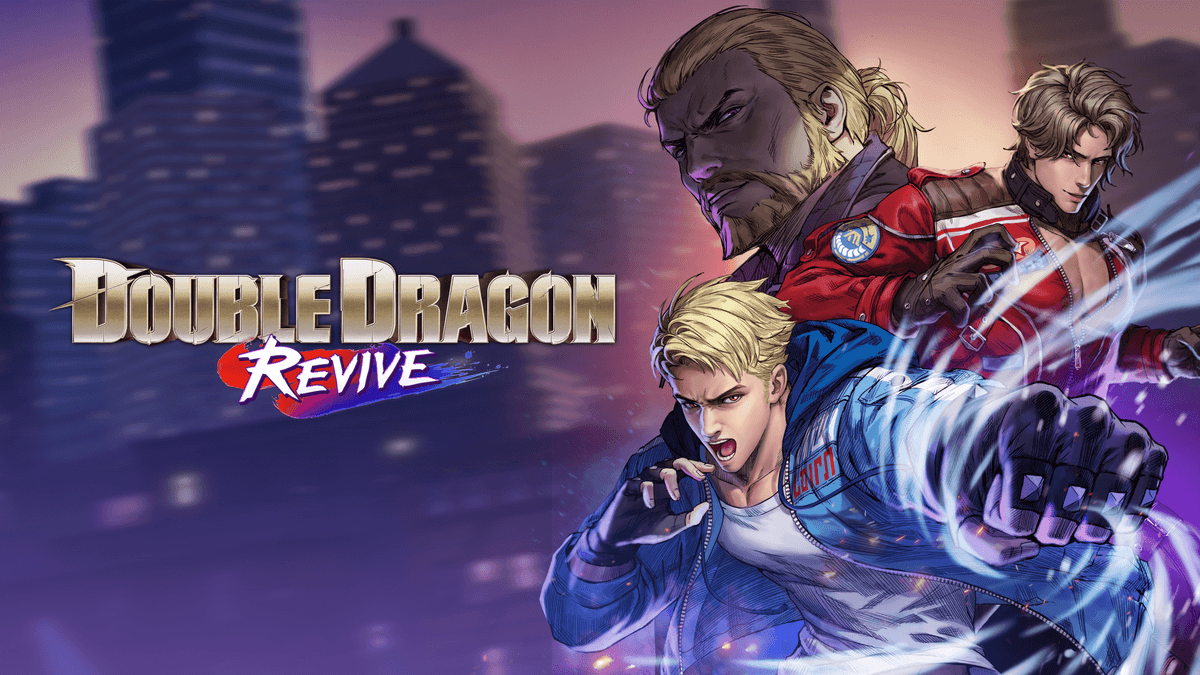
Comparing it to Double Dragon: Neon, this feels better in the hands—more grounded, less smirking—but also less visually cohesive. Compared to River City Girls 2, it lacks the attitude and animation polish but wins on the sheer joy of a well-placed environmental finisher. I don’t think Revive dethrones any of the modern kings, but it carves a scrappy lane worth visiting if you’re willing to wrestle with its temperament.
Who Should Play This (and Who Should Skip It)
- Play it if you love beat’em ups with weight and you get a kick out of using the room as a weapon.
- Play it if you’re patient with quirks and willing to learn a cranky ruleset to find the fun underneath.
- Maybe skip if you want pristine hitboxes, clean wake-up logic, and modern z-axis forgiveness.
- Skip for now if co-op is your make-or-break; I couldn’t test it, and solo difficulty spikes might sour you.
My Time With It: Moments I Can’t Shake
Three moments sold me on Revive’s potential. First, that early fight in a diner where I discovered that vault-dropkick combo into a fridge. The timing was tight; I felt like I’d cracked a secret that was sitting in plain sight. Second, a late-game factory boss who kept stun-locking me on wake-up—rage fuel—until I realized I could spawn-add bait him into a conveyor trip and slide him under a laser. Third, a challenge room with a 60-second timer that I failed twice and then beat by changing characters, rushing a paint bucket to the center, and chaining blind knockdowns to the finish. The game rarely tells you these solutions; it just shrugs and asks if you’re stubborn enough to find them.
The Bottom Line: A Punchy Revival With Sand in the Gears
Double Dragon: Revive isn’t the glossy, crowd-pleasing comeback some were hoping for. It’s a stubborn bruiser with a killer right hook and a crooked nose. The art style never won me over. The rules around wake-up, targeting, and pickup/grab overlap need a patch. And the difficulty spikes are going to send some players packing. But when it clicks—when you’re using the room like a Rube Goldberg machine of pain—it captures a kind of scrappy magic the genre sometimes polishes out.
I ended my eight hours wanting two things: a balance update that tightens the cheap edges, and a long co-op night to see the environmental chaos sing in harmony. If those happen, Revive goes from “good with caveats” to “recommended with a grin.” As it stands, it’s a flawed good time—one I’m glad I played, and one I’ll probably revisit when a friend is ready to throw someone through a window.
FinalBoss // Gear
Level up your setup
01Top-rated gaming headsetson Amazon→02High-refresh gaming monitorson Amazon→03Gaming chairson Amazon→04Discounted game keyson Kinguin→Affiliate links · As an Amazon Associate, FinalBoss earns from qualifying purchases.
Want to Level Up Your Gaming?
Get access to exclusive strategies, hidden tips, and pro-level insights that we don't share publicly.
Ultimate Reviews Strategy Guide + Weekly Pro Tips