
Table of Contents (8)
Heretical Had No Business Hooking Me This Fast
I went into Heretical expecting “another hard roguelike with a dark fantasy coat of paint.” Within half an hour, I was hunched over my keyboard muttering, “OK, one more run,” as my character got folded by yet another enemy I’d underestimated. By the end of my second night with it, my Steam activity page was a graveyard of failed attempts… and I was having a suspiciously good time.
On the surface, Heretical is an early access action roguelike with strong Soulslike vibes. The world is soaked in decay: a praying skeleton fused with some impossible, insectoid horror; NPCs that sound like they gave up hope two cataclysms ago; a constant sense that everything here is dying slowly and painfully, including you. The crucial difference is that under all that gloom sits a surprisingly smart progression system that turns failure into forward motion.
Runs are punishing. Death comes fast. But nearly every attempt nudges something forward – a prophecy completed, a permanent stat unlocked, a shortcut kicked down, a new skill or item added to the pool. After a few hours, I realised I wasn’t just chasing a “good run”; I was playing a long campaign spread across dozens of brutal, short-lived lives.
Combat: Simple Inputs, Heavy Consequences
My first impression of the combat was “huh, this is simpler than I expected.” You’ve basically got three things to worry about: your main attack, an alternate weapon, and a dodge. Your various skills and passives are slotted in before the run and then fire off automatically as you meet conditions – maybe they’re on timers, maybe they trigger after a certain number of hits, maybe they just hum away in the background as flat buffs.
That sounds straightforward on paper, and mechanically it is. There’s no long combo strings to memorise, no complicated stance swapping. But the game leans into commitment and positioning in a very Soulslike way. Attacks feel weighty rather than snappy; once you commit to a swing, you live with that decision. Whiff an attack at the wrong moment, mistime a dodge, or overextend into a pack you haven’t fully read yet, and enemies will rip your health bar apart frighteningly fast.
The longer you survive in a run, the more the game turns the screws. For every 50 kills, the overall difficulty ratchets up a notch. Enemies hit harder, encounters grow nastier, and you start earning a special currency that can be offered at shrines. Those shrines are fascinating little temptation machines: each one offers a buff with a built-in downside. Take more damage in exchange for extra crit chance. Gain healing, but reduce your max health. You’re constantly weighing “short-term power spike” against “is this going to be the debuff that ends my run?”
One of my best early runs died because I got greedy at a shrine. I’d stacked a build around aggressive offense, grabbed a buff that pushed my damage even higher, and thought I could play around the defense penalty. The next room had a cluster of enemies I’d handled easily earlier in the run; this time, one mistake meant instant death. I stared at the “Run Failed” screen, annoyed at myself but also quietly impressed: the game hadn’t cheated. I’d taken the risk. I’d been outplayed.
Build Crafting and Permanent Stats: The Real Hook
The magic of Heretical isn’t that the combat is wildly complex on a button-press level. It’s how your skills, gear, and permanent stats intertwine to create builds that feel wildly different from run to run.
You pick from distinct characters, each with their own stats, a signature skill, and equipment preferences. The game doesn’t treat this as a throwaway flavour choice. Your starting character meaningfully shapes how your early fights feel and which gear or skills suit you. Some options lean more toward survivability, others toward burst damage or sustained pressure, and that subtle push quickly snowballs as you start layering on upgrades.
During a run, you level up and choose how to upgrade your skills. Do you nudge a defensive passive into something more aggressive? Do you lower a cooldown to lean harder into a particular trigger? Meanwhile, new equipment is constantly dropping. The interesting twist is that any item you don’t equip immediately gets converted to gold. There’s no bottomless inventory to hoard for “later” – you’re making real-time choices: keep your current trustworthy weapon, or gamble on something that might fit your evolving build better in exchange for a bit of extra cash if it doesn’t?
Layered on top of that is a meta-progression system of permanent stat unlocks. As you play, you earn stat points you permanently unlock account-wide. Before each run, you can allocate those points to the character you’re bringing in. It’s a clever system because it respects the roguelike loop — a bad run still ends when you die — but it chips away at that early-game helplessness. After a handful of sessions, I could slightly shore up a fragile character’s survivability or push a glass-cannon style even further, which encouraged me to experiment instead of clinging to “safe” builds.
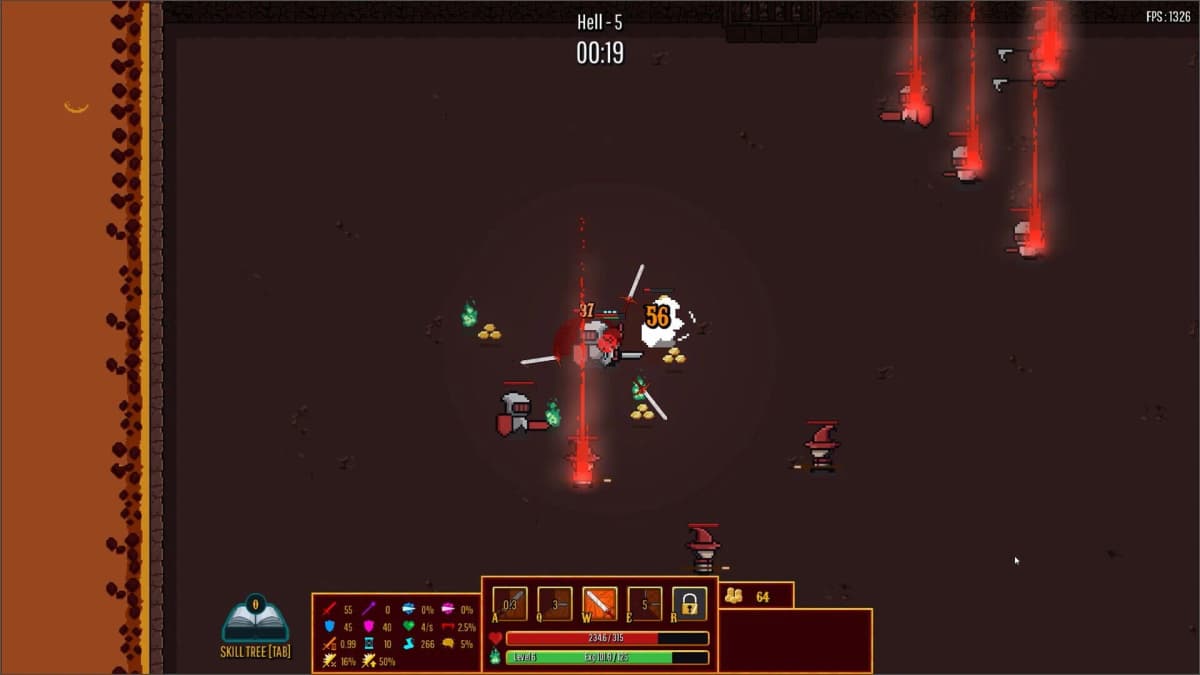
The end result is that even though the moment-to-moment controls are straightforward, the planning around your build gets delightfully involved. I’d find myself thinking, “If I grab that skill that triggers every X attacks and stack it with this on-hit effect, then pick shrines that amplify attack speed, I can probably ride that synergy for a while…” And then the game would throw a new piece of gear into the mix and force me to reconsider the whole house of cards.
Prophecies and a Semi-Fixed World: Failure That Feels Forward
What really sold me on Heretical is how it treats failure. A lot of roguelikes say “every run matters,” but in practice you often have lots of early runs that are just… noise. Here, the game does a much better job tying your deaths into a larger sense of progression.
The backbone of that is the Prophecy system. Each prophecy is essentially a mission or challenge you’re trying to complete across runs. Beat a certain enemy, reach a particular area, do something under certain conditions — finish one, and you unlock something tangible. That “something” can be new skill slots, new skills, new characters, new items, or other systems. Importantly, these aren’t tiny 1% number tweaks. They meaningfully expand your toolbox.
The first time I completed a prophecy and unlocked an extra skill slot for a favourite character, it felt like cracking open a whole new build archetype. Suddenly there was room to slot in a risky offensive skill I’d been eyeing but couldn’t previously justify. Another prophecy opened up a brand-new skill I didn’t even know existed. Even failed runs would end with a little burst of excitement as a prophecy ticked over and I’d hustle back to town to see what new toy I’d earned.
Then there’s the world layout. Unlike fully procedural roguelikes where every run is a complete mystery, Heretical lives in a middle ground. The world is largely fixed: bosses are in the same places, key areas sit where you expect them. As you push deeper, you learn the layout, discover shortcuts (often literally by kicking down ladders), and even permanently open magical gates after beating certain bosses enough times.
That semi-fixed structure changes how runs feel. Early on, I was lost and tentative, inching forward, reacting to whatever the game threw at me. A few hours later, I was planning routes. “If I go this way first, I can hit that shrine, maybe complete this prophecy along the way, and shortcut back if things go sideways.” Your knowledge of the world becomes another form of progression on top of stats and gear.
Difficulty, Pacing, and the “Just One More Run” Spiral
Heretical is tough. Not “you need to be a speedrunner” tough, but you absolutely can lose a run in seconds if you get cocky or if your build can’t keep up with the escalating difficulty. Most enemies have enough bite to be dangerous, especially once the kill-counter-induced difficulty increases start piling up.
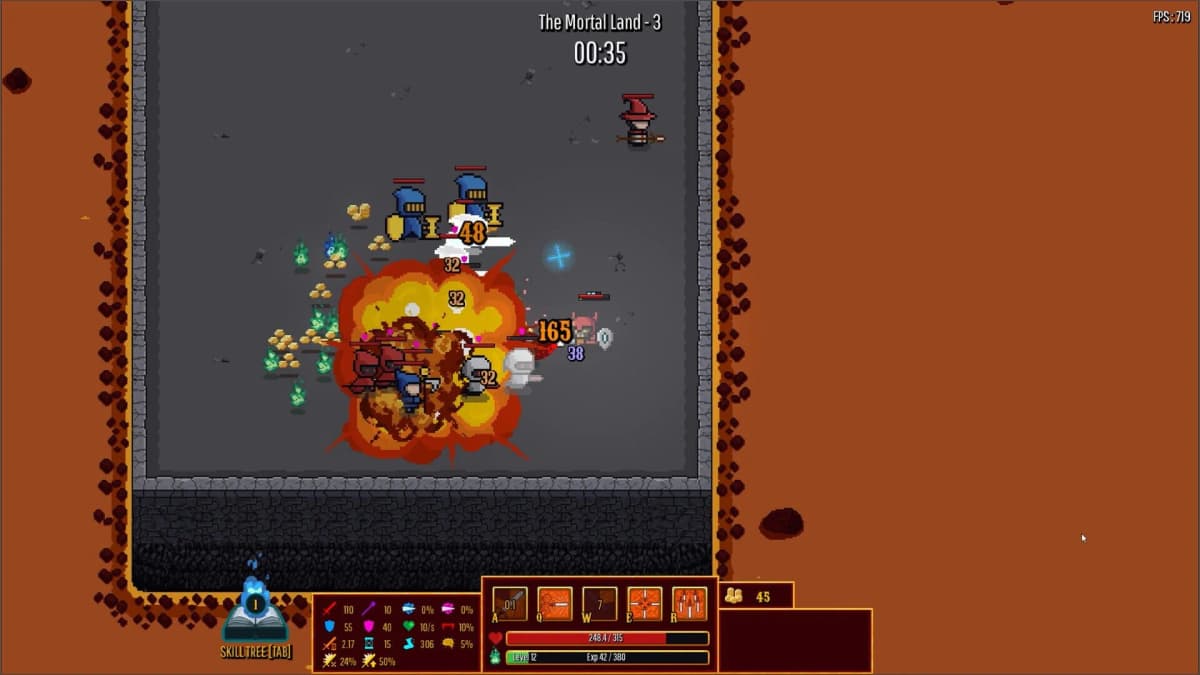
What kept me from bouncing off the challenge was how often I could look at a death and go, “Yeah, that’s on me.” I overextended into an unfamiliar enemy type because my last run had made me feel invincible. I grabbed one too many shrine debuffs. I tried to play a fragile, high-damage build like it was a tank. There are cheap moments — this is still an early access game with some balance spikes — but I rarely felt outright cheated.
The pacing helps too. Because your power increases both through in-run gear and skills and meta-progression, you start to feel noticeably stronger after just a couple of sessions. That doesn’t mean runs suddenly become easy, but the early few rooms become less of a slog. Coupled with prophecies constantly dangling new rewards just within reach, it becomes frighteningly easy to say, “OK, last attempt,” and then realise you’ve played for another hour.
Atmosphere, Visuals, and Sound
The first thing that hit me, even before the combat clicked, was the vibe. Heretical leans hard into its gloomy, almost oppressive atmosphere. You’ve got that skeletal NPC fused with an eldritch spider-leg nightmare, muttering prayers in the corner. You’ve got mournful scraps of dialogue from characters who sound like hope is a distant memory. The environments and enemies all feed into that same feeling of a world that’s rotting from the inside out.
Visually, it’s not aiming for hyper-realism. Instead, it goes for strong, moody art direction — lots of dark corners, unsettling silhouettes, and designs that manage to be both grotesque and strangely elegant. The UI is clean enough that I never felt lost in menus during a run, which is crucial in a game where you’re constantly comparing items and skills on the fly.
The music quietly does a lot of heavy lifting. It’s not in-your-face bombast; it’s brooding, tense, and just melodic enough to keep you locked into the flow of a long run without becoming grating. I caught myself humming a couple of tracks after stepping away from the PC, which is always a good sign. Sound effects carry the necessary punch — hits land with a satisfying thud, and enemy audio cues do a decent job of warning you about incoming danger.
On the technical side, running on my mid-range PC, I didn’t run into any game-breaking issues. A few minor rough edges and occasional jank are there — it is early access, after all — but nothing that derailed a run or made me want to step away. Stability felt solid, which matters when a single crash could mean losing 30+ minutes of progress.
Early Access State: Already Addictive, Room to Grow
Given that this is an early access release, I spent a good chunk of time paying attention to what feels finished versus what feels like groundwork for bigger things. The core loop — combat, build-crafting, prophecies, kill-based difficulty scaling, and semi-fixed world progression — already feels surprisingly cohesive. After several evenings with the game, I never hit a point where the systems ran out of steam.
That said, I’d love to see even more variety layered on top: more enemy types that force different responses from your builds, more shrine combinations to tempt you into riskier choices, and more prophecies that push you into weird, uncomfortable playstyles you wouldn’t normally pick. The foundations are solid enough that adding breadth — new skills, new characters, new item types — could make the long-term experience genuinely massive.
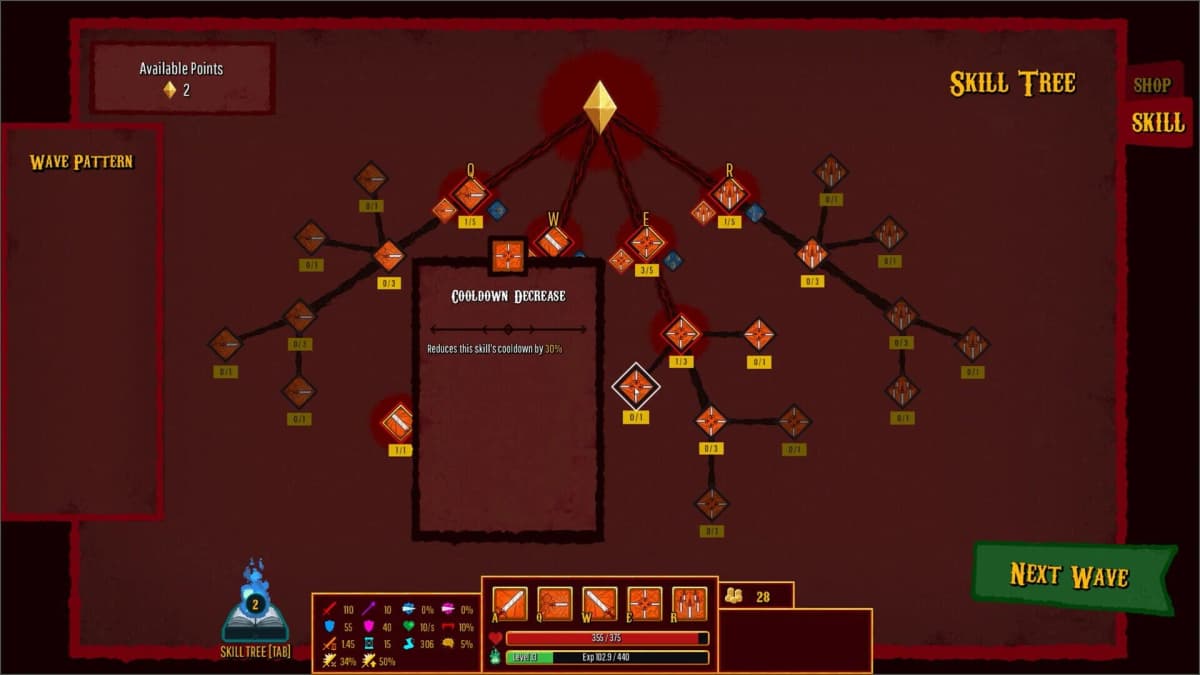
Balance is the other area where early access status shows. Some skills and setups feel noticeably stronger than others, and there were a few difficulty spikes that felt more abrupt than they probably should. None of it made the game feel unfair overall, but you can tell there’s tuning still happening under the hood. Personally, I don’t mind being around for that process; seeing a favourite skill get reworked or a weak option get buffed can be part of the fun if you enjoy theorycrafting.
Who Heretical Is For (and Who It Isn’t)
If you live at the intersection of “I like Soulslikes” and “I like roguelikes,” Heretical is basically engineered for you. The combat has that heavy, you-messed-up-and-now-you’re-dead weight to it, while the roguelike structure and persistent progression keep things from feeling hopeless. Players who enjoy tinkering with builds, chasing synergies, and trying to squeeze a few more percent out of their runs will find a lot to chew on here.
If, however, your patience for repeated failure is thin, this is going to be a harder sell. Even with the permanent stat unlocks and prophecies throwing you bones after bad runs, the fundamental loop is still: go in, make mistakes, die, learn, repeat. There’s no easy mode toggle to smooth things out. The game also doesn’t overwhelm you with tutorials or handholding, so you’ll be doing a lot of learning through bruises.
For me, that learning curve is exactly the appeal. The first time you finally crush a boss that’s been stonewalling you for a few evenings, or piece together a build that absolutely shreds through encounters that used to terrify you, it’s deeply satisfying in a way only this kind of game can be.
FinalBoss // Gear
Level up your setup
01Top-rated gaming headsetson Amazon→02High-refresh gaming monitorson Amazon→03Gaming chairson Amazon→04Discounted game keyson Kinguin→Affiliate links · As an Amazon Associate, FinalBoss earns from qualifying purchases.
Want to Level Up Your Gaming?
Get access to exclusive strategies, hidden tips, and pro-level insights that we don't share publicly.
Ultimate Reviews Strategy Guide + Weekly Pro Tips