
After more than a decade of franchise drift, Heroes of Might & Magic: Olden Era is doing something more important than merely existing: it is trying to prove this series still has a future beyond nostalgia compilations and forum arguments about why Heroes III was the peak. The Early Access launch on April 30 gives strategy players a substantial first slice-campaign opening, six factions, multiplayer, skirmish, procedural maps, and a map editor-but it also makes one thing clear. This is not a finished resurrection. It is a playable foundation under active construction.
That distinction matters because the franchise name carries baggage. “Back to the roots” has been promised often enough across strategy revivals to qualify as boilerplate. What players actually need is not reverence. They need a game that understands why the old formula worked, where it needs modernization, and which rough edges are acceptable in 2026 versus which ones are just old problems wearing retro clothing.
Table of Contents (5)
What you get on day one is real, not token
On the practical side, the launch package is not thin by Early Access standards. Olden Era is out now on PC via Steam, the Microsoft Store, and PC Game Pass, which is a smart move for a niche strategy game trying to rebuild an audience. Lowering the price-of-entry problem is not glamorous, but it matters. A franchise comeback has a much better shot when lapsed fans can try it without committing to a full-price leap of faith.
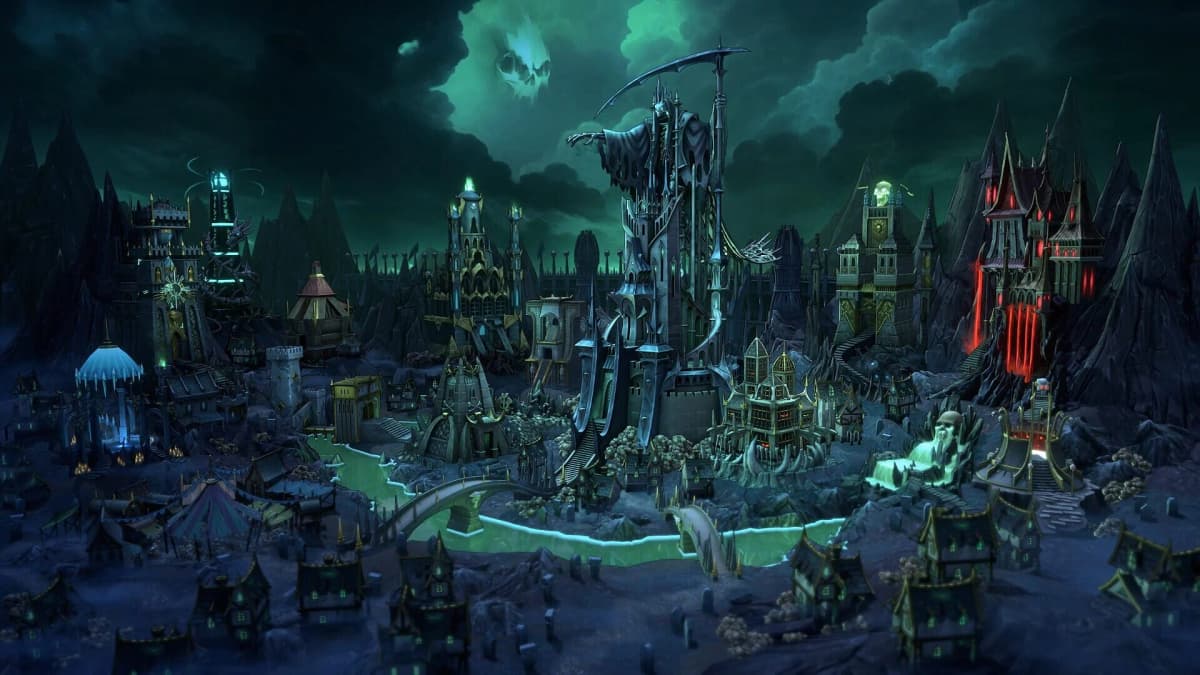
The current build includes six playable factions, with reported lineups including Temple, Necropolis, Sylvan or Grove depending on source naming, Dungeon, Hive, and Schism. That last point is worth noting because some previews and promotional material have not presented the faction list with perfect consistency. The broad picture is clear-there are six factions in the Early Access build—but not every outlet has described them in exactly the same terms. That usually happens when a game is still settling terminology, faction identity, or localization.
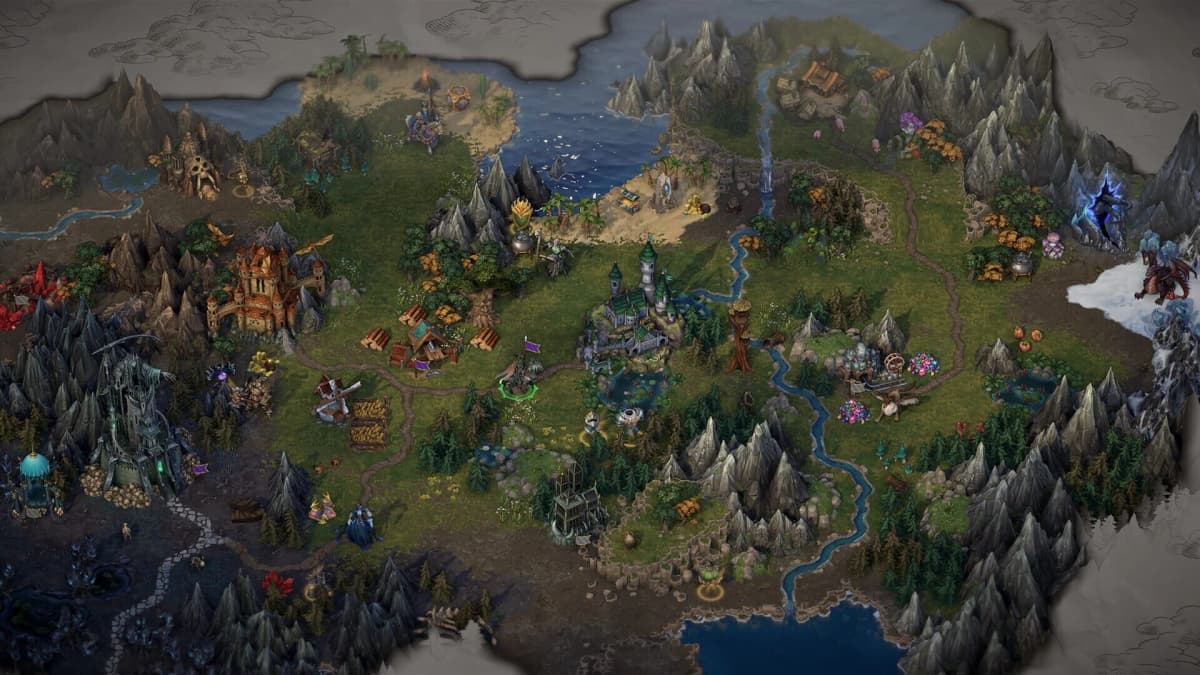
Beyond faction count, the feature set is more convincing than the usual “come back in a year” Early Access pitch. Players get the first act of the narrative campaign, centered on the Dungeon faction story, along with skirmish options, multiplayer support, arena-style battles, handcrafted maps, and procedurally generated maps for replayability. A beta map editor is already included. That last feature is not just fan-service. For a series like this, user-made maps are part of the ecosystem, not a bonus extra. If Olden Era wants longevity, community tools are infrastructure.
The good news is the combat seems to understand the assignment
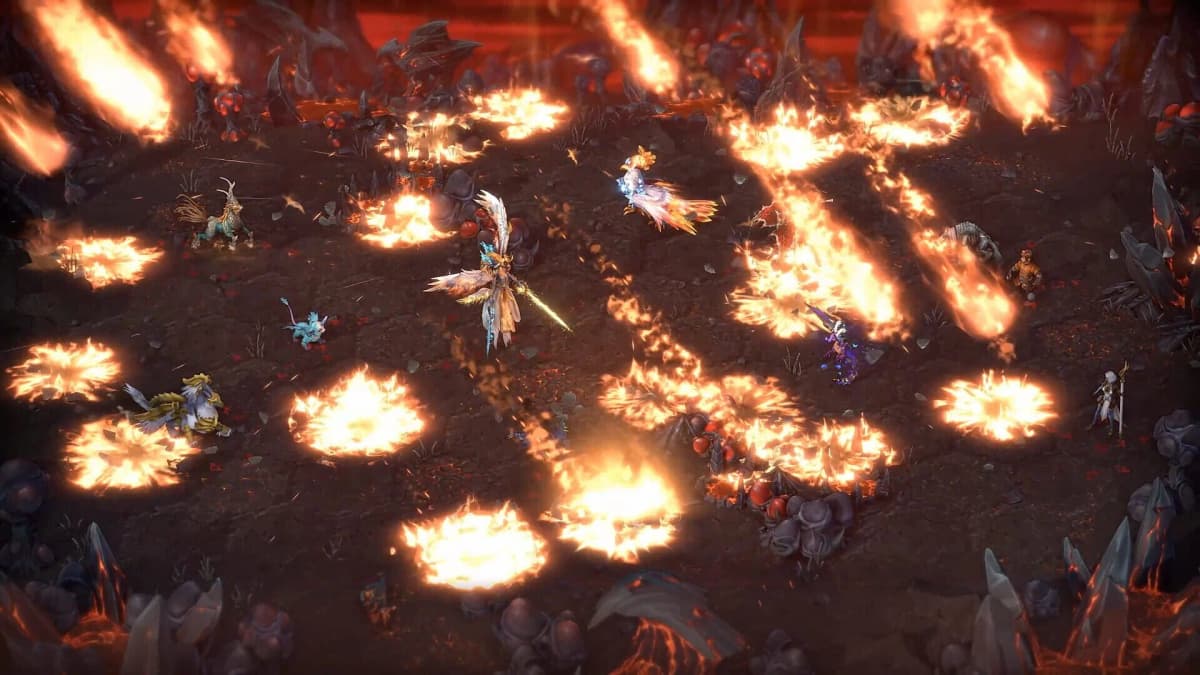
The strongest early read from critics and experienced strategy players is fairly consistent: the tactical layer works. That is the part Ubisoft, Unfrozen, and Hooded Horse absolutely could not afford to miss. If the battles felt mushy, random, or simplified into modern broad-appeal sludge, the comeback would have been dead on arrival. Instead, the early response suggests the hex-based combat, faction distinctions, and turn-based map flow do a credible job of channeling classic Heroes energy without feeling like a direct museum copy.
That does not mean the design is beyond criticism. Some early impressions point to balance problems, swingy hero and spell randomness, and cities that do not yet feel distinct enough in practice. Those are not minor details. In a game like this, “the faction fantasy is strong” and “the faction actually plays differently over a 10-hour map” are not the same statement. Plenty of strategy games nail the silhouette and fumble the systems. Olden Era appears to have cleared the first hurdle. The second one will take months of tuning, not trailer editing.
There are also reports of campaign bugs, rough AI behavior, and a map editor that is functional but clearly early. Again, this is where the label matters. Early Access is not the issue by itself. The issue is whether a developer uses it to refine a strong tactical core, or to ask players to subsidize a roadmap made of promises and placeholder UI. So far, Olden Era looks closer to the first category. But it is still in the category.
This is less a launch than a franchise stress test
The uncomfortable observation here is simple: the first major Heroes of Might & Magic release in years is arriving with a lot of “good bones” language around it because the genre has changed, the audience has aged, and the series does not get infinite second chances. Nostalgia can create interest spikes. It does not create retention. The game now has to survive contact with people who still remember every exploit, every faction matchup, and every reason older entries stayed installed for years.
That is why the roadmap matters more than the launch trailer. The current plan points to roughly a year of Early Access support, with additional campaign acts, improvements to the editor, and an Underground layer among the notable future additions. Those are meaningful expansions, not cosmetic filler. The Underground is especially important because it changes map logic, pacing, scouting, and strategic pressure in ways series veterans immediately understand. If it lands well, it makes the world design feel more authentically Heroes. If it lands late or half-baked, it will read like a missing organ.
The other stress point is multiplayer durability. Launching with multiplayer support is good. Launching with multiplayer that players actually stick with is harder. Strategy communities are ruthless about balance, pacing, and interface friction. If matchmaking, desync stability, turn flow, or faction tuning feels off, players will retreat to private circles or older games faster than any publisher slide deck would like to admit.
The real unanswered question is how much modernization the audience will tolerate
The most interesting problem around Olden Era is not whether it respects the classics. It obviously does. The harder question is whether it can update the formula without triggering the usual civil war between purists and everyone else. New mechanics like laws, focus systems, and mode variations can broaden strategy options. They can also create the sense that the game is layering systems on top of a formula that used to win through clarity.
If there is a question a PR team should have to answer directly, it is this: what is the non-negotiable design identity of Olden Era once community feedback starts pulling in opposite directions? Every successful Early Access game claims it is community-driven. The successful ones also know when not to chase every forum post into a design ditch. For a legacy strategy series, that line is even harder to hold because every veteran believes they are defending the true version of the franchise.
There is a narrow path here. Too conservative, and the game becomes a respectful imitation with modern graphics. Too aggressive, and it stops feeling like Heroes at the exact moment it needs old fans to advocate for it. The current build seems aware of that problem. It has not solved it yet. No Early Access launch can.
What to watch over the next few months
- The pace of balance patches. Fast, specific tuning for factions, spells, and hero progression will tell you whether the team is reacting to real play data or just collecting goodwill.
- Editor upgrades. A bare-bones editor at launch is forgivable. A weak editor six months from now is a strategic mistake for this series.
- Campaign follow-through. The first act is enough to establish tone, but the later acts will show whether the narrative layer is just framing or a real reason to stay invested.
- AI and multiplayer stability. These are not polish extras in a turn-based strategy game. They are the difference between a hobby game and a curiosity.
- The Underground implementation and any co-op or mode expansion. Those will signal whether the roadmap is substantive or just feature-complete theater.
Right now, Heroes of Might & Magic: Olden Era looks like a credible return rather than an automatic triumph. That is already more than this franchise has managed in a long time. The launch build appears substantial, the tactical core seems sound, and the Game Pass release gives it a real chance to rebuild an audience. The weakness is equally obvious: much of the final verdict still depends on tuning, tools, and follow-through. For a series built on long-term replayability, that is not a small asterisk. It is the whole case.
FinalBoss // Gear
Level up your setup
01Top-rated gaming headsetson Amazon→02High-refresh gaming monitorson Amazon→03Gaming chairson Amazon→04Discounted game keyson Kinguin→Affiliate links · As an Amazon Associate, FinalBoss earns from qualifying purchases.
Want to Level Up Your Gaming?
Get access to exclusive strategies, hidden tips, and pro-level insights that we don't share publicly.
Ultimate Gaming Strategy Guide + Weekly Pro Tips