
Table of Contents (11)
A new wind in an old desert: my time with Hexi’s Jade Gate Pass
Where Winds Meet hit in late 2025 like a flying kick out of nowhere. A free-to-play open world Wuxia ARPG that racked up more than 15 million players in its first month was already wild, but what really stuck with me was how confidently it embraced those wire-fu fantasies. Gliding off rooftops, dueling on lake surfaces, body-jumping between arrows mid-flight – it had texture and swagger.
When Everstone announced Hexi, the first big expansion, I half-expected a safe victory lap: a new city, a few bosses, some extra loot. Instead, Hexi rips the story out of its original era and chucks it into a Tang dynasty dreamscape, with an entirely different mood and traversal focus. I spent a long weekend with the first chapter, Jade Gate Pass, ahead of its March 6 launch, and it feels less like a content drop and more like the start of a second phase for the game.
Hexi is planned as a three-chapter arc rolling out through May, with three major maps and nearly twenty subregions, plus new martial arts paths, legacies and bosses. On paper it sounds big. Living in its first desert map for a dozen or so hours, it feels even bigger, because it does something most expansions never touch: it changes the way you move and read the world.
Key takeaways from Jade Gate Pass
- Traversal is the star: Sand-surfing and time-reversal fundamentally reshape exploration and pacing.
- The desert is dense, not empty: reactive sand, hidden ruins, and surreal moments (including a goldfish form) keep it from feeling like filler.
- Bosses are nasty in a good way: cinematic duels that demand real mastery rather than just higher numbers.
- Navigation still stumbles: the base game’s occasional vagueness returns, amplified by the size of the sands.
First steps into Jade Gate Pass: when the sand pushes back
My first half hour in Hexi did that thing I love: it quietly proved a point without shouting about it. The game drops you near the Jade Gate Pass itself, a fortress wedged between stone and sea of sand, and the very first time I sprinted down a dune I noticed something was off in the best possible way.
The sand is reactive. Not just a generic shader or a particle spray – the dunes visibly deform under your weight. Slopes crumble in small avalanches when you slide, jump landings leave deep impacts, and sprinting traces a believable trail that lingers long enough to feel physical. It is subtle at first, but once you start deliberately carving S-shapes and circles in the dunes, it becomes impossible to ignore.
Where Winds Meet’s original Jiangnan regions were all misty mountains, rivers, and tiled roofs. Beautiful, but familiar open world territory. Jade Gate Pass plants you in a massive Tang-era frontier desert and refuses to let it be empty. Rusted siege engines half-swallowed by sand, ruined watchtowers leaning at weird angles, caravans limping across the horizon, wind tearing loose planks from abandoned outposts – the map looks hostile and lived-in at the same time.
The lighting carries a lot of that feeling. Late-afternoon sun turning the dunes into a field of bronze, sandstorms that swallow the skyline in ochre haze, night skies with stars so sharp they almost feel stylized. The base game was already pretty, but Hexi pushes things toward that painterly, almost dreamlike look that fits the expansion’s premise as a kind of historical vision.
Very early on I caught myself doing something I rarely do in ARPGs: I stopped chasing quests and just walked. Up a dune, down the other side, just to see how the shadow of my character stretched across the sand and how the wind picked up loose grains. That was when it clicked that Hexi is much more about how you move than simply where you are going.
Sand Race and Cosmic Reversal: traversal that actually matters
Jade Gate Pass introduces two new Wuxia abilities that quietly redefine the game’s rhythm: Sand Race and Cosmic Reversal. Both sound like flashy toys on paper. In practice, they change how you approach almost every hill and ruin.
Sand Race is the showstopper. Trigger it and your character dives forward, riding a ribbon of swirling sand like a board, carving through dunes at ridiculous speed. It is more than just a sprint button with fancy VFX. You gain momentum down slopes, lose it climbing, and need to angle your approach to crest dunes cleanly instead of slamming into them. After a while I found myself planning routes the way I do in good skating or snowboarding games, stringing dunes and ridges into lines.
Everstone smartly ties Sand Race into exploration hooks. Time-limited races along natural sand half-pipes, hidden ledges only reachable by launching off the right slope, collectibles perched at the end of risky downhill runs — the desert starts feeling like a park organic enough that the systems do not show through too much, but present enough that movement turns into play instead of commute.
The other new trick, Cosmic Reversal, is quieter but may be my favorite. It lets you rewind the state of certain objects in the world, most notably ruined architecture. Spot a half-buried archway or a collapsed staircase, channel Cosmic Reversal, and the environment rebuilds itself in front of you, chunks of stone snapping back into their original positions while sand pours off the surfaces in reverse.
Mechanically, it functions as a combined exploration and light puzzle tool. One early sequence had me restoring a broken aqueduct piece by piece to create a path across a canyon, occasionally dropping the reversal to slip through the half-ruined state and reach secret platforms. Another involved reconstructing an entire watchtower, climbing it, then cutting off the power mid-way and using its collapsing debris as mid-air stepping stones. It is not Braid, but there is enough room for experimentation that it feels like more than a gimmick.
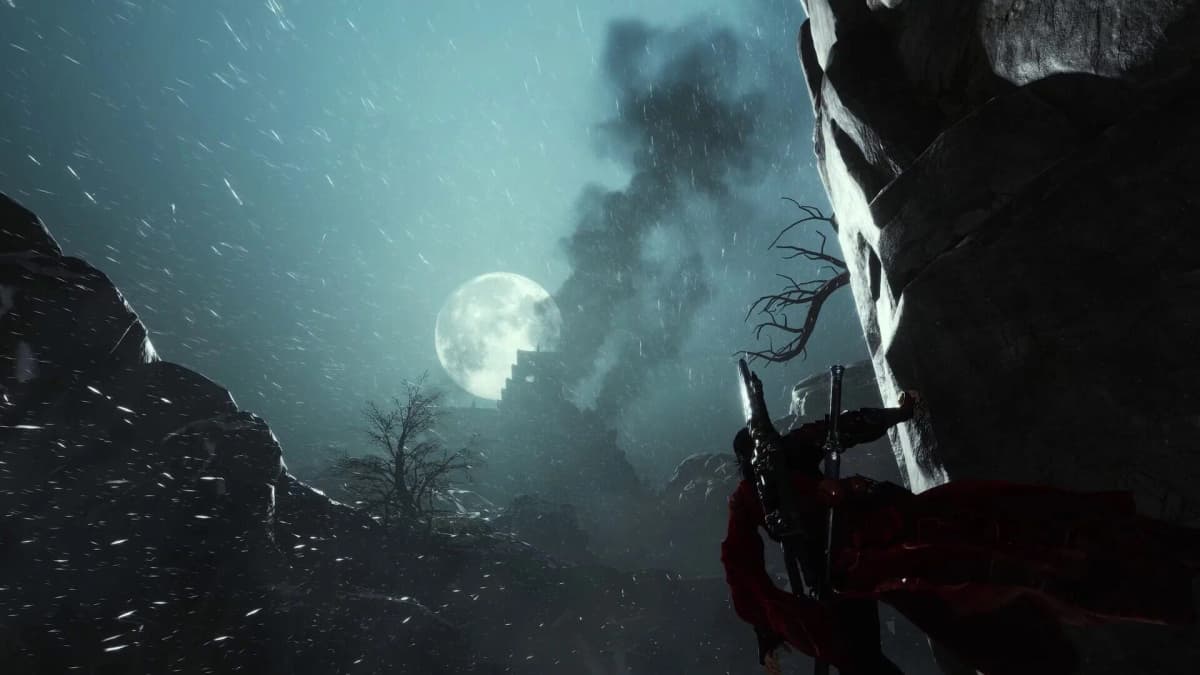
Crucially, both abilities bleed into combat and general traversal. Sand Race doubles as an evasive tool and gap-closer when fights break out on dunes, letting you flank archers or dodge multi-hit boss charges with long, arcing slides. Cosmic Reversal can pull fallen debris back into shields or expose weak points once you learn which environmental pieces respond to it. That integration keeps the new tools from being “that thing you only use in designated puzzle areas.”
Camels, cities, and a golden fish: why this desert never feels empty
One fear I had before jumping in was that a giant desert zone would end up feeling like filler between fights. That did not happen. Jade Gate Pass stays surprising long after you think you have seen its tricks.
On the grounded side, there are camels. Yes, it sounds trivial. It is not. Riding a camel across the dunes, with that slow, swaying gait and the slightly awkward acceleration, completely changes the tempo of travel. After spending ten minutes threading between rock outcrops on my mount during sunset, I started to prefer it over horses in this region. It aligns with the fantasy of trudging through a desert frontier rather than blazing across it.
Then there is White Crown City, a hub tucked between Jade Gate Pass and the regions that will unlock in later chapters. It has major outpost energy: too big to be a village, too scarred to feel like a proper capital. Caravans crowd the gates, side alleys hide informants and gamblers, and the whole place carries that sense of a last safe stop before the true wilderness. It neatly ties together the chapter’s subregions and sells the idea that Hexi is a wider frontier waiting to open up.
And then, there is the moment the game briefly turns into a dream.
At one point, through a chain of side events I will not spoil in detail, I ended up triggering an interaction that transformed my character into an ethereal golden fish. No UI prompt screaming about a new mode, no tutorial pop-up. I was suddenly gliding, fish-like, above the desert, drifting over dunes as if swimming in warm air.
There is almost no mechanical payoff. You can reach a few scattered collectibles and vantage points, but it is mostly about the feeling — that sensation of weightless, unhurried exploration. I spent a ridiculous amount of time just floating from dune to dune, letting the music and ambient sound wash over me, staring at little camps and ruins from above. It felt like Everstone tapping into the same energy as the best Journey moments, those stretches where nothing threatens you and the game simply gives you a space to breathe.
This is where Jade Gate Pass is at its purest: it trusts players to find small, strange delights without being dragged there by quest markers. Some of those hidden corners are just small environmental stories — a pair of skeletons huddled together beneath a collapsed wall, a half-buried shrine still lit with fresh incense. Others kick off spontaneous events that never repeat the same way twice. The desert is not a corridor between icons. It is the main attraction.
Boss fights: brutal, cinematic, and mostly fair
Where Winds Meet’s combat already had bite, and Hexi leans into that. The bosses in Jade Gate Pass feel tuned for players who have at least a moderate handle on parries, dodges, and Wuxia mobility.
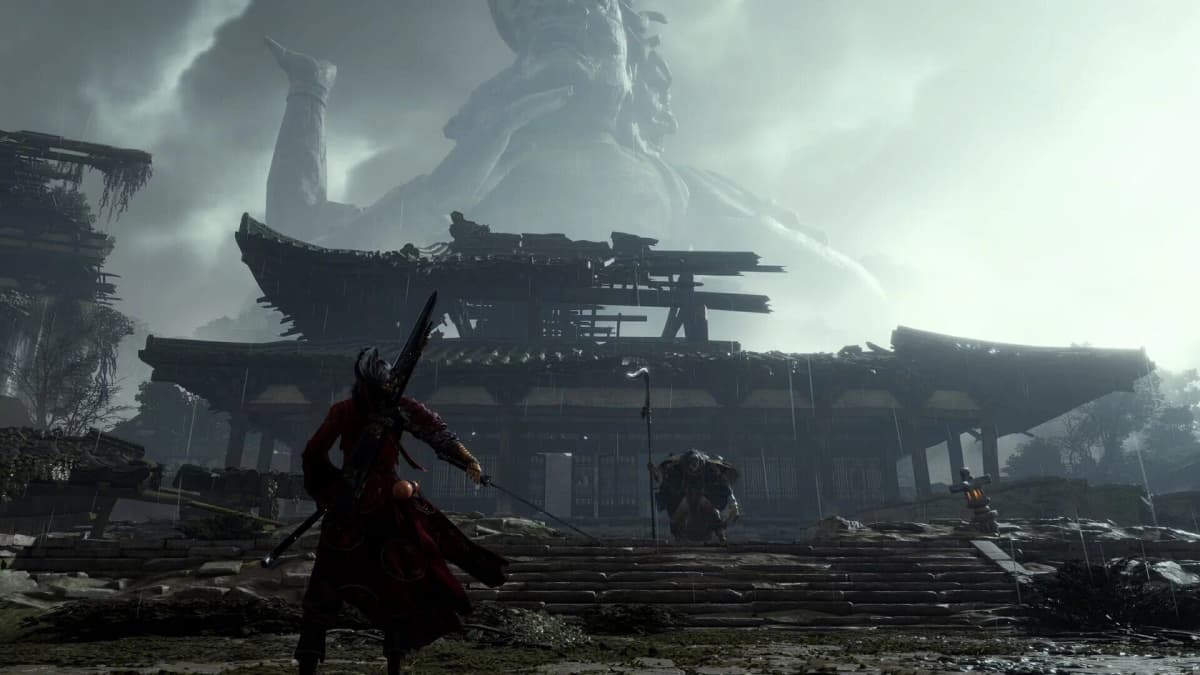
One of the early standout encounters is an aging Tang general who feels like a walking summary of the region’s themes: stubborn, half-broken, still lethal. The fight takes place on a sand-choked battlement with the wind howling hard enough that cloaks and banners constantly whip into your field of view. He rotates between tight, almost Sekiro-like flurries and slower, telegraphed smashes that send waves of sand across the arena.
Another highlight is the Wandering Ark, essentially a moving fortress that doubles as a boss. It rolls across the desert like a mechanical beast, cannons firing in rhythm while melee troops leap off to harass you. The game choreographs the whole encounter with sweeping camera work that never quite wrests control away but frames your dodges and counterattacks like a Wuxia film. Climbing up its sides with Wuxia movement, disabling cannons mid-run, then dropping back to the dunes to reset makes the whole thing feel more like a dynamic set piece than a traditional “arena” fight.
The throughline across these battles is that they are demanding, not cheap. Health bars feel reasonable, especially for an ARPG that could easily have gone down the inflated HP sponge route. Victory comes from reading patterns and making deliberate use of your toolkit. Sand Race, in particular, turns into a lifesaver during multi-phase fights, letting you reposition across large arenas without burning all your stamina on basic sprinting.
Multi-enemy boss encounters are where the system really flexes. One duel against a pair of elite swordswomen had me constantly switching between targeted aggression and full-on evasive laps around the arena, baiting one into overextending while the other reset. Failing felt frustrating, but never opaque. Each retry taught a new spacing or timing trick, and the eventual win landed with that very particular kind of relief only good boss fights deliver.
When the compass fails: navigation and clarity issues
The main frustration in Jade Gate Pass comes from something Where Winds Meet already struggled with: navigation clarity. The desert’s openness magnifies that weakness.
Quest markers sometimes hover in the general direction of your goal rather than pointing to a clear path or landmark. With mountains and canyons cutting across the sands, that occasionally turns into trial-and-error detours. I had a side quest that wanted me to find a caravan remains “north of White Crown City,” only for the marker to sit on the wrong side of a ridge maze. After circling that area longer than I want to admit, I eventually stumbled across the actual path through a narrow pass that the map never hinted at.
Most of the time, getting lost in this world feels fine, even rewarding. Stumbling onto a hidden ruin or a world event while meaning to go somewhere else is part of the fun. The problem appears when scripted content depends on fairly specific triggers but does not give enough guidance, creating nagging doubt that something important might be left behind simply because the visual language was unclear.
A bit more intelligent routing on the map, or subtle in-world cues like vulture trails, caravan tracks, or distinct rock formations leading toward key spaces, would ease that friction without undercutting the sense of freedom. Right now, Hexi leans a little too far toward “figure it out yourself” in a few main and side quest lines.
Performance and presentation: mostly smooth sailing in the sand
I played the pre-release build of Jade Gate Pass on a PC setup that already ran the base game comfortably. The expansion kept that baseline. Frame rates dipped slightly during the most violent sandstorms and the busier boss fights, but never enough to tank responsiveness or make parry timings feel unreliable.
Loading into the new region from the main menu took a touch longer than hopping between base game zones, which makes sense given the size and streaming demands of the dunes. Once inside, transitions between subregions — from high rocky plateaus to enclosed ruins and back into the open desert — stayed seamless and hitch-free for me.
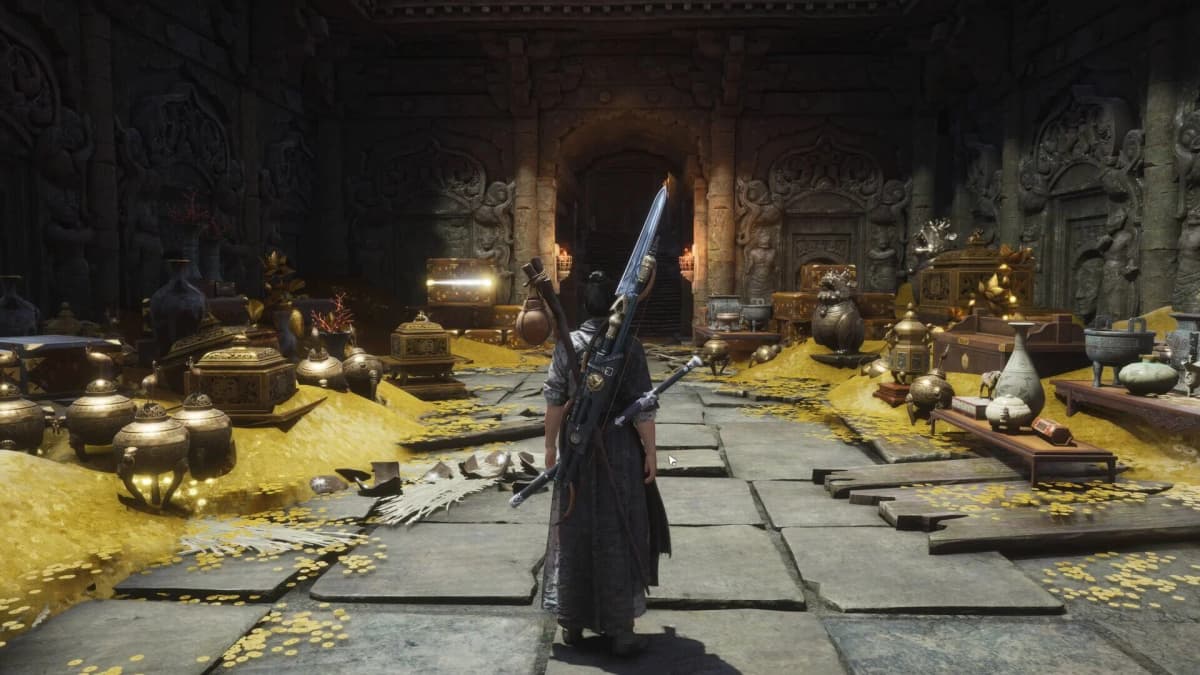
The audio design deserves a nod. Wind carries real weight in the mix, sand grains hiss against armor, and distant thunder from sandstorms builds tension long before the sky darkens. The soundtrack leans heavily on flutes, low percussion, and occasional choral swells that sell the Tang frontier vibe without drowning out combat or ambient noise.
Who Hexi’s first chapter is really for
After a full run through Jade Gate Pass, Hexi feels aimed squarely at players who already “get” Where Winds Meet and want the game to stretch its legs, not just hand out more loot. It is not a new-player-friendly reboot, even though the story’s shift to a Tang-era dreamscape sits outside the base timeline.
If the original release’s Wuxia freedom hooked you — sprinting up walls, dueling on rooftops, improvising with environmental tricks — Hexi doubles down on that philosophy through its traversal redesign. It is less about number-chasing progression and more about inhabiting a space that reacts to the way you move through it.
Players who primarily loved Where Winds Meet for dense cities and court intrigue might initially bounce off the open, lonely desert tone. The political undercurrents are still there in the background, but Jade Gate Pass cares more about frontier myths, forgotten battles, and the thin line between history and legend.
Bottom line: a bold step into the sands
Hexi’s first chapter is not a safe, incremental expansion. It is a swing. Shifting into the Tang dynasty, re-centering the game around a reactive desert, and handing players tools that let them rewrite how exploration feels is the kind of ambition that can easily backfire. In Jade Gate Pass, it mostly lands.
The combination of Sand Race, Cosmic Reversal, tough and theatrical boss battles, and quiet, almost meditative side moments (that golden fish transformation is going to live rent-free in my brain for a long time) creates an arc that feels complete on its own while clearly setting up the frozen peaks and grasslands still to come.
The navigation issues are not dealbreakers, but they are noticeable, especially if the base game already occasionally left you spinning in circles. Losing your way in Hexi sometimes leads to wonder, sometimes to mild annoyance. A bit more guidance would not hurt in future chapters.
Even with those rough spots, Jade Gate Pass has been one of the most memorable ARPG experiences I have had in 2026 so far. It feels like Everstone planting a flag and saying that Where Winds Meet is not done growing, and that growth will not be confined to simple power creep.
TL;DR
- Hexi is a free, three-chapter expansion for Where Winds Meet, starting with the Tang-era desert of Jade Gate Pass.
- Sand Race (sand-surfing traversal) and Cosmic Reversal (time-rewind for ruins) radically change how exploration and some combat encounters feel.
- The desert map is dense and reactive, with deforming dunes, sandstorms, hidden ruins, and standout surreal moments like a golden fish transformation.
- Boss encounters are challenging and cinematic without relying on bloated health bars, rewarding mastery of the game’s Wuxia systems.
- Navigation can be unclear, with some quests and routes feeling more vague than they should in such a vast open space.
- Visuals, audio, and atmosphere push the game’s presentation beyond the base release, selling the Tang frontier fantasy.
- If you enjoyed the base game’s sense of movement and Wuxia flair, Hexi’s first chapter is absolutely worth returning for.
FinalBoss // Gear
Level up your setup
01Top-rated gaming headsetson Amazon→02High-refresh gaming monitorson Amazon→03Gaming chairson Amazon→04Discounted game keyson Kinguin→Affiliate links · As an Amazon Associate, FinalBoss earns from qualifying purchases.
Want to Level Up Your Gaming?
Get access to exclusive strategies, hidden tips, and pro-level insights that we don't share publicly.
Ultimate Reviews Strategy Guide + Weekly Pro Tips