
Table of Contents (12)
Highguard Review – Fantasy Raids, FPS Tension, and a Lot of Screaming in Comms
The first time I tried to explain Highguard to a friend, I sounded like I was reading patch notes from three different games at once. “Okay, it’s a 3v3 base assault shooter where you vote on which base to defend, loot like Apex, breach shields with a magic sword, plant bombs like Valorant, and it kind of feels like pushing through a Star Wars capital ship.” Their response was basically: “…What?”
That confusion is kind of the point. Highguard is the rare shooter that genuinely resists an easy label. Wildlight – a studio stacked with former Titanfall 2 and Apex Legends talent – calls it a “raid shooter,” but that barely scratches the surface of what’s happening in a match. On paper it sounds like a chimera of familiar ideas. In practice, it actually feels like its own thing.
It’s also one of the more stressful shooters I’ve come across in a while. Matches swing brutally from “we’re doomed” to “we just stole it at the last second,” and the margin between those two states is usually one smart flank or one badly defended doorway. If you miss the feeling of discovering a new subgenre – the way battle royales or extraction shooters felt in their early days – Highguard lands surprisingly close to that vibe.
Key Takeaways
- Genre mashup that actually works: Highguard fuses Siege-style base defense, Valorant-esque bomb lanes, and Apex-style looting into a single, coherent raid-FPS mode.
- Match flow is excellent: The tug-of-war structure, shared respawns, and instant-win anchorstone objective make comebacks and sudden swings feel constant and earned.
- Movement feels great, gun feedback doesn’t: Traversal and melee rhythm are sharp and satisfying, but hit feedback and some weapon tuning undercut otherwise strong firefights.
- Wardens are stylish but uneven: Some characters (Scarlet, Mara, Kai) feel essential and brilliantly designed; others (Condor, Redmane) lag behind in both usefulness and fun.
- High skill ceiling, high stress: Easy enough to pick up as a free-to-play curiosity; brutal if you want to master rotations, resource control, and Warden synergies.
- Huge potential as a trendsetter: Whether or not it dominates the market, the core design here feels likely to inspire other shooters over the next few years.
So… What Actually Is Highguard?
Wildlight’s own label – a “raid shooter” – is cute, but not very helpful. The easiest way to understand Highguard is to think of it as a round-based, two-lane siege played across a mid-sized map, with looting and upgrading happening between every major clash.
Each match is 3v3. Both teams are made up of unique heroes called Wardens, each with their own abilities and ultimate. At the start of a match, both teams vote on one of several bases to defend. The game then stitches those two choices together into a single map: your chosen base at one end, the enemy’s at the other, with the terrain in between shaped by the combo.
This does two smart things right away:
- It gives every match a slightly different layout and flow, based on which bases are in play.
- It makes you feel attached to “your” base; you picked it, you fortified it, now you have to live with its strengths and weaknesses.
Each base starts at 100 health. Damaging that health is the entire point of the match. You do it in three ways:
- Breaking the shield: Mid-match, a glowing sword called the Shieldbreaker spawns out on the map. Whoever grabs it becomes a glowing “kill me” sign for both teams, but it’s the only way to slice open the energy shield around the enemy base, dealing a chunk of damage immediately.
- Destroying generators: Inside each base are two generators. Plant a bomb on one, defend it for ~30 seconds, and it explodes for significant damage.
- Shattering the anchorstone: The high-risk, high-reward option. There’s a single anchorstone deep in the base. If your bomb goes off here, the base is instantly destroyed, no matter how much health it has left.
Every “raid” on the enemy base plays out as a self-contained assault. The attackers get a shared pool of respawns. If they succeed in blowing up a generator or the anchorstone, huge damage is dealt. If they fail to do any structural damage at all, their own base eats damage as a punishment. Then everyone resets, runs back to their respective sides, and the next assault begins.
The result is this constant, rhythmical tug-of-war. You loot, you upgrade, you jostle for map control and the Shieldbreaker, someone finally punches through a shield, and then all hell breaks loose in tight corridors and chokepoints. Rinse, repeat, for 8–30 minutes depending on how evenly matched you are and how greedy each team gets with anchorstone plays.
The Loop: Part Battle Royale, Part Tactical Breach
Minute-to-minute, Highguard borrows a surprising amount from battle royales and extraction shooters, even though it isn’t one. Between assaults, you’re out in the field:
- Mining Vesper, a mineral currency you use to buy armor and weapon upgrades.
- Opening scattered chests for gear.
- Racing for care packages that drop more powerful equipment.
- Hunting the enemy team to steal their Vesper and deny them loot.
This layer matters a lot. Show up to a base assault under-geared and you’re basically a speed bump. Spend too long hoarding Vesper and the enemy walks the Shieldbreaker straight to your door.
What keeps it interesting is how compressed all of this feels compared to a full-blown BR. The maps sit in that sweet middle ground – noticeably bigger than your standard arena shooter map, nowhere near as sprawling as a battle royale island. After a game or two, you start to build little mental routes: “Hit this Vesper vein, swing through that chest, grab the mount, contest the mid-lane zipline.” The best rounds feel like you’re running a practiced heist route, only to have it blown up by a chance skirmish or a desperate sword carrier sprinting past.
Where battle royales usually ramp from quiet looting to one chaotic final circle, Highguard is more like a series of spikes. Each raid is its own climactic moment, with the added anxiety that someone might pull off an anchorstone plant and end the match on the spot. You’re never really allowed to relax, and if you enjoy that permanently-on-edge feeling, Highguard has it in spades.
Movement: Respawn DNA in a Fantasy World
Even if you went in blind, you would not be shocked to learn that a ton of the team worked on Titanfall 2 and Apex Legends. Highguard isn’t as twitchy or hyper-mobile as Titanfall – there are no wall-runs or double jumps – but there’s clearly the same obsession with flow.
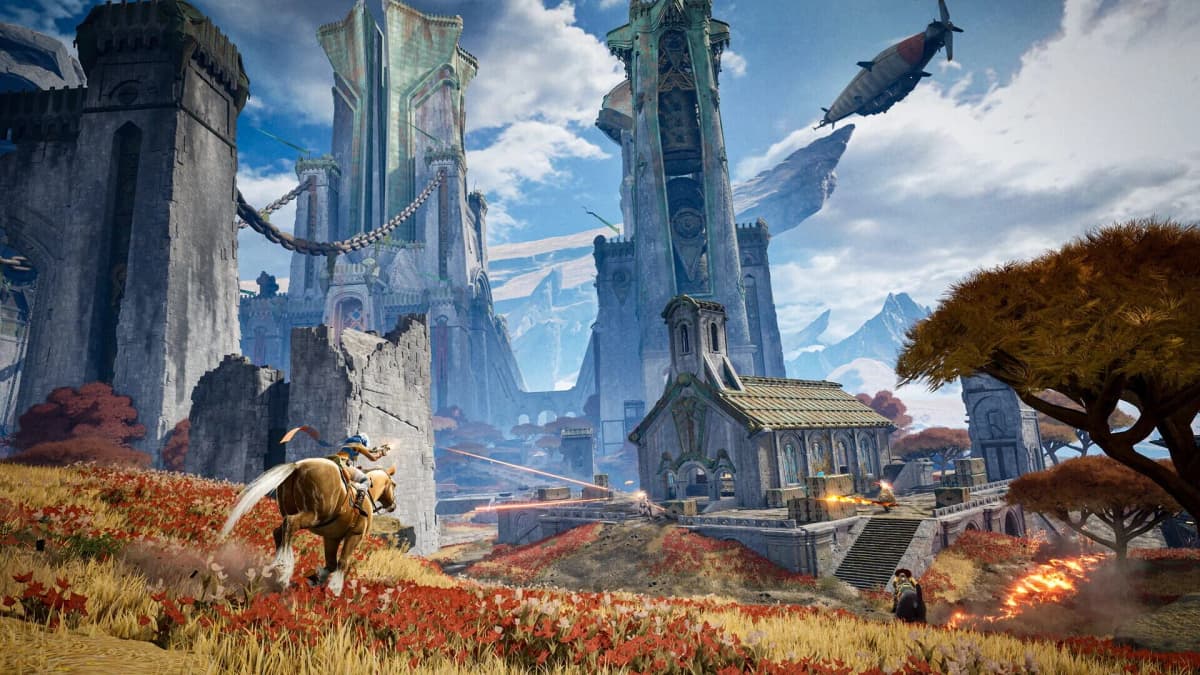
On foot, your base movement feels quick without being slippery. Add in mounts for long-distance travel and ziplines that sling you across key lanes, and getting around is surprisingly frictionless. Importantly, the game gives you enough mobility to reposition and flank, but not so much that defenses feel pointless. When a team actually invests in barricades and chokepoints, it matters.
The standout touch is the melee rhythm system. Your pickaxe isn’t just a “hold to mine” tool. If you time your swings properly, you harvest Vesper faster, chop through enemy fortifications more efficiently, and land a supercharged fifth hit. It’s a tiny mechanic, but it makes otherwise mundane tasks feel tactile and skillful rather than purely busywork.
Guns: Great Handling, Messy Feedback
Gunfeel is where Highguard is most clearly chasing the standards set by its lineage – and where it stumbles the most.
The handling itself is generally solid. The sniper, revolver, and LMG punch the way you expect. Recoil patterns are readable enough that a couple of sessions will get you comfortable. The full-auto SMG already feels like it’s edging into “a bit too good at everything” territory, which is par for the course for early-meta shooters.
The bigger problem is how hits register to your senses. Coming from Apex’s iconic armor crack, Highguard’s enemy shield break is strangely limp. Visual effects and audio cues are subdued enough that, in the chaos of a firefight, it’s easy to lose track of whether you’ve just stripped someone’s defenses or are still chewing through them. That matters a lot in a game where commit-or-disengage decisions are constant.
Moments where you back off because you thought an enemy still had shields, only to watch them die to a teammate one bullet later, feel more frustrating than they should. Not because you got outplayed, but because the information wasn’t clearly conveyed. Likewise, when you full-send into a duel assuming they’re weak and instead run into full armor, it feels less like a misread and more like the UI and effects aren’t pulling their weight.
Weapon balance also isn’t quite there yet. Shotguns and assault rifles in particular feel caught in an identity crisis – they kick hard but don’t hit that hard, so you don’t get the satisfying “delete at close range” feeling you’d expect. None of this is unsalvageable; tuning numbers and juicing hit feedback is the kind of iteration live-service shooters are built on. But right now, the gunplay lags behind the movement and macro design.
Wardens: Brilliant Ideas, Uneven Roster
The hero roster is where Highguard struts its personality the hardest. There are eight Wardens at launch, and they’re all dripping with style, from their silhouettes to their animations to their voice lines. Wildlight leans into a fantasy world that feels like magical fallout from a collapsed tech civilization, and the characters carry that aesthetic beautifully.
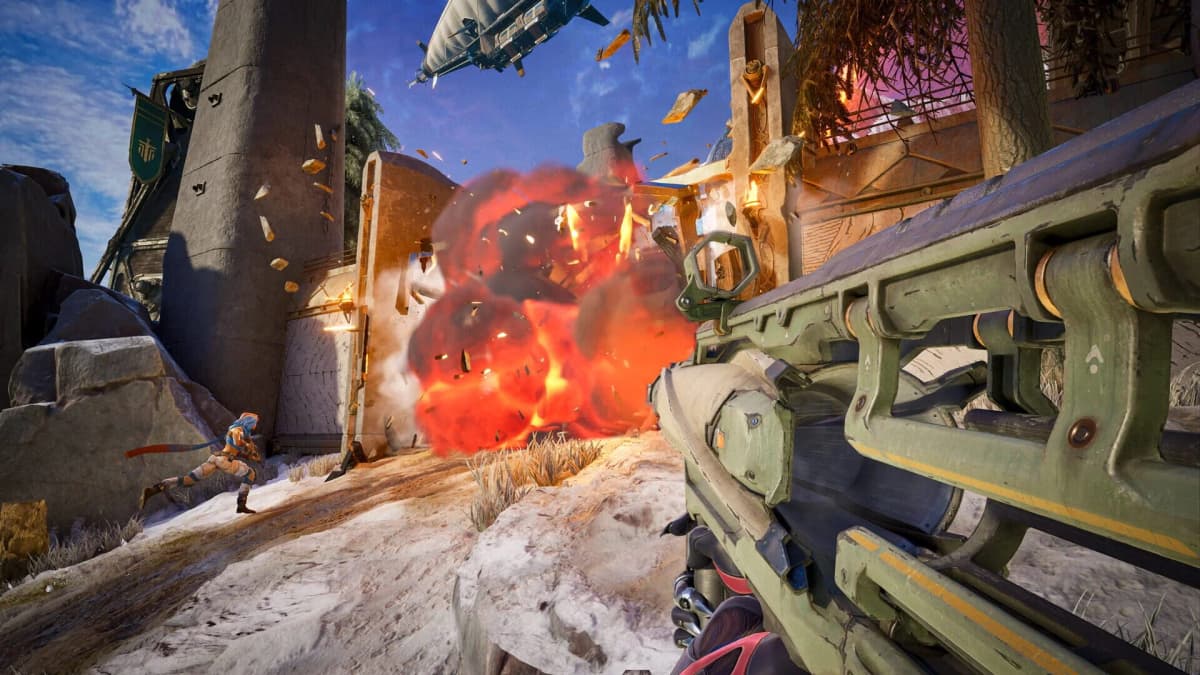
On the gameplay side, though, they’re not all created equal.
Scarlet, the stealth Warden, is the kind of hero people will one-trick for hundreds of hours if she survives the balance passes. Her sand magic lets her turn invisible and slip through walls, opening up flanks and infiltration routes that just don’t exist for other characters. In a game built around base assaults and surprise plants, that’s enormous.
Mara is one of the more exciting support concepts: a dark, eldritch-esque caster who buffs allies’ shields and, crucially, can create a forward spawn point anywhere on the map – yes, even in the enemy base. In coordinated play, that’s a nightmare for defenders trying to stabilize after wiping an initial push.
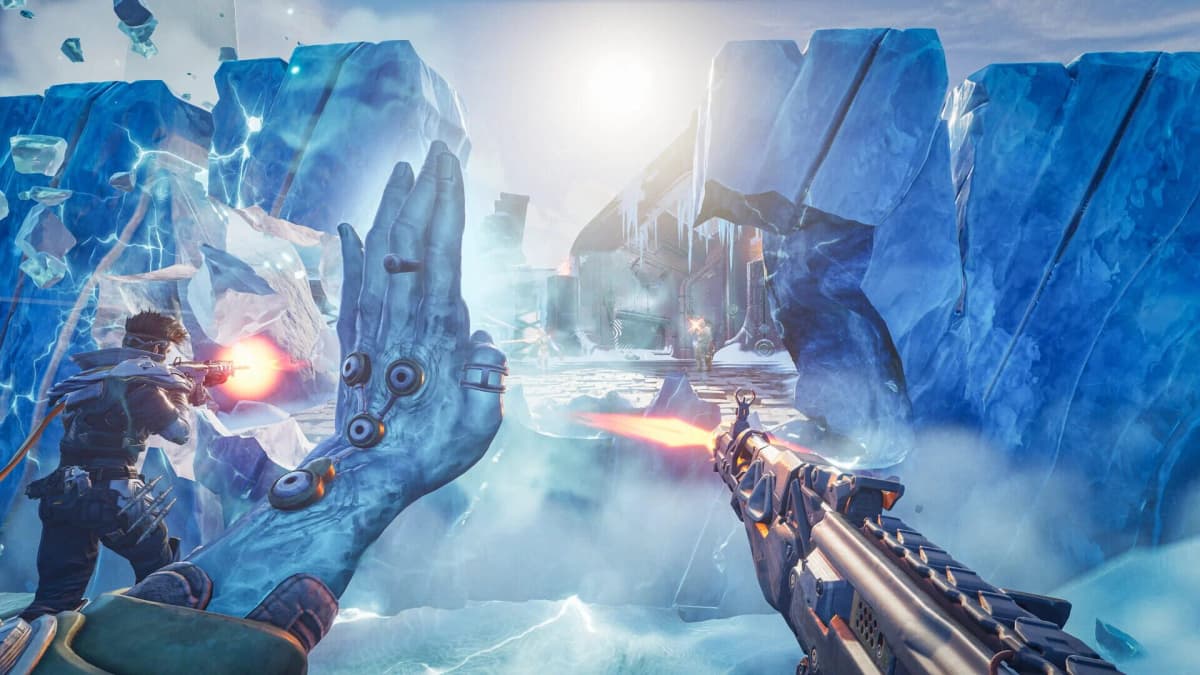
Kai arguably feels like the closest thing to “meta” right now. His ice abilities let him carve out on-demand cover, block off sightlines, and later transform into a tanky yokai-form bruiser that will absolutely ruin anyone trapped in close quarters. On defense, he’s a dream; on attack, he turns chaotic breaches into something you can actually structure.
Then you hit characters like Condor, the recon specialist, and things get muddier. Knowing that “enemies are nearby” passively isn’t especially powerful on sprawling, open maps. Her active scan – highlighting foes through walls – is fantastic in theory, but her ultimate is where the design really falls over. Taking manual control of a slow-moving hawk to drop smoke while your actual body stands there like a scarecrow is borderline suicidal in a high-tempo FPS. Too often, using it feels like inting for minimal payoff.
Redmane has a similar problem, but from the opposite direction. His kit is geared toward wrecking enemy fortifications and base defenses… which sounds great until you remember that everyone can carry wall-breaching bombs, rocket launchers, or hammers that fill the same niche. He ends up feeling redundant in a way the more support- or control-focused Wardens don’t.
What ties the cast together, though, is sheer charisma. Almost every Warden looks like they stepped out of high-end key art – stylish, expressive, and, honestly, hot as hell. Legendary skins lean straight into that energy. The pre-match banter between your trio is also quietly excellent, dropping bits of lore about past missions, rivalries, and the broader state of the world without feeling like exposition dumps.
If Wildlight chooses to lean into an ongoing narrative the way many of these devs did with Apex Legends, there’s a ton of fertile ground here: a civilization that burned through its tech and now has to rely on recently awakened magic is a great hook. For players who care about story in their multiplayer games, this is one to keep an eye on.
Stress, Skill Ceiling, and the “One More Match” Problem
Matches in Highguard are short on paper – somewhere between about eight and thirty minutes – but they feel dense. There’s almost no downtime that isn’t tinged with tension. Even during the early loot-and-mine phase, you’re glancing at the map, counting Vesper, wondering if the other team is about to make a greedy Shieldbreaker play.
Once both bases have taken damage, that stress compounds. Because the anchorstone is always a looming instant-win condition, there’s no such thing as a “safe lead.” You can be up huge on base health and still lose to one perfectly executed sneak plant. That’s exciting, but it also means Highguard can be mentally exhausting over longer sessions in a way that games like Apex or Valorant often aren’t.
The skill ceiling looks extremely high. To play well, you’re juggling:
- Macro decisions about where to mine, when to chase fights, and when to rush the sword.
- Base-building choices – what to reinforce, which entrances to leave as bait, how to layer defenses.
- Hero picks and synergies between Wardens’ abilities.
- Moment-to-moment mechanical skill in gunfights and positioning.
Jumping in as a free-to-play tourist and playing a handful of matches to “get it” is easy; truly mastering it feels like the kind of thing only a small, dedicated core will do. That’s not a criticism so much as a reality check. Highguard is not a casual, low-stakes hangout shooter. It’s closer to a compact, round-based strategy game that happens to be played from the perspective of an aggressively hot wizard with a gun.
Free-to-Play, Live-Service, and the Big Question
Highguard being free-to-play is a huge part of why I think people should at least try it. The core mode is weird enough that a traditional $70 boxed launch would be a hard sell. As a “download it, play a couple matches, uninstall if it’s not your thing” experience, it makes far more sense.
On the monetization side, the focus – at least from what’s visible – is squarely on cosmetics. Legendary skins lean into the design team’s clear understanding that players will happily throw money at attractive, well-animated heroes even in a first-person game where you barely see them. As long as things stay in that lane and don’t creep into pay-to-win territory with stat-boosting upgrades, the model fits the genre.
The bigger concern is one no designer can fully solve: the audience problem. Highguard is entering a live-service shooter market absolutely clogged with games that have multi-year progression tracks, established pro scenes, and players deeply sunk into comfort picks. Breaking through that inertia will be rough for any new IP, even one this inventive.
Where I feel weirdly confident is in its long-term influence, regardless of raw player count. The “raid-FPS tug-of-war” concept is strong enough that it feels almost inevitable other studios will borrow from it – the way BR circles, extraction extractions, and hero-shooter ults got scattered across the genre. Whether Highguard itself becomes huge or settles into a cult favorite, the ideas here don’t feel like a dead end.
Who Highguard Is For
You’ll probably click with Highguard if:
- You like objective-based shooters (Siege, Battlefront 2’s capital ship phases, Valorant) more than raw deathmatch.
- You enjoy looting and upgrading mid-match, but don’t want a full 30–40 minute battle royale commitment.
- You want a fresh hero shooter that isn’t just another 5v5 three-lane control-point remix.
- You appreciate strong movement and macro depth, and don’t mind that balance and feedback are still a bit rough around the edges.
If you’re looking for a chill, jump-in-and-vibe shooter, or you’re exhausted by live-service grinds and metas, this might not be your new nightly main. Highguard demands focus, coordination, and a tolerance for matches that can swing from triumphant to tragic in one play.
Bottom Line
Highguard is exactly the kind of experiment I want from a new studio full of FPS veterans. It doesn’t try to be “Apex but fantasy” or “Titanfall but with swords.” Instead, it splices together ideas from Siege, Valorant, battle royales, and looter shooters into a cohesive, tense, and often exhilarating raid-FPS loop that feels genuinely new.
The fundamentals – match structure, movement, macro decision-making, hero concepts – are strong enough that they make its flaws stand out more sharply. Gun feedback needs more bite. Some Wardens need rethinks. Not every ultimate or ability fits the tempo of the game. It’s messy, the way most ambitious first drafts are.
But I’d take this kind of messy, inventive shooter over another safe, polished retread any day. Highguard may not conquer the live-service FPS space overnight, but it absolutely deserves a spot on your “at least try it once” list – and I suspect we’ll be seeing its fingerprints on other games for years to come.
TL;DR
- What it is: A free-to-play 3v3 “raid shooter” where both teams defend their own base while trying to breach and bomb the enemy’s, with looting and upgrading between assaults.
- What it nails: Dynamic map setup, high-stakes tug-of-war pacing, slick movement, and a hero roster full of style and strong macro roles.
- What needs work: Hit feedback and audio-visual clarity in gunfights, plus some underwhelming Wardens and ultimates that don’t match the game’s pace.
- Who should try it: Fans of Siege, Valorant, and Apex who want something structurally new, and anyone curious about where competitive FPS design might be headed next.
- Why it matters: Even if it doesn’t become your forever game, Highguard feels like the kind of design swing that could quietly redefine what objective-based shooters look like in the next decade.
FinalBoss // Gear
Level up your setup
01Graphics cardson Amazon→02Gaming laptopson Amazon→03High-refresh gaming monitorson Amazon→04Discounted game keyson Kinguin→Affiliate links · As an Amazon Associate, FinalBoss earns from qualifying purchases.
Want to Level Up Your Gaming?
Get access to exclusive strategies, hidden tips, and pro-level insights that we don't share publicly.
Ultimate Reviews Strategy Guide + Weekly Pro Tips